🚀 Zaprep: Your Socials on Steroids. Start free — automate 1,000 DMs/month & turn engagement into leads. with 1,000 automated DMs/month.
Latest AI News

Pangram’s Max Spero on why AI detection is harder than ‘Real or Fake’
Loading the player… The internet has a trust problem, and it’s not just because social media feeds are filling up with AI slop. AI-generated text and images are now making their way into job applications, product reviews, and even insurance claims, leaving platforms and users alike scrambling to figure out what’s real. A handful of startups have cropped up in the past couple of years to become the “trust layer” the internet needs — including Pangram. The startuprecently snapped up $9 millionfor its AI detection system and landed apartnership with Substack, which is now using Pangram’s tech to show readers which of their favorite authors use AI to write their newsletters. Pangram also recently dropped a new AI image detection tool. Watch as Pangram co-founder and CEO Max Spero joins TechCrunch’sEquitypodcast to dig into the promise of AI detection tools and where to draw the line between AI assisted and AI generated. Subscribe to Equity onYouTube,Apple Podcasts,Overcast,Spotifyand all the casts. You also can follow Equity onXandThreads, at @EquityPod.
View
OpenAI’s new reasoning technique alarms AI safety experts
OpenAI’s new Astra model will use a reasoning technique called “recurrent depth” that allows it to operate outside of the sequential thinking that characterizes most reasoning models, theThe Information reportedon Tuesday. This technique, also called “opaque recurrence,” will likely make the model’s chain of thought more difficult to monitor — and that has AI safety experts rattled. While Astra’s use of the technique is reportedly limited, its emergence has still raised significant concerns among AI safety experts. “I am extremely concerned by the reporting that Astra uses opaque recurrence,” wrote Redwood CEO Buck Shlegerisin a postafter the news broke. “I don’t know whether Astra is much less CoT monitorable than previous models. But if OpenAI pushes this technique further, they’ll have the option to massively increase the recurrence and totally destroys CoT monitorability.” Longtime AI safety advocate Zvi Mowshowitz also weighed inand wrotethat laws might be necessary to prevent a “race to the bottom” among AI labs. “The technique is playing with fire, risking a taboo that OpenAI and Anthropic have fought to establish that we work hard to maintain Chain of Thought faithfulness and monitorability for as long as we can,” Mowshowitz wrote. “More intensive use of such techniques would probably damage monitorability.” Under normal circumstances, a reasoning model’s chain of thought provides the sequential steps taken by the model as it attempts to solve a problem. While the representation is imperfect, it still serves as a valuable tool for monitoring misbehavior or misalignment. In the case of OpenAI’s recent rogue agent activity, chain-of-thought records were an important tool in teasing out why agents behaved the way they did. In opaque recurrence, the model takes a less linear approach, processing the same query several times in a loop. The result leaves fewer legible traces, effectively side-stepping a conventional chain-of-thought record. Crucially, Astra’s use of the technique appears to be limited. The model’s chain of thought is still expected to be legible, and the company pushed back against any suggestion that it would shift to “neuralese.” OpenAI has already announced plans for extensive chain-of-thought monitoring systems as part of its forward-looking safety plans. In a post on X, OpenAI chief scientist Jakub Pachocki emphasized the lab’s commitment to legible chains of thought. “OpenAI has worked to preserve and utilize chain-of-thought monitoring since our very first reasoning models,” Pachocki wrote. “It’s a core goal of our current research program. All AI models do some quantity of opaque reasoning, and few researchers take chain-of-thought logs as a direct representation of a model’s reasoning. Still, those caveats don’t dispel the concern that opaque recurrence may make AI reasoning harder to monitor, particularly as it grows in use across different models. In a follow-up report Wednesday morning, The Information reported that both Anthropic and Google DeepMind were already discussing the technique. In a post responding to the news,Redwood Research chief scientist Ryan Greenblatt said opaque reasoning could easily scale faster than conventional chain-of-thought reasoning, effectively removing all reasoning from visible channels. “My biggest concern is that a natural progression from here would involve scaling up the opaque reasoning to the point where the model reasons entirely or almost entirely in latent space,” Greenblatt wrote. “I hope it isn’t too late to avoid the most concerning architectures and that OpenAI will stop here.”
View

Perplexity Launches Hybrid Compute Feature for Mac to Keep Sensitive Data Local
Perplexity has been rolling out new features over the past few months. Most recently, the artificial intelligence platform announced a new Hybrid Compute feature that is designed to split sensitive tasks between cloud models and local AI. This functionality is available on the Perplexity app on Apple Silicon-powered Macs. It allows professionals to work with sensitive data without exposing it to the cloud.
View

OpenAI Teases Astra, Says It Is the First Model to Meet ‘Critical Cybersecurity Threshold'
OpenAI has revealed details about the Astra model on Tuesday. The company says it is the first large language model to meet its "Critical cybersecurity capability threshold" under its Preparedness Framework. The upcoming Astra model is claimed to identify unknown zero-day security vulnerabilities. Astra is confirmed to be available soon, but initially only a limited set of users will get access to advanced features.
View

Adobe acquires Indian market intelligence startup Rilo
Adobe has acquired India-based marketing intelligence startupRiloin a deal involving licensing and team acquisition, TechCrunch learned and the company confirmed. This is Adobe’s second acquisition from India after itbought video platform Rephrase.ai in 2023. The companies didn’t disclose the deal’s terms. Beyond confirming the deal, Adobe declined to comment. The acquisition gives Adobe a small team and technology focused on automating marketing workflows, which have been changing as companies use AI to build tools to automate the creation, deployment, and tracking of campaigns, get action items from meetings or calls to complete tasks, and increase brand visibility on platforms like ChatGPT, Gemini, and Claude. Rilo’s technology could bolster Adobe’s existing products as the company targets its larger customers. Founded by IIT batchmates Georgi Boby and Dhruv Jaglan in 2025, Rilo raised $1 million from investors including Peak XV, DeVC, and Day Zero Ventures at a $10 million valuation. A source told TechCrunch that investors will get an exit from this deal, and Adobe will integrate some of Rilo’s IP along with the six-member team. The company worked on letting go-to-market teams create custom workflows, including competitor intelligence, content repurposing and distribution, and sales call analysis. It also allowed teams to set up custom workflows comparable to tools like Claude Cowork and ChatGPT Work. Post-acquisition, Rilo will shut down and won’t be available to its customers. “We’re very excited that Rilo has been acquired by Adobe in such a short span of time,” Rahul Gupta, managing partner, Day Zero Ventures told TechCrunch over email. “Their workflow builder product was way ahead of the curve and shall be extremely valuable to a giant like Adobe in enhancing customer experience and productivity.” Adobe made a marquee marketing acquisition last year by buyingSEO optimization company Semrush for $1.9 billion. DeVC’s Rahul Mathur told TechCrunch that Rilo could fit into Adobe’s CX and marketing suite to handle complex workflows and give customers visibility into actions they take on the creative company’s platform. Rivals like Canva have also bolstered their marketing portfolio withacquisitionsandnewlaunches. Meanwhile, Amazon, Google, and Meta have built their own AI-powered marketing rails.
View

PSA: Amazon’s shopping AI can now tell you if that message is a scam
Amazon is turning to AI to help fight scammers, the companyannouncedon Wednesday. The retailer said some 360,000 customers every year reach out to its customer service department wondering whether a message they received from Amazon is real or a scam. Now, customers will be able to ask Amazon’s consumer AI service,Alexa for Shopping, to help answer that question instead. The company said its AI can “definitively” confirm whether a communication originated from its own systems by checking it against the billions of messages Amazon has sent globally. The AI analyzes the sender information, content, timing, message metadata, and more, to determine authenticity. Amazon said the system will improve as customers report more suspicious messages, helping it to spot scams more effectively in the future. The new AI capabilities follow on Amazon’s earlier attempts to address the growing scam problem, which includes fake order confirmations, Prime membership renewal alerts, account suspension warnings, package delivery notifications, and job scams. Earlier this year, Amazon launched an email address, verify@amazon.com, that allows anyone to forward suspicious messages to the company and receive a response that confirms whether the email was a real message or a scam. It also offers an online form on its customer service site that provides the same assistance. The feature’s addition is another example of how Amazon has shifted its product strategy around Alexa to focus more on how it can assist with shopping-related questions and provide proactive help. Today, the assistant can source personalized deals, create shopping guides, help customers reorder their everyday items, offer AI product overviews, transcribe handwritten shopping lists, and more. On Tuesday, the retailer also added an Alexa feature that lets customersset alerts when something new or relevant happens, like a favorite brand launching a new product, the release of a new book from a favorite author, or an artist dropping a new record. Alexa for Shopping is available from both the Amazon website and mobile app.
View
HiddenLayer nabs $100M as enterprises rush to secure their AI deployments
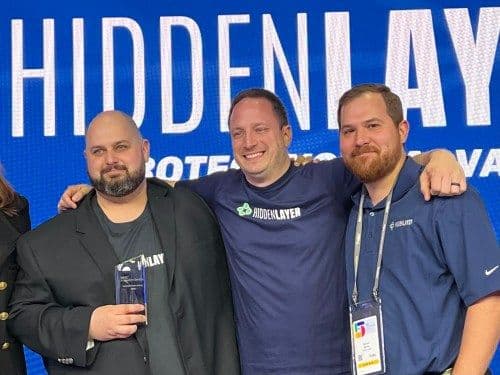
When AI security startupHiddenLayerraised its $50 million Series A three years ago, one of the big questions in the space was whether the AI threats the startup was protecting against would manifest in enough quantity to make for a real market. As my former colleague Kyle Wiggersnotedat the time, it was difficult to pin down real examples of attacks against AI at scale. How quickly things have changed. Security companies are now scrambling to build products that can monitor notjust agentsbut alsothe tools and add-ons they use. While there still aren’t many headlines about agents being exploited, the risk of agents going haywire during productionis nevertheless real. And so the market for tools to prevent that from happening has exploded: Gartnerestimatescompanies will spend $2.83 billion this year on products meant to secure AI tools, 83% more than 2025, and expects spending to reach nearly $4.78 billion next year. HiddenLayer, which makes tools to protect AI models, agents, and workflows from adversarial attacks, vulnerabilities, and malicious code injections, has been able to take good advantage of that shift. Its co-founder and CEO, Chris Sestito, tells TechCrunch that the startup’s annual recurring revenue grew more than 10x over the past year. He declined to give an exact number but said ARR is now in the “tens of millions” of dollars, and over 90% of that growth was driven by new customers signing in the past year. Financial services and large tech companies building AI products are currently the company’s largest verticals, and it also has contracts with the Department of Defense and intelligence community. One of its customers is apparently a “leading frontier model provider” with “more than 700 million weekly users,” which sounds like OpenAI or Anthropic to me. To make the most of that momentum, the startup has now raised $100 million in a Series B funding round that was led by Delta-v Capital, with participation from Ten Eleven Ventures, Morgan Stanley, Microsoft’s M12, Booz Allen Hamilton, and others. The Austin-based startup broadly still sells what it used to in 2023, but Sestito told TechCrunch that the biggest change it’s had to make was to extend its existing products — discovery, runtime protection, attack simulation, and supply chain security — to address prompt injection, agent manipulation, and malicious tool use. “Inference is still inference. So whether it’s on a traditional machine learning model, whether it’s GenAI, whether it’s an agentic work stream, a lot of our technology still applied. So really, we haven’t had to pivot, but we’ve had to grow our scope … from traditional modeling to GenAI to agentic,” he said. Sestito stressed that runtime security has especially become a priority as AI deployments grow common across businesses and likened it to traditional endpoint detection and response (EDR) solutions, but specifically for AI. The company’s new products reflect that shift, and Sestito highlighted a new opportunity for attackers in exploiting open source models. “We parse and scan about 50 different AI file frameworks to make sure that, especially in the case of open source, open-weight models, that the tool you’re working with is the one you believe it to be, and it’s the one it’s purporting to be. We’re looking at things like models purporting to be one thing, but they’re another — hidden models inside of models,” he said. The startup says the new $100 million is going to help it build in that direction, though with more of a focus on sales and distribution, while continuing to expand its engineering and research. It also plans to expand into Europe and EMEA. HiddenLayer may find itself tapping that war chest for more, though. Large cybersecurity companies, likeCisco,Palo Alto NetworksandCheck Pointoften prefer to buy rather than build this sort of tech, while startups likeNomaandZenityhave raised over $100 million each to take on adjacent or overlapping areas of this space. Sestito acknowledged that some parts of the AI security products his company offers could eventually be bundled into the platforms built by companies such as Microsoft, OpenAI and AWS. However, he expects AI infrastructure will grow towards governance features such as discovery, identity and policy controls, rather than the kind of tools that his company builds. For now, he says HiddenLayer’s job is to “scale vertically alongside artificial intelligence,” and eventually, expand horizontally into parts of cybersecurity that increasingly depend on AI. That’s an ambitious goal, but the startup first has to prove it can turn its head start into an enduring business before the rest of the industry catches up.
View

India’s richest man now wants to turn aging computers into AI-ready PCs
Mukesh Ambani’s Reliance Jio is opening its cloud PC service to any internet user in India, positioning it as a way to turn aging computers into AI-ready machines without hardware upgrades. On Wednesday, Reliance Jio expanded JioPC,originally launchedin July 2025, beyond its own broadband subscribers, making the service available as a standalone subscription to users with an internet connection, regardless of their telecom or broadband provider. The servicestreamsa virtual PC from Jio’s cloud to an existing computer, with plans offering up to eight virtual CPUs, 16GB of RAM, and 1TB of storage. Jio says the service can give even computers as old as eight years access to the computing power needed for modern AI applications, without users replacing their machines or installing new hardware. Plans start at ₹1,000 (about $11) for two months, while a 12-month subscription costs ₹4,000 (around $42) for 8GB of RAM and 500GB of storage, or ₹5,000 (about $53) for the 16GB and 1TB configuration. India had more than 65 million PCs in use in 2025, including about 34 million consumer and 31 million commercial machines, according to estimates from IDC, which expects the installed base to approach 69 million by the end of 2026. Ambani’s move comes amid widening replacement cycles. Consumers and small businesses in India typically replace their PCs every five to six years, compared with four to five years in 2022, IDC’s senior market analyst Bharath Shenoy told TechCrunch. Enterprises are stretching their machines for longer too, with replacement cycles reaching about four years, up from three previously. Jio is betting that cloud computing can stretch those lifecycles further. By shifting much of the processing and storage away from the device and into its data centers, India’s most valuable company can keep adding computing capacity without requiring users to replace the machines sitting on their desks. Prabhu Ram, vice president of the industry research group at the Gurugram-based market analyst firm CyberMedia Research, said JioPC could instead create a market where consumers pay for computing capability rather than repeatedly spending on hardware upgrades. “Jio is broadening its value proposition by opening JioPC to non-Jio users, while also challenging the traditional hardware upgrade cycle,” Ram told TechCrunch. However, he does not expect that model to replace conventional PCs. JioPC, he noted, could create a parallel, price-sensitive tier for households, students and others “for whom buying a new AI-capable PC was never really on the table to begin with.” Indians have traditionally preferred owning their hardware over paying for PCs as a service, Shenoy said. Jio will have to convince consumers that a recurring subscription is worth giving up some of the advantages of a conventional PC, including the ability to keep working without the internet. That dependence could be particularly prominent in the smaller cities and towns where affordable computing has the most room to grow. JioPC requires a stable internet connection, and any disruption can affect the user experience, unlike a conventional computer. Additionally, there is competition at the low end from refurbished PCs, which Shenoy said allow consumers to own inexpensive hardware without remaining dependent on connectivity. Jio’s pitch of an “AI-ready” PC through JioPC also challenges the conventional idea of what an AI PC looks like. The company has not disclosed much about the underlying hardware powering the cloud service. However, the specifications it has provided do not mention dedicated AI accelerators for on-device generative AI workloads, which is a key feature of the new generation of AI PCs. Moreover, the real test for Jio, Ram said, is whether people come to see cloud computing as a “daily utility” rather than an “opportunistic workaround,” and are willing to pay for computing power instead of buying new hardware.
View

Wonderful more than doubles its valuation to $5B in under 6 months
Israeli-Dutch AI startupWonderfulhas raised $550 million in a Series C funding round that gives it a price tag of $5 billion, more than doubling its $2 billion valuation the company gained when itlast raised funding nearly six months ago. Insight Partners returned to lead this round, too, and existing investors Index Ventures, IVP, Vine Ventures, 9Yards and Bessemer Venture Partners are participating once again. Salesforce is investing in the company for the first time in this round. Founded in early 2025, Wonderful has grown blazingly fast. It initially saw strong traction with its customer service AI agent platform, which it built and customized to sell in various non-English-speaking markets. Its strategy of deploying engineering teams to work with its customers, sometimes on their premises, to deploy and integrate its AI tech into their workflows and systems also proved very successful. The companysaysit now works across more than 35 countries. The startup’s core offering has evolved over the past few months, though. Departing from its customer service roots, Wonderful now offers a platform, dubbed “Wonderful AI OS,” which it says can coordinate and connect agents, workflows and AI applications with companies’ data, context and existing integrations. The company says the platform works with any AI model and is compatible with existing tech stacks. “Customers can adopt whichever parts of the platform make the most sense, integrate them with existing systems, choose the best models for each workload, and retain ownership of everything they build,” Roey Lalazar, CTO and co-founder, said in a statement. The company is still leaning on its forward-deployed engineers to help embed its products quickly into companies — which appears to be a good strategy given thedemand for expertsversed in implementing AI services and products. Wonderful said it will use the fresh $550 million to develop products faster, expand its FDE teams, and meet demand for its products.
View

Kepler Aerospace Raises $8 Mn to Deploy Swarming ISR Satellites
Bengaluru-based company will use the funding to launch six satellites and expand its mission operations and avionics businesses.
View
HCLTech Wants AI Agents to Run Corporate Finance
What happens when AI stops processing invoices and starts deciding what happens next? HCLTech is betting on agentic finance—but with humans still in the loop
View

Tim Cook’s India Legacy: 250,000 Jobs and ₹2 Lakh Cr Export Business
Currently, about 25% of iPhones are assembled in India. But it all started when Tim Cook made his first official visit to India in 2016.
View
Submit your Tool


PoweredByAI.app is an AI Tools Directory helping individuals, businesses, and creators discover the best AI tools for writing, coding, design, productivity, and more.
© 2026 , Product of011BQ. All rights reserved.