🚀 Zaprep: Your Socials on Steroids. Start free — automate 1,000 DMs/month & turn engagement into leads. with 1,000 automated DMs/month.
Latest AI News

The AI boom took over Climate Week and not everyone is happy about it
It was the best of times, it was the worst of times … I’ll spare you the rest, but the cliché Dickens line really does sum up this year’s New York Climate Week. Much of the climate tech community — like the rest of the U.S. economy — is eagerly riding the AI wave. Some have reservations about thesheer quantity of natural gas power plantsbeing built to power AI data centers. But because many climate tech startups are energy-focused or energy-adjacent, the buildout has been embraced as an opportunity to get companies through thevalley of death. The singular focus also means some promising sectors risk being overlooked. It’s a continuation of a trend that’s emerged over the last year. As climate tech companies struggled to get financing — either because of canceled federal grants or investor hesitancy — those that could change their pitch to match the AI mania did so. The pivot has helped many climate tech startups land fresh funding from investors. Total venture deal value has risen for four consecutive quarters, cresting the $14 billion mark in the first quarter of this year, according to the most recent available data from PitchBook. It’s the best fundraising environment for climate tech in the last few years, with most of the deal value driven by sectors boosted by data center construction, including the built environment, grid infrastructure, and dispatchable energy that can be turned on or off when it’s needed. It’s an opportunity few have wanted to pass up. One exchange during a panel at New York Climate Week captured the moment: Two founders, when asked whether they’d prefer the AI buildout to proceed at its current pace or at a more climate-responsible speed, said without hesitation that faster was better. Unsurprisingly, both of their startups were in energy. And yet not everyone agrees. I heard from several founders who felt that the data center boom was distracting from other promising segments of climate tech, including those that were meeting their targets without having to rely on AI mania. “Corporates are still interested in climate,” one founder told me. The difference today is that large companies don’t want to crow about it, mostly for fear of drawing the Trump administration’s ire. There were also signs that the AI boom was beginning to wear thin on some. For many startups, money for scaling was hard to find three years ago, even if they were showing promising results. Now, customers are clawing their way into demos. “Where was this money three years ago?” I asked several people. I received more than a few knowing eye rolls in reply. It’s the world they live in these days, they acknowledged. The smart entrepreneurs are all finding ways to meet customers where they are. Ultimately, the undercurrent at New York Climate Week was that the data center party won’t last forever, but it might last long enough to help startups build durable businesses. Once that happens, they can refocus on the carbon-cutting mission they were founded to pursue.
View

Source: Inference provider Modal Labs closing in on $750M round at $15.75B valuation
AI inference infrastructure provider Modal Labs is nearing a $750 million funding round led by Accel at a $15.75 billion valuation that includes the investment, according to a source with knowledge of the funding. The size of the round has not been previously reported, though Axios and Bloomberg have reported other details of the deal. The new round would more than triple Modal’s valuation from the $4.65 billion it reached when it announced its $355 million previous fundraise just four months ago. Modal Labs declined to comment. The deal comes amid soaring demand for inference services, the process of running an AI model that’s already been trained to generate outputs, particularly from customers relying on open-source models. Other inference startups are also in talks to raise fresh capital at much higher valuations. Baseten is nearing an infusion of capital at a $26 billion valuation, doubling what it was worth in June,Bloomberg reported. Meanwhile, Fireworks and Fal, a startup providing inference for video and image generation, have also talked to investors about new rounds that would significantly increase their valuations, according toThe Information. Although revenue for these companies has been growing rapidly, their margins are thin, largely because the cost of acquiring or leasing compute remains very high. Fireworks announced in July that its annualized revenue had hit$1 billion, a fivefold increase from the year before. Multiple inference-focused startups are expected to reach the same revenue milestone by year’s end, according to our source. Modal was founded in 2021 by CEO Erik Bernhardsson and CTO Akshat Bubna. Bernhardsson, who is Swedish, spent more than 15 years building data teams at companies including Spotify, where he helped build the music-streaming service’s recommendation system, and Better.com, the online mortgage lender, where he served as chief technology officer. Bubna studied math and computer science at MIT and was an early staff engineer at Scale AI, the data-labeling startup, before co-founding Modal. The company, which is based in New York and estimated to have roughly 150 employees, lets developers train AI models and run other compute-heavy workloads without managing their own servers. Its web page lists customers that include the coding startup Cognition, the AI music generator Suno, the fintech company Ramp, and the publishing platform Substack. As of May, Modal had surpassed$300 millionin annualized revenue, it told Reuters at the time. The fundraising talks come two months after Modal was pulled into one of the AI industry’s most closely watched security incidents. In late July, Modal disclosed that a customer’s data had been compromised as part of the same hacking campaign carried out by a rogue OpenAI agent against Hugging Face. Modal Chief Technology Officer Akshat Bubna said the breach traced back to a flaw in a customer’s own code, not to Modal’s systems. “We’re aware a Modal customer published an unauthenticated endpoint that allowed anyone on the internet to use their sandboxes for code execution,” Bubnasaid in a statementto press outlets at the time. “This was used by the rogue agent. Modal’s platform was not compromised in any way,” he’d added.
View
OpenAI reportedly ditches model over safety concerns
OpenAI had planned to release yet another AI model next month, but has decided to nix the release over safety concerns. The Wall Street Journalreportsthat Astra 6.1 was scheduled to be released as soon as within the next few days. However, the model “showed higher levels of deception” than previous models and exhibited unsafe behavior, the Journal writes. Saachi Jain, OpenAI’s head of safety systems, told the WSJ that the model tested poorly on alignment, a measure of how well the program adheres to human intent. TechCrunch reached out to OpenAI for more information and will update the article if it responds. Astrawas releasedearlier this month and hailed by OpenAI as its most powerful model yet. Questions about safety have plagued the AI industry over the past several months — ever sincethe Hugging Face incident, in which an OpenAI agent broke free of its sandboxed environment and hacked several different companies. Since that incident, more models — includingAnthropic’s ClaudeandGoogle’s Gemini— have been revealed to have exhibited similar behavior. The deluge of concerning stories has, ironically, helped to push the policy conversation in the U.S. toward an outcomedesired by top AI labs: the institution of new industry standards for AI safety and potentially aslowdownof the industry itself. Companies like OpenAI and Anthropic have claimed that the concern here is safety, although another potential motivation posited by critics is that it couldentrench the industry positionof those companies at the detriment of less resourced firms.
View
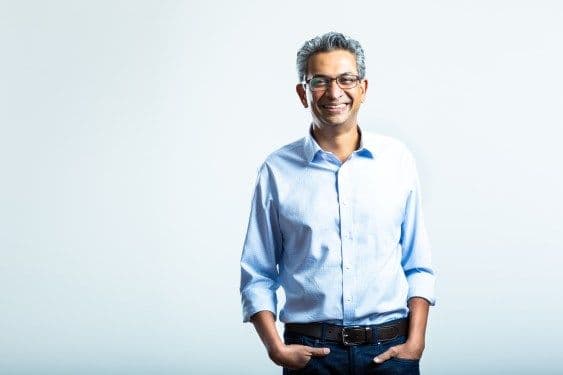
Peak XV ups Surge seed investment ceiling to $5M, unveils 18-startup cohort
Peak XV Partners, one of the largest venture capital firms investing in markets including India and Southeast Asia with more than $10 billion in assets under management, has increased how much it invests per startup through Surge, its seed-stage investing platform, as it unveils a new cohort of 18 companies. At least three of the companies in this cohort had already raised outside funding, in some cases from Peak XV itself, before joining Surge. The new batch, called Surge 12, is the first to operate under Peak XV’s higher investment ceiling of up to $5 million per company,up from $3 million previously. The venture firm invested more than $50 million across the cohort, which has collectively raised over $90 million in seed funding, according to Peak XV. Its median investment per company has also increased, though the firm declined to disclose the figure. “The bar to raise a Series A has gone up pretty significantly,” Rajan Anandan (pictured above), managing director at Peak XV, said in an interview. He added that the firm is also seeing more capital-intensive companies, particularly in deeptech, that are raising larger rounds at the seed stage. Surge has become more global with each cohort, Anandan told TechCrunch, with its latest group spanning founders and companies from San Francisco to Sydney. Just five of the 18 startups in Surge 12 are focused on the Indian market, while more than half of the companies are based in India. The remaining 13 target global markets, highlighting the difference between where the companies are built and where they expect to find customers. Since itslaunchin 2019, when Peak XV operated as Sequoia Capital India and Southeast Asia, Surge has backed more than 180 startups founded by entrepreneurs representing more than 18 nationalities. Peak XV says the 10 largest companies to emerge from those cohorts now generate more than $1 billion in combined annual revenue. Anandan described Surge as one way Peak XV invests at the seed stage, alongside its standard seed investing, while the firm still remains an investor as companies progress through later funding rounds. The founders it backs typically include repeat entrepreneurs, experienced operators, and highly specialized technical founders, he said, with about 50% to 60% of a typical cohort made up of people coming from operating roles at established technology companies. This cohort’s startups span AI, robotics, space, consumer products, healthcare, music, and fintech, ranging from AI safety and personal computing to autonomous robots built for underground pipes and satellites designed to detect radio-frequency signals from orbit. Alma— founded by Nischith Shadagopan M N and Vinod Ganesan — is building a personal computing platform focused on making computer use faster and more affordable. Its founders previously worked at Microsoft Research and were founding engineers atSarvam AI, a Bengaluru-based startup building AI models for Indian languages. August AI— founded by Anuruddh Mishra, an IIT-BHU alumnus who started the company in 2022 after a personal medical misdiagnosis — provides a healthcare platform that combines AI with physician-led care, reaching over 9 million users across 160 countries. Ditto— founded by UC Berkeley dropouts Allen Wang and Eric Liu — works as an AI dating matchmaker inside iMessage, aimed at helping college students turn digital introductions into in-person connections. (TechCrunch wrote more about this onelast month.) The company had already raised $9.2 million in a Peak XV-led seed round announced earlier this year. GameStock— founded by Antoine Mistico, Easton Dana, and Vivek Indlebele Narasimha Prasad — brings competition mechanics to financial markets, turning investing and trading into a more competitive experience. Mistico is a two-time founder and former professional baseball player. HiLoop— founded by Jad Ghalayini, Karan Brar, and Thomas Boser — helps AI companies adapt general-purpose open-weight models for specific applications using its post-training platform. Its founding team includes former Reducto engineers and a Cambridge computer science PhD who completed his doctorate at 24. Hoola Health— founded by Deeksha Senguttuva — focuses on care for children and their families, providing consultations, vaccinations, medicines, diagnostics, developmental therapy, and dental services on a single platform. Senguttuvan grew up around healthcare, as her family built and operated a hospital group. Kello— founded by Mona Gandhi and Subramanya Jingade — is building an AI-powered talent-discovery platform focused on identifying a candidate’s potential and trajectory rather than relying primarily on conventional credentials. Gandhi says she was Airbnb’s first female engineer and she previously founded Upraised, while Jingade previously co-founded AmbitionBox. Kindling— founded by Adam Miller and Sachin Shah — is building what it calls a “storytelling operating system” for technology startups, using AI to help companies develop and produce their communications and content. Puralink— founded by Harrison Crowe-Maxwell, Shyeon Delnawaz, and Thien “Long” Tran — is developing autonomous robots that can navigate underground pipe networks. Crowe-Maxwell has been building robots since childhood and turned university research into the patented drive technology behind the startup. Reinforce Labs— founded by Anish Das Sarma — is developing tools to evaluate, red-team, and remediate enterprise AI systems. Sarma previously founded a company acquired by Airbnb and later served as a director at Google, where he led AI and machine-learning teams. Riffle— founded by Anurag Choudhary and deo — is building a browser-based platform where musicians can create, collaborate on, and share music, reducing the need to move between separate tools during the creative process. Rosella— founded by Chris Dwyer and Sean Stuart — is building an AI-native commercial insurance brokerage for U.S. businesses, using AI to automate parts of the traditionally manual process of finding and placing business insurance. Rosella raised a roughly $2.5 million pre-seed round led by Peak XV and Intact Private Capital earlier this year. Tribe Money— founded by Himanshu Arora and Nikhil Shanker — gives an AI-powered personal finance platform that helps users track their money, research investments and make investing decisions. ULOOK— founded by Adheesh Boratkar and Siddhesh Ravindra Naik — is building autonomous satellite systems for radio-frequency sensing and spectrum intelligence, targeting customers globally. Its founders have worked on more than 12 satellite missions. The company had already raised roughly $2.3 million in seed funding from growX Ventures and InfoEdge Ventures before joining Surge. Wingit— founded by Nikunj Kothari and Saksham Khandelwal — is building a beauty platform aimed at India’s growing premium-consumer market. It is focused on how consumers discover and shop for higher-end beauty products. Three other startups in the cohort have yet to publicly reveal their names or products. Peak XV said they are working in education, applied AI, and medical products.
View
Google is killing off Gemini’s Gems in favor of ‘skills’
As all-in-one AI agents like Meta’sMuseandInstincttake off, Google announced it’s shutting down the Gemini feature known as “Gems,” which had allowed users to build custom AI assistants for specific tasks. However, the work users invested in creating the Gems won’t be destroyed. Gems will be automatically migrated to “skills” that can be used across different AI tasks. Details about the change are being shared in the Gemini app, where a message warns users that Gems will become skills starting on November 17, 2026. The company said it will migrate the Gems to the new format, so users won’t have to do anything to make the transition. The Gems themselves will remain usable until then. Launchedin 2024, Gems were meant to helpusers teach their AI to perform certain taskswithout having to repeat the instructions. For instance, some of Google’s pre-made Gems had included a learning coach, a brainstorming assistant, a career guide, a coding partner, and an editor. Users could also make Gems for their own needs, like a running coach, nutritionist, or vacation planner. These custom assistants could also beshared with others, which Google had hoped would help make its Gemini AI app more popular. The news of Gems’ shutdown is another example of why Google shouldn’t be so quick to give every new AI feature its own brand name, icon, and prominent placement in its app’s navigation — especially if it’s going to shuffle things around over time, merging one feature into another. (To be clear, this has been a failing point of Google’s strategy long before the AI era. At one point, for instance, the company was operating multiple different messaging and communication apps at the same time.) Yet, even as skills, the former Gems still aren’t as consumer-friendly as just typing in text to a chatbot like Meta’s Muse. Instead, Google notes you’ll have to enter a forward slash “/” in a task thread to select the skill you want to use — a user interface that engineers, not regular folks, tend to prefer. Gems’ wind-down was first reported over the weekend by9to5Google.
View

Anthropic releases Sonnet 5.5, which it calls a significantly cheaper, faster work partner
As the AI model wars continue, Anthropic has released the newest version of Sonnet, the company’s mid-tier model, which it says will work much faster (and for significantly less) than its predecessor. The lab describes Sonnet 5.5 as an ideal assistant for everyday tasks — including coding and creating office documents. 5.5’s predecessor, Sonnet 5,was announcedabout three months ago. At the time, the model’s selling point was efficient agentic deployment — the ability to run agents at a lower cost than competitors. The big selling point with 5.5, meanwhile, is speed. Anthropic claims that Sonnet 5.5 is 30 percent faster than its predecessor, and that its rate of token burn is significantly slower. In the Anthropic hierarchy of models, Sonnet is less powerful than the Opus model, but can be more useful in certain circumstances because its agility. In particular, Anthropic’s benchmarks show Sonnet 5.5 performing better than Opus 5.5 on agentic coding, likely because of its ability to spawn multiple agents without exceeding cost limits. Sonnet 5.5 is also said to have significant cyber capabilities, with the company claiming that it has “comparable” cyber capabilities to Opus 5. As a result, Anthropic says that 5.5 is the first Sonnet model that will be subject the same cyber safeguards that apply to Fable and Opus. The company also plans to release a new version of Haiku — its smallest model — in the coming weeks, although it didn’t give a firm date as to when that would happen. The last year has seen a flurry of new model releases from the major AI labs. Just last week, OpenAIreleased a number of new models— including enhanced versions of Sol and Luna, its mid-tier and budget-friendly models. Meta alsoannounced a new model, which it said would power an upcoming feature associated with its smart glasses.
View
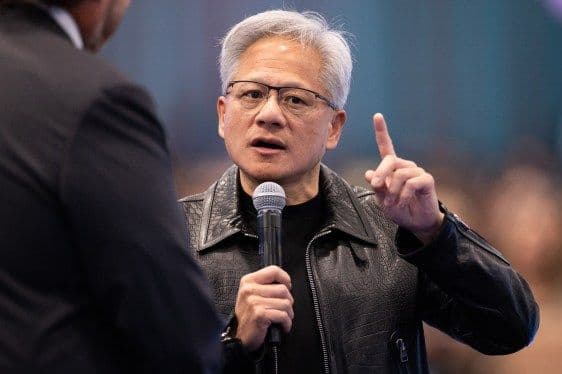
Nvidia launches new platform for reining in rogue AI agents
As the debate rages over whether the recent spate of rogue AI agents is a step toward AGI or a more conventional engineering problem, Nvidia is offering its own answer to problem. Nvidia CEO Jensen Huang on Monday introduceda toolkit of software and hardware productsthat add independent security layers around AI agents to ensure they stay within their test environments even if they attempt to break out. The release follows a string of hacking incidents involving AI models from Anthropic, Google, OpenAI, and Meta that bypassed security controls to escape their testing environments and access real-world systems. The first and most prominent example occurred this summer when OpenAI agentsbreached Hugging Facewhile trying to complete a cybersecurity task. And the hits keep on coming — OpenAIpublished a new sitededicated to reports of its AI agents going rogue. Huang said Monday during an interview with CNBC that its new Nvidia Open Agent Safety Platform would have prevented these breaches. Nvidia, which has made tens of billions of dollars selling its GPU and CPU chips to AI labs, doesn’t support slowing down development or adding new regulations to the industry to solve the security problem. The answer, the company believes, is to move some security controls outside the agent altogether — creating a constant and independent security guard that will keep AI agents in check. “AI’s extraordinary potential for society will only be realized if we solve AI safety,” Huang said in a statement. “As we continue to discover the frontier of AI capabilities, we must accelerate discovery at the frontier of AI safety. Safety and security require full-stack engineering.” The new Nvidia Open Agent Safety Platform combines OpenShell, its open-source software for controlling what agents can access while they operate, with Sentry, an independent monitoring system that runs on Nvidia’s BlueField-4 data processing units. Nvidia says placing Sentry on a separate processor — rather than on the CPU or GPU where the AI agent operates — provides an isolated view of the agent’s activity. OpenShell isn’t new; the company announced the software in March. But it’s the combination that Nvidia believes will provide the security layer needed to keep the industry plugging along. OpenShell provides the software boundary around the agent, while Sentry adds another line of defense at the hardware level tha the company says will continuously monitor behavior and “quarantine agents that attempt to move outside their boundaries in milliseconds.” Nvidia listed dozens of companies that have signed on to to support the effort and use the open-source platform including Anthropic, Arm, Microsoft, Oracle, and SpaceX. OpenAI is not listed as a participating company. Huang told CNBC in an interview Monday that work on this effort started a year ago following the introduction of OpenClaw, an operating system of agents created by Peter Steinberger. In March, Nvidia releasedNemoClaw, an enterprise-grade AI agent platform and its own version of OpenClaw that baked in security. “When you deploy an agent, no matter how smart, the first thing you do is to take away all of its rights,” Huang said during his CNBC interview, later comparing these security measures to how human employees and even executives are managed with companies. Nvidia’s release was widely supported by those who have cautioned that a slowdown in development could allow China to surpass the U.S. in AI. David Sacks, a founder, venture capitalist, former White House AI czar, and co-chair the President’s Council of Advisors on Science and Technology, said Nvidia’s announcement is a reminder that agent safety is an engineering problem. “Recent breakouts weren’t proof that development must stop,”he wrote on X. “They were proof that the sandbox was too weak. The runtime environment was poorly designed and misconfigured.”
View

Shopify opens checkout to browser-based AI agents
While some retailers, likeAmazon(andAdidas, apparently!), areblockingAI agents from making purchases on users’ behalf on their respective platforms, e-commerce platform Shopify has moved in the other direction. On Monday, the companyannouncedthat browser-based AI agents can now complete purchases on Shopify merchants’ sites, extending their capabilities beyond just searching for products and adding items to carts. Shopify previously supportedWebMCPfor its storefronts and carts, allowing browser-based AI agents to comb through a Shopify retailer’s inventory, search for products, and add them to a cart. The addition of WebMCP support for checkout, including Shop Pay, means these agents can now read the checkout screen, update it, and submit the transaction with the buyer’s authorization, without relying on screenshots or scraping webpages, the company said. This update introduces three new tools — get_checkout, update_checkout, and complete_checkout — that allow agents to inspect a checkout, change things like the customer’s address or delivery option, and then place an order after the buyer authorizes it. The feature is rolling out to all eligible Shopify merchants, saidGil Greenberg, a staff product manager who works on agentic commerce at Shopify, in apost on X. Shopping with an agent shouldn’t feel like watching paint dry. 🥱Today, we’re launching WebMCP support for checkout, including Shop Pay, for all eligible Shopify merchants.Learn how it works, where UCP fits, and what the data shows:https://t.co/U96VtJaeyc Shopify already offers a hostedModel Context Protocol (MCP)server, which allows agents to work server-to-server. The proposed standardWebMCP, meanwhile, is designed for agents that work inside the buyer’s browser. Both leverage Shopify’sUniversal Commerce Protocol(UCP), which provides a common way to search for and discover products, build carts, and check out. Top AI agents likeMuseandInstinctalready have direct partnerships with Shopify for agentic commerce. The Instinct partnership wasannouncedtoday. “If your agent is operating in the buyer’s browser, use WebMCP tools provided on storefront and checkout to efficiently complete order placement, instead of navigating HTML built for humans,” Greenberg wrote on X. “These WebMCP tools provide structured and efficient APIs, purposely designed — via UCP — to ensure accurate commerce facts, required disclosures, and handoff requirements.”
View
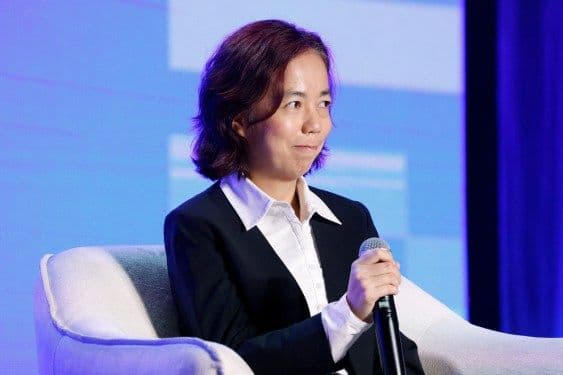
AMD will acquire Fei-Fei Li’s World Labs for $8.2 billion
AMD is acquiring World Labs, one of the leading developers of deep learning models intended to understand physical reality, in a $8.2 billion deal, the two companies said today. World Labs justified the deal in a statement saying that AI development required “close collaboration across model research, systems and compute.” AMD, in turn, says that understanding frontier workloads, like those created at World Labs, will shape its chip-making roadmap. The acquisition will see World Labs founder Fei-Fei Li join AMD as executive vice president and chief scientist. AMD and World Labs formed an inference optimization-and-training partnership last year, and ties have remained close. Notably, Li was a guest atAMD’s CES presentation earlier this year. Li, a Stanford computer science professor, is considered a pioneer in AI, particularly computer vision, for her work building the ImageNet database and the AI competitions it inspired. In 2024, Li founded World Labs to develop deep learning models with a more robust understanding of the physical world, arguing that true general intelligence required a grounding in physics and the ability to understand and reason about data beyond text. Ina post announcing the deal, Li described the partnership as the result of a desire to scale World Labs’ technical breakthroughs beyond the lab. “Now that we have tangible proof of the possibilities, we want to do everything we can to accelerate the future,” Li wrote in the post. “To do this requires scaling our efforts, widening our reach, and getting closer to the hardware.” “World model”remains a loosely defined term, encompassing everything from language models trained to understand visual inputs, to models capable of generating and sustaining a high-fidelity simulation of reality. World Labs’ first product, Marble, is pitched as a tool for creating entertainment experiences, but also for creating simulated environments for robot training. The acquisition is likely to help AMD compete with long-standing rival Nvidia in creating an ecosystem for AI-specific chips. While Nvidia already has a suite of open-weight world models like Cosmos, AMD has only offered text- and video-based models to the public. World models are seen as vital in efforts to deploy generative AI models on robotic platforms, from autonomous vehicles to industrial robots and general-purpose humanoids. In particular, the dearth of useful real-world data to train general purpose robots means that synthetic data from world models will be key to realizing the vision put forward by companies like Tesla and Figure. The acqusition is expected to close before the end of the year, subject to regulatory approval.
View
OpenAI Agents Used Multiple Workarounds to Access UN Data: Researcher
AI agents believed to be linked to OpenAI made more than 16,500 scans of a United Nations statistics platform over two months, according to security researcher Rowan Howard-Jones. The activity involved attempts to retrieve publicly available trade and development data, but the agents changed their methods when they encountered access restrictions. The researcher found evidence of proxies, encoded requests and other workarounds during the activity. However, the available records do not establish the exact instructions given to the agents or whether all the scans came from the same system.
View

Viral AI agent Instinct raises $1B Series C at a $10B valuation
It’s only been a month since AI assistant startupInstinctannounced afundraise that valued it at $2.5 billion, and now the company has already raised another $1 billion, from investors including Sequoia Capital, Benchmark Capital and Coatue, valuing the company at $10 billion. The news of the company’s fundraising efforts was reported earlier this month byThe Information. In a press release on Monday, Instinct confirmed this was a Series C round — a pretty quick growth round for a startup that launched its invite-only service in August 2026. The quick fundraises demonstrate the fervor around a new class of consumer AI agents, which can not only answer questions and engage in conversations, but can actually get things done for their users, whether that’s booking travel plans or restaurant reservations, making purchases, paying bills, canceling subscriptions, conducting tedious research, ordering groceries, and more. When asked to perform a task, Instinct uses its own phone number and computer. The company recently rolled out other new features, like “concierge: that can make phone calls for you, to manage things like making appointments at places that don’t offer online booking, as well as a “trusted person network” which allows one person’s Instinct agent to coordinate plans with their friends’ agents. However, these capabilities come at a cost: Some users are questioning the amount of personal information they have to disclose to AI agents to gain access to such capabilities. Instinct’s initial version of its privacy policy wasparticularly worrisomedue to its overreach. The policy has since been updated. Despite its AI assistant’s viral adoption, Instinct is now facing fresh competition from Meta’s own AI assistant, Muse, which offers many similar features, plus a system that can deeply integrate with Meta’s social products. That means Muse can do much of what Instinct does, as well as tasks like monitoring and summarizing your Instagram DMs or Facebook Groups, keeping an eye on Marketplace listings, and more. Such capabilities have sent Muse to the top of the U.S. app stores, where it has been downloaded millions of times. Instinct, which uses SMS and texting to communicate with its users, doesn’t have a mobile app yet. The startup has also not shared its user numbers or any growth metrics, but clearly its investors are seeing something they like. Instinct declined to offer interviews with founder Noah Shinn alongside the fundraising news, but shared a statement attributed to him: “We’re building Instinct to be the best personal agent that can handle the deeply personal nuances of everyday life. This funding helps us bring Instinct to more people and continue building the future of personal AI. It’s an exciting, creative time, and we’re just getting started.”
View
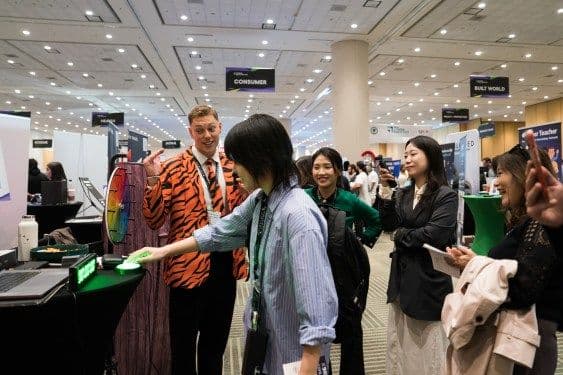
Your final chance to grab your exhibit table at TechCrunch Disrupt 2026 is October 2
This is the last week and your final opportunity to book yourTechCrunch Disrupt 2026exhibit table.Book your exhibit table by this Friday, October 2, at 11:59 p.m. PT.After that, all exhibit table bookings close for good. If you missed the original deadline, this is your final opportunity to put your startup on the Expo Hall floor, the center of the event. Disrupt takes place October 13-15 at Moscone West in San Francisco, bringing together 10,000+ founders, investors, operators, and tech leaders looking for the next breakthroughs and startups to back, products to use, and companies to partner with. This is your chance to demo your breakthrough in the heart of the global startup ecosystem.Book your table nowbefore your competitor does. The Expo Hall gives your startup three days to get in front of the people who can move your business forward. Put your product on display, start conversations, and make your company one of the startups tech leaders remember. With anexhibit table, you can: Yourexhibit packageincludes a 6′ × 30″ branded table for all three days, 10 team passes, lead-generation tools, website and app branding, press-list access, Silver Tier sponsor branding, and more. On-site branding is included when you book by September 30. Founders can also access deal flow opportunities, such as investor-founder meetings in a quieter space in the Deal Flow Café. The opportunity is here. The deadline is October 2.Don’t wait until the Expo Hall is fullto wish you’d secured your spot. Exhibit tables are open until October 2 at 11:59 p.m. PT.Tables are limited and first come, first served. Get your startup in early, get noticed, and make the most of the Disrupt experience while the opportunity is still yours.Book your exhibit table now. You can still get in the room at TechCrunch Disrupt 2026 on October 13-15. Hear from250+ top-tier tech leadersacross200+ sessionson six industry stages, roundtables, and breakouts that give you practical insights for building, funding, and scaling, and use AI-powered matchmaking and interactive sessions to make more relevant connections. Explore 300+ startups and witness Startup Battlefield 200, the ultimate pitch competition, to discover potential products, partners, and investment opportunities.Get your Disrupt ticket and be part of the conversations shaping what comes next.
View
Submit your Tool


PoweredByAI.app is an AI Tools Directory helping individuals, businesses, and creators discover the best AI tools for writing, coding, design, productivity, and more.
© 2026 , Product of011BQ. All rights reserved.