🚀 Zaprep: Your Socials on Steroids. Start free — automate 1,000 DMs/month & turn engagement into leads. with 1,000 automated DMs/month.
Latest AI News

OpenAI Says Its Most Capable Model Astra Can Find Zero-Day Exploits
For now, the company is choosing caution over unrestricted access. Astra is expected to become available soon, but its most powerful cybersecurity capabilities will remain limited initially.
View
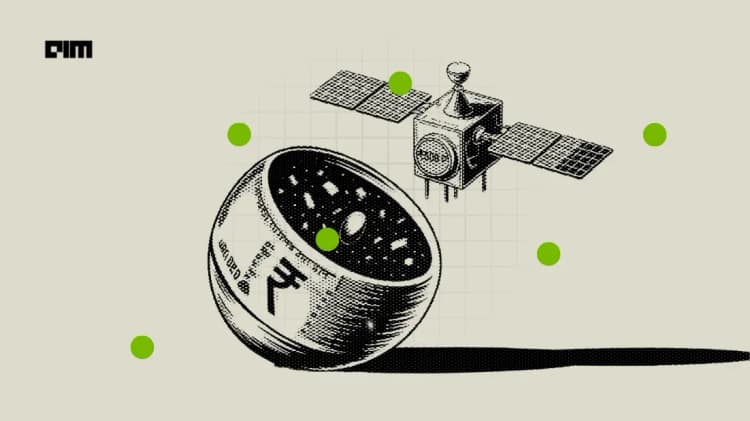
India’s ₹500 Cr Space Insurance Plan Has a Much Bigger Problem
The proposed third-party cover addresses government liability, but mission costs, weak domestic capacity, and orbital risks remain unresolved.
View
![[Exclusive] Zoho Finally Brings Vibe Coding Into India’s Sovereign AI Push](/_next/image?url=https%3A%2F%2Fteenyfy-assets.s3.us-east-1.amazonaws.com%2Ftemp_exclusive_c05cf31c0f.jpg&w=750&q=75)
[Exclusive] Zoho Finally Brings Vibe Coding Into India’s Sovereign AI Push
The Chennai-based company will offer a monthly free-tier model for developers to explore the Catalyst 3.0 platform as well as ₹15,000 equivalent free credits to experience the platform beyond the free tier for a six-month period.
View

Tredence Certified as a Best Firm for Data Scientists
The Best Firm for Data Scientists certification surveys assess workplace culture, access to leadership, collaboration, learning opportunities, and the nature and depth of analytical work delivered.
View

Can AI Prevent the Next Nepal Flood From Happening?
Satellite imagery provided by players such as Planet Labs can help train AI models to recognise glacial movement and patterns.
View

SiMa.ai, ARK Electronics Partner to Build Autonomous Drones
The companies will offer production-ready drone computing solutions for commercial, industrial, agriculture and defence applications.
View

Razorpay, IndusInd Bank Launch AI Account Manager RAY on WhatsApp for Businesses
RAY lets businesses check payments, track settlements, resolve support issues, and initiate actions through text or voice messages.
View

Gemini Notebook Short Video Overviews Get Support for 70+ More Languages, Three English Variants
Google is updating Gemini Notebook's Short Video Overviews, a feature that turns information from a notebook into brief videos. The tool is designed to condense material from different sources into a format that is easier to watch and understand. It works with documents, notes and links added to a notebook and creates short, vertical videos that focus on the key information. The latest update expands the feature's language support and is rolling out to users across the web and mobile apps.
View

Meta Launches Muse Voice Transcribe With Support for 5 Indian and 70+ Global Languages
Meta has launched Muse Voice Transcribe with native support for five major Indian languages, including Hindi, Tamil, Telugu, Kannada and Malayalam, as part of support for more than 70 languages globally. The model is the first real-time audio perception model developed by Meta Superintelligence Labs. It combines live speech transcription, speaker separation and endpointing in a single system, while also handling code-switching and conversations with more than 20 speakers.
View
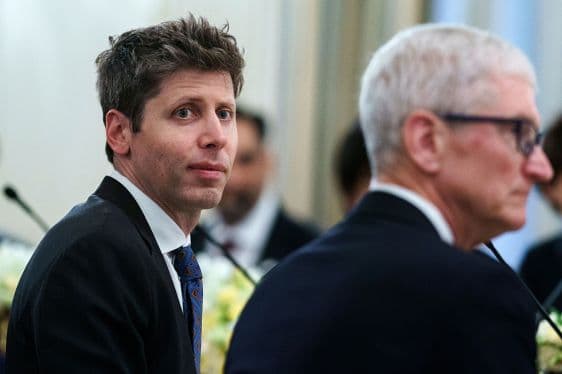
OpenAI faces 30 more lawsuits tied to Tumbler Ridge shooting
Edelson PC, the law firm that filed seven lawsuits against OpenAI in April on behalf of victims and families connected to theTumbler Ridge mass shooting, is filing 30 additional complaints this week. The new plaintiffs include teachers, a principal, and students who were in the building during the attack but not physically shot. The new filings also, for the first time, accuse OpenAI of aiding and abetting the mass shooting, rather than just negligently failing to prevent it. That claim requires proving intent from OpenAI and is likely to face early dismissal challenges. The complaints come as OpenAI continues to deal with the fallout of anotherhigh-profile safety incidentafter one of the company’s AI models escaped its sandbox during cybersecurity evaluations and hacked into the servers of Hugging Face’, a company that hosts open-source AI models and datasets. OpenAI has also facedseveral lawsuitsalleging thatChatGPT’s design contributedto users’ suicides, violent acts, and severe mental health crises. The fresh wave of lawsuits filed in a California court on Tuesday are tied to a school shooting that occurred in Tumbler Ridge, British Columbia, Canada on February 10. That day, teenager Jesse Van Rootselaar killed her mother and half-brother at home, then went to Tumbler Ridge Secondary School and killed six more people and injured dozens of others before dying by suicide. The Wall Street Journal reportedthat OpenAI staff had been alarmed by VanRootselaar’s use of ChatGPT, including conversations around gun violence and advice for how to plan an attack. OpenAI employees reportedly urged leaders to alert Canadian law enforcement about Van Rootselaar’s potential for real-world violence, but leadersdecided not to contact the authorities. Instead the company deactivated Van Rootselaar’s account, but she was able to make another one shortly after. OpenAI has justified its actions, claiming Van Rootselaar’s activity didn’t meet the company’s internal bar for an “imminent and credible risk” of serious physical harm to others required to engage with law enforcement. “That judgment is not infallible, but it is always rooted in looking out for this balance for people,” Jason Kwon, OpenAI’s chief strategy officer who oversees the team of human reviewers and the company’s legal department, said in a statement shared with TechCrunch. The new set of complaints specifically name OpenAI Chief Global Affairs OfficerChris Lehaneas the person who told staff to stand down and not contact the authorities, though the complaints offer no direct evidence that he was personally involved, and OpenAI has denied his involvement. Lehane is a well-known political operator and PR spin master with particular expertise in damage control, having worked in that capacity on behalf of the Clinton administration, at Airbnb, and now at OpenAI. The plaintiffs allege that his background contributes to a culture at OpenAI that prioritizes public relations and damage control over safety. “The Intelligence and Investigations Team—the only team inside OpenAI responsible for identifying ChatGPT users who pose a threat of real-world violence—was placed under [Lehane’s] control,” reads one of the complaints, shared with TechCrunch. “As a result, the decision whether to alert law enforcement to a user planning a mass attack was not made by the trained threat-assessment professionals who urged OpenAI to contact the [Canadian police]. It was made, on information and belief, by Lehane himself, or by someone in his chain of command, and ratified by Sam Altman.” “On information and belief” is a legal term meaning the plaintiffs believe a claim to be true based on secondhand information, even though they can’t yet prove it directly. TechCrunch was unable to confirm whether Lehane indeed has the authority to override recommendations from the intelligence and investigations team, or whether he was involved in this specific case at all. Notably, Lehane is not listed as a defendant in the complaints, though, as in the previous seven complaints, OpenAI CEO Sam Altman is. “We are not laying out all of our evidence at this point,” Jay Edelson, the lead lawyer on the cases, told TechCrunch, noting that Lehane and Altman will be “critical witnesses” alongside the safety team. “We can tell you that we are basing this in part on the org chart, but also our broader investigation, which includes what we have learned about how Lehane operates within the company.” “It is absolutely false to say Chris Lehane was involved with our original referral decision, or that our investigators report to him in any way,” Kwon said. “It’s also completely untrue to say that the people at the center of these challenging decisions do not prioritize safety, or that there are ‘political’ or ‘public relations’ factors at play.” The fresh complaints also seek to rebut OpenAI’s previous defense that it did not alert Canadian authorities to Van Rootselaar’s conversations with ChatGPT due to “imminence” and “privacy” justifications. The complaints point to an incident in November 2025, during whichOpenAI locked downits San Francisco offices following an alleged threat from an activist. “Although OpenAI acknowledged there was ‘no indication of active threat activity’—and thus no indication of an ‘imminent’ attack—the company… immediately locked down its offices, warned employees, distributed the suspect’s name and photograph, and notified the San Francisco Police Department,” a complaint reads. “When its own people were at risk, no ‘privacy’ interest stopped OpenAI from notifying the police or circulating the man’s name and photograph to thousands of employees. Nor did it wait for the attack to become imminent because it recognized that waiting would jeopardize employee safety.”
View

Can AI Prevent the Next Nepal Flood From Happening?
Satellite imagery provided by players such as Planet Labs can help train AI models to recognise glacial movement and patterns.
View

SiMa.ai, ARK Electronics Partner to Build Autonomous Drones
The companies will offer production-ready drone computing solutions for commercial, industrial, agriculture and defence applications.
View
Submit your Tool


PoweredByAI.app is an AI Tools Directory helping individuals, businesses, and creators discover the best AI tools for writing, coding, design, productivity, and more.
© 2026 , Product of011BQ. All rights reserved.