



AI NewsIs bad news for Jensen Huang also bad news for the AI industry?
Is bad news for Jensen Huang also bad news for the AI industry?
3:51 AM IST · November 16, 2026
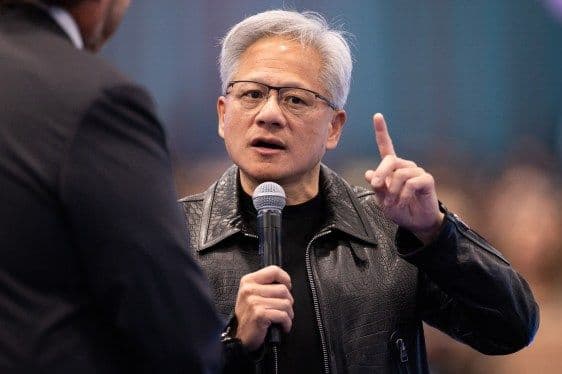
We didn’t see this coming. Or at least,Ididn’t — a week ago, whenI wrote about Nvidia’s board opening an investigationinto then-CEO Jensen Huang, I assumed his job was safe. On the latest episode ofTechCrunch’s Equity podcast, Rebecca Bellan, Tim De Chant, and I discussed how Huang’s ouster went down and what it means for the larger AI economy. While Tim said he saw it coming (albeit not this quickly), Rebecca said, “I didn’t think it was going to happen at all.” “Jensen is Nvidia, right?” she added. “And so much of this economy is riding on Nvidia.” Similarly, I marveled at how quickly Huang’s support seemed to crumble, with more scandals seeming to emerge every day. (At the same time, there aremany who’d still like to see him return.) And we also took a moment to wonder what will happen to Nvidia’s investments in the larger AI ecosystem. Keep reading for a preview of our conversation, edited for length and clarity; you canlisten to the whole episode here. Tim De Chant:I figured this was coming. I didn’t think it would happen this quickly. I thought there would be at least a few days. Rebecca Bellan:I didn’t think it was going to happen at all. I mean, Jensen is Nvidia, right? And so much of this economy is riding on Nvidia. And we’ve got nothing but the last few years of data to show us that billionaires can do whatever the hell they want. So it was surprising to me — it almost restored my faith in humanity, that he resigned. But someone said to me, “If this were Elon, nothing would happen.” He would not be resigning. Nothing would be going down Anthony Ha:Which is interesting, because I would have said, as of a week ago, or even just a few days ago, that Jensen is in the same category as Elon. I mean, no one is quite asspecialas Elon is, but it’s a big, incredibly successful company. Like you said — in a lot of ways, the entire AI economy is built on top of Nvidia. And for most people, Jensen HuangisNvidia. He’s the biggest shareholder. He has family members who work at the company, and probably most importantly, there was no succession plan in place. So this was not something that they were prepared for at all. Rebecca:I think we should actually take a step back, because we just launched into this conversation assuming — rightly so — that our listeners will know what the heck we’re talking about. But for those who somehow don’t, Jensen resigned on Thursday, after it came out he was having an affair with a former executive at an Nvidia customer called Megaspeed, who’s alleged to have ties to Chinese intelligence. And then there was another reported affair with an Nvidia executive. So he’s resigned. Nvidia CFO Collette Kress is jumping in as the interim CEO. She’s a longtime board member. I think it’s always interesting when a CFO steps in to be a CEO. It just means we’re going to manage expenses right now, like that’s the key. Anthony:I think a big part of the message is: This is not necessarily someone you should expect to be in this role for the long term. No disrespect to her, but it feels like a caretaker appointment while they figure things out. Just to get into that backstory a little bit more, what has been really remarkable to me has been this sense that a lot of what ultimately brought Huang down, [that] stuff was at least known in intelligence circles for a while. Apparently, this report that [raises] questions, concerns about his relationship with Alice Huang is something that was circulating a year ago, or close to a year ago. And then suddenly, everything really accelerated, Starting over the weekend, with Jensen Huang admitting to having an affair, the board saying it was investigating, but that it still had a lot of faith in him. And then this week, this other affair being reported on, and it just felt like there was all this bad news coming fairly quickly. But also, it wasn’t this thing that no one had known before. I guess a lot of the general public hadn’t known. So it’s this combined feeling of, “Wow, the ground kind of shifted so quickly under him,” even though the worst stuff, the possibility that somehow national security might have been threatened, is something that actually has been known by the government for nearly a year, if not more. Rebecca:That’s exactly right. Trump was given some warnings about Huang’s affair with someone who has ties to Chinese intelligence, potentially, and it seemed like he didn’t really mind. I think what’s important here, though, is to note that Jensen Huang has been an advocate for loosening chip exports to China. And so this is where the crux of it is. Can anyone trust him as the CEO of this company when he’s advocating for loosening chip exports to China? Which a lot of people believe is a national security issue, because that means it will give Chinese AI companies access to our powerful chips, which will help them improve their AI, which could threaten America. I mean, there’s two sides of this coin. And I think, honestly, that Jensen does not need a woman to tell him that — he just wants to sell more chips, and to anybody and everybody, and whether or not that’s good for national security or not, I think is honestly secondary to him. Tim:I completely agree. I think the big turning point seems to happen on November 9 — so that would have been earlier this week, Monday, when the Bloomberg report came out and suggested thatNvidia’s head attorney had some rolein inquiring about the Department of Commerce’s investigation into Alice Huang. Things seem to have accelerated in the last few days following that. And I don’t know what role exactly that report played in it, but it seems to be maybe there was a shift within government or within the board, a kind of a daunting realization of the extent to which this had spread just beyond Jensen and some affair. Anthony:There’s also just the question of: What does this mean for Nvidia? What does this mean for the broader AI industry? And one of the reasons those two things are very tightly connected is not just Nvidia chips themselves, but also the fact that under Jensen Huang, the company has invested very, very heavily in a number of AI startups. People talk about the idea of an AI circular economy, and I think Nvidia has been one of the biggest players in that, in terms of both funding a lot of things, [but] also, obviously, providing the infrastructure for a lot of AI projects. So if Nvidia is going into this stage of lockdown, circle the wagons — even if it just means a small pullback, that could have really dramatic repercussions. Rebecca:Yeah, that’s what I want to know: What happens to the Bank of Nvidia without Jensen? Is he the one leading this? Just to throw some numbers at you, Nvidia apparently accounts for roughly 80% of the AI GPU market. It reported $99 billion in investments and another $25 billion in commitments, plus $36 billion dollars in cloud service commitments. A lot of those include investments into CoreWeave, Nebius, OpenAI, Anthropic, major data center projects. They’ve got their fingers in literally everybody’s pie.
read more






 , Product of