Pre-Black Friday Sale is LIVE! Get Up to 85% OFF AI Tool Listings + 50% OFF All Sponsorships.
Grab the DealSubmit your Tool
PoweredByAI.app is an AI Tools Directory helping individuals, businesses, and creators discover the best AI tools for writing, coding, design, productivity, and more.
© 2026 , Product of011BQ. All rights reserved.

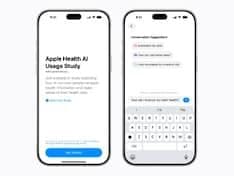
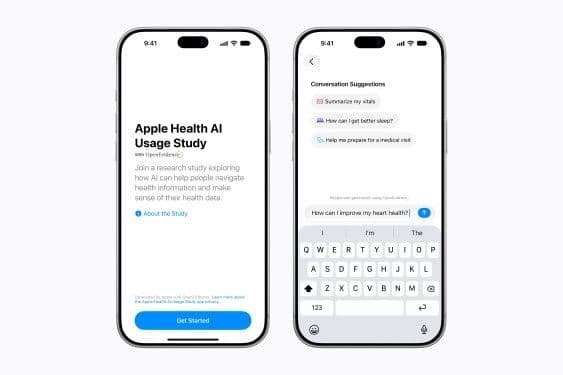
Apple has launched a US research study with clinical AI platform OpenEvidence to explore how people use AI for health information. The company says the study will examine how users assess AI-generated responses and whether access to personal health data can make them more relevant. Participants will use a dedicated iPhone app to ask health-related questions and rate the responses. The Cupertino-based tech giant plans to enrol up to 200,000 people aged 21 and above.
View

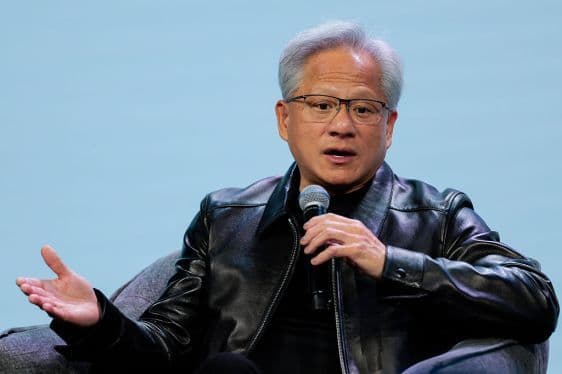
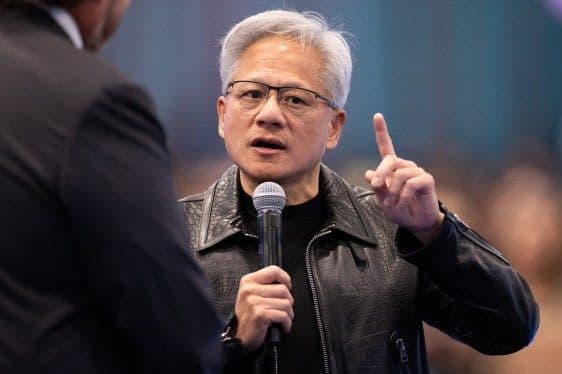
It was the resignation heard across the world. Jensen Huang, Nvidia’sembattled CEOwho co-founded and led the company for 33 years,had officially stepped down. “It’s like a bomb went off,” one neocloud founder told TechCrunch when he first heard the news. Over the last several years, Nvidia has been aprolific investor, pouring tens of billions into startups annually and participating in 105 rounds this year alone, often as the largest investor, according to PitchBook. “If that direction changes, it’ll be a big blow to so many young companies,” said Maria Davidson, founder of Relational Capital. Huang’s absence leaves the startup ecosystem without one of its biggest champions and with far less capital for now, investors say, which could have a massive impact on dealmaking, valuations, funding, and even competition. “Nvidia is carrying almost every AI-native startup from application to neocloud,” Dawn Capital’s Shamillah Bankiya told TechCrunch. Most of the significant decisions to invest in startups often came from Jensen himself, according to Umesh Padval, managing partner at Seligman Ventures. Padval has known Huang since serving on the board of Mellanox Technologies, a networking chipmaker Nvidia acquired for approximately $7 billion in 2020. While there is hope that Huang’s eventual successor will resume his dealmaking spree, investors aren’t hopeful that it will happen in the short term. Nvidia’s interim CEO, Colette Kress,is expected to institute some changes, especially when it comes to Nvidia’s investments into AI startups at the crux ofthe billion-dollar data center build-out. Huang’s rampant dealmaking in this sphere has been a source of concern for Wall Street. “She’s much more conservative,” one investor said of Kress. “I don’t think she’s going to commit the same amount of money to keep the early-stage ecosystem going.” Nvidia’s biggest bets were backing neoclouds, inference providers, and open weight models, which are expensive for smaller companies to build. “Jensen’s initiatives are a big reason an ecosystem has emerged despite that,” Zain Javaid, founder of the hardware company Ghost, said. For instance, Nvidia backed CoreWeave when it was still private and participated in two of Crusoe’s rounds, including its $1.4 billion Series E. It boughtHugging Face this year for $13 billion(expected to close in 2027) and holds investments in Mistral AI, Lambda, and Black Forest Labs. Nvidia was often the largest investor in the deals. Last year, it wrote an $800 million check into a $2 billion Series B round for Reflection AI, before the open source startup began to earn meaningful revenue, according to theWall Street Journal. “Jensen believed in open source and frankly speaking, Europe,” Bankiya said of how Huang invested so much in AI across the world. The cease of that support in other regions outside of America, like Europe “would be a massive funding and honestly ecosystem gap that no one can fill.” It’s also true that Nvidia was such a dominant player in the ecosystem that at times, it felt like a monopoly. By backing so many companies with such generous checks, Nvidia effectively locked those startups into using its chips, which helped reinforce its dominant market position. If the company does grow more conservative with its startup investments, that could leave more room for rivals and smaller competitors. (Coincidentally, Googleannounced two new chipsthis week amid Huang’s Nvidia fallout.) Some investors with whom TechCrunch spoke hope that large cloud companies and other chipmakers will step in to back startups and fill some of the void that will likely be left by Huang. Dharmesh Thakker, a general partner at Battery Ventures, for example, expects Big Tech rivals to vie for Nvidia’s investment crown, “depending upon who brings the best combination of a great product, an ecosystem and community to compete with CUDA, and the financial power to bankroll the ecosystem,” he said. CUDA is Nvidia’s software platform that enables developers to run AI models on its GPUs. While companies like Google, Amazon, Microsoft, and AMD may back mature startups to drive adoption of their chips and clouds, Thakker doubts they will pour hundreds of millions into pre-revenue infrastructure startups the way Nvidia did. Under Huang, infrastructure companies that needed $100 million to $500 million in GPUs would often raise half of that amount at valuations of $1 billion or more from Nvidia just to get started, one VC said. The chipmaker’s participation gave other investors the comfort in backing these companies at the lofty valuations. Now Nvidia is expected to be more selective in the new companies it backs, while writing smaller-sized checks into its existing portfolio, contributing to a drop in valuations. “When Nvidia was on the cap table, everyone felt safe,” Padval said. Without that backing, investors say traditional VCs are likely to think twice before writing checks into these startups and may even pause certain dealmaking. Even so, few believe that Nvidia’s investment slowdown will by itself halt the broader AI boom. Though everyone agrees that Huang is a massive loss for Nvidia, one of his ex-employees, Amulya Vishwanath, who now runs her own VC fund, said that “founders and leaders must be held accountable,” and that the ecosystem is bigger than one person. “That talent will, and must, continue to thrive.” This piece was updated.
View

Jensen Huang’s departure from Nvidia has drawn a range of responses across Asia, with some governments moving to confirm chip supply commitments, while others are monitoring the impact on local projects or addressing ongoing investigations. On Sunday, November 8,Nvidia’s board launched an independent investigationafter reports that Huang was targeted by a Chinese spy operation; Huang admitted to an affair with Alice Huang, a former executive at Singapore-based chip company Megaspeed. Nvidia’s influence extends far beyond the United States. The chip giant has built close ties with companies worldwide, particularly in Asia, where many of its key partners play important roles in the global AI industry. China’s foreign ministryrejected allegations on November 10 that a Chinese businesswoman linked to former Nvidia CEO Jensen Huang was a spy, calling them groundless and a smear against Beijing.On Friday, a spokesperson reiterated opposition to export controls that disrupt global supply chains and stated the ministry was not aware of reports linking restricted Nvidia chips to a Shanghai data center associated with Alice Huang. Huang’s exit has also raised uncertainty overmore than $3 billion in Chinese AI computingprojects reliant on Nvidia’s restricted processors, according to Reuters. Many of these chips are subject to U.S. export controls, making them difficult for Chinese companies to obtain. In Singapore, authorities seized the passport of Alice Huang, former CEO of Singapore-based cloud computing company Megaspeed, in June 2025 as part of an investigation into possible false declarations regarding server purchases, according to theMinistry of Home Affairs. The Singapore ministry said police took her passport to ensure she remained available for questioning, as she was not based in Singapore.The investigationexamined whether servers shipped from Singapore to Malaysia were later sent to other countries without proper declaration. In February 2026,police found insufficient evidenceto establish that Alice Huang had committed offenses related to the suspected false declarations, according to the ministry. However, authorities said she had knowingly provided inaccurate information about her role at Megaspeed. She was issued a warning and barred from re-entering Singapore. Her passport was returned that month. Singaporealso said it received limited assistancefrom U.S. authorities despite repeated requests for information about U.S. server maker Supermicro. Singapore’s Ministry of Home Affairs said its investigation into Megaspeed and six other individuals remains ongoing. The ministry didnot identify the six individuals orspecify their alleged roles in the case. South Korea has close ties to Nvidia, with major chipmakers Samsung Electronics and SK Hynix playing important roles in supplying memory chips used in its AI processors. Following Huang’s exit, South Korea’s Science Ministry said Nvidia had reaffirmed its plan to supply 260,000 advanced GPUs to the country and to continue joint AI projects. Apart from that, South Korea’s government AI strategy council held an emergency meeting on Friday to assess the potential impact of Huang’s departure on the country’s AI industry, pera local media report. Taiwan’s Economy Minister Kung Ming-shin said Huang’s departure was unlikely to significantly change the growth of the global AI industry,according to local media. Meanwhile, Taipei’s city governmentsaidNvidia’s planned overseas headquarters in the city remained on track despite the leadership change. The company has met its contractual obligations so far, and officials said they would continue to support the project. In Japan, the Industry Ministry said the government would closely monitor Nvidia following Huang’s resignation, describing the chipmaker as an important player in Japan’s AI semiconductor industry, Reuters reported.Deputy chief cabinet secretary Masanao Ozakisaid it was too early to assess the impact on the global AI industry, while stressing Japan’s commitment to ensuring a stable supply of semiconductors.

Last month, chatbot platform Character.aifiled for bankruptcyjust five years after launching. Soon after, privacy-focused AI assistant Ollieannouncedits shutdown, too, citing competition in the market. “We got close, but ultimately couldn’t keep up,” co-founder and CEO Bill Lennonsaid on X. Aside from Character.ai and Ollie, plenty of AI bets never even survive inside the companies that build them. According toS&P Global Market Intelligence, about 42% of AI initiatives are ultimately abandoned by their corporate parents. The reasons vary: insufficient funding, technical challenges, competition, difficulty scaling, or just weak user demand. The result is a growing AI graveyard. Below is a look at some of the most notable AI products, startups, launches, and bets that have shut down, pivoted, or significantly missed expectations. Think of it less as a scorecard of flops than as a record of what these attempts can (hopefully) teach the rest of the industry. Even the biggest players aren’t immune. OpenAI, one of the most valuable private companies in the world, has had its own share of casualties and missteps. One of the more recent examples was its attempt to turn ChatGPT into a broader “super app.” On July 9, OpenAIupdatedthe app to combine several experiences, including separate “Chat,” “Codex,” and “Work” modes, while renaming the traditional, familiar version “ChatGPT Classic.” The redesign quickly drewcriticismfrom users who found the new interface confusing and cluttered, and OpenAI rolled back the changesoon after, bringing the familiar ChatGPT interface back. That wasn’t OpenAI’s only attempt to pull everything under one roof. The company has also shut down several stand-alone apps and folded their features directly into ChatGPT — a strategy that’s worked out better than the redesign did. ChatGPT Atlas, a stand-alone AI-powered web browser, lasted less than a year before being discontinued on August 9, with its most useful features absorbed into ChatGPT. The company did the same thing withOperator, an AI agent that could browse the web and complete tasks on a user’s behalf, and OpenAI has increasingly built image generation directly into ChatGPT, shrinking the role ofDALL-Eas its own separate destination for creating images. We also can’t forget its video-sharing platform,Sora, which struggled with high operating costs and user-retention challenges and shut down in March 2026. When AppleunveiledApple Intelligence in 2024, an improved Siri was one of the highlighted features. The pitch promised a Siri that could understand context, know what was happening across apps, and get tasks done effectively. However, Apple repeatedlypushed backthe release of the new Siri, citing various reasons likeengineering issues and bugs. This delay eventually contributed to a$250 million settlementover claims regarding how Apple marketed the AI capabilities of the iPhone 16. Siri AI finally appeared in theiOS 27 betathis past July, with the new AI-powered version rolling out to English-language users first this month; support for other languages is expected to follow. Founded in 2021 by former Google researchers Noam Shazeer and Daniel De Freitas, Character.ai was a consumer AI app that let people chat with customizable bots, many of them modeled on celebrities and fictional characters. It raised $150 million at a $1 billion valuation in 2023. Then, the next year, Google paid a reported $2.7 billion to license its technology and bring its founders back into its orbit, leaving the startup to carry on without them. Character.ai has run into a lot of trouble over the years. Families have sued, alleging the chatbots contributed to teen suicides and self-harm, and Disney sent a cease-and-desist letter over unauthorized use of its characters. Character.aibarred under-18 usersfrom open-ended chats late last year and agreed to settle several of the suits, along with Google, in early 2026. But it wasn’t enough. The companyfiled for bankruptcyin early October, citing legal, regulatory, and operational headwinds. In an ironic twist, Disney is now the opening bidder, offering $20 million for a license to some of its intellectual property. The app is still running during the process, and the sale is expected to wrap up by late November or early December. Relay, an AI-powered workflow automation tool built as an alternative to Zapier,shut downentirely in August 2026. The product let users automate email and task workflows using AI agents, but as OpenAI, Google, and other larger platforms built similar automation directly into their own tools, five-year-old Relay struggled to hold on to a reason to exist as a stand-alone product. Ollielaunched in June 2026 as one of the first mainstream apps to achieve SOC 2, a privacy compliance standard. Similar to the other family-focused agents, the idea behindOlliewas that families already have the information they need, but it lives across school messages, calendars, task lists, and group chats. Ollie aimed to bring those pieces together and keep them in sync. It kept track of calendars, emails, reminders, tasks, and other household details, then delivered relevant information to users through text. However, the app faced a very common challenge: keeping up with heavyweights like Muse and Instinct. Co-founder and CEO Bill Lennon revealed the app would shut down on November 6, citing difficulties like being unable to stand out, failing to grow, and not raising enough capital. Announced at its 2024 Build developer conference, Microsoft’sRecall featurewas pitched as an AI-powered “photographic memory” for Windows PCs, periodically taking screenshots of what a user was doing so they could later search back through their own digital history. Predictably, the announcement triggered an immediatebacklashover privacy and security. Critics argued that Recall could create a searchable archive of highly sensitive information, including passwords, private messages, financial details, and other activity. Microsoft delayed the feature for nearly a year, giving the company time to rethink its security and privacy protections. Even after a redesign, the controversy hasn’t gone away. A cybersecurity researcher recently built a tool that couldextract and display datathat Recall had captured, reviving questions about whether Microsoft has actually fixed the underlying problem. Notion Maillaunched in April 2025 as an AI-focused email product designed to help users organize and automate their inboxes. However, the company noticed its users were using separate AI agents to handle their email inboxes instead. As a result, Notion Mail is scheduled to shut down onSeptember 22. TheHumane AI Pinis probably one of the most well-known failures in AI hardware. Designed to provide AI features through a wearable device rather than a traditional smartphone, Humane raised $230 million from investors and garnered significant attention. But the product struggled mightily with performance, and the situation worsened when Humanewarnedcustomers to stop using its charging case because of a potential battery fire risk. Humane then shut down its AI Pin business in February 2025, with most of the company’s assetsacquired by HPfor $116 million. TheRabbit R1was another heavily hyped AI device. Unveiled at CES in January 2024, the AI companion was designed to perform tasks on behalf of its owner. Rabbit said it had sold 100,000 units shortly after launch. However, strong initial sales didn’t mean it was a strong product.Early reviewsdescribed the device as unfinished, with unreliable performance and a limited number of useful integrations. The company hasn’t given up, though. It has continuedupdatingthe R1, positioning it as a computer controller capable of performing agentic tasks. It also recently announced a new hardware project, dubbed “Project Cyberdeck,” aimed at creating a portable device built for vibe-coding. Huxewas an AI audio app, built by former developers of Google’s NotebookLM, that turned written information into conversational, podcast-style audio. The companyshut downin May 2026, partly as larger platforms began offering similar experiences to large existing audiences. For instance,Spotifyhas been expanding its own AI-powered audio tools. Yuppwas an interesting AI product: a free playground that allowed users to compare responses from hundreds of AI models side by side. Users could also vote on responses and earn cryptocurrency through the platform. At its peak, the platform let users test more than 800 models, including from companies such as OpenAI, Google, and Anthropic. But according to its founders, Yupp never achieved strong enough product-market fit to survive. The platformshut downin March 2026. Figgs AI operated from 2023 to 2024, letting users create and interact with customizable AI characters for role-play and storytelling. The platform reportedly drew more than 1 million users, but its developers said keeping the service free became too expensive to sustain, and theyshut it down.

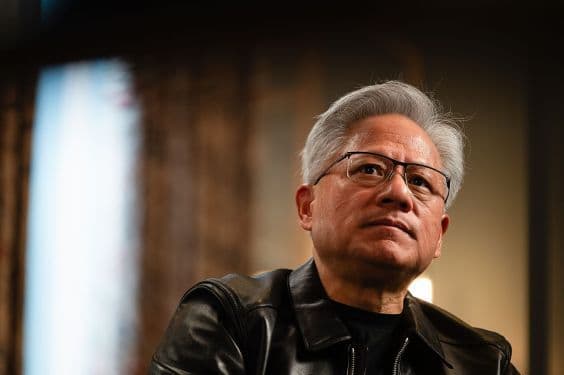
Apetitioncalling on Nvidia to reinstate the company’srecently ousted CEO Jensen Huangappears to have attracted more than 115,000 signatures as of Saturday afternoon. The petition website said the signers include 5,965 current Nvidia employees, 1,108 former employees, and 63,063 shareholders. Notable supporters include Tesla and SpaceX CEO Elon Musk, Replit CEO Amjad Masad, Epic Games CEO Tim Sweeney, and Y Combinator CEO Garry Tan. The petition states that its signers are “concerned that Jensen was removed without meaningful due process” and demands that the board “bring him back while an independent investigation establishes the facts.” It also calls on the board to ensure a fair investigation and provide more information to the public. “Jensen deserves due process, not mob justice,” the petition says. Huang resigned on Thursday, four days after confessing to having an affair with a chip executive suspected by U.S. intelligence to be a Chinese spy. The former CEO has agreed to testify before Congress, while news reports have also suggested thatHuang engaged in multiple extramarital affairs. Nvidia appointed CFO Colette Kress as the company’s interim CEO while it searches for a permanent replacement. Nvidia’s stock price fell sharply through the week, while Huang’s departure is also expected toleave a big gap in AI industry funding.
View

Outsiders had little reason to notice when Nvidia’s longtime chief security officer and head of product security stepped down in August. Just two and a half months later, CEO Jensen Huang himself left the company over growing questions about his extramarital relationships — starting with an executive at Megaspeed, a Singapore data center company that U.S. investigators suspect of funneling Nvidia chips to China, then widening to reports about two separate affairs with Nvidia employees. At the time, David Reber, who spent four years as CSO and seven at Nvidia overall, said he was leaving for health reasons. “This wasn’t a pivot I had planned. But I know what needs to come first: family and health,”he wrote on LinkedInin late August, disclosing that he’d been diagnosed with young-onset Parkinson’s more than two years ago. Reber’s replacement, Saša Zdjelar, previously spent 17 years at ExxonMobil in Houston, leaving as a senior IT manager before spending one year at Salesforce and several years at the cybersecurity company ReversingLabs. Zdjelar didn’t respond to questions Thursday about the transition or what the security team knew. Nothing public connects Reber’s or Zdjelar’s role changes to the Megaspeed matter, but it seems fair to wonder what Nvidia’s security team knew about the government’s scrutiny of Megaspeed and about Huang’s relationships, and whether anyone raised concerns. Reber didn’t respond to questions Thursday. Nvidia also has not answered our related questions. Relationships between a CEO and his employees typically fall to HR, legal and the board, not security. But security specialists say any affair — even one inside the office — can give a foreign intelligence service leverage over an exec who wants it kept quiet. Still, spotting the clues isn’t easy. The way intelligence services collect information, much of it through everyday conversation rather than hacking, makes it especially difficult for security teams to identify risks, according to retired senior intelligence officer Nicholas Eftimiades, who says he has trained more than 1,000 corporate security professionals. Some people inside Nvidia clearly knew parts of the picture. Nvidia’s top lawyer was engaged with the government’s Megaspeed inquiry more than a year ago, The New York Timesreported earlier this week. (Nvidia has said it regularly contacts officials.) Reports about Huang’s relationships with employees suggest colleagues also knew of them, even if the behavior is not expressly forbidden by Nvidia’scode of conduct. The Times cited five Nvidia employees who said he was involved with a vice president who reported directly to him; Reuters, citing two people, later reported a second relationship. What’s unclear is whether any of that reached security. Even if it had, Eftimiades, who wroteChinese Espionage Operations and Tacticsin 2020, told TechCrunch that a security team’s resources are often limited. For one thing, they’re often underfunded because, unlike some other cost centers, they don’t drive revenue. It’s astonishingly common for CEOs to answer a security team’s warnings with “not a nickel more than compliance,” he said. Many companies also define security overly narrowly, specialists say. In an opinion piece inThe Hill, Don Aviv, CEO of the corporate investigations firm Interfor International, and author Jeremy Hurewitz, wrote, “Too many companies still approach security primarily as a matter of protecting facilities, preventing cyberattacks, and responding to physical threats.” The two argued that “[s]ecurity teams need to pay greater attention to insider threats, including the cultivation of executives and employees by foreign intelligence services, suspicious business relationships, conflicts of interest and attempts to obtain sensitive information through trusted personal contacts.” It would be surprising if Nvidia’s security team didn’t have a more expansive remit than most companies given its scale and business partners, but it’s possible. In fairness, some of it is simply beyond what any team can do. Speaking generally, not about Huang, Eftimiades offered a hypothetical in which a CEO complains that he can’t do something because “I’m fighting a board who doesn’t want to do this.” That tells an intelligence asset who the obstacle is. The service then asks, “Who’s the sticking point here?” and looks for ways into that person’s email and phone. What a rival intelligence service wants is often less technology than policy insight, including who’s pushing to change export rules and who the biggest blocker is. “Intel world tends to be like cancer,” he said. “Once it gets into the body, it looks to spread and looks to reach out.” The playbook isn’t new, Eftimiades added, “particularly for China.” Any executive dealing with the country “will tell you that they’ve been approached.” He said there are also “tons of diplomat stories” of U.S. diplomats walking into a hotel room to find a woman on the bed. He said what’s newer compared with Soviet era spying is the relationships these services cultivate now often last years, not weeks. Technology can augment that human intelligence, Eftimiades said, pointing to IMSI catchers as one example. The devices mimic a cell tower so that nearby phones connect to them. A basic version can cost about $1,000 and fit in a suitcase, he said, though government-grade models cost far more, and there were a couple of cases involving Chinese espionage where these factored in last year. Eftimiades says no one knows yet if the devices were used against Huang, whose phone was presumably hardened such that compromises could be detected, if not stopped altogether. But what Nvidia’s security team knew, and whether it could have acted on it, will only become clearer as the board’s independent investigation and federal inquiries proceed. In the meantime, Eftimiades said he hopes the whole episode is “a wake-up call” for U.S. industry, which he said is mostly “clueless” about China’s tactics. “We have lost trillions [of dollars] in intellectual property,” is his guess. “Whatever we think we’re doing isn’t working.”

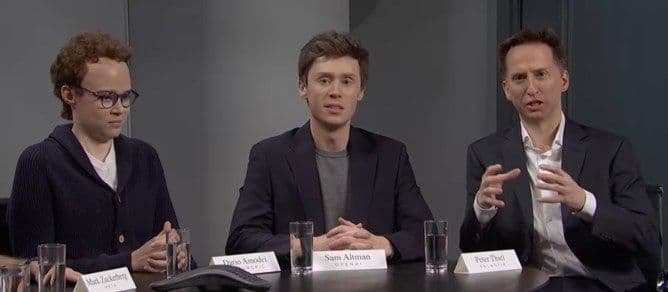
While awkward, creepy tech executives have become arecurringthemeon Saturday Night Live, this week’s episode gave the cast a chance to show off all their impressions at once. In a single sketch, we got James Austin Johnson as Peter Thiel, Ben Marshall as Sam Altman, Jane Wickline as Dario Amodei, Jeremy Culhane as Elon Musk, Andrew Dismukes as Mark Zuckerberg — and eventually, the recently departed Bowen Yang joined the fun as Jensen Huang. Huang’souster from Nvidia(after admitting to an affair with a suspected Chinese spy) could haveserious implications for the tech industry; it also provided a hook for some obvious jokes about rich nerds being easy marks for women (or men) who are out of their league. In the sketch, a CIA agent played by host John Mulaney (hilarious as ever, if not entirely confident about how to pronounce “Palantir” or “Nvidia”) attempts to painstakingly explain why these execs should be suspicious when someone attractive suddenly seems interested in them romantically. For Altman and Thiel’s sake, he added, “I hope this is obvious: Even though you’re gay, you can still be tricked by a spy.” Johnson’s version of Thiel pushed back, insisting that tech tycoons deserve more respect, given all they’ve done for the country. “Name one time technology has let us down,” he said, giving Mulaney a chance to remind viewers aboutflights being halted all across the United Stateson Friday night. “Okay, name one more time,” the fictional Thiel said, leading to an obligatory mention ofMicrosoft Outlook going down on Thursday. When asked for a third example, Mulaney said, “No, I’m done naming times.” “Look, I get it,” he said. “I can’t imagine how disorienting this has been for you, to go from being bug-eyed weirdos to being gods. I mean, never in the history of our species have people as pale and as strange as you a) survived, and b) been given all the world’s wealth and power.”
View

We didn’t see this coming. Or at least,Ididn’t — a week ago, whenI wrote about Nvidia’s board opening an investigationinto then-CEO Jensen Huang, I assumed his job was safe. On the latest episode ofTechCrunch’s Equity podcast, Rebecca Bellan, Tim De Chant, and I discussed how Huang’s ouster went down and what it means for the larger AI economy. While Tim said he saw it coming (albeit not this quickly), Rebecca said, “I didn’t think it was going to happen at all.” “Jensen is Nvidia, right?” she added. “And so much of this economy is riding on Nvidia.” Similarly, I marveled at how quickly Huang’s support seemed to crumble, with more scandals seeming to emerge every day. (At the same time, there aremany who’d still like to see him return.) And we also took a moment to wonder what will happen to Nvidia’s investments in the larger AI ecosystem. Keep reading for a preview of our conversation, edited for length and clarity; you canlisten to the whole episode here. Tim De Chant:I figured this was coming. I didn’t think it would happen this quickly. I thought there would be at least a few days. Rebecca Bellan:I didn’t think it was going to happen at all. I mean, Jensen is Nvidia, right? And so much of this economy is riding on Nvidia. And we’ve got nothing but the last few years of data to show us that billionaires can do whatever the hell they want. So it was surprising to me — it almost restored my faith in humanity, that he resigned. But someone said to me, “If this were Elon, nothing would happen.” He would not be resigning. Nothing would be going down Anthony Ha:Which is interesting, because I would have said, as of a week ago, or even just a few days ago, that Jensen is in the same category as Elon. I mean, no one is quite asspecialas Elon is, but it’s a big, incredibly successful company. Like you said — in a lot of ways, the entire AI economy is built on top of Nvidia. And for most people, Jensen HuangisNvidia. He’s the biggest shareholder. He has family members who work at the company, and probably most importantly, there was no succession plan in place. So this was not something that they were prepared for at all. Rebecca:I think we should actually take a step back, because we just launched into this conversation assuming — rightly so — that our listeners will know what the heck we’re talking about. But for those who somehow don’t, Jensen resigned on Thursday, after it came out he was having an affair with a former executive at an Nvidia customer called Megaspeed, who’s alleged to have ties to Chinese intelligence. And then there was another reported affair with an Nvidia executive. So he’s resigned. Nvidia CFO Collette Kress is jumping in as the interim CEO. She’s a longtime board member. I think it’s always interesting when a CFO steps in to be a CEO. It just means we’re going to manage expenses right now, like that’s the key. Anthony:I think a big part of the message is: This is not necessarily someone you should expect to be in this role for the long term. No disrespect to her, but it feels like a caretaker appointment while they figure things out. Just to get into that backstory a little bit more, what has been really remarkable to me has been this sense that a lot of what ultimately brought Huang down, [that] stuff was at least known in intelligence circles for a while. Apparently, this report that [raises] questions, concerns about his relationship with Alice Huang is something that was circulating a year ago, or close to a year ago. And then suddenly, everything really accelerated, Starting over the weekend, with Jensen Huang admitting to having an affair, the board saying it was investigating, but that it still had a lot of faith in him. And then this week, this other affair being reported on, and it just felt like there was all this bad news coming fairly quickly. But also, it wasn’t this thing that no one had known before. I guess a lot of the general public hadn’t known. So it’s this combined feeling of, “Wow, the ground kind of shifted so quickly under him,” even though the worst stuff, the possibility that somehow national security might have been threatened, is something that actually has been known by the government for nearly a year, if not more. Rebecca:That’s exactly right. Trump was given some warnings about Huang’s affair with someone who has ties to Chinese intelligence, potentially, and it seemed like he didn’t really mind. I think what’s important here, though, is to note that Jensen Huang has been an advocate for loosening chip exports to China. And so this is where the crux of it is. Can anyone trust him as the CEO of this company when he’s advocating for loosening chip exports to China? Which a lot of people believe is a national security issue, because that means it will give Chinese AI companies access to our powerful chips, which will help them improve their AI, which could threaten America. I mean, there’s two sides of this coin. And I think, honestly, that Jensen does not need a woman to tell him that — he just wants to sell more chips, and to anybody and everybody, and whether or not that’s good for national security or not, I think is honestly secondary to him. Tim:I completely agree. I think the big turning point seems to happen on November 9 — so that would have been earlier this week, Monday, when the Bloomberg report came out and suggested thatNvidia’s head attorney had some rolein inquiring about the Department of Commerce’s investigation into Alice Huang. Things seem to have accelerated in the last few days following that. And I don’t know what role exactly that report played in it, but it seems to be maybe there was a shift within government or within the board, a kind of a daunting realization of the extent to which this had spread just beyond Jensen and some affair. Anthony:There’s also just the question of: What does this mean for Nvidia? What does this mean for the broader AI industry? And one of the reasons those two things are very tightly connected is not just Nvidia chips themselves, but also the fact that under Jensen Huang, the company has invested very, very heavily in a number of AI startups. People talk about the idea of an AI circular economy, and I think Nvidia has been one of the biggest players in that, in terms of both funding a lot of things, [but] also, obviously, providing the infrastructure for a lot of AI projects. So if Nvidia is going into this stage of lockdown, circle the wagons — even if it just means a small pullback, that could have really dramatic repercussions. Rebecca:Yeah, that’s what I want to know: What happens to the Bank of Nvidia without Jensen? Is he the one leading this? Just to throw some numbers at you, Nvidia apparently accounts for roughly 80% of the AI GPU market. It reported $99 billion in investments and another $25 billion in commitments, plus $36 billion dollars in cloud service commitments. A lot of those include investments into CoreWeave, Nebius, OpenAI, Anthropic, major data center projects. They’ve got their fingers in literally everybody’s pie.

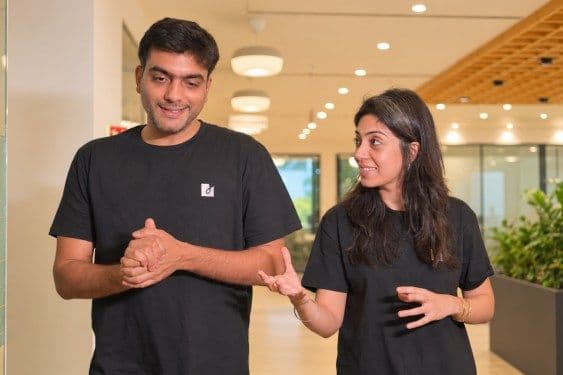
Bharat Semi, an Indian semiconductor startup, has raised $24 million in seed funding to develop AI-enabled image sensors, as it seeks to win customers in the United States and elsewhere. The investment comes as the nearly five-year-old, pre-revenue startup says it has secured design wins with U.S. defense technology company General Atomics and India’s Kaynes Semicon. Its image sensors, however, remain under development, with the startup targeting its initial commercial production in 2027. India hascommitted billions of dollarsto build up a domestic semiconductor industry, with a hope to become an alternative manufacturing hub as U.S. companies look to diversify supply chains beyond China. The country, however, has yet to establish itself as a major chip manufacturing hub. Meanwhile, the AI boom is also giving Indian startups such as Bharat Semi an opportunity to develop specialized chips for global markets. The New Delhi-based startup is developing programmable image sensors that combine image capture, processing, and AI capabilities on a single chip, reducing the need to send visual data to separate processors. The move could cut system costs by at least 70% compared with conventional setups that use a separate image sensor, image signal processor, and a system-on-chip, co-founder Vrinda Kapoor (pictured above, right) said in an interview. “Our aim here is to move from sensors to sense-making solutions,” Kapoor told TechCrunch. Kapoor, a South Park Commons fellow who earlier worked in healthcare technology, co-founded Bharat Semi in late 2021 with Vinayak Dalmia (pictured above, left), the startup’s managing director, who previously worked at McKinsey and in private equity. Its chief technology officer, Boyd Fowler, previously held the same role at image-sensor maker OmniVision. Bharat Semi is targeting smart homes, industrial automation, surveillance, and aerospace. Without disclosing specifics, Kapoor pointed to air conditioners that could detect when a room is empty and adjust automatically and drones that could process visual information — even with the absence of more expensive computing hardware elsewhere in the system. The startup’s first-generation sensors are already in prototyping, while its second-generation sensors, which will incorporate more advanced AI capabilities, are expected to reach the prototype stage by mid-2027, Kapoor said. Moreover, the startup plans to get those newer sensors into customers’ hands by the end of 2027. The all-equity seed round was led by Info Edge Group, South Park Commons, and Indus Bridge Ventures, with participation from Valour Capital, Micromax, Gaingels, and individual investors. Bharat Semi, Kapoor said, plans to use the funding to expand its engineering team, complete product development, and bring its sensors to market. Bharat Semi has about 75 employees across India and the U.S., including 10 to 12 in its American operations, which span engineering and business development in Santa Clara. The startup plans to increase its U.S. headcount to around 20 by mid-2027, Kapoor said. It has also begun hiring engineers in Europe. “It’s a story of can we build a global technology company out of India,” Kapoor said. In 2024, Bharat Semiannounced plans for a semiconductor fabrication projectin India involving a technology partnership with the U.S. Space Force. The initiative, Kapoor said, remains in development and the startup is working to identify domestic partners that would build and operate the facility. The project is separate from Bharat Semi’s image-sensor business, Kapoor added. The startup plans to remain fabless, outsourcing chip manufacturing while focusing on semiconductor design and software. The new funding will not be used to finance the proposed fabrication facility.

Big AI labs likeOpenAIandAnthropichave made their bets on offering chatbots that can answer health-related queries with specialized features. Apple is debuting a new study to understand how people use AI for health. But it isn’t quite following other AI startups just yet; it wants to study how clinically grounded answers can help people. The iPhone maker is partnering with healthcare-focused AI company OpenEvidence to launch a new study app. Apple is inviting users in the U.S. over 21, using iPhone 15 or later, and running iOS 26 or later, with Apple Intelligence enabled. The company is aiming to run this study with up to 200,000 participants for more than 12 months. The new app will allow users to ask health-related questions, as they do with ChatGPT or Claude, with answers grounded in clinical data, from sources including The New England Journal of Medicine, Journal of the American Medical Association, and Nature. Apple said that the app will try to give simplified answers to everyday medical questions. Users can rate those answers and provide feedback about the responses; they’ll also be asked to participate in monthly surveys. Participants can share data from HealthKit such as resting heart rate, activity, sleep, or lab results to get more personalized and pointed suggestions from the app. The company said the app can also help prepare participants better for a doctor’s visit, and it will guide users to specific providers for answers related to concerning medical issues. Apple specified that the data will be anonymized before sending it to a secure third-party cloud provider, and it won’t be used to train any kind of AI models. The company said that OpenEvidence deletes the query and response data after 24 hours. “At Apple, we believe responsible innovation starts with scientific rigor and clinical grounding. Health is deeply personal, and conducting a dedicated research study is the most thoughtful way to understand how people engage with, comprehend, and evaluate health AI in everyday life,” Sumbul Desai, M.D., Apple’s vice president of Health and Fitness, said in a statement, adding, “Insights from this study will help advance the broader scientific conversation and ensure that as technology evolves, we continue building trusted tools that genuinely support people wherever they are on their health journey.” The app isavailable to downloadstarting today for U.S. users. It’s not clear if Apple wants to release AI-powered answering to its Health app or Siri yet. The potential is huge — earlier this year, OpenAI said users were asking over300 million health-related queries each week.

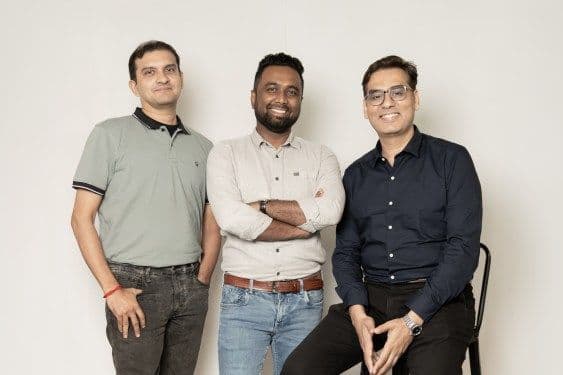
Dreamteam, a startup founded by former Freshworks executives, has raised $53 million to challenge Salesforce and HubSpot with its AI-native CRM, betting that AI can finally shake up a market where established players have so far proved difficult to dislodge. The funding comprises seed and Series A rounds, led by Together Fund and Accel respectively, with participation from Premji Invest. The San Francisco-based startup declined to disclose the size of each round or its valuation. Traditional CRMs depend on salespeople to manually record customer interactions and keep deal information up to date. That often leaves businesses with incomplete or outdated information. Dreamteam aims to eliminate much of that work by automatically capturing context from sources including emails and customer conversations. It also uses AI agents to handle tasks such as follow-ups, meeting preparation, and pipeline monitoring. Dreamteam co-founder and CEO Anand Venkatraman (pictured above, right) told TechCrunch that he had repeatedly encountered problems with traditional CRM platforms over more than 25 years in enterprise software, including at Salesforce and Freshworks. Salespeople spent considerable time updating records, yet managers still struggled to get a reliable picture of their business. “In all these years, I have never come across an instance where I could click a button and get a forecast from the CRM,” he said. That experience led Venkatraman to co-found Dreamteam in 2025 with Senthil Kanthaswamy (pictured above, center), who spent more than nine years at Freshworks, most recently as a product leader at Freshservice, and Ramesh Parthasarathy (pictured above, left), who previously worked on AI and platform engineering at Freshworks. At the heart of Dreamteam’s CRM is what it calls the Company Brain. This acts as virtual memory, pulling together information from emails, meetings, and other customer interactions to build a shared record of customer relationships. Four built-in AI agents use that information to research prospects, draft follow-up emails, flag potential risks to deals, and configure CRM workflows, with sales teams retaining control over what gets sent to customers. Dreamteam has signed up more than 100 customers across 13 countries in the three months since it began actively selling its product, with most paying for the service, Venkatraman said. The startup has also replaced established CRM platforms at several businesses, including Salesforce at healthcare company DMS Health and HubSpot at other customers. The advertising sales team at media streaming company Plex also chose Dreamteam over HubSpot and other AI-native CRM alternatives, Venkatraman told TechCrunch. Plex’s co-founder and chief product officer Scott Olechowski said Dreamteam’s ability to integrate with AI tools already used across the company was a “game changer.” Replacing established CRM platforms at scale may prove more difficult. In a blog post earlier this year, venture capital firm Andreessen Horowitz (a16z)arguedthat while AI could transform how businesses manage customer relationships, existing CRMs are likely to remain the systems where customer records are stored, with a new generation of AI-powered tools capturing much of the value by working on top of them. Venkatraman acknowledged that Salesforce and HubSpot are unlikely to disappear anytime soon, but noted that their entrenched positions do not guarantee they will dominate the next generation of CRM software. “We see this as an electric-car moment for systems of record,” he said, adding that AI requires a fundamental rethink of how CRMs are built — not simply adding new features to existing platforms. Kanthaswamy believes startups have a window of two to five years to gain ground before established CRM providers can fully adapt to AI. Rebuilding software around a fundamentally different architecture takes time, he stated, giving newer companies an opportunity to attract customers while incumbents work to overhaul their existing products. Dreamteam also plans to expand beyond sales into other parts of the customer lifecycle, including onboarding, customer support, and upselling. The startup already has a feature called Magic Apps that allows users to create custom applications and dashboards within the CRM using natural-language instructions, without writing code. Currently, Dreamteam employs more than 35 people, with its engineering team based in Chennai and its go-to-market operations in the United States. Kanthaswamy said the startup aims to reach eight figures in annual revenue by the end of 2027, though he declined to disclose the startup’s current revenue.

Women founders have asked the Karnataka government to make GPUs, hardware facilities, and industry connections more accessible.
View
View
View
View
View
View
View
View