🚀 Zaprep: Your Socials on Steroids. Start free — automate 1,000 DMs/month & turn engagement into leads. with 1,000 automated DMs/month.
AI NewsThe AI graveyard: a running list of projects and startups that didn’t make it
The AI graveyard: a running list of projects and startups that didn’t make it
2:20 AM IST · September 16, 2026

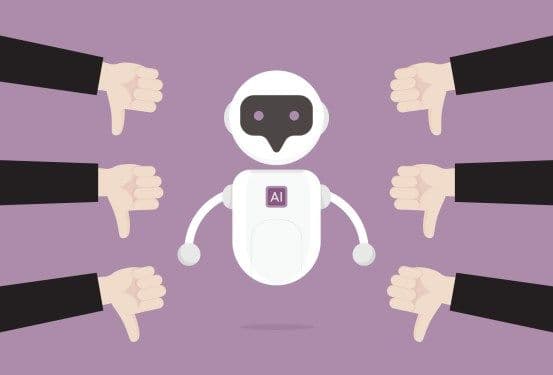
Relay, an AI-powered workflow automation tool built as an alternative to Zapier,shut downentirely on Monday. The product let users automate email and task workflows using AI agents, but as OpenAI, Google, and other larger platforms built similar automation directly into their own tools, five-year-old Relay struggled to hold on to a reason to exist as a stand-alone product. Relay — a startup outpaced by bigger platforms — is one version of the story playing out right now. But plenty of AI bets never even survive inside the companies that build them. According toS&P Global Market Intelligence, about 42% of AI initiatives are ultimately abandoned by their corporate parents. The reasons vary: insufficient funding, technical challenges, competition, difficulty scaling, or just weak user demand. The result is a growing AI graveyard. Below is a look at some of the most notable AI products, startups, launches, and bets that have shut down, pivoted, or significantly missed expectations. Think of it less as a scorecard of flops than as a record of what these attempts can (hopefully) teach the rest of the industry. Even the biggest players aren’t immune. OpenAI, one of the most valuable private companies in the world, has had its own share of casualties and missteps. One of the more recent examples was its attempt to turn ChatGPT into a broader “super app.” On July 9, OpenAIupdatedthe app to combine several experiences, including separate “Chat,” “Codex,” and “Work” modes, while renaming the traditional, familiar version “ChatGPT Classic.” The redesign quickly drewcriticismfrom users who found the new interface confusing and cluttered, and OpenAI rolled back the changesoon after, bringing the familiar ChatGPT interface back. That wasn’t OpenAI’s only attempt to pull everything under one roof. The company has also shut down several stand-alone apps and folded their features directly into ChatGPT — a strategy that’s worked out better than the redesign did. ChatGPT Atlas, a stand-alone AI-powered web browser, lasted less than a year before being discontinued on August 9, with its most useful features absorbed into ChatGPT. The company did the same thing withOperator, an AI agent that could browse the web and complete tasks on a user’s behalf, and OpenAI has increasingly built image generation directly into ChatGPT, shrinking the role ofDALL-Eas its own separate destination for creating images. We also can’t forget its video-sharing platform,Sora, which struggled with high operating costs and user-retention challenges and shut down in March 2026. When AppleunveiledApple Intelligence in 2024, an improved Siri was one of the highlighted features. The pitch promised a Siri that could understand context, know what was happening across apps, and get tasks done effectively. However, Apple repeatedlypushed backthe release of the new Siri, citing various reasons likeengineering issues and bugs. This delay eventually contributed to a$250 million settlementover claims regarding how Apple marketed the AI capabilities of the iPhone 16. Siri AI finally appeared in theiOS 27 betathis past July, with the new AI-powered version rolling out to English-language users first this month; support for other languages is expected to follow. Announced at its 2024 Build developer conference, Microsoft’sRecall featurewas pitched as an AI-powered “photographic memory” for Windows PCs, periodically taking screenshots of what a user was doing so they could later search back through their own digital history. Predictably, the announcement triggered an immediatebacklashover privacy and security. Critics argued that Recall could create a searchable archive of highly sensitive information, including passwords, private messages, financial details, and other activity. Microsoft delayed the feature for nearly a year, giving the company time to rethink its security and privacy protections. Even after a redesign, the controversy hasn’t gone away. A cybersecurity researcher recently built a tool that couldextract and display datathat Recall had captured, reviving questions about whether Microsoft has actually fixed the underlying problem. Notion Maillaunched in April 2025 as an AI-focused email product designed to help users organize and automate their inboxes. However, the company noticed its users were using separate AI agents to handle their email inboxes instead. As a result, Notion Mail is scheduled to shut down onSeptember 22. TheHumane AI Pinis probably one of the most well-known failures in AI hardware. Designed to provide AI features through a wearable device rather than a traditional smartphone, Humane raised $230 million from investors and garnered significant attention. But the product struggled mightily with performance, and the situation worsened when Humanewarnedcustomers to stop using its charging case because of a potential battery fire risk. Humane then shut down its AI Pin business in February 2025, with most of the company’s assetsacquired by HPfor $116 million. TheRabbit R1was another heavily hyped AI device. Unveiled at CES in January 2024, the AI companion was designed to perform tasks on behalf of its owner. Rabbit said it had sold 100,000 units shortly after launch. However, strong initial sales didn’t mean it was a strong product.Early reviewsdescribed the device as unfinished, with unreliable performance and a limited number of useful integrations. The company hasn’t given up, though. It has continuedupdatingthe R1, positioning it as a computer controller capable of performing agentic tasks. It also recently announced a new hardware project, dubbed “Project Cyberdeck,” aimed at creating a portable device built for vibe-coding. Huxewas an AI audio app, built by former developers of Google’s NotebookLM, that turned written information into conversational, podcast-style audio. The companyshut downin May 2026, partly as larger platforms began offering similar experiences to large existing audiences. For instance,Spotifyhas been expanding its own AI-powered audio tools. Yuppwas an interesting AI product: a free playground that allowed users to compare responses from hundreds of AI models side by side. Users could also vote on responses and earn cryptocurrency through the platform. At its peak, the platform let users test more than 800 models, including from companies such as OpenAI, Google, and Anthropic. But according to its founders, Yupp never achieved strong enough product-market fit to survive. The platformshut downin March 2026. Figgs AI operated from 2023 to 2024, letting users create and interact with customizable AI characters for role-play and storytelling. The platform reportedly drew more than 1 million users, but its developers said keeping the service free became too expensive to sustain, and theyshut it down.
read moreLatest AI News
View All News →


Submit your Tool


PoweredByAI.app is an AI Tools Directory helping individuals, businesses, and creators discover the best AI tools for writing, coding, design, productivity, and more.
© 2026 , Product of011BQ. All rights reserved.