Pre-Black Friday Sale is LIVE! Get Up to 85% OFF AI Tool Listings + 50% OFF All Sponsorships.
Grab the DealSubmit your Tool
PoweredByAI.app is an AI Tools Directory helping individuals, businesses, and creators discover the best AI tools for writing, coding, design, productivity, and more.
© 2026 , Product of011BQ. All rights reserved.

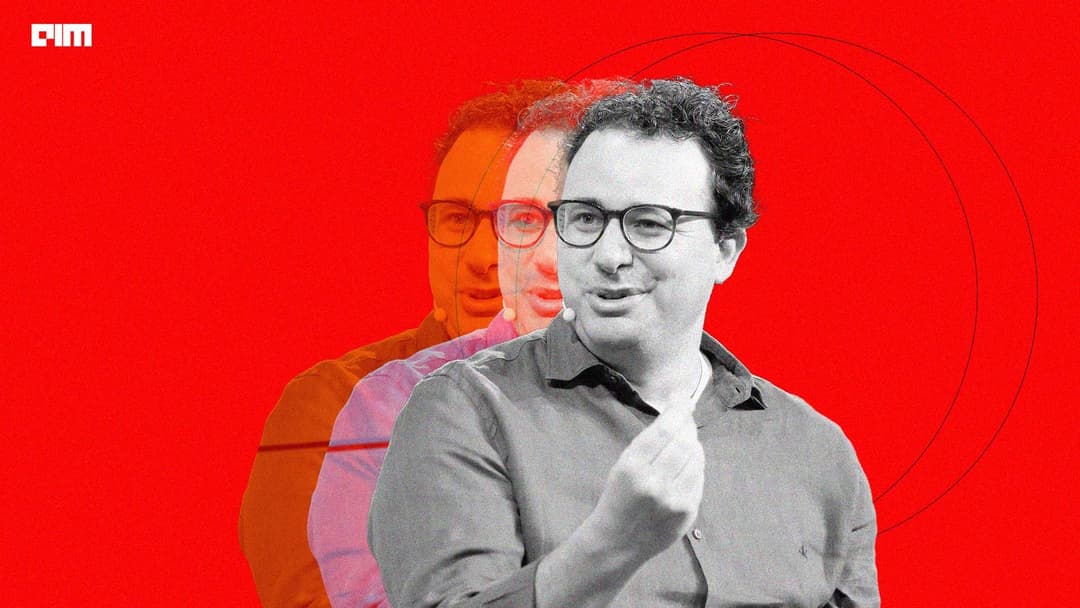
Databricks on Wednesday unveiled an updated version of its AI agent Genie, which can now perform multi-step jobs that take extended work to finish. It does this through an ontology that Databricks built to give Genie the context it needs from the information that customers store on the Databricks platform. Corporate leaders can now assign the agent a wide range of tasks, and it will complete them unsupervised, the company says. To prove the point, Databricks CEO Ali Ghodsi showed me how he uses it internally. Instead of a product demo, he fired up his actual agent and walked me through his most recent chats and charts. He showed me how it analyzed the parts of an employee satisfaction survey where the company didn’t score well, and how it helped him rate (and discard) fixes for those low scores that some executives suggested. He showed me how it summarized a big sales pitch to a prospect that went poorly — including the features the prospect said it needed before buying. It also prepped him for a podcast interview by reviewing his previous appearances and developing likely questions. While we talked, he even had it tell him what he should say to me. (And its advice on that wasn’t bad.) The fascinating part was that Ghodsi was using Genie to find the stuff that he’s now unlikely to hear as the big boss. It was a source of unvarnished truth about what wasn’t going well that he needed to address. “Have you heard of Dunbar’s number? The magic number is 150,” he said when I pointed this out. Named for British anthropologist Robin Dunbar, it’s theoretically the maximum number of people with whom humans can maintain stable relationships. In a small startup, a CEO knows everyone, has direct relationships with them, and they feel safe to tell him negative info straight up. With 12,000 employees, Ghodsi is the first to admit he can’t know everyone. At that size, a salesperson isn’t likely to confess a disastrous sales call to the CEO. An HR manager isn’t likely to confess that their idea for increasing employee satisfaction will probably fail. “Anyone who has more than 150 employees, which is a lot of companies, a lot of people can get value out of this,” he said of AI agents generally and his product, Genie, specifically. Ghodsi’s own use of Genie (often called dogfooding, from the phrase “eating your own dogfood”) is one reason why Databricks is now pitching it as an always-on agent for business leaders. He says he also uses it in his personal life, rather than a security-questionable alternative like OpenClaw or Instinct or Muse. He believes Genie can do for the business side what AI, agents and harnesses (the software that wraps around an AI model and lets it use tools) are doing for programmers. As for the risk that agents will ratchet up corporate AI costs, Ghodsi has an answer for that, too. He said costs can be controlled through Databricks’ Unity Gateway product. It allows companies to set usage limits and to swap in less expensive open-weight models.
View

OpenAI is bouncing back from the doldrums it experienced earlier this year. The company’s quarterly revenue crossed $10 billion for the first time, thanks to strong demand for its recent AI models, Bloomberg reported, citing anonymous sources. If true, that would represent an almost 50% jump from the $6.7 billion in sales the companyreportedlyrecorded in the second quarter. That would also mark a sizable increase in its revenue growth rate, which was previously said to be about 18% between the first and second quarters of the year. OpenAI’s profitability picture also appears to have improved, with its adjusted operating margin narrowing from -150% in the second quarter to -109% in the third quarter, the report said. OpenAI, one of the first to commercialize AI models, wasn’t exactly struggling to continue growing its top-line expansion — 18% growth on top of $5.7 billion in quarterly revenue is massive by any measure, especially compared to most software businesses. But it was seeing those gains be trumped by its archrival Anthropic, which has taken the lead in capturing the enterprise market for AI models and recentlyreported Q3 revenue of $17 billion. OpenAI’s broader focus helped it attract a large user base and gain popularity early on, and it says it hasover a billion users, but it’s reasonable to assume most of those are free users or subscribers to its cheapest plans. Still, the company lagged Anthropic in catering to enterprises, a market where the Claude-maker has pulled ahead, at least in terms of revenue growth. OpenAI has recently benefited from a combination of tighter pricing, discounts, improving models, and a greater focus on building more enterprise-focused products and AI agents that can help people complete tasks. OpenAI has now reached an annual revenue run rate of $50 billion, according to Bloomberg. Meanwhile, Anthropic, which isseeking a $1.4 trillion valuation in an IPO likely to happen soon, said yesterday that its annual revenue run rate had increased by $10 billion within a month to $81 billion as of the end of October. (Note that OpenAI and Anthropic calculate their annualized revenue differently: Anthropic counts sales made by its cloud partners, while OpenAI only reports its share of some sales through its partners.) None of those figures are small, of course, but the companies are also competing with models from Meta, Amazon, Microsoft, and Google, as well as a plethora of cheaper but still highly capable models from open-source AI labs, especially those from China.

The AI industry is still reeling from Nvidia CEO Jensen Huang’s honeypot scandal, but some in the industry see it as an issue that’s much larger than one man. The Chinese government has been active in economic espionage for decades, and with semiconductors at the center of the AI boom, there’s intense pressure to infiltrate any company involved. At the same time, many of the executives getting rich off that boom have made themselves easy targets. As CEO of investment intel firm Heron Intelligence, Nate Singer has a unique view into the problem. His firm works on corporate due diligence: Essentially, making sure companies know the relevant dirt before making a major acquisition or executive hire. And while the Nvidia case is particularly severe, Singer says there are lots of similar cases in the semiconductor industry that have stayed under the radar. “We’ve got former employees talking about behavior at senior executive levels,” Singer told TechCrunch, saying executives are “really crossing lines that should not be crossed.” Ina widely circulated LinkedIn post, Singer detailed one case in which a CEO’s wife made an unexpected board room appearance, “screaming about her husband and another company exec flying around in the corporate jet with a couple young ladies (who also turned out to be state-sponsored actors).” It’s an alarming story, but an unfortunately common one. Singer says he’s seen at least three reports of similar cases, and suspects many more have gone unreported. “There’s a lot more than this one woman,” Singer said. “They are embedded in these companies.” Semiconductor companies are already big targets for international trade secret theft. There have beendozens of prosecutionsfor similar cases in recent years, includinga case involving the fabrication powerhouse TSMCin 2006. In 2017, four executives atan unnamed “Bay Area semiconductor equipment manufacturer”were charged with stealing trade secrets for use at a competing company in China. According to the indictment, the technology in question “related to the high-volume manufacturing of semiconductor wafers to be used in lighting and electronic devices, such as flat screen televisions and smart phones.“ Any sexual elements in such cases rarely become public, in part because of the severe consequences for executives and their companies. But according to Singer, the ongoing threat has become a kind of open secret in the industry. “There are a lot of senior people in the industry that know this is happening, and are effectively condoning it,” he told TechCrunch.

The Series A funding will support engineering and enterprise expansion as the startup launches PuppyGraph 1.0 graph query engine.
View

IBM had historically used high-skilled visa programmes to address talent shortages, but its participation had been declining for several years.
View

Anthropic is offering 825 million shares of Class A common stock at an indicative price range of $70–78 per share.
View

AI agents today—the ones that can use your web browser and autonomously perform tasks—are getting more intuitive. But are they safe enough?
View

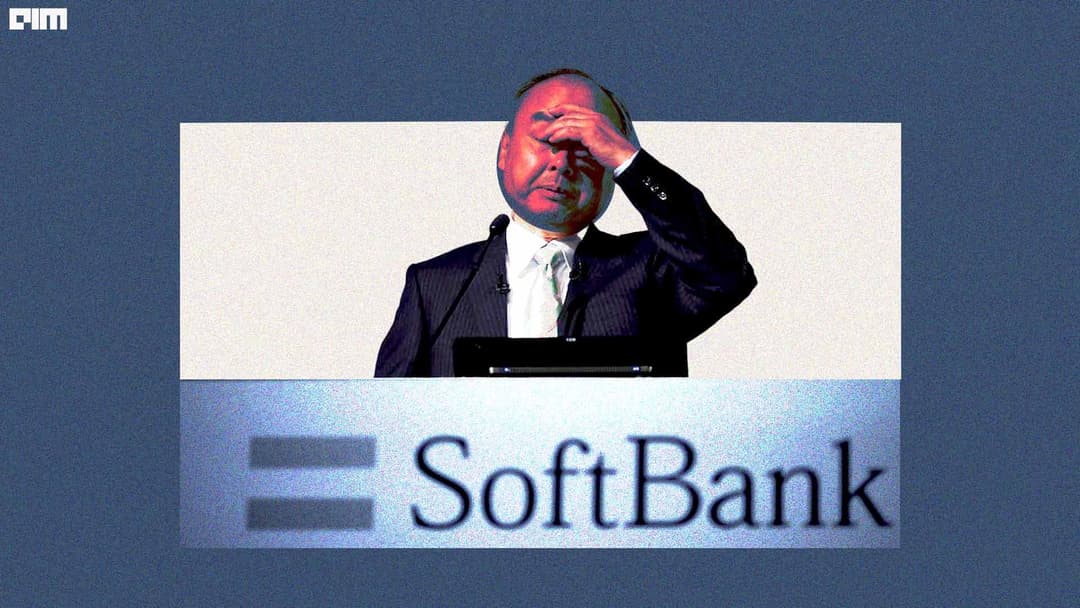
The Japanese investment giant has written off billions of dollars after changing its plans for US data centre infrastructure, while also reporting losses linked to its OpenAI deal.
View

The health AI company’s Parrotlet-A 2.5 Pro speech model and Lipi agentic harness convert doctor-patient consultations into structured digital health records.
View

IBM and Microsoft have launched Imagine Enterprise, an agentic AI platform combining agents with enterprise cloud, data, and security technologies.
View

The offering runs on PTC's Windchill platform and covers IP management, supplier collaboration, product introduction, quality, and regulatory compliance.
View

Coforge CAICO Anup Nair says the IT services firm is skipping a Palantir-style platform and betting on context, trained engineers and repeatable projects.
View
View
View