Pre-Black Friday Sale is LIVE! Get Up to 85% OFF AI Tool Listings + 50% OFF All Sponsorships.
Grab the DealSubmit your Tool
PoweredByAI.app is an AI Tools Directory helping individuals, businesses, and creators discover the best AI tools for writing, coding, design, productivity, and more.
© 2026 , Product of011BQ. All rights reserved.

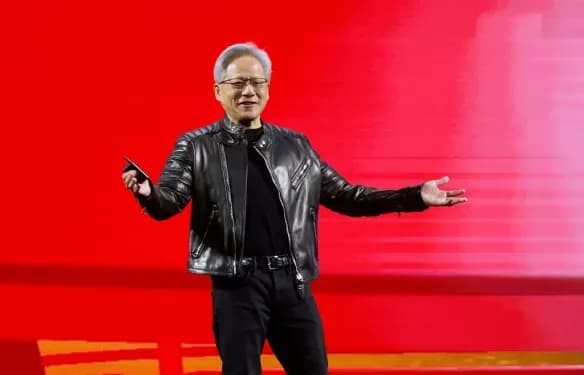
Markets can do little more than speculate about possible outcomes until the investigations yield conclusive results. But what if Huang is ousted as CEO?
View

If you signed up for ChatGPT Go through the 12-month free offer in India, you might be wondering what happens when the free period ends. If you don't want to continue with a paid subscription, it's worth checking your renewal date and cancelling in time. ChatGPT Go costs Rs. 399 per month in India after the offer period. The cancellation process is fairly simple, but the steps differ depending on whether you signed up through the website, Google Play Store or App Store.
View

Apple has started offering paid add-ons for AI usage in Logic Pro through its new Intelligence Usage Packs. Users can buy additional usage once they reach the app's monthly limit, rather than wait for it to reset. The option is currently available only in Logic Pro, but a new report claims that Apple plans to bring it to more apps in its Creator Studio suite. The packs are available as one-time purchases, not recurring subscriptions.
View

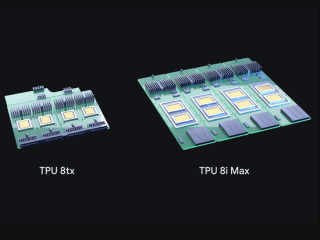
Google introduced the 8tx and 8i Max chips on Wednesday as its two new eighth-generation Tensor Processing Unit (TPU) systems. With the unveiling of the two new TPUs, the Mountain View-based tech giant now has four eighth-generation chips, including TPUs 8t and 8i. The company first introduced its eighth-generation range of TPUs at Google Cloud Next in April, initially including two chips. Google further highlighted that the launch of the two TPUs marks the first time it has introduced four systems in a single year. The new TPU 8tx and TPU 8i Max are designed for confidential computing and large context and density computing, respectively.
View

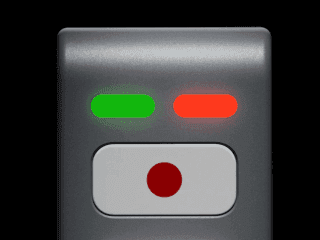
Nothing is scheduled to launch its first “AI-native” device next month. The company recently started teasing the debut of the unspecified device, while keeping its name and product category under wraps. The upcoming device will mark the UK-based tech firm's entry into a new AI-powered hardware market, which currently has AI pendants, AI pins, AI smart glasses, and dedicated AI-backed companions. However, Nothing has already confirmed that its AI-native device will be different. Now, a company executive has revealed the design of the upcoming AI hardware, which appears to be a metal box with LEDs and a physical button.
View

Anthropic announced the expansion of Claude's capabilities beyond its existing chat and coding tools. According to the company, users will be able to access new ways for teams to create and work with data. Among the notable additions are Claude Sheets, Claude Whiteboards, and Claude Data, which allow users to build spreadsheets, organise ideas, and create interactive dashboards with the chatbot. Further, Anthropic is also upgrading interactive connectors, which let users access third-party applications without leaving Claude.
View

Google announced the rollout of Gemini 4 Carbon on Tuesday. Following its release last month, the Mountain View-based tech giant is expanding access to developers and enterprises through paid plans. Meanwhile, Google AI Ultra subscribers can also use it across select products, including the Gemini app and AI Mode in Search. Compared to Gemini 4 Argon, Carbon is claimed to be capable of handling more demanding, multi-step tasks by spending more time reasoning and verifying its output.
View

OpenAI has announced Businesses in ChatGPT, a new feature that allows companies to manage their business information on the platform. It includes a Business Hub where businesses can claim their profiles, update details and check how people engage with them on ChatGPT. The company has also introduced Business Agents, which can answer customer questions about products and services. The tools are currently in beta, although access to Business Agents is initially restricted to eligible businesses in the US.
View

OpenAI launched GPT-Live earlier this year, in July, as the Sam Altman-led AI giant's latest voice model. Since its introduction, the US-based company has witnessed a notable spike in its usage. Now, the ChatGPT developer has announced that it will be retiring the Advanced and Standard Voice models next month, as most users have transitioned to the new GPT-Live voice model. However, the chatbot will retain user conversations with the Advanced and Standard models. While ChatGPT Voice will no longer be powered by the two speech-to-text and turn-based voice models, select functionalities will remain based on one of the models.
View

Google is notching up its chipmaking game as the company seeks to reduce its dependence on chips made by other companies for its cloud computing business. Google on Mondayunveiledtwo new variants of its tensor processing units (TPUs), in-house-developed chips meant for AI workloads, that broaden its chip portfolio to additional use cases: confidential inference and more memory capacity for large workloads. The new units, TPU 8tx and TPU 8i Max, are part of the company’s eighth generation of chipsintroducedin April this year, and build on what those chips offered, which was more inference capacity and support for large training requirements. TPU 8tx, designed with AMD, is based on the TPU 8t chip, and is geared specifically for confidentially training and running AI models, Google said in a blog post. The chip “builds security directly into the hardware layer, keeping sensitive data and model weights protected and isolated even while in active use,” the company wrote. The chip also has a custom inferencing network that lets it run reasoning alongside training, so it can be used to distill and train small models on the fly. That ability, according to Google, could prove useful for cases where a company might want to train a model on its proprietary data without having to move the data between devices. Meanwhile, TPU 8i Max basically combines two of the inference-focused TPU 8i chips the company launched in April, doubling the memory capacity, processing power and bandwidth, but in a single package. The result is a chip that lets AI models handle a larger range of information during queries. The chip launch comes as hyperscalers likeMicrosoft,Amazon, and even AI labs likeOpenAIandAnthropicare working on their own lines of AI-specific semiconductors andaccompanying softwarein order to reduce their reliance on the dominance of Nvidia. The news also comes at a particularly vulnerable moment for Nvidia, whose CEO Jensen Huang over the weekendadmittedtohaving an affairwith someone alleged to be a Chinese spy.
View

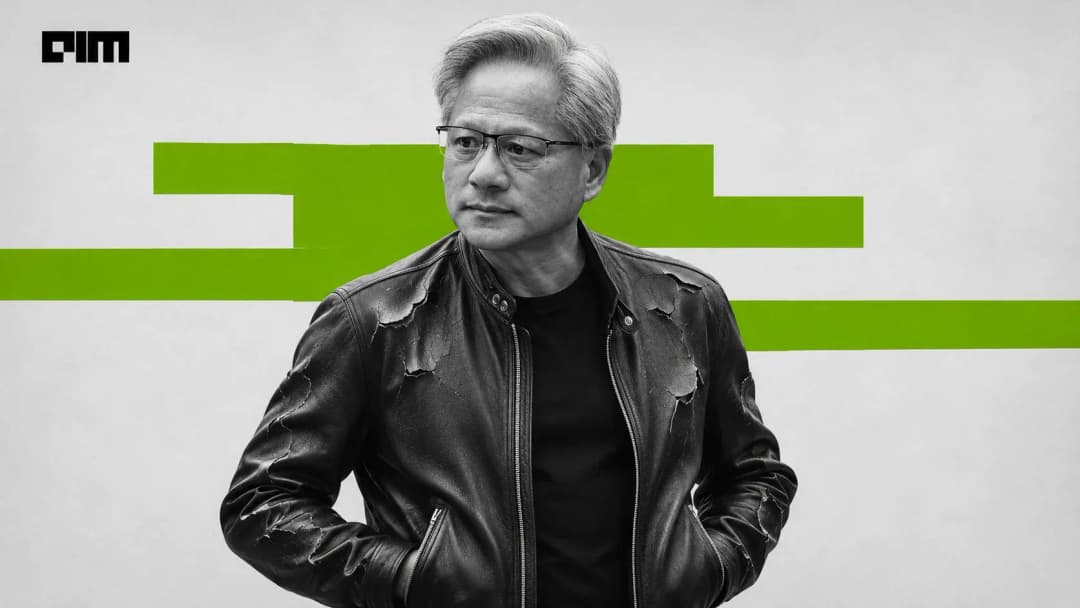
Nvidia co-founder CEO Jensen Huang has never been as flashy or controversy-prone as AI leaders like OpenAI’s Sam Altman or SpaceXAI’s Elon Musk. Now, the 63-year-old industry kingpin has admitted that hecheated on his wifeof 40 years in an affair that could have ramifications beyond Huang’s personal life and potentially impact national security. United States officials believe that Huang’s likely romantic interest, Megaspeed executive Alice Huang, isa Chinese spywho has been feeding information back to Beijing. (Alice Huang, a Chinese citizen, is of no relation to Jensen Huang.) Megaspeed, a Singapore-based AI infrastructure company, had reportedlypurchased$4.8 billion in Nvidia chips over the last two years. The U.S. and Singapore have both previously investigated Megaspeed over suspicions that the firm was illegally sharing chips with China. The U.S. and China are embroiled in a fierce technological arms race to build the most advanced AI infrastructure, which could shape each country’s economic future, military prowess, and capacity for innovation. Nvidia is valuable in this competition as one of the world’s largest makers of AI chips, which are essential for accelerating AI development. But as an American company, Nvidia faces government restrictions on the sale of its most powerful chips to Chinese entities. As the controversy unfolds, we are organizing the most relevant events into a reverse-chronological timeline to keep you up to date. The Nvidia CEO pulled out ofupcoming speaking engagementsat the ElevenLabs Summit and Anthropic CEO Forum. Alice Huang and her family reportedly built a network of companies in China and Singapore to acquire Nvidia chips, including founding a Chinese company called Shanghai Century Litong. Founded in 2023, it became an Nvidia-preferred cloud partner, giving it priority access to chips,The Information reported. The Information also reported that Shanghai Century Litong facilitated buying $7.5 billion worth of Nvidia’s chips, including banned chips. Nvidia’s head lawyer, Tim Teter, intervened in a 2025 U.S. government probe surrounding the suspected smuggling of AI chips by Megaspeed International,Bloomberg reported. Teter contacted Commerce Under Secretary Jeffrey Kessler asking questions about whether the Trump administration played a role in detaining Alice Huang. In early 2025, Alice Huang and a business partner sought China-based investors for an Asian data center, promising they had no problem in securing GPUs,the Financial Times reported. On Sunday night, President Trumpweighed inon Huang’s controversy and showed support for the Nvidia CEO. “I have not spoken to him about it. I just know he’s a fine person, but you never know what’s going on,” Trump said. When asked if Huangshould remain chief of Nvidia, Trump said, “I think so. Oh yeah, sure.” Jensen Huang wrote in aletterto Nvidia employees — which was also published as a press release — that he cheated on his wife. “I owe my family and all of you an apology,” Huang told his company. “I was unfaithful to my wife. My actions hurt her and our children. There is no excuse for what I did. I am deeply sorry.” Huang did not mention Alice Huang by name in the message, but linked his infidelity to “the national security concerns raised in news reports.” “Nvidia’s Board of Directors has initiated an independent investigation. I support the investigation and will cooperate fully. I love our country and our company. I am committed to protecting Nvidia and supporting America’s national security. I am proud and grateful to be an American,” Huang wrote. Nvidia shares slidover 5%the following day. Three Republican congressmen — Chairman John Moolenaar of the House Select Committee on China, Chairman Brian Mast of the House Foreign Affairs Committee, and Chairman Rick Crawford of the House Permanent Select Committee on Intelligence — sent a request to Huang for a closed-door joint briefing with their three committees. “Recent reports raise significant national security concerns regarding the [People’s Republic of China]’s access to sensitive U.S. technology and information,” the chairmenwrote. “The issue of PRC infiltration and access to cutting-edge U.S. technology is core to the investigative work of our three committees this Congress. It is vital that Congress determines the extent to which U.S. national security has been placed at risk.” U.S. officials had been investigating Alice Huang and Megaspeed for more than a year whenthe New York Timesbroke the story in late October that the two executives also had a close relationship. An Nvidia spokesperson denied that this relationship was something out of the ordinary. “Jensen’s interactions with Ms. Huang are not unusual or unexpected. Meetings with customers are part of a CEO’s job; Jensen talks with thousands of customer executives every year,” Nvidia spokesperson John Rizzo said. He added that “if the U.S. government believes that any person is a threat to American industry, it would let us know.” U.S. officials circulated a secret memo among policymakers that warned that Megaspeed’s Alice Huang, who had a relationship with Jensen Huang, was a spy for China’s Ministry of State Security. This memo was not public knowledge until it was laterreportedby the New York Times. Secretary of State Marco Rubiosupervisedthe drafting of the memo. Around the same time, per the New York Times’report, U.S. President Donald Trump was briefed about intelligence findings that possible Chinese spy Alice Huang had formed a close relationship with Jensen Huang. Trump did not act on this information. The Nvidia CEO, anally of Trump, hasrepeatedly advocatedfor the U.S. government to let Nvidia expand its business in China. Megaspeed wasconfirmedto be under investigation by both the U.S. and Singaporean governments in October 2025. As a customer of Nvidia, Megaspeed wassuspectedof helping Chinese companies get around American embargoes on chip exports. Megaspeed, a neocloud that used Nvidia chips, had been renting computing power to Chinese internet giant Alibaba and other Chinese companies, the Times reported. A Commerce Department official who had visited Megaspeed’s data center in Malaysia in 2024 had found a hoard of Nvidia equipment that was still packed in boxes and the concern was that this equipment was being directly shipped somewhere else, like China, rather than installed and sold as a cloud service. Jensen Huang had been spotted socializing with Megaspeed executive Alice Huang as early as 2024 in Taiwan, where the Nvidia CEO was born. These investigations into Megaspeed highlighted concerns about the degree to which Nvidia is able to track its chip exports. At the time, an Nvidia spokesperson told press that the company did not have “any reason to believe products had been diverted.” “NVIDIA visited multiple Megaspeed sites yet again earlier this week and confirmed what we previously observed — Megaspeed is running a small commercial cloud, like many other companies throughout the world, as allowed by U.S. export control rules,” the Nvidia spokespersonsaidat the time.

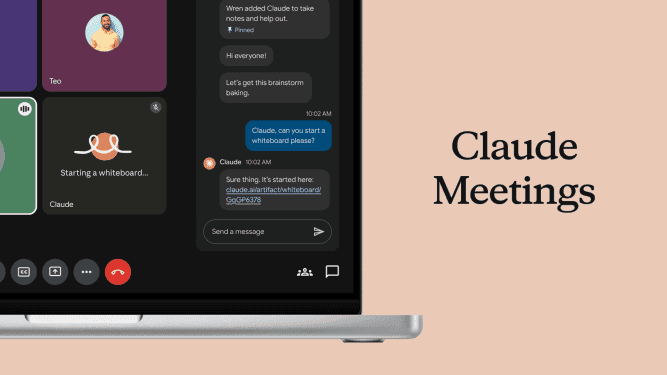
Anthropic announced new workplace features on Tuesday, including Claude Meetings, which brings Claude into video calls to begin working on tasks while participants are still talking. The company also unveiled Claude Whiteboards and Claude Sheets. The launch of Anthropic’s new productivity-focused features comes just a few weeks afterOpenAI unveiled a series of workplace toolsthat allow users to collaborate with ChatGPT to do things like visualize company information and create presentations, as both companies compete to turn their products into office suites of sorts to take on Microsoft and Google. Meta is also joining the competition with its Muse AI agent, which canbuild mini-apps on the flyto help users complete specific tasks. With Claude Meetings, teams can add Claude to a video call as a visible participant. Claude then follows the conversation and gets to work on tasks in real time. As participants talk, it can draft the plan being discussed, map out a timeline on a whiteboard, answer questions in the meeting chat, and access connected work apps to retrieve information, such as last year’s figures. After the call, the meeting notes, action items, and other materials Claude created are available in claude.ai. The work that comes out of a meeting usually starts after everyone hangs up, but with this new feature, teams can turn discussions into actions in real time, Anthropic says. Claude identifies itself as a meeting participant and posts a notice in the meeting chat. It won’t join calls with external guests unless authorized by an admin, and will automatically leave if an external guest joins. Claude Meetings is launching in beta on Team and Enterprise plans. At launch, it works with Google Meet, with support for additional plans expected to follow. As for Claude Whiteboards, Anthropic describes the feature as a collaborative board where teams can talk through a plan and have Claude turn it into an organized visual workspace with timelines and deadlines. The company notes that many people already brainstorm with Claude, but that in order to share their results with others, they would have to copy-paste them somewhere else. Now, a team can work directly with Claude on the same board in real time. When the brainstorm is done, Claude can turn the board into a doc or a slide deck. Additionally, Whiteboards also work inside Claude Meetings, so the board builds while people talk, Anthropic says. Claude Whiteboards is available in beta on paid plans, on web, desktop, and mobile. The company also launched Claude Sheets, which lets teams create and collaboratively edit spreadsheets with Claude. A team can ask it to build a campaign tracker or hiring budget, and Claude will then generate a working spreadsheet. Anthropic says Claude handles the initial setup of trackers and budgets, while allowing teams to continue refining and updating the same spreadsheet. Each spreadsheet can include multiple tabs, formulas, formatting, and dropdown menus. Claude also makes edits directly in cells alongside the team, and outlines each change so users can see what it did. Claude Sheets is available in beta on paid plans, on web, desktop and mobile. Anthropic also announced that Claude Data, formerly known as Claude Dashboards, is now generally available. The feature connects Claude to systems that companies use to keep their numbers, like a data warehouse or CRM. Users can ask questions, and Claude responds with dashboards, written data stories, or narrated videos. Additionally, the company announced interactive connectors that open the full version of apps like Adobe, Atlassian, and HubSpot inside Claude. Anthropic notes that teams can now open these apps directly alongside their Claude conversations and ask the assistant to work within them, essentially bringing existing workflows into the same workspace.
View
View