Pre-Black Friday Sale is LIVE! Get Up to 85% OFF AI Tool Listings + 50% OFF All Sponsorships.
Grab the DealSubmit your Tool
PoweredByAI.app is an AI Tools Directory helping individuals, businesses, and creators discover the best AI tools for writing, coding, design, productivity, and more.
© 2026 , Product of011BQ. All rights reserved.

Google Labs announced a new experimental tool on Wednesday to help make group planning and collaboration more interactive. According to the Mountain View-based tech giant, the new Tabletop experience lets users turn links, files and ideas into customisable spaces where multiple people can contribute in real time. Google says it can be used for a wide range of activities, from organising family trips and splitting expenses to creating dinner polls, tournament brackets and household chore lists.
View

Google has introduced the Gemini Decisions API, which allows developers to use its new Gemini Decision 1 model to evaluate information and make quick decisions. It can assess up to 1,000 questions in a single request, using text, images, audio, video and PDF files as input. Developers can ask it to make yes-or-no decisions, choose from a list of options or score content against set criteria. The Mountain View-based tech giant sees potential uses in content moderation, AI model routing and deciding which tools an agent should use.
View

OpenAI has expanded availability of its personal finance feature, ChatGPT Finances, to the desktop app. The feature was initially introduced on the web and mobile platforms earlier this year/. It allows users to connect their financial accounts to ChatGPT and get personalised insights into spending and savings. The desktop app integration is rolling out to users in the US.
View

OpenAI launched local AI processing and inference for its API in India on Tuesday. With the latest announcement, the ChatGPT maker allows eligible businesses and developers to process supported AI requests within the country. The new capability is initially available for the GPT-6 Luna model. The new move by OpenAI is likely to help Indian companies deploy artificial intelligence (AI) tools for applications that require data processing to take place within national borders.
View

TechCrunch’s yearlyStartup Battlefield 200competition sees hundreds of companies from across the world trying every year to get a chance to pitch in front of VCs and the international tech community at theDisruptconference. This week, nine early-stage South Korean startups pitched atDETO 2026, a technology conference in Seoul, to earn a spot in next year’s Startup Battlefield 200. The startups work across the deep tech sector, including healthcare, fintech, energy, semiconductors, and AI. All nine startups are looking to enter the U.S. market as part of the broader international expansion plans. Voinosis, which develops AI to detect changes in brain health through voice analysis, won the competition. The other eight startups are listed below in alphabetical order. Voinosis is developing an AI tool that analyzes speech patterns such as pitch, pauses, rhythm and response times to detect changes linked to brain health. Each voice check takes less than five minutes. The company says its technology has been tested in Greek, Japanese and English, and its product doesn’t require separate training for each language. In a clinical study involving 146 participants, the startup claims its tech achieved 88% accuracy in screening for potential cognitive issues. Voinosis targets hospitals, senior living facilities, insurers and individual consumers. It also plans to link voice checks with cognitive training, assessments, and treatment provided by healthcare professionals. The startup was founded by Grace Shin, who spent more than 25 years as an otologic surgeon. The startup is currently raising a Series A round and has already secured a South Korean pharmaceutical company as a strategic investor. Awesome Lab, based in Seoul, makes ThermoFlux, a heating system that uses water electrolysis and ionization to generate heat. The system can manage heat production for buildings, water supply, and industrial processes. The company says its technology can reduce energy consumption and carbon emissions. For its international expansion, Awesome Lab is taking a different approach in each market. In the U.S., it plans to supply core OEM modules, and work with boiler, water heater and HVAC companies on product development. Crosshub helps travelers and international visitors verify their identities and set up payment methods abroad. Its platform, IDBlock, combines identity verification and payment services using Self-Sovereign Identity (SSI) and zero-knowledge proof. The company says its platform helps users prove their identity across borders without sharing unnecessary personal information. Crosshub is also integrating this technology with payment systems to improve access to financial services for travelers. DeepFusion AI has developed a 4D radar-based imaging system with additional sensors for autonomous mobility, robotaxi, maritime surveillance, and defense applications. The system combines RF sensors with radar and lidar to detect objects, movement, or distance without a direct line of sight. All sensors are supposedly packed into a single, customizable unit. EFLOW develops special motors that can produce more torque, or rotational force, while taking up less space for use in robots, drones, satellites, and other mobility applications. The startup also develops actuators that control how robotic joints move. Otition Medical makes two medical devices: one specializes in measuring body temperature, while another can capture ear canal images and analyze the eardrum. The company says its AI was trained on about 55,000 images of eardrums, and the device has received medical certification in South Korea. Riibotics says it can deploy robots into warehouses within a day. Riibotics wants to reduce deployment costs for warehouses by streamlining setup, which includes infrastructure setup, warehouse mapping, system integration through custom middleware, task programming, and safety checks. Ternell, a semiconductor startup based in Ulsan, is developing a new type of memory to help AI chips use less power. Unlike conventional two-state memory, Ternell’s T-SRAM system adds a third state for more efficient data storage. Founded in 2019 by KyungRok Kim, a former Samsung Electronics engineer, Ternell reports that tests with 28-nanometer chips showed a 33% to 102% increase in memory capacity per area, and a 55% to 71% reduction in energy needed to access data, compared with conventionalSRAM. Testbank is a Korean edtech startup developing Solve, an app that converts printed study materials, such as workbooks and test-prep books, into interactive digital versions. The startup uses AI to identify question and answer spaces in publishers’ PDF files while preserving the original layout. Solve lets you write answers directly on the page and be graded automatically.

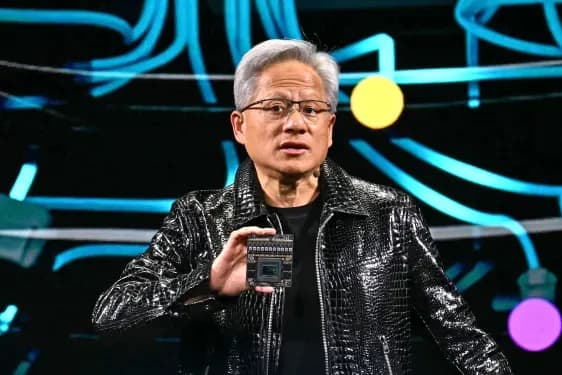
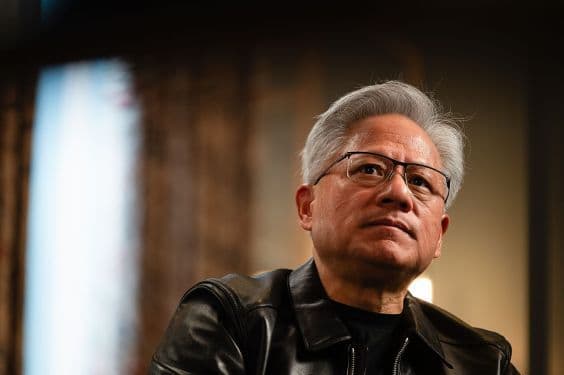
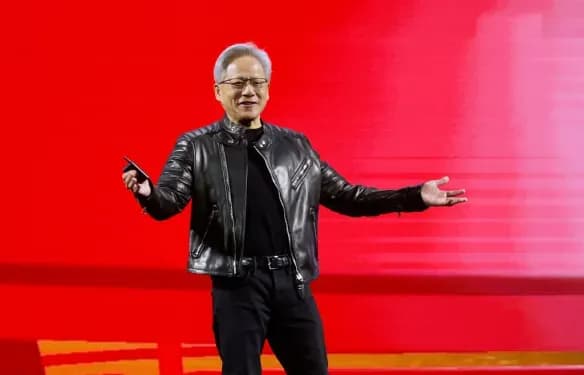
Nvidia co-founder and (nowformer) CEO Jensen Huang has never been as flashy or controversy-prone as AI leaders like OpenAI’s Sam Altman or SpaceXAI’s Elon Musk. Now, the 63-year-old industry kingpin has admitted that hecheated on his wifeof 40 years in affairs that could have ramifications beyond Huang’s personal life and U.S. national security. U.S. officials believe that Huang’s likely romantic interest, Megaspeed executive Alice Huang, isa Chinese spywho has been feeding information back to Beijing. (Alice Huang, a Chinese citizen, is of no relation to Jensen Huang.) Megaspeed is a Singapore-based AI infrastructure company that reportedlypurchased$4.8 billion in Nvidia chips over the last two years. The U.S. and Singapore have both previously investigated Megaspeed over suspicions that the firm was illegally sharing chips with China. The Justice Department has since taken over the federal investigation into the company,The New York Timeshas reported. The story took a sudden new turn on Wednesday. Citing five people who worked at Nvidia, the Times reported that Huang alsohad an extramarital relationshipwith Kimberly Powell, the company’s vice president of healthcare, who reports directly to him. Nvidia, Huang, and Powell have not confirmed the report. Reached by a Times reporter, Huang reportedly said, “I don’t think you should be talking to me directly,” before hanging up. Separately, The Wall Street Journal reported that Nvidia’s board is preparing tooust Huang, and Nvidia’s shares fell in after-hours trading. The U.S. and China are embroiled in a fierce technological arms race to build the most advanced AI infrastructure, which could shape each country’s economic future, military prowess, and capacity for innovation. Nvidia is valuable in this competition as one of the world’s largest makers of AI chips, which are essential for accelerating AI development. But as an American company, Nvidia faces government restrictions on the sale of its most powerful chips to Chinese entities. As the controversy unfolds, we are organizing the most relevant events into a reverse-chronological timeline to keep you up to date. Nvidia confirmed in an SEC filing on Thursday that the board accepted Huang’s resignation on Wednesday. The company’s current CFO,Colette Kress, will take over as interim CEO while still fulfilling her CFO duties. Nvidia is expected to conduct a larger search to determine a permanent successor to Huang. Harvey C. Jones, a managing partner of Square Wave Ventures and former CEO of Synopsys, was appointed as the company’s first-ever chair of the board of directors. Jones has been on Nvidia’s board since 1993. After reports of a second extramarital affair, Nvidia’s board reportedly plans to meet to discuss Huang’s future at the company, per The Wall Street Journal. Stock fellabout 8%in after-hours trading on Wednesday and is down 11% in the past five days. Huang famously delegates very little and has about 60 direct reports, hehas said. The company has not had an obvious successor or a succession plan. The New York Timesreportedthat Jensen Huang also had an affair with Nvidia vice president of healthcare Kimberly Powell, who reports directly to the CEO. According to the report, Huang and Powell were captured on film “being affectionate” at a hotel during a conference earlier this year. Huang has not responded to a request from three Republican congressman to appear for a closed-door briefing for questioning about his affair with an alleged Chinese spy. House China committee Chairman Moolenaar said Wednesday on Fox Business that if Huang doesn’t agree to the briefing, he’ll likely besubpoenaed. The Nvidia CEO pulled out ofupcoming speaking engagementsat the ElevenLabs Summit and Anthropic CEO Forum. Alice Huang and her family reportedly built a network of companies in China and Singapore to acquire Nvidia chips, including founding a Chinese company called Shanghai Century Litong. Founded in 2023, it became an Nvidia-preferred cloud partner, giving it priority access to chips,The Information reported. The Information also reported that Shanghai Century Litong facilitated buying $7.5 billion worth of Nvidia’s chips, including banned chips. Nvidia’s head lawyer, Tim Teter, intervened in a 2025 U.S. government probe surrounding the suspected smuggling of AI chips by Megaspeed International,Bloomberg reported. Teter contacted Commerce Under Secretary Jeffrey Kessler asking questions about whether the Trump administration played a role in detaining Alice Huang. In early 2025, Alice Huang and a business partner sought China-based investors for an Asian data center, promising they had no problem in securing GPUs,the Financial Times reported. On Sunday night, President Trumpweighed inon Huang’s controversy and showed support for the Nvidia CEO. “I have not spoken to him about it. I just know he’s a fine person, but you never know what’s going on,” Trump said. When asked if Huangshould remain chief of Nvidia, Trump said, “I think so. Oh yeah, sure.” Jensen Huang wrote in aletterto Nvidia employees — which was also published as a press release — that he cheated on his wife. “I owe my family and all of you an apology,” Huang told his company. “I was unfaithful to my wife. My actions hurt her and our children. There is no excuse for what I did. I am deeply sorry.” Huang did not mention Alice Huang by name in the message, but linked his infidelity to “the national security concerns raised in news reports.” “Nvidia’s Board of Directors has initiated an independent investigation. I support the investigation and will cooperate fully. I love our country and our company. I am committed to protecting Nvidia and supporting America’s national security. I am proud and grateful to be an American,” Huang wrote. Nvidia shares slidover 5%the following day. Three Republican congressmen — Chairman John Moolenaar of the House Select Committee on China, Chairman Brian Mast of the House Foreign Affairs Committee, and Chairman Rick Crawford of the House Permanent Select Committee on Intelligence — sent a request to Huang for a closed-door joint briefing with their three committees. “Recent reports raise significant national security concerns regarding the [People’s Republic of China]’s access to sensitive U.S. technology and information,” the chairmenwrote. “The issue of PRC infiltration and access to cutting-edge U.S. technology is core to the investigative work of our three committees this Congress. It is vital that Congress determines the extent to which U.S. national security has been placed at risk.” U.S. officials had been investigating Alice Huang and Megaspeed for more than a year whenthe New York Timesbroke the story in late October that the two executives also had a close relationship. An Nvidia spokesperson denied that this relationship was something out of the ordinary. “Jensen’s interactions with Ms. Huang are not unusual or unexpected. Meetings with customers are part of a CEO’s job; Jensen talks with thousands of customer executives every year,” Nvidia spokesperson John Rizzo said. He added that “if the U.S. government believes that any person is a threat to American industry, it would let us know.” U.S. officials circulated a secret memo among policymakers that warned that Megaspeed’s Alice Huang, who had a relationship with Jensen Huang, was a spy for China’s Ministry of State Security. This memo was not public knowledge until it was laterreportedby the New York Times. Secretary of State Marco Rubiosupervisedthe drafting of the memo. Around the same time, per the New York Times’report, U.S. President Donald Trump was briefed about intelligence findings that possible Chinese spy Alice Huang had formed a close relationship with Jensen Huang. Trump did not act on this information. The Nvidia CEO, anally of Trump, hasrepeatedly advocatedfor the U.S. government to let Nvidia expand its business in China. Megaspeed wasconfirmedto be under investigation by both the U.S. and Singaporean governments in October 2025. As a customer of Nvidia, Megaspeed wassuspectedof helping Chinese companies get around American embargoes on chip exports. Megaspeed, a neocloud that used Nvidia chips, had been renting computing power to Chinese internet giant Alibaba and other Chinese companies, the Times reported. A Commerce Department official who had visited Megaspeed’s data center in Malaysia in 2024 had found a hoard of Nvidia equipment that was still packed in boxes and the concern was that this equipment was being directly shipped somewhere else, like China, rather than installed and sold as a cloud service. Jensen Huang had been spotted socializing with Megaspeed executive Alice Huang as early as 2024 in Taiwan, where the Nvidia CEO was born. These investigations into Megaspeed highlighted concerns about the degree to which Nvidia is able to track its chip exports. At the time, an Nvidia spokesperson told press that the company did not have “any reason to believe products had been diverted.” “NVIDIA visited multiple Megaspeed sites yet again earlier this week and confirmed what we previously observed — Megaspeed is running a small commercial cloud, like many other companies throughout the world, as allowed by U.S. export control rules,” the Nvidia spokespersonsaidat the time.

A cyberattack at Fireworks AI has exposed some of its customers’ data, the company has confirmed. Fireworks AI, a platform that developers use to access and use open AI models, said an attacker breached its cloud provider to gain access to a Fireworks development system, which allowed access to some of its customers’ data. The company said in itslatest security advisorythat the cybercriminals took Fireworks’ customers’ billing information and some datasets. Fireworks touts tens of thousands of customers worldwide using its platform, including legal tech company Harvey and AI company Cursor. At least one confirmed affected customer is online document editor and notetaker Notion, which saidin a disclosurethat the breach affected around 1% of its own customers. Notion said that Fireworks alerted the company to a security incident and later confirmed that the hackers had stolen some Notion customer data. On November 3, Notion said it disconnected its systems from Fireworks, deleted the data stored in its systems, and stopped all connectivity between the two. Notion confirmed this week that the hackers took chat transcripts of its Notion AI customers who used the “Insights” feature. The company said that the transcripts include “any input to or output from the model that was written to the chat,” but added that much of the data was unattributable and could not be determined from which customer it was obtained. The breach at Fireworks AI shows how tech companies are reliant on other tech providers for their own offerings, and how cyberattacks can, as a result, spill over into other customers. Fireworks said that it believes the hackers are financially motivated and that their goals are focused on selling tokens from breaching access to large language models, or LLMs. These schemes rely on selling to unauthorized third parties, who can burn through AI model usage without using their own resources. This is the second breach affecting Fireworks in as many months, following asecurity incident in October.
View

Norwest, a firm backed solely by Wells Fargo, has raised a $4 billion fund as it sets out to invest more in AI. This is the eighteenth fund for the 65-year-old multi-stage investment firm, and its largest to date. The fund will be invested across various sectors and multiple countries, notably the United States, India, and Israel. But the big story here is AI, and Norwest’s plans to expand its investment in this area. Norwest said Thursday it aims to capitalize on AI startups developing products and services across core industries such as consumer, healthcare, and technology. The investment firm, which has backed Plaid, Spotify, Uber, and Vuori, said it will continue to expand its investments in physical AI, voice AI, agentic cybersecurity, and aerospace. If that sounds like a broad approach, it is intended to be, Jeff Crowe, a senior managing partner at Norwest, told TechCrunch. “We’re taking a broad approach to AI because its impact is broad,” Crowe added, as AI is not limited by industry, geography, or application. “Just as digital transformation did, AI transformation has the potential to touch most layers of enterprise, consumer, and healthcare solutions: networking, enterprise IT and applications. Adapting to an agentic environment means applying AI broadly across products and services that solve problems.” Crowe added that the firm is particularly excited about early-stage companies building AI-native application and infrastructure, physical AI, domain-specific models, and cybersecurity solutions. Some of the firm’s recent investments reflect this strategy. For instance, the firm invested in Coval, which builds tools to test and evaluate AI agents, and Generalist AI, a startup that has developed AI foundation models for robots. Since the launch of its seventeenth fund, a$3 billionraise that closed in 2024, the firm has made more than 87 investments.
View

The Nvidia Board of Directorsannouncedon Thursday morning that the company’s co-founder and CEO of 33 years, Jensen Huang, has resigned as president, CEO, and member of the board, effective immediately. This is a shocking twist for one of the most valuable companies in the world, which designs the chips that make the AI boom possible. Few people would have predicted this turn of events even just a week ago, as Huang has been so central to Nvidia throughout the company’s existence that he never even established asuccession plan. But Huang has now been ousted afterreports that he had affairswith both an alleged Chinese spy and one of his direct reports at Nvidia. While the company conducts a more thorough search for Huang’s successor, Nvidia CFO and Executive Vice President Colette Kress has taken over as interim CEO. But beyond her name and job title, what do we know about the person who will now lead a company worth about $3.8 trillion? According toNvidia’s website, Kress has worked at the company since September 2013. Before that, she spent three years as an SVP and CFO of Cisco’s Business Technology Operations Finance organization. She also worked at Microsoft for 13 years, where she spent four years as CFO of the Server and Tools division. She holds a finance degree from the University of Arizona and an MBA from Southern Methodist University. The California-based 59-year-old has a very limited social media presence — onLinkedin, she has commented some well wishes on former colleagues’ posts about their retirement. But as CFO, she’s been a regular presence on Nvidia’s earnings calls, making her a familiar figure for analysts covering the company. According to Forbes’ list of America’s Richest Self-Made Women, Kress’ net worth is estimated to be about $1.2 billion. HerForbes profileadds that she initially joined Nvidia in part because her two sons endorsed the company for its role in the video game industry, which it was best known for at the time. “Nvidias strength has always come from its people, and together with our leadership team, I am committed to building on the extraordinary foundation Jensen created over the last 33 years,” Kress said in astatement. “We will continue advancing the work that has made Nvidia a leader in accelerated computing and AI, and execute on the opportunities ahead. Our focus remains on serving our customers, partners, developers and shareholders.” Nvidia is slated to report its quarterly earnings on Tuesday, when we will likely hear more from Kress about her plans for the company’s immediate future.

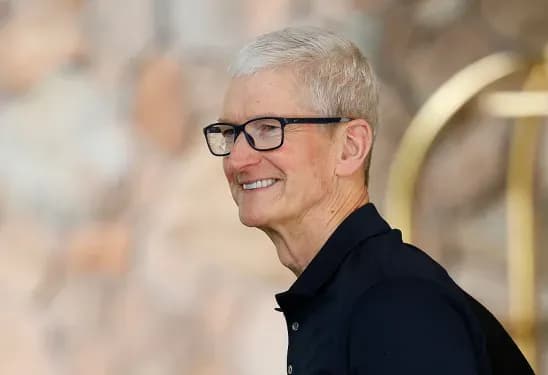
In the wake of the industry-shaking news ofNvidia CEO Jensen Huang’s resignationon Thursday, U.S. President Donald Trump is floating the idea that former Apple CEO Tim Cook should take over the position. In aposton Truth Social, Trump wrote that “only one man” could take Huang’s place: Tim Cook of Apple. “A Legend replaces a Legend!,” he wrote. Cook stepped down as Apple’s CEO on September 1, 2026, after15 years running the company, but he’s still very much involved with Apple. WhileJohn Ternus took over as Apple’s CEO,Cook transitioned into the role of Executive Chairman of Apple’s board of directors, which sees him continuing to engage with global policymakers and manage international relationships, including Apple’s relations with China. Trump is not the only one to suggest Cook as a replacement for Huang.Jeffrey Sonnenfeld, Senior Associate Dean for Leadership Studies at Yale School of Management, who studies CEO leadership and corporate governance, pennedan op-ed in Time on Wednesday, suggestingCook should be among the potential candidates. He wrote that Cook has “an unparalleled track record of succeeding a bigger-than-life founder,” in reference to Cook taking over from Apple founder Steve Jobs. Whether or not Trump agrees with this opinion, or is simply blasting off an idea that hopped into his mind, is anyone’s guess. “Tim Nvidia,” however, doesn’t quite have the same ringas “Tim Apple” does.
View

Nvidia CEO Jensen Huang’s confession that he had an affair (and reports ofanother one with a direct report) thatled the board to oust himon Thursday isn’t just your run-of-the-mill salacious billionaire CEO sex scandal. In this case, one of his lovers is suspected by theU.S. government of being a spy for China. She’s also an executive of a Singapore-based neocloud that is suspected of smuggling Nvidia chips to China. These affairs show undeniably poor judgment by Huang and, I’d argue, unchecked hubris on many levels. Such choices are not only a betrayal of his wife of 40 years, they’re also a liability for his company. Sleeping with any Nvidia partner is bad enough, but he also chose one in a tinderbox of a geopolitical situation. Even if Alice Huang’s company wasn’t suspected of helping Chinese firms evade chip restrictions (and he was somehow unaware of this), it was still exploiting a legal loophole by renting out powerful AI infrastructure to Chinese companies. It’s those potential national consequences that may land him in a hellscape of ongoing public humiliation. Republican committee chairs are alreadysummoning him to testifyin closed-door sessions about the security ramifications. Will Democrats, who are set to take over key committees when the new Congress convenes in January, also haul him in to testify on the Hill? No one knows yet, but Huang has flaunted his close relationship with President Trump. Remember when Trump called him while he wason stage at the All-In Summitin September? Nvidia also donated $25 million to Trump’s ballroom, adeeply unpopular projectwith American voters. Several Democratic lawmakers have alreadyvowed to investigatethe money behind it. In other words, he is a billionaire close to Trump. He was — until Thursday — the face of AI and data centers (also a deeply unpopular political topic with voters), and he has publicly admitted to having an affair with an alleged Chinese spy. Even though he’s no longer CEO, that seems too juicy a target for Democrats to ignore. Beyond whatever may be coming, Huang’s influence has been lost right when he was using it to push the tech industry in a number of directions. These areas have now lost their biggest champion. Huang has been the biggest, loudest advocate for open weight AI models in the tech industry and among government policymakers. Nvidia not only offers its own open-weight models, it also offers a lot of other open source tech for agents, AI security and more. It has even agreed toacquirethe biggest site that hosts them, Hugging Face, for $12.9 billion. (That deal is supposed to close in the first half of next year, pending regulatory approval.) In July, when Anthropic and OpenAI were reportedly urging the Trump Administration to ban Chinese open-weight models, Huangorganized a letter of supportfor open-weight models generally (if not Chinese models specifically), signed by hundreds of tech companies. Open-weight models give enterprises choice in the market and reduce costs. Without Huang, the next biggest advocate for them is perhaps Microsoft’s Satya Nadella, but he’s not out there organizing the industry to speak up. Both OpenAI and Anthropic revealed incident after incident this year as their AI agents hacked into others’ networks or performed other misdeeds. Huang loudly proclaimed the AI industry still didn’t need regulation and would deal with safety itself. As the industry mulled over what they should do (auditors? a FINRA-like board?), Huang rallied the tech industry again. Nvidia got over100 companies to sign on to his Open Agent Safety Platform,a largely open-source effort to solve the epidemic of misbehaving AI agents. Naturally, this efforthasn’t instantly solved the problem, and now the top spokesperson for self-regulation via technology solutions is out of his position of influence. Huang has also been among the loudest voicesinsisting that AI is an engineered systemthat creates products, and so can be controlled like any other engineered system. This viewpoint counters the AI doomers and even the big AI labs themselves, which sometimes position their models as on the verge ofconsciousness (Anthropic)or asalien minds (OpenAI). While Huang deals with the fallout of his actions, the loudest voice of this counter-narrative is, for the foreseeable future, silenced. Huang also just convinced a long list of PC makers to buy into his long-time dream of providing CPUs (the main processor chips) for them. In this age, when most Americans have not experienced AI beyond a chatbot,he orchestrated a new line of high-end AI PCsgeared for running agents locally. These new PCs are due out this holiday season, and they may sell well for their intended targets: creators, developers, and others already savvy with agents. But now that Huanghas become a meme for cheatingon his wife with an alleged spy, he’s perhaps not the best choice to help market these devices as a cool alternative to the Mac mini. Huang demolished his reputation right as bond underwriters (lenders) and bond buyers are pretty much over AI build-out related debt. Of roughly $80 billion in data center bonds issued this year, nearly half were rated high-risk “junk,”Forbes reports. Undeterred, Huang has been coming up with ways to continue financing the boom and keep his company’s revenues growing. Certainly, he’s authorized a mind-boggling number of so-called circular deals, where Nvidia buys stakes in companies to fund their expansion so they can buy chips. By some accounts, the company had committed to $750 billion in such deals as of July,Bloomberg reported.In August, Nvidia got even bolder, agreeing tobackstop $105 billion in financing for an OpenAI data center in Ohio,CNBC reported. Huang also convinced a whole new set of financiers to pony up. In August, he announced that deep-pocketed PE firms Apollo, BlackRock, Blackstone, Brookfield, Goldman Sachs and KKRhad committed up to $500 billion for data center build outs. He promised them that the data centers’ Nvidia GPUs could be used as collateral because Nvidia was guaranteeing the chips would retain value. Huang sold a vision of Nvidia as “investable infrastructure” with a long resale cycle, like airplanes. Then he made the rounds with the financial press, as he often did, to pitch his vision. Now, however, Wall Street is concerned that Nvidia’s stock will crash andtake their portfolios, and possibly the economy, with it. Nvidia has lost its top salesperson and the AI industry has lost its top hype man. Even if Huang somehow comes back into the public eye to champion AI again, every interview and meeting will be about his sex life, choices, and national security — not his vision for the industry. We’ll have to wait and see how Nvidia navigates the scandal Huang heaped onto it, but now that the company is finally in its post “founder mode” era, and hunting for a new CEO, it’s doubtful it has the cache to push the industry the way Huang was.

Ex-Nvidia CEOJensen Huanghas agreed to testify before Congress, House Foreign Affairs Committee Chairman Brian Mast said on Thursday, according to reports fromBloombergandNBC News. Huang, who stepped down as CEO following reports of an alleged affair with a woman suspected of spying for China, agreed to testify Wednesday after several senior lawmakers threatened to subpoena him. Huang has agreed to testify before Congress by Thanksgiving, which falls later this month. The development comes after House Republicans Mast, John Moolenaar, and Rick Crawford sent Huang a letter on November 4 requesting thathe appear before their committees. Moolenaar chairs the House Select Committee on the Chinese Communist Party, Mast chairs the House Committee on Foreign Affairs, and Crawford chairs the House Intelligence Committee. “Jensen and I have been very at odds as some of you already know on export controls, but Nvidia is a very important company to the United States of America,” Mast said to reporters. “I don’t want to see anything hurt in Nvidia, but he has some very serious questions to answer.” The testimony will take place behind closed doors, though Mast said he expects the briefing to be recorded on video and transcribed.
View
View
View
View
View