🚀 Zaprep: Your Socials on Steroids. Start free — automate 1,000 DMs/month & turn engagement into leads. with 1,000 automated DMs/month.
Latest AI News

Join Neysa AI & AIM Innovator Series to Learn What Breaks When AI Moves to Production
As AI adoption scales, infrastructure decisions are becoming critical to balancing cost, performance, and operational control.
View

Why Everyone in AI is Suddenly Obsessed with Harnesses
From memory and orchestration to tool use and evaluation, the next AI moat is being built outside the model.
View

China’s ByteDance is Training a 10 Trillion-Parameter AI Model: Report
The model would be around three times larger than Moonshot AI’s Kimi K3 and could approach the scale of Anthropic’s latest Mythos model.
View

OpenAI’s Smart Speaker to Cost Over $300: Report
The Jony Ive-designed hardware will launch in 2027 as a battery-powered, screen-free AI companion, even as Apple's trade secrets lawsuit threatens to complicate its rollout.
View
OpenAI’s new AI smart speaker will reportedly sell for between $300 and $400
More details continue to trickle out about OpenAI’s mysteriousnew hardware device— described previously as an AI-fueled smart speaker that will be the “physical manifestation” of ChatGPT. Bloomberg nowreportsthat the device will be “donut-shaped,” designed thusly to allow users to carry it around their home and place it in different locations, like a bedside table or a kitchen counter. It will be constructed from “high-quality metal,” have a “premium look,” and (in a detail that mystifies) will have distinct “moving parts,” sources told Bloomberg. It also could be slightly more expensive than your average smart speaker, perhaps $300 to $400 per unit, according to this report. For comparison, most of Amazon’s smart home speakers range in price from $40 on the low end to $240 on the high end. So, to sum up: an expensive talking AI donut that has … moving parts? OpenAI releasing a smart home device has a certain logic to it, in that it would further integrate ChatGPT into users’ lives. However, historically speaking, smart speakershave not always been profitableand may prove adifficult market to break into. The potentially high price point also might not help. The device, which is being developed in partnership with LoveFrom, the design studio founded by famous former Apple developer Jony Ive, will likely be released at some point in 2027, Bloomberg writes. The company’s attempt to enter the hardware market has not gone off without a hitch.OpenAI is being sued by the current king of hardware, Apple, which has accused the AI lab of stealing trade secrets. OpenAI has denied wrongdoing.
View
Gen Z dating apps like Ditto ditch swiping in favor of AI matchmaking
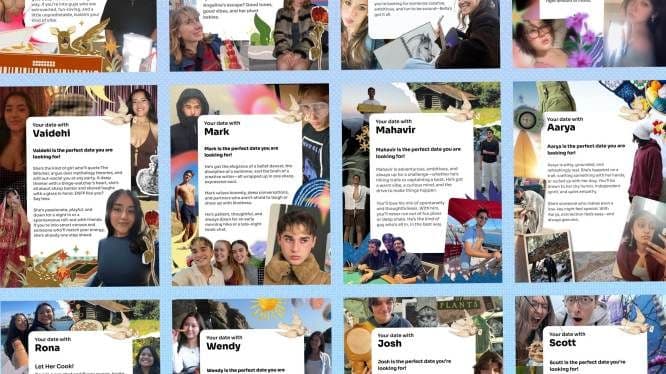
This generation of twentysomethings is sodisillusionedwithswipe-baseddating apps that they’ll try literally anything else — even an AI matchmaker. After dropping out of UC Berkeley,Dittoco-founders Allen Wang and Eric Liu set out to build something that would help their peers connect without having to spend hours each week navigating the messiness of apps like Tinder and Hinge. “As Gen Z ourselves, we were firsthand witnessing the behavioral shift in terms of how people are connecting with each other,” Wang told TechCrunch. “We see that people are getting super tired of all the endless swiping and endless small talk, and they’re really looking for something more genuine in real life.” Instead of a typical app, college students can sign up for Ditto by texting a certain iMessage number, along with a code. Then an AI chatbot introduces itself as Ditto, “a dating initiative built by college students who get it … no swiping, no awkward DMs, just real dates every Wednesday at 7 pm.” Users text their way through an onboarding process, starting with basic biographical information like their name, gender, and birth date. Then Ditto gets into more specific questions to understand someone’s personality, interests, and dating preferences. Some users even upload photos of their celebrity crushes to give the AI a sense of their type. The Ditto algorithm tries to match people not based on similar hobbies and interests, but rather what those hobbies and interests say about who someone is. “If there’s this guy, and he’s really into rock climbing, skydiving, and outdoor sports, and this girl, if she’s into hip hop, streetwear, and skateboarding, then even though those hobbies don’t look similar on the surface, I can tell you deeper down, both are very adventurous; maybe they’re very individualistic,” Wang said. “So that’s actually the core reason why people will find chemistry with each other, and so basically our claim is that chemistry is actually predictable with the right signals.” Then, every Wednesday at 7 p.m., Ditto messages users with their match for the week. “It comes with the person, it comes with a time, it comes with a location, and the users simply just need to show up and date each other and come back. We’ll collect more feedback about the date, and then improve our understanding of the user, and send them to a better next date,” Wang said. “Right now people’s goal is really just to go out there and meet each other, so it’s actually removing a lot of friction for our users, so that we are doing the heavy lifting for them, and they just simply go there and then meet whoever.” Ditto has 150,000 signups, and Wang says that out of all the matches that are connected via Ditto, about 20% of those matches end up going out on a date. (If that percentage sounds low to you, then you’ve probably never used Tinder.) Ditto creates a collage-like graphic to introduce users to one another and explain why they might be a good match — it’s a popular aesthetic among Gen Z that other connection apps with young founders likeSonderhave gravitated toward. With any dating app, and especially one that minimizes the time between matching and going out, it can be hard to discern the safety of a situation — is the person you’re meeting really who they say they are? For now, while Ditto is only available at a few dozen colleges, there’s a built-in vetting process in which you know that someone is a student at your university with a .edu email. Ditto is focused on figuring out how to grow to more schools — and eventually beyond just college — while scaling safely. Even for the most established and well-funded dating apps, this is a challenging endeavor. But Ditto does have $9.2 million in seed funding to work with from investors like Gradient, Peak XV, and Scribble. Wang said, “99% of the investors just reached out to us through inbound, because we were pretty big on LinkedIn and Twitter for a bit. Even Duolingo’s co-founder Severin [Hacker] reached out to me saying, ‘Hey, love your mission, I really like what you do, let’s hop on a call.’” Ditto has been able to establish this notoriety through its irreverent marketing, like videos ofrobot stunts. Now based in San Francisco, Ditto has 12 full-time employees, but they’re also hiring a “chief yacht officer” to throw promotional parties (yes, this is a legitimate job listing). “Our users are college students, and they can smell corporate marketing from a mile away,” Wang said. “But the stunts are the top of the funnel, not the product … Viral moments get college kids to look; a good first date is what makes them stay.”
View

Naïve raises $28.5M to automate the grunt work of setting up and running a company
Developers detest drudgery. The entire field of programming is proof of how hard people will work to automate away the boring tasks involved in building things. And, as vibe coding has proved, they’ve even managed to find ways tonotdo most of the work of putting products together. So I wasn’t very surprised to hear thatNaïve, which offers infrastructure that lets AI agents take on the bulk of the work involved in running a business, had signed up over 30,000 developer customers within months of its launch. Taking vibe coding a step further, the startup claims its infra can automate most of the work in setting up and running a business — provided you supply the AI agents and the required token budget, of course. It packages the process of assembling payments, email accounts, phone numbers, cloud infrastructure, storage, and company incorporation behind a single API. Naïve supplies a prompt that developers can provide to tools like Cursor, Claude Code, or Codex, which can connect to the company’s API to provision the infrastructure to set up a business. It lets an agent orchestrate the formation of a U.S. LLC, supplying details such as the state, industry code, business description, and proposed names, though users are still required to be involved to complete KYC/KYB processes and make any required payments. The rest of the set up can be done by your AI agents, including setting up email inboxes, virtual cards, phone numbers, databases, computing resources and connections to services such as Stripe and QuickBooks. A governance layer promises to help users set budgets, restrict their agents’ capabilities, and require human approval before sensitive actions are carried out. The company also provides templates for businesses, such as AI SEO, full-stack SaaS apps, recruiting, accounting, customer support, and even a mobile emulator with which agents can operate smartphone apps on emulated devices. The allure of such automation has clearly resonated, as evidenced by the user figure mentioned above. And Naïve has scaled annual run-rate revenue by 10x to the low double-digit millions over the past six months, CEO and co-founder Sean Dorje said. Based on that traction, the company has now raised $28.5 million in a Series A funding round led by Nexus Venture Partners, TechCrunch has exclusively learned. Dorje told TechCrunch that his customers are using Naïve to run autonomous businesses such as AI automation agencies, “face-less” online content channels on TikTok and YouTube, and even a rental car agency. In one case, he discovered Naïve’s infrastructure supporting a TikTok channel that posted AI-generated videos of cats and dogs dancing and boxing. “I think the one that’s growing the fastest right now is AI automation agencies,” Dorje said. “You know, the first business that a lot of people start is genuinely just selling agents to other small businesses […] We have some customers who run an entire rental-car agency autonomously.” But this toolkit for running businesses may only be part of Naïve’s opportunity. Using AI to automate everything sounds great, but the cost of keeping agents running can grow astronomical as they call expensive AI models, pass large amounts of context between tasks, and consume resources while sitting idle. Naïve is using some of the new capital to develop infrastructure that it says can make those agent loops more efficient. It’s building a model router to send queries to the most efficient model for a task while preserving and replaying already reasoned data; a memory system that stores and surfaces business context as needed by agents to do their tasks; and an orchestrator for dividing work among agents. Notably, Naïve is also building a serverless runtime that runs agents within lightweight JavaScript environments rather than assigning each one a complete virtual machine — an approach that lets customers pay primarily when an agent is active and makes it less expensive to deploy large numbers of agents. While the autonomous company toolkit is in the most demand today, Dorje said optimizing inference costs is one of its fastest-growing sources of demand. “Part of running an autonomous company and running agents, like that’s your biggest cost line now, and so the highest growing demand right now, I would say is [for] inference and serverless agents,” he said. He added that part of the business is getting interest from enterprises, though he did not name any. That could prove to be a more valuable business than helping founders automatically set up phone numbers and corporate cards. Developers may initially use Naïve to deal with the tedium of setting up a company, but as they grow, they may care more about whether it can meaningfully reduce the recurring cost of operating a horde of agents. Enterprises with established businesses may find something to care about on that front, too. Naïve currently has 10 full-time employees. Dorje said proceeds from the Series A will be used to hire researchers and develop the company’s four infrastructure projects: virtualized sandboxes for agents; model routing and inference optimization; a memory layer; and governance and orchestration. Y Combinator, Zetta, Liquid 2 and angel investors including Gokul Rajaram, Apollo.io co-founder Tim Zheng, and former HubSpot COO JD Sherman also participated in the Series A. The funding brings the company’s total capital raised to roughly $32 million.
View
ChatGPT brings unlimited text chats to free users
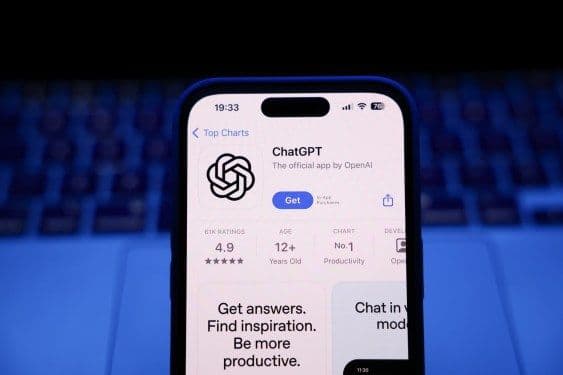
OpenAI is removing limits on text-based chats for all users on ChatGPT, which recently crossed the1 billion weekly user mark, the companyannouncedtoday. The new GPT-5.6 Luna model will power this experience and will be the default model for Free and Go users, replacing GPT-5.5. Both users will also get a new “Think” button that lets them select higher reasoning power for complex questions. OpenAI said that there will still be separate limits for files, images, voice, and image generation. The update brings changes for Plus and Pro users as well. They’ll gain access to an upgraded GPT-5.6 Sol model that’s better for quick tasks such as questions, web research, advice, planning, writing, and making decisions. The company noted that this new model will give more compact and robust answers. (Notably, this is a separate version from GPT-5.6 Sol used for Codex and Work, which is unchanged.) ChatGPT Plus and Pro users are also getting a thinking slider to adjust “how much” thought the model puts into an answer. They can tune the thinking slider based on complexity and steps involved in solving a query. OpenAI said an internal evaluation found that, compared to GPT-5.5-Instant, factual errors were 62% less common for GPT-5.6 Luna and 68% less common for GPT-5.6 Sol. The updated version of GPT-5.6 Sol is available to Plus and Pro users today, while the other changes for Free and Go users are arriving this week. Next week, users will gain access to unlimited text chats and the new Think button for harder questions.
View

Omilia raises $67M to scale its customer support platform
The customer support industry has seen a massive influx of startups like Sierra, Decagon, and Parloa trying to infuse AI into automating customer calls, chat, and messages so companies can handle more queries at scale. But according to Athens-basedOmilia, which has been working on automating voice calls and customer support since 2002, throwing AI at every process can be wasteful. The company’s CEO, Dimitris Vassos, says that a large proportion of incoming customer support queries involve basic information, such as account balances, and there’s little need to deploy large language models for such tasks. “We will use any available weapon to win the battle for customer service. Companies like Sierra, Decagon, etc. identify as generative AI companies. Their sole purpose is to deploy generative AI and limit themselves. You may have a bazooka, but if your enemy is near you, you need a knife. This is the reality of the contact center, where you need multiple tools,” he said. Omilia itself has expanded its operations to building self-learning agents that can work across different customer contact points. To build that out, the company has now raised a $67 million Series B led by Expedition Growth Capital. This round is the company’s second time raising capitalafter it raised $20 million from Grafton Capital in 2020. Since then, it has managed to increase its annual recurring revenue by 10x to $60 million. Vassos says Omilia’s key differentiation lies in having great unit economics for both itself and its customers, and thanks to this approach, it hasn’t needed large cash infusions as compared to its competitors. “In the next few years, we will see the companies that can offer real ROI prevail. We don’t mind that we’re not as sexy as ElevenLabs and Sierra on LinkedIn right now. We care about growing steadily and building the foundations for a billion-dollar revenue company in the next three years,” Vassos said. Omilia’s clients include Capital One, Discover, RBC, DWP, and PSEG, and Vassos said quick-service restaurants that have adopted voice-based ordering are now a big focus. The company already has Taco Bell as a client and has deployed its tech across more than 1,000 outlets. Vassos said that it is in talks with two more quick-service restaurants in the U.S. But AI deployments can be quite hit or miss. In Taco Bell’s case, a snafu in its ordering system reportedly allowed a customer to order18,000 cups of water last year. Vassos maintains this incident never took place, and Omilia’s logs didn’t show it. We have reached out to Taco Bell to clarify, and we will update our story if we hear back. Omilia will use the fresh cash to open a new office in the U.S., a market that accounts for a significant chunk of its revenue. It will also bolster its go-to-market team and is hiring a chief revenue officer, chief marketing officer, and a VP of revenue operations. The company has around 500 employees at the moment and expects its headcount to reach 600 by the end of the year.
View

Google Maps adds agentic features, including food ordering and hotel bookings
Google announced on Thursday that Google Maps’ “Ask Maps” feature is gaining a slew of new agentic capabilities, including the ability to order food, book hotels, and find event tickets. The tech giant is also bringingPersonal Intelligenceto Ask Maps, allowing the AI tool to personalize its responses by drawing on information from a user’s Gmail and Google Calendar. The launch of the new features reflects Google’s ambitions to transform Google Maps from a navigation tool into an assistant that’s capable of helping users complete real-world tasks. With the new agentic food-ordering capabilities, users can open Ask Maps in Google Maps and ask a question like, “Where can I order vegan avocado toast and an oat milk latte near home?” The tool will then surface nearby restaurants that have what they’re looking for. After selecting a restaurant, users can tap the “Order online” option to place an order through supported platforms such as Square, Toast, or Uber Eats. Ask Maps will add the items to a cart. Users can choose to add more items to their cart, then pay for the order on the supported platform. Additionally, users can use Ask Maps to find a hotel for their next trip by entering a query like, “For next weekend’s conference in downtown Miami, find me a decently priced, top-rated hotel with an artsy vibe within walking distance from a gym and restaurants.” Ask Maps will then compare prices and check availability before providing a list of options. Once users find an option they like, they can click through to the partner’s website to book the stay. Users can also ask questions like “What are some comedy shows or live music this evening near work?” to get a list of options along with links to buy tickets. The new agentic features are rolling out to users in the U.S. With the addition of Personal Intelligence, Ask Maps will be able to give users personalized answers to their questions about upcoming flights, dinner reservations, hotels, and more. For example, users could ask, “What time will I land in Vancouver on my upcoming flight?” or “Can you recommend where to eat and what to do near my hotel?” Ask Maps will then pull information from a user’s emails and calendar to provide tailored responses. It’s worth noting that Personal Intelligence is off by default. Ask Maps will now also remember prior conversations, allowing users to pick up where they left off. Now users can ask things like, “What activities had you suggested for my trip to Seattle?” and continue planning without having to start from scratch. Google is also launching a live transit widget in Ask Maps that will allow users to stay up to date on delays and conditions as they change in real time. Personal Intelligence and the live transit widget in Ask Maps are rolling out to all markets where Ask Maps is available.
View

Exclusive: Mirendil inks $100M+ Google Cloud deal to scale self-improving AI
AI labMirendilhas signed a multi-year partnership with Google Cloud to source compute capacity for its self-improving AI research, TechCrunch has exclusively learned. The deal mirrors two trends shaping the AI industry: cloud giants are courting startups with huge infrastructure commitments, and AI companies are snatching up as many compute deals as they can to secure access as they scale. The deal is worth upwards of $100 million, Mirendil’s co-founder and CEO, Behnam Neyshabur, told TechCrunch. That’s roughly half of what Mirendil raised inseed funding at a $1 billion valuationin late June. The deal gives the startup access to both Google’s TPUs and Nvidia GPUs, as well as managed training clusters with which Mirendil will work on its self-improving AI. The startup hopes its AI will eventually be able to take on the work of an entire frontier AI lab. Self-improving AI, also known asrecursive self-improvement, refers to AI systems that iteratively improve themselves. It’s a concept that major labs likeAnthropic, where Mirendil’s co-founders hail from, have been working on. A handful of startups likeRecursive SuperintelligenceandRicursive Intelligencehave also recently sprung up around achieving that goal. Mirendil believes this process will automate a lot of scientific and AI research, helping scientists make progress in fields like medicine, biology, and materials science. Neyshabur thinks AI can mimic how human scientists can learn more about new domains, accumulate knowledge and expertise, and gradually improve their performance. “You can have a self-improving AI where you can point a problem at it and it keeps getting better with time,” he said. “How can we have an AI system that keeps doing research, keeps improving its own knowledge and performance when it comes to Alzheimer’s disease?” he continued. “This technology allows us to set goals that are ambitious for AI, and the AI would keep making progress.” Training self-improving AI, however, requires enormous amounts of computing power. The lab’s co-founder Harsh Mehta said training is increasingly about matching the right workloads to the right hardware. “These models are really good at working with different workloads and chips, and assigning the right workloads to the right chips,” Mehta said. “[Google] provides multiple kinds of chips […] this flexibility allows us to ultimately mix and match workloads with the right kind of accelerators, and then lower the cost not just for us, but also for our customers using our systems.” That flexibility is central to Google’s AI infrastructure pitch. Amin Vahdat, SVP and chief technologist of AI and infrastructure at Google, said in a statement that AI advancement isn’t just about chip-level performance anymore, “but how we orchestrate entire systems of intelligence and break through the physical constraints of scaling.” Neyshabur said Mirendil’s software and systems layer help customers get more out of Google’s hardware, giving the cloud giant another potential leg up in the race against its competition. In return, Google gets a strategic partner building frontier recursive self-improving AI — technology that it can eventually shop around to enterprise customers.
View

Ex-Spotify employees raise $10M to bring the AI behind its recommendations to e-commerce
Sidd Motwani, Ian Anderson and Shivaditya Sinha spent years building the behavioral intelligence infrastructure behind Spotify’s recommendation engine. Called Vector AI, the system is designed to predict a person’s intent and next actions instead of relying only on their past behavior. It powers about 90% of Spotify’s recommendations to its 800 million users. Now, the three are bringing a similar system to e-commerce with their new startup,Malachyte. The company on Thursday said it had raised $10 million in seed funding to scale distribution and hire more product and commercial leaders. Malachyte was formed from the belief that most online stores treat shoppers the same way: Personalization is largely dictated by historical purchases, demographic segmentation, or logged-in customer profiles. That means first-time visitors often see the same generic storefront as everyone else, while existing shoppers receive recommendations based primarily on what they bought previously rather than what they need today. The startup wants to change that by building real-time, intent-aware shopping experiences. Its platform uses what it calls “two-headed Vector AI” to predict what product a shopper wants next, learn their general taste, and fine-tune continuously based on what they do in real time. “[Our] system starts forming before the first click, using the context available the moment the page loads. Within a single session, we build a real read on both preferences and what someone is trying to accomplish right now,” Motwani, Malachyte’s CEO, told TechCrunch. “A search for ‘heavy-duty boot’ followed by two clicks on steel-toed boots is enough to move work pants and gloves up the page and push dress shoes down, with no account or history required. Every additional action sharpens the profile, so the experience gets more relevant the longer someone stays, and again on their next visit.” Motwani argues that retailers already possess their most valuable source of customer intelligence, but rarely take advantage of it in real time. “Every hover, click, scroll, search refinement and add-to-cart is a signal, and most systems either never act on it in the moment or aggregate it into a segment overnight. We read it continuously, so each action makes the user’s vector more confident about both preference and current intent,” he added. He also believes contextual signals remain significantly underutilized. “A phone visitor at 11 p.m. from an email link is in a different state of mind than the same person on a laptop mid-morning, and most systems treat them identically,” Motwani said. The company has been developing and testing its technology since 2024, and worked with more than 20 enterprise customers across travel, grocery and retail before ultimately focusing on e-commerce. Its platform first went live in the fall of 2025 with Fun.com. Since June 2026, it has been generally available to Shopify merchants through a native integration, while larger retailers can integrate the technology through its API. Looking ahead, Motwani says the bigger opportunity is in bringing merchandising and marketing together around the same understanding of customer behavior. The funding round was co-led by Bessemer Venture Partners and Gradient, with participation from Harpoon Ventures.
View
Submit your Tool


PoweredByAI.app is an AI Tools Directory helping individuals, businesses, and creators discover the best AI tools for writing, coding, design, productivity, and more.
© 2026 , Product of011BQ. All rights reserved.