🚀 Zaprep: Your Socials on Steroids. Start free — automate 1,000 DMs/month & turn engagement into leads. with 1,000 automated DMs/month.
Latest AI News

Jeff Dean, Sanjay Ghemawat Exit Google, Launch AI Startup to ‘Accelerate Discoveries’
The new venture will use frontier AI models to automate experimental workflows across machine learning, science, and engineering.
View

Meta Launches Muse Code Beta With Muse Spark 1.2 for AI Coding
The release brings a coding-focused AI model trained for debugging, repository-scale development and long-running software engineering workflows.
View

But What If Meta Had Not Apologised to Modi?
Section 79 of the IT Act, 2000 exempts platforms such as Meta, Google, and X from being treated as publishers of what billions of users post on their platforms.
View

Big Tech’s Multi-Billion AI Infrastructure Bet Has an Achilles’ Heel
Microsoft, Google, and Amazon are set to invest up to $615 billion in AI infrastructure this year as enterprise demand continues to outpace available cloud capacity.
View
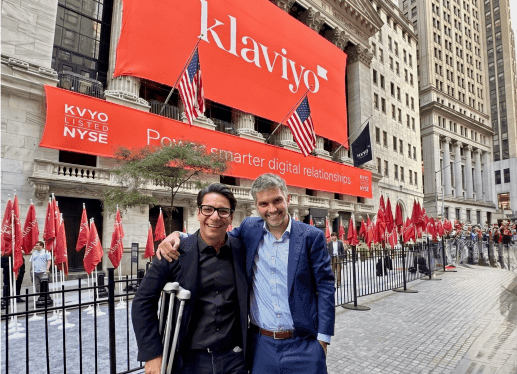
Klaviyo acquires Elias Torres’ Agency in full-circle reunion for tech founders
Publicly traded e-commerce marketing automation platform Klaviyo has agreed to acquire Agency, a three-year-old AI-powered customer success startup founded by serial entrepreneur Elias Torres. The terms of the deal were not disclosed. Founded in 2023,Agencyhad raised $32 million from investors, including Sequoia, Menlo Ventures, and Felicis prior to the acquisition. As part of the deal, Torres (pictured left) will join Klaviyo as chief product officer, leading Agency’s 25-person team to accelerate the development and expansion of Klaviyo’s AI agents: Composer, which builds marketing campaigns, and Customer Agent, which handles post-sale support like returns and order tracking. “Elias and the team built a great product with Agency,” Klaviyo co-founder and CEO Andrew Bialecki (pictured right) told TechCrunch. “We’re going to take that and combine it with our agent products and try to bring that to 200,000 businesses — and hopefully to millions more over the next couple of years.” For Torres, joining Klaviyo brings his career full circle. He is no stranger to M&A exits, having co-founded Performable (acquired by HubSpot in 2011) and later Drift, where he served as CTO for eight years until its $1.2 billionsale to Vista Equityin 2021. Back in 2010 at Performable, Torres hired Bialecki, who had graduated from Harvard two years earlier, as one of that startup’s first engineers. Torres mentored Bialecki on early-stage startup dynamics. “He soaked it up in a short amount of time,” Torres recalled of their time working together. Bialecki co-founded Klaviyo, which he initially bootstrapped, shortly after leaving Performable. When Klaviyo raised its first outside capital in 2015, Bialecki invited Torres to back the seed round as an angel investor.Klaviyo went on to complete a high-profile IPO in September 2023 at a$9.2 billionvaluation. While Klaviyo’s stock has taken a hit alongside other SaaS companies, Torres and Bialecki believe the platform’s years of customer data give its AI agents an advantage over competitors like Decagon and Sierra. “Elias and I coalesced on the mission of how we provide agents for businesses that they can give to their customers,” Bialecki said, adding that he is excited to work with Torres again, as he did at the beginning of the cloud era. “It’s the next Big Tech revolution: agents. Let’s get the band back together, and let’s go build.”
View

Meta launches Muse Code, an AI agent for large code bases
Meta, considered a bit of a straggler in the AI harnesses realm, is making strides to catch up. This week, the company released a new terminal coding agent aimed at programmers looking for assistance with complex tasks across large software code bases. Muse Code, which is currently available in beta, can accomplish “complete software engineering tasks across large repos,” Meta CEO Mark Zuckerberg saidin a social mediapost on Wednesday. Those tasks include “planning changes, writing code, validating the results,” he added. Code, which can be installed with a single command, is powered by Meta’s previously released coding model, Muse Spark. It handles large projects by launching its own agents, which then work simultaneously. “When a job is big enough, it fans out to separate sub-agents working in parallel in isolated worktrees,” Zuckerberg explained. “Your working copy is never touched. In testing we had it build six features for a game simultaneously with no collisions.” The move attempts to position Meta more competitively, and more affordably, with AI lab peers like OpenAI and its coding agent Codex, and Anthropic with Claude Code. “We think that for a lot of workflows and a lot of use cases, this can be an incredibly good option, especially from a cost perspective,” Alexandr Wang, Meta’s AI chief who leads Meta Superintelligence Labs,toldthe Wall Street Journal. Meta has been attempting to grow its AI presence bypouring moneyinto development. In June, it expanded beyond its core focus of using AI to support its advertising business andentered the enterprise AI marketwith an agent aimed at customer service and support.
View

Hark previews its browser use agent for completing tasks
Hark, a startup that raised$700 million in Series A funding in May, today launched its agentHark Handoff,which can use a browser efficiently to complete tasks. The company claims that Handoff can easily navigate websites that have no official APIs, including Target, Walmart, OpenTable, and LinkedIn. It said that the Handoff agent looks at website structure and visual data to understand if it needs to click buttons or type information. The premise is similar to tons of browser-based agents released before. Issue a command, and it will complete tasks for you, including ordering food or coffee, booking travel tickets, filing returns, shopping for essentials, reserving a table at a restaurant, or researching on your behalf by looking at various sources. In a video demo, the company’s CEO, Brett Adcock, showed that the assistant can take a command to build a bouquet with flowers users specify, along with accommodating fuzzy terms like “some of the florist’s choice.” Notably, the video shows only part of the process, so we can’t really gauge its effectiveness. The company said that for this release, it’s using a post-trained model, and plans to pre-train later this year. Hark said that, with this approach, it can refine its data pipeline, training infrastructure, and techniques more quickly. Hark also claims that, unlike large language models (LLMs) predicting the next token, its model can predict the next action — which could be a clock or a keyboard input at a specific place. There are many companies working on computer-use agents, including Google, OpenAI, and Anthropic, with VC-funded startups working on browser-based task automation, such asBrowser Use,Polar, Strawberry, and Aside. Hark said that its Handoff agent is faster than the competition and also costs much less than other models like GPT 5.5 and Opus 4.8. The startup has opened a waitlist for its platform and plans to release it by the end of the summer.
View

Shopify says AI search is driving more traffic and sales, not replacing Google
E-commerce software maker Shopify seems to be benefiting handily from people using AI to search. On the company’s second-quarter earnings call, Shopify President Harley Finkelstein said AI has become a “complement to search, rather than a substitute for it,” and had particularly benefited the long tail of e-commerce, including the smaller merchants that make up the majority of its customer base. Indeed, the company credited itsearnings beatand soaring revenue to AI search, at least partly. This is quite different from how AI isimpactingonline publishing, where AI summaries have led to a measurable drop in click-through rates, which lowers traffic and consequently eats into advertising revenues. Instead, Shopify believes that AI is a boon to its business. The company noted that AI-driven traffic and orders to Shopify stores had tripled year-over-year in the second quarter. And, this was not a result of AI taking share from search. “In fact, search remains one of our largest sources of buyer traffic to our merchants, and it’s still growing,” Finkelstein told analysts on the call. “Traditional search sessions are up 1.3x over the past two years, holding roughly a third of all storefront sessions.” The e-commerce platform reported strong results in the quarter, with revenue rising 36% to $3.6 billion from a year earlier, outstripping Wall Street’s forecast of $3.4 billion. Gross operating profit rose 31% to $1.71 billion, also ahead of analysts’ expectations of $1.63 billion. The company went into further detail about why AI search was working for its business. “While search engines rank by popularity against a handful of keywords, AI agents make multiple calls into Shopify’s catalog, working with richer structured data to match products with the buyer’s specific intent, rather than just keywords,” Finkelstein explained. “When a buyer asks an AI assistant for the best car seat that fits three across a sedan, traditional search focuses on the keyword ‘car seat.’ An agent, however, understands the actual need, the dimensions, the vehicle type, and the fact that they need three. It searches across all of those constraints at once to find the product that actually works, not just the one that ranks highest,” he said. In other words, AI’s capability to search across many dimensions to find the best product for users is resulting in better conversions for merchants. “Buyers’ shopping journeys are being compressed as half of all AI-referred sessions are landing directly on a product description page. That is 2.5 times more than what we see with traditional search,” Finkelstein added. Plus, the company said 75% of AI-attributed purchases in Q2 happened outside the top 100 categories, or what Shopify called its “sweet spot.” In addition, the company suggested Shopify stands to benefit from AI playing a larger role in transactions thanks to its trusted checkout experience. The company pointed out that it’s also working with AI tools and agents, having built connectors to Claude, ChatGPT, Perplexity, Manus, Replit, and Vercel, as well as vibe-coding platforms like Lovable that let merchants build on Shopify however they choose.
View

Jeff Dean and other top AI researchers are leaving Google to launch their own startup
Jeff Dean, one of the longest-serving and most influential executives at Google, is stepping down from the search giant to launch his own AI startup. Coming with him as co-founders are several other top researchers at the company, including Sanjay Ghemawat, a top engineer and senior fellow at Google, Quoc Le, a key AI researcher and founding member of Google Brain, and Oriol Vinyals, a senior research scientist at Google DeepMind. Deanreportedlyplans to serve as CEO. Together, the group is starting Discovery Loop, a public benefit corporation that seeks to use AI to turbo-charge scientific research. Discovery Loop says it plans to use high-octane algorithms to initiate and iterate thousands of experiments simultaneously, with the goal of partially automating the research process and expanding the scale at which experimentation can be conducted. The startup is also interested in usingAI to help create more powerful AI(a process known asrecursive self-improvement), which would cut human iteration out of the loop entirely. “While science and engineering have tremendously advanced society over past centuries, progress has traditionally relied on slow, sequential human iterations, creating a significant bottleneck,” the company said in a press release. “Discovery Loop is developing advanced AI systems that leverage massive computational scale to fundamentally transform the speed and efficiency of innovation by automating complete experimental loops.” Using AI to accelerate scientific discovery has beena key interestof the science and tech communities for many years, but until recently, it remained a largely experimental field with limited commercial application. The company has received financial support from a number of different sources, including Google’s parent company Alphabet. The initial funding round is being co-led by Radical Ventures and Khosla Ventures, the company announced Wednesday. Kleiner Perkins, Lightspeed, and Doerr Capital also participated. “The next great frontier for AI is to go beyond answering questions and to begin making discoveries,” the founding team said in a joint statement. “By fundamentally accelerating how engineering and scientific discovery are conducted, we can deliver the benefits of transformative technologies to the world far sooner.” Dean has worked at Google since 1999 and was Google’s 30th employee. Over the years, he has contributed to Google search’score infrastructure, including its crawling and indexing system, and its query-serving system. He has also had a significant impact onGoogle Gemini’s multimodal models, andplayed a leading rolein the company’s early AI research. “We think there is opportunity for AI to more fully automate what has traditionally been a very human-intensive experimental loop,” Deantold the New York Times. “You will get both a higher quantity and a higher quality of experiments, and that will lead to scientific breakthroughs and advances.”
View

MacPaw taps Liquid AI to offer on-device inference to devs building for its app store
Ukraine-based app developerMacPawhas partnered up withLiquid AIto power its products with locally hosted AI models, and eventually make the tech stack available to developers. The company is also preparing its SetApp app store for AI apps with credit-based plans for users. MacPaw is currently working on its AI assistant Eney,which it unveiled last year, and now plans to build a locally hosted version, for which it has roped in Liquid AI to develop an on-device inference system called Elix as well as a local memory system. “Before training our models, we select an architecture that is different and tailored to the hardware. That allows us to really have the most efficient version of intelligence that runs directly on the device, with benefits like privacy and security,” Liquid AI’s co-founder and CEO Ramin Hasani told TechCrunch. MacPaw’s CEO Oleksandr Kosovan said locally hosted AI models will also give users the ability to run assistants and agentic workflows offline. Notably, Apple already provides its own local models to developers. But Hasani maintains that Liquid AI’s models focus on performance for different capabilities. “We are also building a customization stack around models. This means that with user input, the models can use the data and improve. We want our models to be adaptable and become more intelligent over time,” Hasani said. MacPaw plans to focus more on AI apps for its subscription-based app store, SetApp, which has over 150,000 paying users. Once it locks in the local processing architecture with Liquid AI, MacPaw wants to make the tech available to developers so they can use on-device inference with their apps. Kosovan said the platform will also provide access to other cloud models from companies like Google, acting as a one-stop shop for developers. MacPaw is already experimenting with credit-based pricing for the app store, where users can perform a certain number of AI operations based on the credits they have and the complexity of the task.
View

Anthropic is hiring an AI chip design team
Anthropic is building a team to design its own custom chips for AI usage. Business Insider was first to reporton the news, but Anthropic has since confirmed with TechCrunch. The Claude maker said it is planning to co-design hardware and models to help its technology run faster and more efficiently. Last month,The Information reportedthat Anthropic was scouting Samsung as a potential partner for building such chips. Anthropic’s decision to design its own chips comes as demand for Claude rises while AI companies snatch up as many AI infrastructure deals as they can. For its part, Anthropic has inked deals with AWS, Google, Nvidia, and AMD to access AI computing hardware. But to really scale to meet the level of demand, relying on others clearly isn’t enough. Anthropic isn’t the first AI company to decide to build its own chip. In June,OpenAI unveiled its Broadcom-built Jalapeño chip, which is designed specifically for inference workloads. Google DeepMind has long relied on Alphabet’s TPU chips to power its AI models, while Meta has been developing its own MTIA accelerators for AI workloads. The company is seeking engineers with experience in chip design for its “custom silicon team,” per a job listing. This article has been updated to include confirmation from Anthropic.
View

TechCrunch Disrupt 2026’s Real World AI Stage features robots, automated factories, and extinct animals
At our past TechCrunch Disrupt events, AI has taken center stage, both throughout our programming and in a stage of its own. This year, the technology, implications, and players are so rapidly developing and widespread that we’re expanding the single AI stage into two! The AI Stagewill continue as you’d expect, with a rundown of sessions and speakers available for review right here. But the Real World AI Stage is brand-new forTechCrunch Disrupt 2026. On this stage, we’ll be focusing on that intersection between the digital and physical, and all the ways we’ll continue to see a blending of the two, as autonomous hardware goes beyond self-driving cars and enters public spaces, battlefields, our homes, and even potentially helps extinct species reenter Earth. It’s a packed lineup featuring speakers from Shield AI, Colossal Biosciences, FieldAI, Foxglove, and more still to come. You can join in on all the excitement October 13 to 15 at San Francisco’s Moscone West. As a bonus, if you’re catching this before 11:59 p.m. PT on August 7,you can get an extra $100 off your ticket by following this link. Here’s the first breakdown of our Real World AI Stage lineup: WithNate Michael, CTO, Shield AI When AI enters the physical world, the consequences of failure change. A mistake could lead to a grounded aircraft, a vehicle crash, or a compromised mission. In this session, leaders who are building autonomous vehicles, defense technologies, and industrial systems will talk about one of the toughest questions that every hard tech founder must face: How do you know when your system is ready to be safely deployed? We’ll dig into how founders can create a safety culture, test and validate AI, navigate regulatory hurdles, and build companies that can earn trust when the stakes are high. With Ben Lamm, CEO, Colossal Biosciences Ben Lamm has built one of the most controversial companies in tech by turning de-extinction from science fiction into a billion-dollar business. In this fireside chat, the Colossal Biosciences CEO will discuss the technologies used to revive extinct species, the role AI plays in modern biology, and the growing debate over whether engineering nature is a conservation breakthrough or a distraction from protecting what’s already here. With Dr. Ali Agha, CEO and founder of FieldAI; Michelle Lee, CEO and founder, Medra; and Aidan Madigan-Curtis, partner, Eclipse Ventures The most valuable AI deployments in the world operate where the cloud can’t reach. And building for them requires a different technological playbook. This session brings together leaders from defense, space, and industrial AI who will share how they have tackled the challenge of making AI work at the edge — where latency matters, connectivity is limited, and failure isn’t an option. Expect practical lessons on architectural principles, design decisions, and trade-offs that make AI-centric systems work in the real world. With John Mackey, CEO, co-founder, MBRYONICS; Boris Sofman, co-founder and CEO, Bedrock Robotics; and Adrian Macneil, CEO, Foxglove A prototype that works is not a product. A product that ships is not a scaled business. The gap between each of those stages is where most deep tech startups die. Founders might have the right team and tech, but they fail to understand what it takes to bring a prototype into production and eventually scale to higher, profitable volumes. This session brings together founders who have crossed that gap in space hardware, humanoid robotics, and autonomous systems. They’ll share what they got wrong, what they’d do earlier, and what the prototype-to-production journey looks like when supply chains and manufacturing realities replace lab conditions. There’s plenty more in store for you at Disrupt 2026 — after all, that’s just one stage’s worth of programming! For a sense of what else you’ll get to access, we’ve also announced the: Be part of Disrupt 2026 in San Francisco from October 13–15, where more than 10,000 startup, tech, and VC leaders come together for three days of insights, Startup Battlefield, unparalleled networking, and access to every stage and the exhibition floor. Register today!
View
Submit your Tool

PoweredByAI.app is an AI Tools Directory helping individuals, businesses, and creators discover the best AI tools for writing, coding, design, productivity, and more.
© 2026 , Product of011BQ. All rights reserved.