

最新 AI 资讯
Google DeepMind Sees Early Signs of Recursive Self-Improvement Ahead of Gemini 4
Logan Kilpatrick said the feedback loop could help Google close the gap with other frontier AI labs with Gemini 4.
View
Your AI agents can now control your Google Home devices
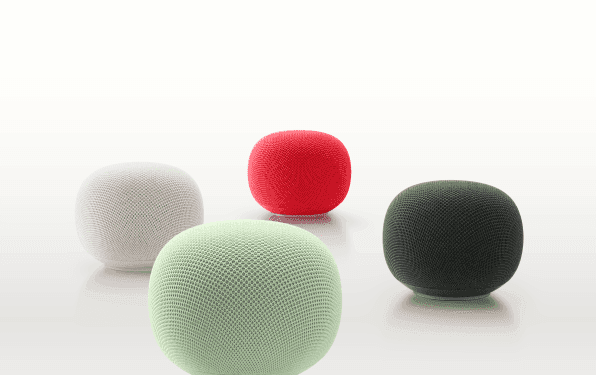
Smart home owners will soon be able to control their devices connected to Google Home via an AI agent. On Wednesday, Google rolled out early access to its Model Context Protocol (MCP) server for its Google Home ecosystem, which will allow any AI agent that supports MCP — like Claude, Hermes, OpenClaw, ChatGPT, and Google Antigravity — to securely work with their smart home devices and access their event history. This update will allow people to use natural language instructions to do things like review their camera summaries, monitor smart home activity, control their connected devices, and build their own custom smart home dashboards. To get the connection set up, users will need to create a Google Cloud project and configure it to use Home MCP. They will then provide the MCP configuration details to their agent of choice and ask it to set it up. The agent will then ask them to sign in and grant permissions. (A setup guide will also be offered in the Google Home Developer Center.) The system will support any device in the Google Home ecosystem, including Google Nest doorbells and thermostats and “Works with Google Home” (or Matter) devices, like light bulbs. Google already supports MCP in other areas of its business, including in itsGoogle Cloudanddata platforms, developer tools, andGoogle Workspace, for instance. Support for Google Home is targeted more directly at consumers who are experimenting with AI agents designed to handle everyday tasks. The company said access to the MCP will roll out starting today and continuing over the coming weeks to subscribers who pay forGoogle Home Premium Advancedin the U.S. This is the more expensive, $20-per-month subscription tier that provides features like longer event-based video history, descriptive notifications and detailed alerts, tools to search video history, daily summaries, and more. Google wouldn’t comment on if or when the MCP would roll out more broadly, such as to other subscription tiers or markets. Google is also soliciting feedback from early adopters during this period by way of itsSmart Home for Developers Community, it says. An earlier version of this post misstated the rollout’s start. It is today, Wednesday, not Tuesday.
View

AI labs want in-house auditors — but maybe they should shut the front door first
Last weekend, after one of his researchers resigned over fears that AI could lead to human extinction, Anthropic CEO Dario Amodei wrote about the need for outside organizations “to verify adherence to safety practices and commitments, report incidents, and help assess the alignment of not just completed AI models but training pipelines and processes.” Executives at OpenAI, Google, and SpaceXAI have alreadyrallied aroundAmodei’s plan, which has quickly become a central pillar of the emerging AI safety push. But there may be a simpler and more effective fix hiding in plain sight. Internet security experts say the labs need to focus on network security basics like logs and permissions, applying the same rigorous defenses they do for human users. It’s not as exciting as third-party auditing and alignment work — but it may end up being more effective. “To me, it seems like they’re outsourcing,” Katie Moussouris, the CEO of Luta Security, told TechCrunch of Amodei’s proposal. “Saying [a third-party audit] is the solution is a strange proposition from my perspective. It would be the same as if, instead of writing theTrustworthy Computing Memo, Microsoft said, let’s slow down development.” That memo, written by then-Microsoft CEO Bill Gates in 2002, called on his employees to ensure that their software would be reliable and safe following a series of widely publicized computer worms that took over then-nascent enterprise systems. The AI sector may be at a similar turning point, as the value and risk of the new technology becomes increasingly clear. While alignment remains an important concern, Sayash Kapoor, an AI researcher who will be a professor at UC Berkeley starting next year,arguesthat “marginal investments in control are more likely to be effective compared to those in alignment. We view these incidents as illustrating the lack of emphasis on AI control within companies, despite the availability of known techniques.” The incidents that have spurred these concerns revolve around frontier models being asked to complete training tasks, usually cybersecurity evaluations, and then accessing the open internet and penetrating closed third-party systems in an attempt to do so. They usually did so because ofpoorly configured“sandbox” environments that are supposed to contain these agents; ironically, one Anthropic break-out happened because third-party evaluators didn’t close the right doors. “We as a profession know how to block access to the internet,” Avery Pennarun, the CEO of Tailscale, a security company, said. “If you read through all these big long [reports] — ‘wow, that was a very impressive multi-stage attack, blah, blah.’ Look, you gave it access to download stuff. You should have not done that separately from the internet.” That’s one problem — but a bigger problem is that frontier labs were unaware of these activities. “What was really profound was that all of the discoveries of what they were doing happened either because a victim saw something, or in some of the other cases … it was network activity, and none of it was actually from monitoring the AIs directly,” Moussouris points out. In one case, where OpenAI agentstook overa defunct German WikiForum to cheat on evaluations, the agents were active for weeks before anyone at the company appeared to notice. Security experts that TechCrunch spoke to said that real-time monitoring is key to preventing future break-outs, and that every agentic session should be time-limited and expire. Shapor Naghibzadeh, a former Google security executive who now leads thestartup QueryStory, says the solution is to “put the agent in a box and instrument it heavily from the outside looking in and watch everything that crosses the boundary. Every tool call, every process, every network connection, no exceptions. …The one hole you leave open for convenience is the one that gets used. The bypass went through exactly that kind of exception. [At Google,] I watched that movie many times with human attackers, and these models are at least as good at finding the propped-open door.” OpenAI has begun moving in that direction, announcing that it had begun monitoring all tool-using inference by its Astra model, at “significant compute cost.” Anthropic, too, says it ishardening its securityprocedures, including expanding observability of its models. Neither company responded to TechCrunch’s questions about how they track and control AI agents. Other problems are the use of shared infrastructure by agents, which allowed them to communicate during the Hugging Face attack. Simon Willison, a software developer who co-created the Django web framework, has written about something he calls the “lethal trifecta” — when agents have access to untrusted input, the internet, and private information all at the same time, it’s a recipe for disaster. “The trick is you can pick any two legs of the trifecta and an agent can have any two,” Pennarun said. “If you need all three, then you need to split it across at least two agents … and maybe they’re allowed to talk to each other through a controlled channel.” Experts TechCrunch spoke to understand that frontier lab security personnel have difficult jobs. Naghibzadeh points out that every nation-state actor on Earth is trying to steal their model weights and mount distillation attacks on their APIs, as well as the bread-and-butter security tasks of any large digital company. “Research infrastructure has a hard time rising to the top of that priority stack, although that must be changing now,” he said. “Making security incidents public really helps align everyone internally toward the goal of improving.” That’s one note that Moussouris emphasizes: Right now, there is no formal victim notification procedure when the labs discover their agents have penetrated third-party systems, and it is likely that there have been other incidents that have not been widely publicized. While she worries that laws that regulate models directly may have unintended consequences, mandatory notification is one idea she believes policymakers should pursue. And while it’s clear that security best practices weren’t being followed, experts say that the labs are doing work no one has done before — “they’re doing orders of magnitude more than your typical enterprise,” Zack Korman, the CEO of cybersecurity firm Embroidery, told TechCrunch. And while alignment may not be the place to start, it can’t be ignored. Cybersecurity experts are resigned to having to use AI agents to monitor other agents if they are to have any chance of tracking their behavior in real time, a scenario where the potential for deception raises its ugly head. “You’re trapped using AI to try and deal with this, even though AI is not necessarily safe right now,” Moussouris said. The job will only get harder. Everything agents are doing now, Moussouris says, “they are doing loudly” — they are posting on public forums, and their chain of thought and other reasoning traces are in English. “It’s still human readable,” she says, “so take advantage of that for as long as that lasts, because it won’t last forever.”Additional reporting by Aditya Mehta

After accusations of selling ‘perv glasses,’ Meta prepares to sell a pair without a camera
Meta’s camera-equipped smart glasses haveproven more successfulthan other entrants into the market, but they have also deeply disturbed certain consumers who see them as invasive emblems of a dystopian surveillance society run amok. Now, as the company weathers complaints that it’s selling “pervert glasses,” it has reportedly decided to sell a pair that doesn’t come with integrated spy equipment. The Informationreports thatMeta is developing a new smart glasses model, dubbed Luna, that, sans cameras, comes equipped with a convenient system to communicate with the company’s AI chatbot and Muse, its AI consumer agent. The glasses include six built-in microphones so users can communicate with the chatbot, as well as a button on the side of the glasses that, when pressed, activates the AI system. Luna may be unveiled as soon as Meta Connect, Meta’s annual hardware/developer event happening in Menlo Park next week, the outlet notes. TechCrunch reached out to Meta for more information. The smart glasses industryhas grownover the past few years, with Metapositionednear the front of the pack of providers. However, concerns over usability, cost, and privacy have dogged the business, with many consumersstill unsureof how, why, or if they should use the devices. Meta’s Reality Labs, which is responsible for developing its smart glasses line,is still losing a gargantuan amountof money, as its earnings report from April revealed.
View
Former Infosys chief’s AI startup nabs another $53M
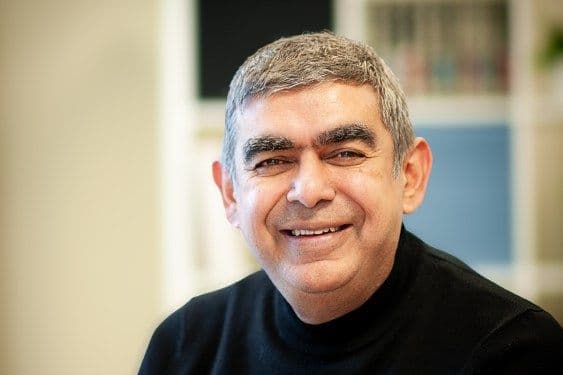
Hang Ten Systems, an AI startup founded by former Infosys CEO Vishal Sikka just four months ago, has expanded its seed funding by another $53 million. This new investment round was closed just five weeks after theinitial $32 million seed round was closed, the company tells TechCrunch. The fresh investment, led by Temasek’s early-stage investment platform Xora, takes Hang Ten’s total funding to $85 million. Mayfield, which led the startup’s earlier investment, also participated. Other investors include Aramco Ventures, Intel CEO Lip-Bu Tan, Micron CEO Sanjay Mehrotra, and Yahoo co-founder Jerry Yang, who is also on its board. Founded in May, Hang Ten is betting that AI can fundamentally reshape how large companies build and maintain software. The startup advises companies — typically with over $10 billion in annual revenue — on AI strategy and also helps build and modernize software. “The build part itself has basically become close to zero marginal cost, close to zero time,” Sikka (pictured above) told TechCrunch. He argued that AI is shifting the focus of software development from writing code to defining requirements and validating whether systems perform as intended. The thesis appears to be resonating with customers. Within 25 days of the first meeting with one customer, Hang Ten signed a multimillion-dollar contract to build a mission-critical software system, Sikka said, adding that he had never seen enterprise deals move that quickly. Hang Ten is now working with a mix of existing customers and late-stage prospects spanning 21 major enterprises, Sikka said, with some prospects in the proposal or contract-negotiation stage. The startup has secured multiple seven-figure contracts and is pursuing eight-figure deals. Moreover, its customers span the U.S., Europe, the Middle East, and Asia, and include Fresenius Kabi, Saudi Aramco, and Siemens Energy. The early customer wins prompted Xora to approach Hang Ten about investing, Sikka said, adding that Xora saw an opportunity to introduce the startup to other companies in Temasek’s portfolio. Sikka declined to disclose Hang Ten’s valuation but said the second round of seed funding was a bump up. With the fresh capital, Hang Ten plans to expand its engineering, consulting, and sales teams. The Palo Alto-headquartered startup currently has about 20 to 25 employees across the U.S., the Middle East, and Australia, and expects to hire in Europe and India, Sikka said. Hang Ten enters a crowded market in which AI model developers such as OpenAI and Anthropic are expanding their enterprise offerings, while traditional consulting firms are racing to embed generative AI into their own services. “Enterprises still need trusted partners who are independent of the underlying platform and who work with and solely in the interest of the enterprise,” Sikka said. “There will always be room for companies like us.” Hang Ten says its edge lies not in building another AI model, but in adapting AI to the complex software development processes of large enterprises. Co-founder and chief design officer Sanjay Rajagopalan told TechCrunch the startup’s engineers rely on an in-house framework, Hobie, that packages reusable AI “skills” for regulated industries and complex enterprise software projects. “We are actually delivering production software,” Rajagopalan said. “It’s not like we are doing some kind of PoC.” Hang Ten’s approach is already putting it in competition with traditional systems integrators. Many of the startup’s engagements, Sikka said, are replacing incumbent providers, though more than half of its current opportunities involve new projects that companies had previously put off, rather than work taken from existing vendors. Rajagopalan noted that Hang Ten can use teams of about two to four people for some projects that might previously have required about 30, although customers or independent third parties still handle final quality checks and certification. The startup promises customers a 10-fold improvement in cost, speed, or a combination of the two, he said. Even in four months of its debut, Hang Ten has received serious acquisition offers from “very big companies,” Sikka told TechCrunch. He, however, declined to identify the prospective buyers. The startup, he said, has turned them down for now as it focuses on expanding the business. Before founding Hang Ten, Sikka co-founded enterprise AI startupVianAIin 2019 after leaving Infosys in 2017. It raised$50 million in seed fundingand laterraised $140 millionin a 2021 round led by SoftBank Vision Fund 2. Sikka departed that startup in April, according to his LinkedIn profile. He told TechCrunch that VianAI is “going through a transaction,” declining to provide further details. As for how startups like Hang Ten could disrupt services providers like Infosys, Sikka noted, “We are fortunate that we don’t have the burden of legacy that we have to transform.” The startup takes its name from “hang ten,” the surfing maneuver in which a surfer rides with all 10 toes over the front of the board. For Sikka, it reflects the startup’s ambition to help enterprises ride the ongoing AI wave, what he called “probably the biggest wave of our lives.”

SK Hynix reportedly in talks with Intel to build memory chips in US
South Korean memory chip giant SK Hynix is in discussions with Intel to manufacture RAM chips in the U.S. for the first time, Reutersreported, citing anonymous sources. The companies have reportedly discussed various options, one of which would have SK Hynix leasing space at Intel’s planned factory in Ohio to manufacture the chips. The chipmakers are also said to be considering a joint venture that could include cloud-service providers. SK Hynixtold TechCrunch on Wednesdaythat nothing has been finalized yet. “SK Hynix is exploring various options to strengthen its global competitiveness, but no specific plans or arrangements have been finalized at this time,” the Korean semiconductor company said in a statement. “No decisions have been made regarding the two scenarios mentioned in the article.” The Korean chip giant, which hasbenefited massivelyfrom skyrocketing demand for high-bandwidth memory RAM chips used in data centers for AI applications,is already building a $3.8 billionadvanced packaging and research facility for AI chips in West Lafayette, Indiana, with mass production expected to begin in 2029. The factory will use DRAM wafers made in South Korea and package them into HBM chips. It remains unclear what types of memory chips the company would produce in Ohio if the deal goes through. As a global chip shortage worsens, the Trump administration is seeking to expand production on American soil. The White House saidin Januarythat it could impose broader tariffs on semiconductor imports while offering tariff relief to companies investing in domestic manufacturing. SK Group Chairman Chey Tae-won signaled support for U.S. chip production in July,sayingthe company should build factories in the U.S., if feasible, alongside those in South Korea’s Honam region. That month, the chipmakerlistedits American depository receipts on the Nasdaq, broadening its access to American investors. The potential deal with Intel could face scrutiny at home. Seoul holds that the decision would be up to SK Hynix, but any plan involving strategically important chip technology could trigger a government review under a law designed to prevent sensitive technology from being transferred overseas, according to Reuters. Intel and SK Hynix have done business before: In 2020, Intelsoldits NAND flash-memory business to SK Hynix for $9 billion. Intel did not immediately respond to TechCrunch’s request for comment outside regular business hours.

3 days left to exhibit: Get your brand in front of VCs and high-value leads at TechCrunch Disrupt 2026
If you’re looking for opportunities to demo your breakthrough to VCs and build a powerful lead-gen, then thisFriday, September 18 at 11:59 p.m. PT, is your last day to book yourexhibit tableatTechCrunch Disrupt 2026. OnOctober 13-15 at Moscone West in San Francisco, 10,000+ founders, investors, operators, and tech leaders come together to discover startups, source deal flow, find products, and build partnerships. Your6′ × 30″ exhibit tableputs your startup in the highest-traffic area of Disrupt for three days. Use it to: Your package also includes 10 team passes, website and app branding, press-list access, Silver Tier sponsor branding, and more. Founders can access additional opportunities, including the Deal Flow Café and Investor-to-Founder Networking. Three days. Limited tables.Book yours before September 18 at 11:59 p.m. PT. Join 250+ top-tier tech leaders across 200+ sessions on six industry stagesto get practical insights on building, funding, and scaling in today’s tech landscape. Use interactive sessions and AI-powered matchmaking tomeet the people who can help move your business forward. And discover 300+ startups and watch Startup Battlefield 200 to find your next product, partner, or investment opportunity. Save up to $200 on your ticket before prices increase on September 25.
View
Next wave of VCs judging Startup Battlefield 200 contenders at TechCrunch Disrupt 2026 revealed
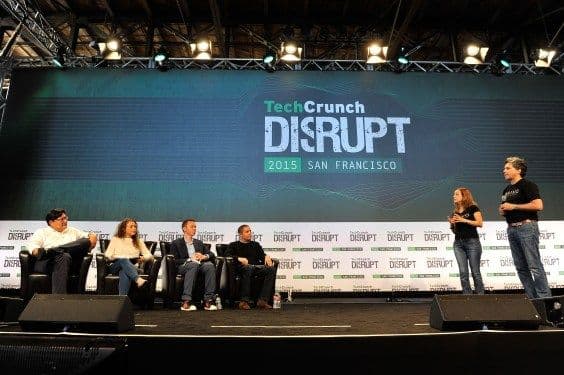
A great pitch doesn’t winStartup Battlefield 200. A great company does. That’s why the VCs sitting in the judges’ seats matter so much. They aren’t looking for polished presentations or clever demos — they’re looking for founders solving real problems with businesses that can endure. Every question they ask is designed to uncover what slides and rehearsed answers can’t: conviction, clarity, execution, and whether this company has the potential to become the next category leader. For more than 15 years, Startup Battlefield has helped launch companies that went on to define entire markets, and every year a new group of founders earns the chance to join that legacy. Today, we’re introducing the next wave of judges who’ll take their seats atTechCrunch Disrupt 2026, happening on October 13-15 at Moscone West in San Francisco. They’ll spend each day evaluating ambitious startups across industries, asking the tough questions founders hope for — and sometimes fear. If you want to understand how experienced investors really evaluate early-stage companies, there’s no better place to watch than Startup Battlefield, live on the Disrupt Stage. Be sure to snag savings of up to $200 on your Disrupt 2026 ticket before rates increase on September 25 at 11:59 p.m. PT.Register here. Now, without further ado, meet the next five judges joining this year’s Startup Battlefield, the ultimate startup pitch competition. Aditi Maliwal, General Partner, Upfront Ventures Aditi Maliwalis a general partner atUpfront Ventures, where she invests at the pre-seed and seed stages in fintech, enterprise SaaS, AI applications, and developer tools. Her portfolio includes Clair, Writer, Arcade, and General Translation. Maliwal previously held roles at Google and Deutsche Bank and led the Series A investment in Chime during her tenure at a prior firm. She is Upfront’s first San Francisco-based partner. Michael Palank, General Partner, MaC Ventures Michael Palankis a general partner atMaC Ventures, a majority Black-owned venture firm that backs seed-stage consumer and enterprise companies through a culturally driven investment thesis, with a focus on AI, fintech, healthcare, media, entertainment, and aerospace and defense. Before transitioning to venture, Palank worked in Hollywood talent representation at William Morris and Overbrook Entertainment, Will Smith’s production company. Nell Daly, Co-founder and Managing Partner, Revenge Capital Nell Dalyis the co-founder and managing partner ofRevenge Capital, an evergreen sector-agnostic fund focused on backing overlooked founders — including women, BIPOC, LGBTQIA+, disabled, and neurodiverse entrepreneurs — across the United States and United Kingdom. Before launching the fund, Daly worked as a psychotherapist, a background she draws on directly in her founder-first investment approach. Grace Ge, Partner, Amplify Partners Grace Geis a partner atAmplify Partners, where she invests in AI, developer tooling, data infrastructure, and modern SaaS — with a particular focus on the layer between foundation models and enterprise applications. Her portfolio includes Pinecone, Eppo, Vivun, Orb, and Avoca. Amplify’s broader portfolio includes Datadog, Fastly, Temporal, dbt, and Modal. Ge was named to the Forbes 30 Under 30 list for Venture Capital. Crystal Huang, General Partner, Google Ventures Crystal Huangis a general partner atGV, where she focuses on enterprise SaaS, AI infrastructure, and fintech — with a particular lens on product-led and developer-led go-to-market strategies. Her portfolio companies include Typeface, Pecan AI, Sardine, Cacheflow, PostHog, Roboflow, and Sift. Before joining GV, Huang was an investor at NEA and GGV Capital and worked in technology mergers and acquisitions at Blackstone. Get to know all the VC judges on theDisrupt agenda. TechCrunch Disrupt 2026is happening October 13-15 in San Francisco, bringing 10,000+ tech leaders, VCs, and founders together to meet the next generation of breakout startups, connect with the leaders who could change their startup’s trajectory, and get a front-row seat to where the industry is headed.Save up to $200 on your ticketbefore rates increase on September 25. Save even more when youregister as a group.

Threads’ new features let podcasters promote shows and reach listeners
Metaannouncedon Wednesday that its social network and X rival Threads is rolling out new tools that will allow podcast creators to promote their shows, grow their audiences, and engage existing listeners directly on the platform. The news comes as X has also more recently been encouraging its creators to directly post videos on the platform, especially podcasts, to earn revenue and grow engagement. While Threads is not yet looking to host podcasts, it wants to make its platform a hub for posting and discussion. To start, Threads will display a podcast profile card and banner on a creator’s profile and in their posts. Plus, when creators post episode links, they appear as tappable cards in the post, allowing users to easily listen. The feature also lets podcast hosts directly post transcripts for listeners to read along with the episode, and they can tag featured guests, which displays a card related to that. Users can save any of these posts, making it easy to listen to the episode at a later time. Threads will additionally be able to send reminders to creators when their new episode drops to post on Threads, which could help boost their engagement with listeners. The social platform is also providing tools that offer insights into how the audience is engaging with creators’ posts, with metrics like views over time by followers, non-followers, and all. Last year, Threads rolled out new tools to increase discussion around podcasts, with features like better link cards and linking their profile with their podcasts. Threads is now close to X in terms of users, as Meta’s social network reached500 million active users in June.
View
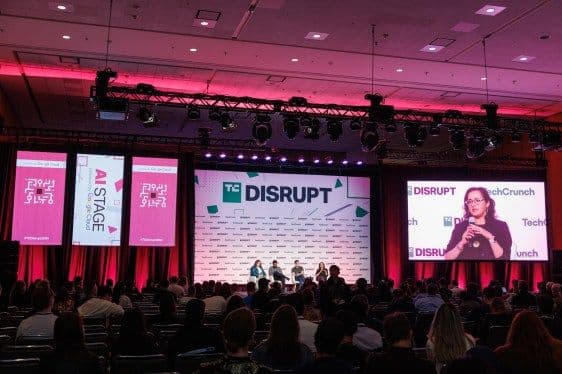
Robots are waiting for a ChatGPT moment: Nvidia’s Les Karpas explains why at TechCrunch Disrupt 2026
The world hasn’t been the same since ChatGPT made its debut in November 2022, when seemingly out of nowhere, a means of engaging with large language models propelled AI beyond hype and into day-to-day reality. Robotics, like AI, has been discussed, built upon, and in some ways adopted for a long time now, but it’s yet to have that big breakthrough moment. And atTechCrunch Disrupt 2026, Nvidia Inception’s Global Head of Physical AI,Les Karpas, will dive into why that is and what could change that in his session on the Real World AI Stage,Robots Are Waiting for Their ChatGPT Moment. Here Is What Is Standing in the Way. After all, anyone who’s seenNvidia CEO Jensen Huang’s keynotes the past few yearsknows the company is bullish about the robotics field. And you can get the opportunity to listen as Karpas details the limitations and opportunities in the AI and robotics spaces firsthand at Disrupt.From October 13-15 at San Francisco’s Moscone West, you and 10,000+ tech leaders, founders, and investors can catch Karpas and the rest of our extensive AI-focused lineup, which ranges from building companies to building in the real world. Act now and get your ticket tosave up to $200 before September 25, after which our prices increase. Save up to 30% when you bring a group, since the Disrupt experience is meant to be shared. Karpas’ POV on the core limitation facing general-purpose robots is simple to understand but wildly complicated to resolve. Nobody has an internet-wide dataset for physical AI in the way OpenAI, Anthropic, and others had for language. Even self-driving fleets from Waymo and its competitors were able to build datasets through years of accumulated road miles, datasets that are still expanding market by market. A growing ecosystem of startups is now trying to manufacture that scale artificially through simulation, synthetic data, and foundation models trained across many robot forms simultaneously. And that challenge of bridging the digital and physical iswhy we created the Real World AI Stage. Karpas will be joined by founders from Shield AI, Colossal Biosciences, FieldAI, and Foxglove, as they walk through the unique challenges and opportunities they face. Karpas is one of the best-positioned people in the world to answer the question his session presents. AsNvidiaInception’s Global Head of Physical AI, he coordinates the company’s relationship with the wide-ranging startup ecosystem stretching across robotics, automotive, manufacturing, mobility, smart cities, and much more. The same companies trying to solve that data gap are the ones he regularly interfaces with. And his path to getting there is one that speaks to the cross-disciplinary skills the robotics industry demands. Across roles at Stanley Black & Decker, Intellectual Ventures, Herman Miller, iRobot, Cirque du Soleil, and more, he’s been an architect, manufacturing engineer, startup CEO, venture studio executive, and corporate venture capitalist. This is your chance to hear firsthand how Nvidia is thinking about the single biggest bottleneck in physical AI, and what it’ll take to clear it. That kind of insight could give you a leg up on your competition or spark an idea that could fuel your next startup venture. That kind of inspiration is what Disrupt is all about, and you can get it only by being in the room and making connections during the event. Act swiftly to get the ticket that gives you the kind of access you need, whether it’s new sources of fundraising or new startups to invest in.Lock in your trip before prices increase on September 25. Bring a group and save up to 30% on bundle passes.
Anthropic merges Claude chat and Cowork in one interface
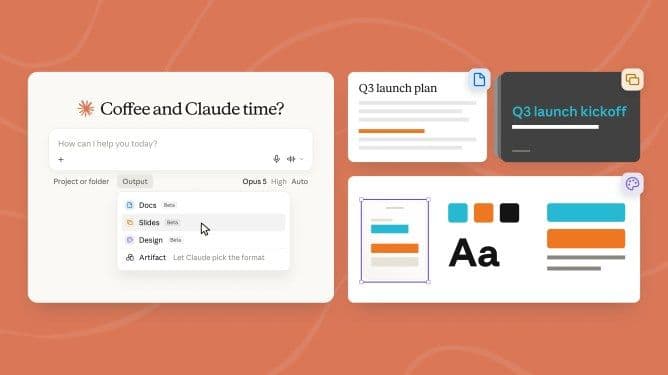
Anthropic is merging its front-end for Claude chat and Cowork, making it less confusing for people to decide which tab to use for different tasks. The unified interface lets users access chat, Cowork, and Artifacts (Claude’s interactive workspace feature) within one window. Claude Design, which was introduced in April for website and prototype design, also works anywhere within Claude. Before this rollout, the company said customers often struggled to choose the right tab for the right task. With the new design, Claude automatically routes requests without having to switch tabs or windows. The idea is to remove confusion about which feature to pick and use just one front-end to route work to different parts of the app. Hopefully, OpenAI also takes a cue from this rollout and fixes ChatGPT’s interface across the platforms. Anthropic is also adding dedicated features for making presentations and documents. Users can ask the AI assistant to create, edit and present slides, and can also download the generated presentation as a PDF or PowerPoint. Similarly, with the Docs feature, users can work alongside Claude to create sections, ask questions, and comment on completed parts. Users can share generated documents or slides with a link and edit them on their phone. Users can also ask Claude to start creating a document on desktop, and they can check the progress of the task using the mobile app. These features are rolling out to Claude’s Pro and Max plans first, on the web, desktop and mobile over the coming weeks. The company plans to extend them to the free and team tiers later. The update comes in the wake of anupgrade of Cowork’s memory layer, which helps Claude remember user context across chats.
View
Google Gemini Notebook Gets Voice Chat, Lecture Recording and New Study Tools
Google is rolling out several new features to Gemini Notebook, adding tools for recording lectures, chatting with notebooks using voice and creating more personalised study material. The update also brings new quiz formats and expands Short Video Overviews to more than 80 languages. The new features will arrive on the web and mobile apps over the coming weeks. Google is also offering eligible college students in the US and more than 140 other markets free access to its AI plans for one year.
View