

最新 AI 资讯
Amazon launches Alexa+ in India with Hindi support
Amazon today announced that its Alexa+ conversational assistant is available in India with Hindi support. The new assistant can hold conversations for longer and maintain context while doing so. The feature is available to all customers in the country in Early Access in Hindi and English. After the early testing period, the company will make the assistant free for Prime customers. For non-Prime customers, the price would be ₹2,000 per month ($20.85). The company said that the new Alexa has a more expressive voice and can handle complex multi-step tasks, including ordering groceries from Amazon’s quick commerce service Amazon Now and turning on/off smart home devices. Users can switch between English and Hindi mid-sentence. Amazon added that Alexa+ is integrated with India-based services such as food delivery service Swiggy, Zomato’s ticket booking platform District, travel websites like TripAdvisor and MakeMyTrip, and restaurant reservation app EazyDiner. The upgraded assistant is also integrated with music streaming services such as Amazon Music and JioSaavn. In June,TechCrunchreported that the company had invited users to enroll in a testing program for Alexa+, through which they could have conversations with the assistant in Hindi. After that, the company also started testingan English version of Alexa+. Amazon launched Alexa inIndia in English in 2017and added Hindi support in 2019. The country has more than 600 million Hindi speakers, and Amazon is trying to tap into that market with its smart devices and new features. The company didn’t give absolute numbers, but said that its smart home devices have grown by 20% from last year. Amazon initially announcedgen AI-powered Alexa+ in 2025and made it available toall U.S.-based users in 2026. This year, the company has also launched its new assistant in markets such as the U.K., Canada, Brazil, Mexico, Italy, and Germany with local language context.
View

Salesforce Calls SaaSpocalypse ‘Crazy Nonsense’, Projects $50 Bn in FY27
“SaaSpocalypse was not about the end of software, but it may be about the end of software that makes humans do all the work,” said CEO Marc Benioff.
View

Perplexity Builds DynamoDB Replacement With 2 Engineers & Hundreds of AI Agents
CobbleDB cuts production batch-read latency by roughly five times, while Perplexity estimates at least 20% lower costs than DynamoDB.
View

Cloudflare Launches Controls to Block AI Training While Keeping Search Access
New Cloudflare controls allow publishers and businesses to independently manage how their content is accessed for search, AI training, and AI agents.
View
Dario Amodei Makes Strange Bedfellows as AI Safety Calls Irk Jensen Huang
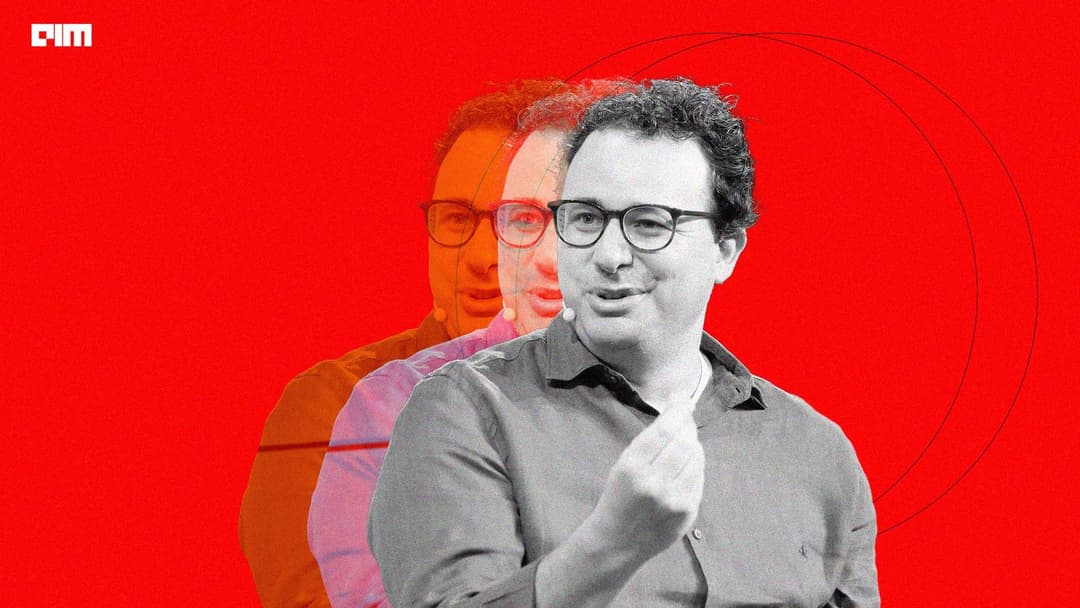
NVIDIA boss wants to put an end to Amodei’s doomsday predictions, while Sacks says frontier labs are being hypocritical.
View

Amazon Alexa+ Arrives in India for Free for Everyone With Smarter Conversations, Agentic Features, and More
Amazon has launched its AI-powered Alexa+ voice assistant in India, eight years after Alexa first arrived in the country. The upgraded assistant is available for free to all users in India starting today, with support for both Hindi and Hinglish at launch. As per the company, Alexa+ is designed to make interactions more conversational while handling more complex requests. India is also the first country where Amazon is bringing Alexa+ and Amazon Now together.
View
Bounding Box is Dead: Data Annotators Find New Purpose in the Physical AI Age
New York-based non-profit Digital Data Divide believes data annotation jobs are now moving to teaching physical AI systems to operate in real-world settings.
View

Japan’s Hirata Enters India, Partners with ATS India for Semiconductor Equipments
The Japanese firm will supply semiconductor automation and material-handling equipment as India expands its manufacturing ecosystem.
View

Meta Launches WhatsApp Business Tool to Let AI Agents Handle Setup
The tool connects AI coding agents including Claude, Codex, and ChatGPT to WhatsApp Business, supporting account setup, phone verification, message templates, and webhooks.
View
Meta Launches Meta One Subscription With More AI Access, Business Tools
The new plans offer higher usage of Meta AI features, creator tools and Meta Business Agent, with subscriptions starting at Rs. 79 a month.
View

The AI data center boom is colliding with cities scarred by big industry
Across the country, Americans are debating how their lives might change if new AI data centers are built in their backyards. Data center companies and their customers are promising new jobs and economic growth, but that pitch hasn’t won over amajority of Americanswho oppose data center construction in their area, often over environmental and energy concerns. For activist Shawmar Pitts, these concerns aren’t theoretical. He knows better than anyone what it’s like to live in the shadow of American industrialization. A lifelong resident of the Grays Ferry neighborhood in Southwest Philadelphia, Pitts grew up next to what was then the East Coast’slargest oil refinery, which shut down after anexplosionin 2019. Though many of his friends and family suffered from chronic health conditions, he didn’t realize what might have caused these illnesses until he encountered the environmental justice groupPhilly Thrive, which was tabling in his neighborhood in 2018 about a proposed oil refinery expansion. “I read the information they had on the table about how living near the refinery affects you, and I’m looking at all the sicknesses on this paper, and I’m like, ‘My mother has this, my sister has that, my next-door neighbor suffers from this’ — every house, someone has something on that list,” Pitts told TechCrunch. “From that point, I was all the way in.” Pitts, who is now the managing co-director of that same organization, is among those leading the charge for a data center moratorium in Philadelphia. While there have been no formal proposals for construction yet, city officials have identifiedtwo potential sites: one in Northeast Philadelphia and the other in Pitts’ Grays Ferry neighborhood. Data center opposition from local residents isn’t unique to Philadelphia. Residents across the United States have pushed back against new data center construction, particularly those living in cities and towns with finite resources. But the pushback has been particularly swift from people living in communities where big industry’s mark is still felt. “We don’t want data centers,” Philly Thrive board president Sonya Sanders said at a rally on Monday at Philadelphia’s City Hall. “We don’t want the pollution, we don’t want the noise, and we know they’re not going to bring us more jobs.” Sanders’ husband, who was also a resident of Grays Ferry, died of a rare bone cancer in 2020.She saidhe didn’t smoke or drink, and she believes that emissions from the refinery caused his illness. “In my eyes, they killed him,” she said at the rally. “The pollution killed him. I believe he would be here today if he wasn’t silently murdered, because it was the pursuit of profit that killed him.” A Philadelphia data center may not have as severe an environmental impact as the now-defunct Philadelphia Energy Solutions refinery, whichprocessedup to 335,000 barrels of crude oil daily. But the international race to dominate the AI industry has become so extreme that by 2035, BloombergNEF predicts that U.S. data centers willconsume more natural gasthan Germany and Japan combined. That’s almost double the firm’s projection from nine months ago. Natural gas burns a lot cleaner than other fossil fuels, like oil, but it’s far from harmless. Burning one cubic foot of natural gas releases the equivalent of60 grams of carbon dioxide, and additional data center demand is expected to generate an extra 1 million metric tons of greenhouse gas pollution each day, which is about12% of all present day U.S. greenhouse gas emissions. Harvard University researchers found in 2021 that fossil fuel air pollution is responsible forone in five deaths worldwide, a staggering figure that is bound to increase in the age of AI. “A typical data center planned in Pennsylvania has hundreds of diesel engines that spew air pollution, and even if they’re supposedly reserved foremergencies, the government has already said that the data center should use those rather than drawing from an overstressed electrical grid during some heat waves,” said Clean Air Council attorney Annie Fox at the rally. “We can expect that to get more frequent… Fossil fuel-hungry data centers will worsen climate change, making those heatwaves more frequent and severe.” Concerned citizens across the country do seem to be getting through to their officials. In New York, Governor Kathy Hochul signed an executive order thattemporarily preventsthe state from approving new permits for large projects. “Progress shouldn’t arrive with a higher utility bill, deleted water supply, or noise pollution,” Hochul said at a press conference. “These data centers can only be built, should only be built in places that want them.” Data center moratoriums have also been approved in a number of U.S. cities, includingDenver,Indianapolis,Asheville,Charlotte, andReno. The purpose of these moratoriums is often to allow city officials to collect more information about the potential impacts of building data centers. “I’m worried about pollution,” Donna Greenberg, a Philadelphia resident who attended the rally, told TechCrunch. “I’m worried about surveillance and the fact that they’re going to have access to information they have no business knowing, and I’m concerned that they’re going to be using water and electricity that takes away from the people and the neighborhoods who need it.” More than 100 people attended the kick-off rally for the No Data Centers in Philly campaign on Monday, chanting loudly in hopes that city council members would hear them from inside their offices at City Hall. “I just think that our community standing up and fighting back is tremendous,” Pitts said. “It takes a lot of effort and a lot of people.”
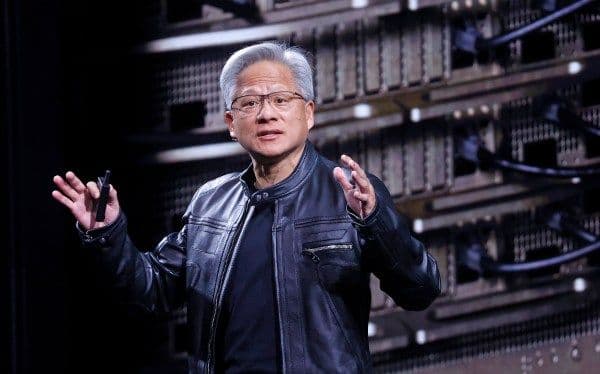
We don’t need AI regulation — leave safety to us, Nvidia’s Jensen Huang says
Nvidia founder and CEO Jensen Huang made his position on the dangers AI poses very clear while speaking at Salesforce’s Dreamforce conference on Tuesday. To him, AI isn’t somenew form of “alien mind,”as at least one OpenAI safety researcher has described it. It’s just hardware and software, he says, built by humans. That means, in his view, it can be controlled by humans and existing laws. “Safety is an engineering problem, not a legal one,” he said. “We’re developing software after all. We’re developing computing systems after all. It’s a complicated computing system, but it’s ultimately a computing system.” Therefore, there’s no need for new laws or regulations to govern it, he argues. In fact, Huang sees little need for new laws at all. The free market, he argues, will be enough to pressure companies not to release unsafe products. “If we’re not confident about the safety of the products, like all companies, like you and I, any any all the companies here, if you build a product or a service, and you’re not confident in its functionality, capability, or safety, then don’t release it. And so that’s a very obvious thing to do,” he said. He continued: “You pace yourself until you are confident you’re releasing something that the market would appreciate. The market forces are already there. We don’t need any new laws. We don’t need new regulations. We just need companies to decide that when [to] run as fast as they can. I think innovation, speed, and safe products … — it’s a false choice. You could definitely have both at the same time. So run as fast as you can. But if you feel at any given point in time the company’s out of control, or or the product’s not going to be safe, you know, take a pause and make sure you get it right.” In some ways, this is a comforting thought. If anyone in the world knows AI, it is Nvidia’s founder, who’s been building the hardware brains of AI since well before ChatGPT existed and now runs a company that also makes open source models, agents, harnesses, and sandboxes. Then again, if we’re being cynical, his point of view is also unsurprising for someone who’s had his breadso well buttered by the AI boom. Why would he want regulation to come along and add in a layer of hinderance that could slow down Nvidia’s quest to sell ever more AI systems and software? As he also said in the interview: “I’m more ambitious than ever. As a result of our ambition, and with the product productivity boost that we get from AI, the sky’s the limit for us. The sky’s the limit for our company. The sky’s the limit for every industry, for every single country.” Unfortunately, even companies with the best intentions ship faulty products with unintended consequences, even software. Remember the 2024 CrowdStrike bluescreen-of-death fiasco that grounded thousands of flights and caused other havoc for businesses? Then there are companies accused of deliberately lacting with less-than-good intentions. Meta justpaid $18 billion to settle a lawsuit over social media harms to children. And AI has already caused harm, too, whatever the intentions orsafety testing involved, from an OpenAI model hacking into Hugging Face to lawsuits suing the AI lab over the suicides of young people who engaged in long conversations with its chatbot. The “leave them alone” strategy, which would let these companies release products as they see fit, could be an unwise approach to AI safety as far as society is concerned. Though Huang is right that it’s possible existing product liability laws could cover AI — if AI doesn’t somehow kill us all before enough cases get through the courts to test that theory. He didn’t discuss the other route, which seems close to taking shape: industry self-regulation. Huang’s approach has been more to champion open-weight models and companies’ use of them as a competitive counterweight to proprietary AI labs. But right now, the industry has a short window to institute self-regulation and to encourage AI labs worldwide, even those inChina, to see the wisdom in participating. As Microsoft CEO Satya Nadellasaid at the All-In Summiton Monday, “China should also deeply care about the same safety concerns if the United States cares about them, right? Why should it be different for them? It’s not like they won’t have the same hacking problem. It’s not as if they don’t want to make sure that their citizens are benefiting from AI, just like we would want our citizens to benefit from AI.” For now, though, if Huang is a no on any new AI regulation, he may be influential enough to get his way. He also demonstrated this week that he,quite literally, has the ear of President Trump.