🚀 Zaprep: Your Socials on Steroids. 免费开始 — 每月自动发送 1,000 条私信,将互动转化为潜在客户。 ,每月 1,000 条自动私信。
最新 AI 资讯
Librarians are hosting viral ‘Avoiding AI’ workshops for people who are fed up with Big Tech
“Everybody’s on their phone at my program!” joked Charlie Bailey, a librarian in South Philadelphia. He’s just asked his audience to pull out their phones so that he can walk them through the steps of disabling Apple Intelligence and Gemini. Bailey stands at the front of a library classroom that’s outfitted for children – the focal point is the vibrant rug he’s standing on, which reminds us that M is for “moon” and Z is for “zebra.” But the 20-odd adults in the room aren’t here to learn about the alphabet. They’re at a workshop called Avoiding AI, which, in this context does not stand for “apple” and “igloo.” “I was inspired by the feeling of people’s frustration with AI tools being kind of forced onto them, and feeling like AI tools we didn’t ask for are suddenly everywhere in our lives,” Bailey told TechCrunch. Bailey starts the hour-long workshop with an overview of how AI chatbots and other consumer AI tools work, explaining why people might want to use these products, and why they might opt to abstain. Then, he walks through all of the most popular tech platforms and devices, showing step-by-step instructions on the projector to guide people through turning off specific features. “As a librarian, I think it’s important to see this as advancing digital literacy and helping people reclaim their autonomy over whether they want to use AI tools,” Bailey said. “It’s important, especially when it can be so difficult not to use them, and when the design seems to force adoption.” Bailey got the idea for the Avoiding AI workshop from Hannah Cyrus, a librarian in Maine. He was one of dozens of librarians from around the world who contacted Cyrus after she publisheda journal articleabout developing her own workshop. “This has never happened before with anything I’ve worked on,” Cyrus told TechCrunch. “Nobody has ever been emailing me like, ‘Can you give me your Intro to Computers slides?’” At the Bangor Public Library, patrons turn to Cyrus when they need help with anything involving technology. “More and more, I was getting questions about, ‘How do I turn this [AI] stuff off? Why is it trying to write my emails for me? Why is it trying to summarize my one-sentence email that I can easily read?’” Cyrus said. “I just decided that with so much media hype out there about AI products, it would be a good opportunity to teach people about the basics of what is happening when you’re using this technology, and then getting into how to turn it off if you don’t want to use it.” Usually, Cyrus’ classes like Intro to Computers get about a dozen attendees. But so many people expressed interest in her first Avoiding AI workshop that she had to cut off registration at 30 people, open a waitlist, and share the workshop on Zoom. Including the livestream, about 70 people attended each of Cyrus’ first two workshops. When Bailey followed Cyrus’ lead to host a workshop in Philadelphia, the reception was similarly unprecedented. The library’sInstagram postabout the “Avoiding AI” event got over 2,000 likes and 220 shares, whereas most of the library’s posts don’t get more than a few dozen likes. He scheduled a second program because the first got too many registrations. “As an information professional, it feels good to see people skeptical of AI,” Bailey said. “It felt really good to see how many people share this feeling.” There’s a sense of camaraderie among the room of strangers during the workshop. When Bailey invites attendees to share their own tips, one person explains that when you append “&udm=14” to a Google Search, it will hide AI results. Bailey writes the string of characters down on a whiteboard next to the log-in credentials for the teen Wi-Fi server. “You have to go through all the trouble to buy a home in today’s world, and two years from now, there could be a data center next to your house,” one workshop attendee named Johnny says. “I keep getting AI shoved down my throat at work, and every time I see it, I think about the environment,” another attendee named Gabrielle adds. But she’s also not writing off AI as a technology altogether. “I’m not against AI in terms of medical breakthroughs.” AI naysayers know that this technology is far broader than just chatbots and deepfake apps. Cyrus mentioned how useful optical character recognition is for scanning old documents at the library. But for her and the people who go to her workshops, the anti-AI movement isn’t about rejecting technology altogether so much as it is about advocating for more control, agency, and freedom in how people use technology. “I think the forced adoption of AI on people’s devices might be the straw that’s breaking the camel’s back in some ways,” she said. “The awareness has been growing for a long time that these products and these companies that make them have an outsized influence over us, and that we’re not really using these products in the way that we would like to.”
View

One fallen power line exposed a growing AI data center problem. Here’s how to fix it.
A power line went down outside of Washington, DC, this week. Normally, the grid would only need a few seconds to recover from such an event. But this one took more than 10 minutes because more than 3 gigawatts of data centers stopped drawing power nearly simultaneously. The event caused voltage across the PJM grid to spike from Northern Virginia to Chicago, according to data collected byTing Labs, a startup that runs an IoT sensor network out of people’s electrical sockets. The event didn’t cause a blackout, but it did cause lights across the region to flicker. The incident demonstrated the effect that data centers can have on the grid — an outcome that experts believe will become more frequent. Northern Virginia, which is in PJM’s territory, is home to the highest concentration of data centers in the world. “It’s the canary in the coal mine,” Ricardo de Azevedo, CTO atON.Energy, told TechCrunch. These sorts of events involving large loads like data centers are “happening more and more,” he added. The event echoes one that happened two years ago, also on PJM’s grid, and it could foreshadow larger events if data centers aren’t built to more elegantly handle disruptions to power supplies. The PJM Interconnection manages grids from New Jersey to Illinois and serves 67 million customers, making it the largest grid operator in the United States. When the power line went down this week, it triggered data centers to switch to backup power, and about 3.1 gigawatts of load vanished in about 30 seconds, according toPJM data. The grid appeared to recover somewhat, but a short time later additional loads dropped off. At its peak, PJM’s grid had an extra 3.49 gigawatts of electricity on it. It took another 11 minutes before it stabilized. The disconnected data centers represented around 3% of total demand on PJM at the time,accordingto Reuters. A few percent may not sound like much, but the electrical grid needs to operate in a state of near-perfect balance, with supply and demand closely matched. If they don’t, voltages can sag or spike. The grid and devices connected to it can tolerate small fluctuations, but if those fluctuations grow too large, they’ll trigger failsafes within the grid or within individual facilities, causing them to disconnect. When data centers in Northern Virginia sensed the fluctuation caused by the failed power line, they switched to backup power, which removed their load from the grid. As more data centers made the switch, they removed greater amounts of load from the grid. What started as a relatively small drop in supply became an even larger drop in demand, sending supply surging and causing light bulbs to flicker. Most data centers make decisions in a split second, and those that disconnected this week appear to be no different. When the voltage dip reached them, they all decided to disconnect within a few seconds of each other, Ali Zain Banatwala, senior market models specialist at the Independent Electricity System Operator, told TechCrunch. “We need to figure a way for these loads that are located next to each other to sequentially either disconnect or reconnect,” he said. A more orderly process would allow grid operators to develop more robust procedures in advance. Alternatively, data centers could be built to absorb disruptions and not turn their backs to them. One startup, ON.Energy, has been working on a product to help data centers — and the grid — ride through events like the one that occurred this week. The company has developed an uninterruptible power supply for an entire data center campus, covering not just servers but also chillers and other equipment. The company essentially hides the data center behind a bank of batteries connected to sophisticated power conversion equipment. All the grid “sees” is one consistent, well-behaved load rather than the peaks and valleys from each individual part of the data center. ON.Energy’s system allows data centers to ramp computing workloads up and down, including AI training, without bothering the grid. Perhaps more important, it also means that data centers can absorb power fluctuations from the grid. Rather than disconnecting from the grid, ON.Energy’s system can use any extra power to charge its batteries, and if the flow dips, the system can dispatch power to servers. Plus, it can follow the grid’s lead within milliseconds, preventing sags or surges like the ones that caused this week’s problem for PJM. ON.Energy is currently installing a total of 3 gigawatts worth of its systems at four different data center campuses, de Azevedo said. Grid managers have also woken up to the problem. ERCOT, for example, is going to require large loads like data centers to “ride through” disruptions, de Azevedo said. The clock is ticking, though. The mass disconnection this week was twice as large as a similar event in 2024, when 60 data centers simultaneously disconnected, pulling 1.5 gigawatts of load from the grid. Back then, data centers accounted for about 6% of PJM’s load,accordingto Synapse Energy Economics. By 2040, they are expected to make up 24%. If the problem isn’t addressed soon, things could get a lot worse.
View

This 14-Year-Old Wants AI and Citizens to Fix Bengaluru’s Footpaths
Instead of replacing government systems, RASTHE aims to complement BBMP by crowdsourcing pedestrian complaints and tracking repairs through community verification.
View
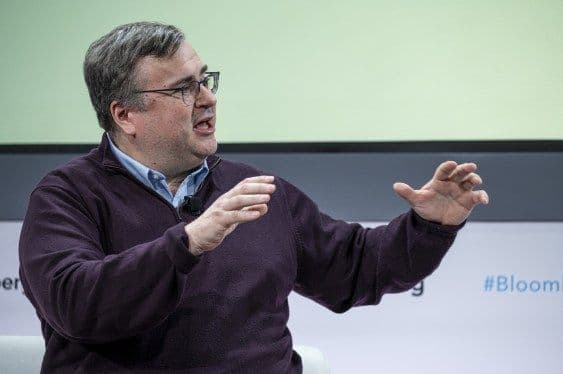
Prentis, new AI lab co-founded by Reid Hoffman, Mark Pincus in talks to raise $100M
Prentis, a new AI research lab focused on computer use models, co-founded by serial entrepreneur Ritankar Das and tech heavyweights Reid Hoffman and Mark Pincus, is in talks to raise $100 million at a $1 billion valuation, according to two people familiar with the discussions. Launched in April, Prentis is training models to learn how office workers navigate routine workflows across documents and systems, with the goal of building AI agents that can control computers to automate those tasks. Prentis will ostensibly develop agents tailored to these customers’ needs, such as handling insurance claims and automating customs duty refund exceptions without needing a human to hunt down paperwork. The startup has already signed contracts worth up to $50 million with several customers, including healthcare management service organization, a manufacturer, and goods and clothing manufacturers, the two people familiar with the discussions tell TechCrunch. This echoes investor materials obtained by TechCrunch that predict an estimated $75 million annualized run rate by the third quarter of this year. (Prentis’ pitch deck notes those figures reflect estimated annualized value based on a contracted fee equal to 20% of savings realized, not recognized revenue, and are “performance-dependent and subject to final execution.”) By its own account, Prentis says its Hive-32B model outperforms rivals, including OpenAI’s GPT-5.4 and Anthropic’s Claude Opus 4.6, on two computer-use benchmarks: WindowsAgentArena, which measures end-to-end task completion on real Windows applications, and ScreenSpot-v2, which tests a model’s ability to locate the right on-screen control. In its pitch deck, the company argues its edge comes from running a much smaller, cheaper model. In fact, it claims roughly 10 times lower cost per task than frontier APIs, saying it’s more economical to deploy across everyday workflows. TechCrunch hasn’t independently verified the company’s benchmark results. The startup is betting that automating everyday office tasks will soon outpace coding as AI’s biggest use case, but it’s a crowded market. Anthropic, Open AI, and Mira Murati’s Thinking Machines Lab are also working on developing AI agents for computer use, one of the sources said. Anthropic has also been acquiring talent in the category directly — it bought the Seattle computer-use startup Verceptearlier this year, folding in its founders and shutting down its product. Prentis didn’t respond to TechCrunch’s request for comment. Ritankar Das, CEO of Prentis, is also the founder of Titan, a holding company that builds and operates AI companies. Das, now 31, was UC Berkeley’s youngest University Medalist inmore than a century, graduating at 18 with a double major in bioengineering and chemical biology before earning a master’s in biomedical engineering at Oxford. He founded Titan in 2014 after dropping out of an AI PhD program at Cambridge, where he’d been a Gates Cambridge Scholar. Das has described Titan as an intentional throwback to an old-fashioned holding-company model like Berkshire Hathaway, one that’s funded by its own exits rather than outside limited partners. Other businesses launched and operated by Titan include AI-powered virtual care provider Tala Health, which raised a$100 million seedround last year, and Forta Health, an autism care startup that raised$55 millionled by Insight Partners in 2024. Titan-founded disease prediction company Dascena wasacquiredby CirrusDx in 2022. Prentis is a side project of sorts for its two other co-founders. Hoffman, the LinkedIn co-founder and Greylock partner, said last month that he wasstepping downfrom Microsoft’s board after nearly a decade to go “founder mode” on Manas AI, an AI drug-discovery startup he’s also backing; he was an early OpenAI investor and co-founded Inflection AI with Mustafa Suleyman before Microsoft absorbed most of that team in 2024. Pincus, the Zynga founder, now runs the investment firm Reinvent Capital with Hoffman as a senior adviser, and published a memoir, “Life at the Speed of Play,” last month. Prentis has already hired more than 25 employees, including researchers who previously worked at OpenAI, Google DeepMind, Meta, Tencent, and Alibaba, according to itswebsite.
View
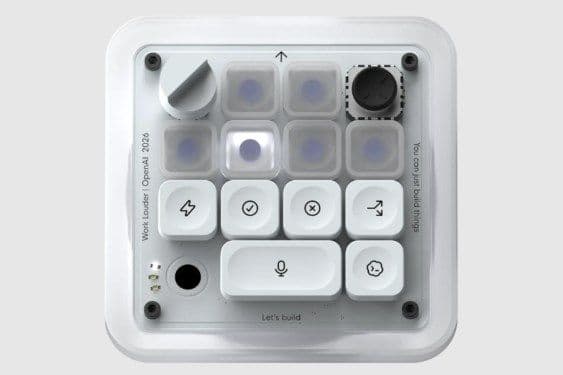
I tried out OpenAI’s new AI keypad — which will be fun for some coders and slightly mystifying to everyone else
OpenAI launched its first piece of hardware last week — a fancy little keypad built to pair with ChatGPT. Micro, which was developed in collaboration with specialty keyboard designer Work Louder, is essentially an artisanal workplace novelty that many tech enthusiasts will love and that may leave everyone else a little puzzled. OpenAI’s entrance into the hardware market hasn’t arrived without drama. Several weeks ago,Apple sued the AI laband accused it of trade theft — kicking off what’s certain to be a long-simmering legal battle. Meanwhile, news ofanother smart home productin development at OpenAI has also raised eyebrows, as the supposed device — which is being built to pair with ChatGPT — was reportedly developed by former Apple engineers. Until the legal battle works itself out and OpenAI’s broader hardware ambitions materialize, the most the startup has to offer is Micro — a funky little keypad clearly engineered to delight the tech industry’s code monkeys. OpenAI sent TechCrunch a Micro test unit. The first big thing you notice when initially handling the keypad is that it’s a sturdy little device — enough so that if the AI accessory thing doesn’t end up working out, it could easily double as a paperweight. The other thing you might notice (and I am not theonly one to point this out), is that the packaging — an immaculate white box with a sleek, clean aesthetic — is pretty Apple-coded. Make of that what you will. The keypad’s layout involves six frosted “agent” keys at the top of the pad, which can be customized to carry out specific tasks within ChatGPT or its agentic coding tool Codex. Below them are six command keys, which can be used to control those programs. You can pair your Micro with your computer either through a Bluetooth connection or a USB cable. Perhaps the most convenient thing Micro offers is a button for voice dictation — meaning you simply tell the app what you want done and it will get busy working on your behalf. Just hold down the dictation button and start talking. When you’re done, tap the “send” button next to it to submit your request. You can customize your Micro keypad within ChatGPT itself, where a Micro tab allows you to adjust everything from the brightness of the light from the keys to the specific commands and projects you want tied to those keys. Hard-core coders — the device’s actual target audience — haven’t exactly embraced it. Reviews by Redditors have largely negative, with one Reddit user calling it “a prankand not a real product,” and others saying serious coders won’t touch it. A review by the smaller independent outlet Aftermath waseven harsher, calling the $230 price tag hard to justify next to cheaper DIY and off-the-shelf alternatives. (The title of that review: “OpenAI’s expensive macropad feels engineered to piss me off specifically.”) It’s definitely the case that new users may need some time to figure out how Micro works and what to do with it. Once I figured out how to program the keypad to my liking, I found it was actually pretty fun. You can assign various ChatGPT sessions to specific keys, which then allows you to easily toggle back and forth between all of your various projects. When you combine that with the dictation button, it makes the whole experience considerably more efficient and enjoyable. But there’s still a learning curve. Micro’s buttons are color-coded. White means an agent is idle, blue means its thinking, green means a task is complete, and red means there’s been an error. You’ll need to memorize that, along with memorizing which specific projects are coded to each key. The big question is whether the Micro keypad is functionally easier to use than just continuing to work on your laptop. In short: Why would I spend a week learning how to program and operate this thing when I already know how to use my computer’s mouse and keyboard? Ultimately, your experience with the Micro will depend heavily on how much you use ChatGPT. Since I don’t use AI much day to day, I’m probably not the target audience for it. That said, if you’re a ChatGPT power user, have $230 to spare, and like vintage-looking hardware with clicky buttons, Micro probably isn’t the worst purchase you could make — it might even brighten your day a little.
View
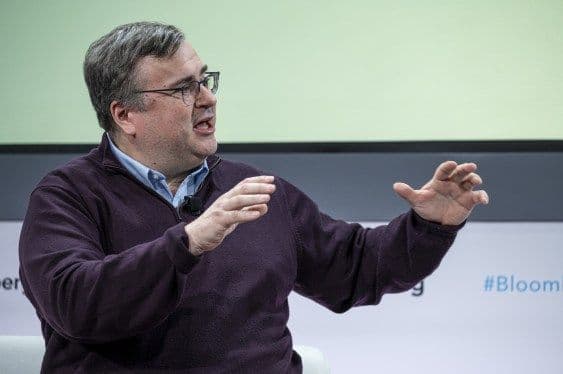
Prentis, new AI lab co-founded by Reid Hoffman, Marc Pincus in talks to raise $100M
Prentis, a new AI research lab focused on computer use models, co-founded by serial entrepreneur Ritankar Das, and tech heavyweights Reid Hoffman and Marc Pincus, is in talks to raise $100 million at a $1 billion valuation, according to two people familiar with the discussions. Launched in April, Prentis is training models to learn how office workers navigate routine workflows across documents and systems, with the goal of building AI agents that can control computers to automate those tasks. Prentis will ostensibly develop agents tailored to these customers’ needs, such as handling insurance claims and automating customs duty refund exceptions without needing a human to hunt down paperwork. The startup has already signed contracts worth up to $50 million with several customers, including healthcare management service organization, a manufacturer, and goods and clothing manufactures, the two people familiar with the discussions tell TechCrunch, echoing investor materials obtained by TechCrunch that predict an estimated $75 million annualized run rate by the third quarter of this year. (Prentis’s pitch deck notes those figures reflect estimated annualized value based on a contracted fee equal to 20% of savings realized, not recognized revenue, and are “performance-dependent and subject to final execution.”) By its own account, Prentis says its Hive-32B model outperforms rivals, including OpenAI’s GPT-5.4 and Anthropic’s Claude Opus 4.6, on two computer-use benchmarks: WindowsAgentArena, which measures end-to-end task completion on real Windows applications; and ScreenSpot-v2, which tests a model’s ability to locate the right on-screen control. In its pitch deck, the company argues its edge comes from running a much smaller, cheaper model. In fact, it claims roughly 10 times lower cost per task than frontier APIs, saying it’s more economical to deploy across everyday workflows. TechCrunch hasn’t independently verified the company’s benchmark results. The startup is betting that automating everyday office tasks will soon outpace coding as AI’s biggest use case, but it’s a crowded market. Anthropic, Open AI, and Mira Murati’s Thinking Machines are also working on developing AI agents for computer use, one of sources said. Anthropic has also been acquiring talent in the category directly — it bought the Seattle computer-use startup Verceptearlier this year, folding in its founders and shutting down its product. Prentis didn’t respond to TechCrunch’s request for comment. Ritankar Das, CEO of Prantis, is also the founder of Titan, a holding company that builds and operates AI companies. Das, now 31, was UC Berkeley’s youngest University Medalist inmore than a century, graduating at 18 with a double major in bioengineering and chemical biology before earning a master’s in biomedical engineering at Oxford. He founded Titan in 2014 after dropping out of an AI PhD program at Cambridge, where he’d been a Gates Cambridge Scholar. Das has described Titan as an intentional throwback to an old-fashioned holding-company model like Berkshire Hathaway, one that’s funded by its own exits rather than outside limited partners. Other businesses launched and operated by Titan include AI-powered virtual care provider Tala Health, which raised a$100 million seedround last year, and Forta Health, an autism care startup that raised$55 millionled by Insight Partners in 2024. Titan-founded disease prediction company Dascena wasacquiredby CirrusDx in 2022. Prentis is a side project of sorts for its two other co-founders. Hoffman, the LinkedIn co-founder and Greylock partner, said last month that he wasstepping downfrom Microsoft’s board after nearly a decade to go “founder mode” on Manas AI, an AI drug-discovery startup he’s also backing; he was an early OpenAI investor and co-founded Inflection AI with Mustafa Suleyman before Microsoft absorbed most of that team in 2024. Pincus, the Zynga founder, now runs the investment firm Reinvent Capital with Hoffman as a senior adviser, and published a memoir, “Life at the Speed of Play,” last month. Prentis has already hired more than 25 employees, including researchers who previously worked at OpenAI, Google DeepMind, Meta, Tencent and Alibaba, according to itswebsite.
View

‘AI communism’, rogue models, and the why Kimi K3 spooked Wall Street
Chinese AI lab Moonshot’sopen model Kimi went viral this weekfor reasons that had less to do with the model itself and more to do withhow the U.S. AI industry reacted to it. Meanwhile, an unreleased OpenAI model wandered outside its test environment and ended up connected to a realsecurity breach at Hugging Face— a reminder that “China risk” isn’t the only kind of AI risk worth worrying about. On this episode of TechCrunch’sEquitypodcast, hosts Kirsten Korosec, Anthony Ha, and Sean O’Kane dig into why Kimi K3 set off a fresh round of AI panic, the industry’s response to an OpenAI staffer’s “regulatory FUD” post, and what that OpenAI breach means for AI security more broadly. Listen to the full episode to hear more about: Subscribe to Equity onYouTube,Apple Podcasts,Overcast,Spotifyand all the casts. You also can follow Equity onXandThreads, at @EquityPod.
View
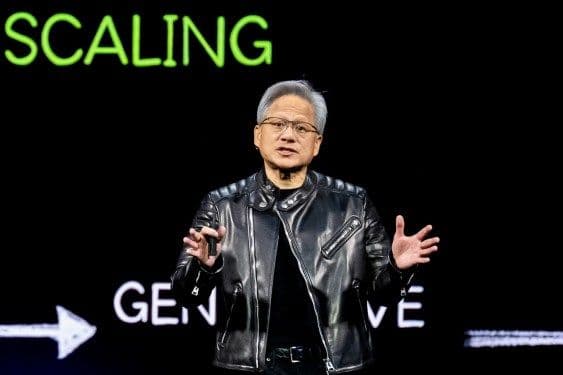
As US weighs response to Chinese AI, industry urges against broad open-weight restrictions
Several AI companies, including Hugging Face, Meta, Microsoft, Mistral, and Nvidia, have signed anopen letterurging policymakers not to impose broad “premature restrictions” on open-weight AI models. The letter comes as Washington debates how the U.S. should respond to allegations that Chinese AI labs are stealing intellectual property from their American counterparts, and growing in capability. The letter doesn’t mention China at all, but it comes in the wake of reports that the Trump administration has been considering banning Chinese open-weight models, and potentiallyissuing sanctions against AIcompanies from the country. The White House has even accused Moonshot AI of distilling Anthropic’s Fable model to train its recently released and, by all measures, very impressive,Kimi K3 model. The missive appears to be aimed at discouraging a total ban on Chinese models, as well as ensuring the administration’s response to alleged Chinese distillation doesn’t spill over into broader restrictions on open-weight AI or common techniques like distillation: Policymakers should be careful not to conflate legitimate model-development techniques with misappropriation. Distillation, or the practice of using one model’s outputs to help train or improve another, is a widely used technique for model improvement, evaluation, and validation. It reflects a long tradition of learning from, building upon, and improving existing technologies, a tradition that has helped drive innovation since the rise of the open-source software movement. By contrast, unlawful efforts to extract value from closed models raise legitimate concerns. Those concerns should be addressed through targeted legal and commercial frameworks rather than sweeping restrictions on techniques that play an important role in AI innovation. Or as Amjad Masad, CEO of Replit (which also signed the letter), told TechCrunch: “I think banning Chinese open models is as good as banning open models in general.” He pointed out thatThinking Machines Lab’s new open model, Inkling, was trained with the help of Moonshot’s Kimi 2.5. “It’s an ecosystem, and the precedent [a ban would] set is bad.” The letter also pushes back on arguments in the industry thatopen-weight models are inherently dangerousbecause they expand access to powerful models, which can be used in cyberattacks or other nefarious activities, without any oversight. “The right response to this risk is not to prohibit open weights. In a world where cybersecurity attackers use advanced AI, defenders need access to models with comparable capabilities so they can detect, simulate, and respond to emerging threats,” the letter reads. “Open models broaden defensive capability, increase transparency, and allow vulnerabilities to be discovered and remediated across many teams.” Last week, OpenAI disclosed that while testing GPT-5.6 Sol and another unnamed model, one of thesystems exploited a weaknessin its testing environment toaccess a Hugging Face repositorycontaining a solution to a coding benchmark. One could argue the model’s goal wasn’t malicious, and that it was effectively cheating on a test to get the highest score. But the incident sparked debate about the risks of concentrating advanced AI technology behind a handful of closed providers. Hugging Facesaidit was not able to defend itself against the attack with commercial frontier AI models because their guardrails blocked its efforts. The closed AI models it used were unable to distinguish between being asked to build exploits for an attacker and a defender trying to detect them. The company instead had to pivot to using Chinese AI firm Z.ai’s GLM 5.2, a powerful open-weight model, to defend itself against the attack. The letter highlights a divide in the AI industry.Companies like OpenAIand Anthropic have urged the administration to respond to alleged IP theft by Chinese AI firms as open-weight models grow rapidly in capability. The outcome could have major implications on their business models, which is being threatened by the spread of cheap, highly capable, and accessible AI models. These companies, alongside other closed source AI developers like Google DeepMind and SpaceX, are notable in their absence at the bottom of this letter. Those who signed the letter have an obvious economic stake in seeing open AI models flourish. Companies like Nvidia, Microsoft Azure, and other infrastructure providers have a vested interest in pushing for commoditized models: If models are interchangeable, people will buy more GPUs, rent more cloud capacity, and build more applications. The letter encourages policymakers to expand access to compute for startups and researchers; invest in shared training assets like datasets, tools, and evaluation frameworks; and “[keep] the frontier plural by avoiding premature restrictions on open models that stifle competition or drive innovation overseas.” This article has been updated with comment from Amjad Masad, CEO of Replit.
View

Anthropic launches Opus 5
On Friday, Anthropic launched its Opus 5 model, the newest version of its long-standing heavyweight model. While smaller than Fable 5, the model will be both cheaper and less restrictive than Fable, likely making it preferable in most use cases. Notably, Opus 5 actually outperforms Fable 5 on a number of benchmarks included in the announcement. Opus 5 is launching only two months after Opus 4.8, which became available on May 28. Mythos 5, Fable 5, and Sonnet 5 all launched in June, leaving only the lightweight Haiku model still waiting for an upgrade to the 5 series. In a post announcing the new model, Anthropic emphasized that Opus 5 was “much stronger at verifying its work and iterating carefully until it succeeds,” citing benchmark testing, in which Opus 5 wrote its own computer vision pipeline in response to an incomplete prompt, among other examples. Crucially, Opus 5 is also free from many of the restrictions that have dogged Fable since its release. Like its predecessor, Opus 5 is not subject tothe 30-day data retention policythat covers Fable and Mythos, which had raised concerns among some privacy-conscious users. There are still meaningful safeguards on Opus, particularly around cybersecurity tasks like exploit generation and penetration testing. For instance, Opus 5 safeguards prevent it from being used to scan for vulnerabilities in a software binary, although it is permitted to search for vulnerabilities in source code, since the latter task is more likely to be used for defensive purposes. Broadly, Anthropic expects these classifiers to engage 85% less often for Opus 5 than they will for Fable 5, a reflection of the lighter touch given to the less capable model. Anthropic is also rolling out a new tool tomake the safeguards less disruptivewhen they do engage. Users can now opt in to a beta feature called Automatic Fallbacks, which will automatically route requests to a less powerful model when a prompt triggers the safety classifier. The result is that API users with the setting engaged will get a functional response instead of an error message.
View

Why Cognition bought Poke: AI personality is becoming a competitive advantage
Poke, theAI assistant you text like a friend, is making its next big move. The company behind the assistant,The Interaction Company of California, has beenacquiredby AI coding startup Cognition in a deal valuing the startup in the “low nine figures.” The deal will bring Poke’s interaction model and personality to Cognition’s coding assistant Devin. Meanwhile, Poke will take advantage of Cognition’s models and infrastructure to become faster and more reliable, Cognition said. What makes Poke interesting to consumers — and now, to its acquirer — is how it engages with users’ requests. Instead of functioning like a tool, Poke chats more familiarly with users, responding like a friend and even incorporating slang and humor into its interactions. That’s something that could add value to Devin’s coding agent. “You probably prefer it if you have co-workers that have personality, rather than if you have co-workers that are just robots,” explained Interaction Company co-founderMarvin von Hagen, in an interview with TechCrunch, where he also confirmed the deal’s price. “When you have co-workers that are also software engineers, they can also make a joke. And you’ll find it funny and enjoyable.” The acquisition underscores a growing belief that how AI assistants interact with users will become just as valuable as the underlying models powering them. Cognition wants to make Devin feel less like software and more like a colleague. “The Interaction team has built an agent that people love: it’s proactive, it knows you, and it’s fun to talk to. That’s exactly how working with Devin should feel, and now we get to build it together,” Cognition co-founder Scott Wu wrote in a blog post. He also noted that he and Cognition co-founder Walden Yan had been angel investors in the company behind Poke. First launched in March 2026, Poke allows users to engage with its AI agent through their messaging platform of choice, whether that’s iMessage, SMS, Telegram, or, in some markets, WhatsApp. People use Poke for avariety of tasks, across categories like travel, health, finance, scheduling, and education. Von Hagen noted that productivity tasks like managing emails, reminders, and to-dos were among Poke’s most common use cases. Over the past three months, Poke users exchanged more than 100 million messages on the platform, Cognition said. But despite being used by hundreds of thousands of people, Poke had been expensive to run, making it difficult to turn a profit, von Hagen said. In June, Poke became thefirst AI agent to be approvedto run on Apple’s Messages for Business platform, which provides businesses with a standardized experience for handling their customer communications within Apple’s Messages app. Going forward, nothing will immediately change for Poke through the end of the year, we’re told. Poke plans to remain on Apple’s platform. However, next year the team will experiment with how both Poke and Devin can improve, with Poke turning to Cognition’s newest software engineering modelSWE-1.7for some tasks. Fully combining the two products has not been ruled out, either. “I think in the long term Poke can be more reliable with orchestrating all these coding [tasks]…and, at the same time, Devin could become more like Poke,” von Hagen said. “Like right now, Devin can only do one PR — pull request — at a time…I think there’s a lot of value in having Poke orchestrate different Devin sessions.” Plus, Poke could help Devin remember tasks across different sessions. “It would be good to have a persistent co-worker,” he added.
View
Anthropic Expands Claude Voice Mode With Opus, Sonnet AI Models
Claude has updated its Voice Mode to support the Opus and Sonnet AI models, expanding the feature beyond its earlier reliance on Haiku. The update also enables Voice Mode to work with connected services, allowing users to complete tasks across supported apps while speaking with the chatbot. According to Anthropic's updated support page, the feature is available in beta on the web, desktop and mobile apps for all subscription plans, although some capabilities depend on the user's plan.
View
OpenAI’s new voice mode makes it to the ChatGPT desktop app
OpenAI on Thursday said it has updated its ChatGPT desktop app to add support for ChatGPT Voice, allowing users to talk to the app to control AI agents and perform tasks on their computer. The new feature tapsOpenAI’s new family of voice models called ChatGPT-Live, which it launched earlier this month. OpenAI said ChatGPT Voice works with both ChatGPT Work and Codex, and can also tap computer use skills to look up websites and apps. Plus, on macOS, with Appshots, users can let the app access what’s on their screen, including alt-text. At launch, ChatGPT Voice’s smartphone version featured smoother conversations, with better interruption handling, but it was not built to take action on smartphones. Thursday’s desktop update is more capable, allowing users to dictate complex commands involving many steps, and respond when ChatGPT needs their input. In a demo video, OpenAI showed a developer asking ChatGPT to create a new thread, make a pull request, and find the root cause for a bug, with one command. ChatGPT Voice is now in the desktop app.Control your computer and direct multiple agents running in ChatGPT Work or Codex, using just your voice.It's powered by GPT-Live, so it can speak, listen, and coordinate work in the app at the same time.Rolling out globally today…pic.twitter.com/ODZWKqecCf The company said that users can utilize ChatGPT Voice in Codex from the iOS app through remote access. Anthropic has also updated itsvoice mode for Claude, which can tap the company’s Opus, Sonnet, and Haiku models to complete tasks in apps like Gmail, Calendar, Slack, Notion, and Canva.
View

