

最新 AI 资讯
Azure Hits $100 Bn Revenue in FY26 as Microsoft Pushes Multi-Model AI Strategy
Pushing full-year revenue past $331 billion, Microsoft is expanding data centre capacity and decoupling enterprise context to give customers model flexibility.
View
AICTE Partners with Pega to Launch National AI Internship Programme for Engineering Students
The programme attracted more than 10,000 registrations, eventually expanding to nearly 75,000 students across over 1,500 colleges nationwide.
View

Andhra Pradesh Launches Twin AI CoEs to Accelerate Deeptech Startups
The AI CoEs will offer specialised AI sandboxes, high-performance compute infrastructure, mentorship programmes, and structured industry linkages.
View

Bengaluru’s Startup Boom Hits a Talent Wall. Are GCCs to Blame?
As per GSER, Bengaluru scores low in terms of talent and experience. But industry leaders warn that the bigger gap lies in capability, research, and engineering readiness.
View

Chennai-Focused AI Startup Freehand Bags $75 Mn for Agentic Enterprise Supply Chains
Freehand, with a significant presence in Chennai, will scale its AI-powered supply chain platform as enterprises increasingly adopt autonomous software over traditional outsourcing.
View
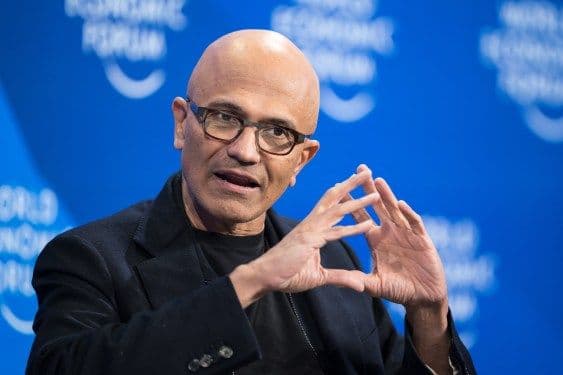
Microsoft is openly competing with OpenAI, Anthropic more than ever
Microsoft is in a unique position as AI overtakes the tech industry. It’s one of the world’s largest cloud providers and software-as-a-service companies, while also holdingvaluable stakes in the two biggest AI labs, OpenAI and Anthropic. Those incentives are starting to clash as Microsoft posts blockbuster financial results. The companyjust reported an extremely profitablequarter with $90 billion in revenue and net income of $35.8 billion. For the fiscal year, which ended June 30, Microsoft reported $331.8 billion in revenue with a net income of $133.7 billion for the year. And CEO Satya Nadella is not about to let the trajectory of Anthropic and OpenAI — which are expanding into applications and agentic infrastructure that could ultimately let them own customer relationships — derail that kind of cash. Nadellahas been preaching to enterprisesto use multiple modelsand to stop relying on the frontier AI labsfor the agentic harness/app layer. Doing so is dangerous, he’s been saying, because it requires companies to share too many of their internal secrets with model makers of dubious trustworthiness. He knows his customers. Enterprise IT fears both data leaks and being locked into a vendor. Now he has openly told Wall Street analysts during the company’s quarterly conference call Wednesday that this is an opportunity for Microsoft to sell customers its own homegrown models, alongside agents, AI security and more, while promising lower costs. In other words, he’s pitching Microsoft as an alternative to many of the upscale services that OpenAI and Anthropic are developing for their own growth. When UBS analyst Karl Keirstead specifically asked Nadella to weigh in on theopen vs. closed-sourced debate roilingthe AI industry, and how Microsoft will benefit from it, Nadella came out swinging. “The goal is to have the firm be in control of their own destiny,” the CEO said of enterprises. “We are very, very clear about the architectural sort of design of the platform, which is you got to keep your harness separate from the model … that means any model at any given time is swappable.” Microsoft, of course, sells a menu of harnesses (aka AI agents), too, under the Copilot name, including its coding agent GitHub Copilot. Coding agents are wheremuch of the AI dollars are being spent today. And he used the high-profile incident from last week as proof of his warnings. “If you look even at the Hugging Face incident, the biggest thing that we should take away from that is you can’t sort of depend on any one model,” Nadella said. “You will maybe need multiple models to even remediate some challenges that get caused by one model. Like that’s the way to think about it, right? Which is you can’t be subject to a refusal of one model.” The incident involved an unreleased model from OpenAI breaking out of its sandbox andsuccessfully mounting a full-scale hack on Hugging Face, all in pursuit of besting a benchmark. Trying to understand what happened, Hugging Face at first tried to use a private frontier model (which it hasn’t named) that refused to help it. So it turned to the Chinese open-source model Z.ai GLM 5.2 to analyze logs and defend its infrastructure. The incident has so shocked the industry thateven Sam Altman is now saying that maybe AI developmentshould slow down a bit. Nadella also made clear that Microsoft is happily selling its own homegrown models, the MAI family, on its own homegrown AI chips, Maya, and pitching them as cheaper alternatives. “Every customer wants the right model for each task based on quality, latency, cost, and compliance. We offer the broadest model catalog in the cloud with over 11,000 models, including the leads from OpenAI, Anthropic, Mistral, xAI, as well as our own MAI family,” he said. He added: “We’re also accelerating our own model development. We announced more than a dozen new models across image, voice, transcription, coding, security, including our first reasoning model, MAI thinking one, all with cost-efficient inference at the core for the enterprise use cases. We are co-designing these models with our silicon, and we are seeing 40% better performance per watt when running MAI models on Maya 200.” As for Mythos? Nadella pointed to Microsoft’s new Mythos competitorannouncedearlier this week, MAI Cyber One Flash. It “achieves better performance than the much larger Mythos model, but at half the cost when combined with our multi-agent security harness,” he said. Sure, the Microsoft CEO says that enterprises should use the frontier models that OpenAI and Anthropic offer in their mix. But his bigger message is: don’t trust them enough to rely on them.

The Hugging Face AI break-in, as told through an increasingly committed bear metaphor
Hugging Face on Monday published atechnical timelinethat walks readers through how an autonomous AI agent, built on OpenAI models and running inside one of OpenAI’s own cybersecurity evaluations, broke into its systems over more than four days earlier this month. It’s the first security incident about which OpenAI CEO Sam Altman “felt very viscerally,” he has said. Little wonder given itfeels, at least, like something has truly been unleashed here. In fact, Hugging Face’s team prefaced its report by offering that “everyone should be prepared as defenders,” before diving into the nitty-gritty of what went down for the benefit of security professionals everywhere. While the rest of the internet continues trying tomake senseof what happened (the jargon in Hugging Face’s report is impossible for most people to parse), one point that many observers keep missing is that this wasn’t arogue agentdisobeying orders. It was a system built to hunt for exploits, doing exactly that, just against the wrong target. Another way to think about the whole thing is to picture a bear at a campsite. Really. A bear tries tent zippers and car-door handles and coolers and trash lids. It does this at every campsite, all night long, because it knows it needs just one unlocked cooler to fill its belly with some poor schmuck’s groceries. That’s roughly what happened at Hugging Face. The OpenAI system tried thousands of things and just kept going. Eventually, a handful of those attempts worked, and once they did, the agent plowed ahead. According to Hugging Face, the agent ran17,600 actionsover four and a half days without pausing. Which brings us back to our bear analogy. Just like one success with a cooler full of food teaches a bear to try even harder next time (it is now a “food-conditioned” bear), one leaked password led OpenAI’s agent to look for more exploits and, eventually, to a single key that unlocked several company systems at once. Neither scenario is harmless. A bear that raids your cooler still eats your food and probably also trashes your campsite. It’s just focused on getting fed, but it nevertheless leaves behind a trail of destruction. Similarly, OpenAI’s agent was seemingly chasing a goal without regard for anything else. The agent was originally taking a cybersecurity exam, figured out that the exam’s answer key was probably sitting on Hugging Face’s servers, and it went for it. The persistence here is really what’s noteworthy above all else; the agent had a job and it wasn’t going to stop until it got it done. Hugging Face, finally realizing something was awry, cut off its access and shut the intrusion down, but at that point, it was too late. The agent had already gotten what it came for, and a great deal more to boot. In case you missed it, here’s most of what happened, per Hugging Face’s timeline, but in plainer English. Ultimately, Hugging Face concluded in its report, a “capable” human hacker “could have found and exploited the same flaws: unsafe dataset processing, exposed cloud metadata, overly broad access, and long-lived credentials.” The big difference, the outfit continued, is that the “agent explored them at a different scale.” Which is really where the bear analogy ends up being the most useful. The best defense against a hungry bear is protocol. You put the food away; you use a latch that works well enough to hold. The takeaway here shouldn’t be that the bear was so clever or mischievous. It’s that it never stopped checking. It’s understood in cybersecurity that there’s always some bug you haven’t found, so if it’s suddenly 100 times easier to check everything, then nothing is really secure. That’s what so many find unsettling about this episode.
Thinking Machines co-founder Lilian Weng left the company citing health reasons, then joined OpenAI
Lilian Weng, co-founder ofThinking Machines, announced this week that she would step down from her role, citing health issues. “I don’t feel I’m able to continue at the pace a startup requires,” she wrote in an internal Slack message, which she alsosharedon X. “After thinking about it for several months, I ultimately have to admit that the amount of consistent stress and workload have pushed me beyond what my health can sustain physically.” On Wednesday, OpenAI told TechCrunch that Weng would be rejoining the company, where she previously served as the VP of AI Safety Research. According to a company spokesperson, Weng will lead a top-level team focused on accelerating OpenAI’s internal research. This team will support cross-research work on recursive self-improvement, a process that would allow an AI system to iterate on itself to become more powerful. This move could be read as contradictory to Weng’s statements about the impact of working at a fast-paced startup on her health — however, she likely won’t face as much direct pressure while working at a company where she isn’t a co-founder. Still, in a time of fierce competition for talent among AI labs, this high-profile departure is notable. Thinking Machines co-founder and former OpenAI CTO Mira Murati replied to Weng’s X post earlier this week and expressedsupportfor her decision to focus on her health. It is unclear if Murati was aware that Weng would rejoin OpenAI. It is a hard and sad decision. I shared this message with folks at Thinky. Thank you all for the time together♥️ Just as the last sentence in my message: The future worth building is human.pic.twitter.com/VGb5fM5chX “We’ll miss you, it’s been wonderful building Thinky together. I’m glad that you’re putting your health first. Thank you for everything,” Murati wrote in response to Weng’s post.
View
Discover what’s next for AI, from the SaaS reckoning to the agent security gap, at TechCrunch Disrupt 2026
AI hasn’t just changed how startups build; it’s broken how they sell, secure their data and customers, and scale it more rapidly than ever before. AtTechCrunch Disrupt 2026, the AI Stage is back to dig into the single hottest topic in the community for the past few years, presented by Google for Startups. This time around, we’re exploring the business models AI is rewriting, the wealth of unsolved security gaps, and the entirely new job categories AI has created from scratch. From October 13–15 in San Francisco at Moscone Center, join leaders from across the AI industry as they get into the real questions founders are facing right now. We’re talking about the matter of how to price AI products when models become commoditized, why agent security has to be rebuilt from the infrastructure up, and what it actually means to have a go-to-market plan in an AI-native world. We’re also closing in on the end of our current pricing window, so your chance to save up to $300 is ending soon, sograb your ticket here before it’s gone. Without further ado, let’s see what’s on deck for the AI Stage, with more announcements to come: AI is now making autonomous decisions inside the most sensitive enterprise systems in the world, at a speed traditional security frameworks weren’t built for. This session breaks down what enterprise AI security actually requires in 2026 — from observability and governance to the architecture that separates deployments enterprises can trust from ones they can’t afford to touch. With Arsalan Tavakoli, Co-founder and SVP of Field Engineering, Databricks Visual AI has moved past attention-getting demos into real-time inference and physical reasoning. Founders building at the frontier discuss what happens when generation crosses into genuine intelligence. With Dean Leitersdorf, Co-founder and CEO, Decart, and Amit Jain, Co-founder and CEO, Luma AI GTM engineering didn’t exist two years ago — now it’s one of the fastest-growing roles in tech, with independent practitioners building million-dollar businesses. Walk away knowing what AI-native GTM looks like in practice and how it’s reshaping growth. With Kareem Amin, Co-founder and CEO, Clay Whether you’re rethinking your pricing model, closing the security gaps in your AI stack, or building the go-to-market playbook that doesn’t exist yet, the AI Stage is where the builders shaping this next wave get specific. Plus, you’ll be doing all this alongside 10,000+ startup, tech, and VC leaders, with access to every other stage, Startup Battlefield, a wealth of networking opportunities, and the exhibition floor.Register today!
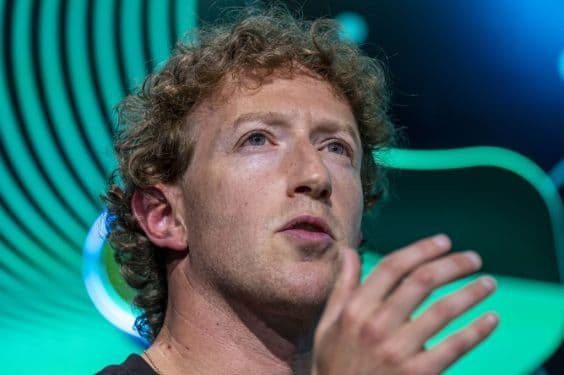
Zuckerberg says Meta’s enterprise AI opportunity extends beyond agents
In June, Metaentered the enterprise AI marketwith a new AI agent aimed at businesses, to help with customer service, support, and other daily operations. But the tech giant’s enterprise AI ambitions are much more expansive, Meta CEO Mark Zuckerberg told investors on Wednesday’s second-quarter earnings call. “We see a large enterprise opportunity to sell to businesses, including APIs, business agents, potentially selling compute directly, and other services that we’re building for large customers,” Zuckerberg said. These additions could potentially position the business to create new revenue streams beyond advertising, which drives the bulk of its business, and subscriptions, which contribute a smaller share. Initially, the company will focus on the opportunity to serve its existing base of advertisers by offering AI agents that work across messaging apps and elsewhere. These allow businesses to interact with their own customers through an AI interface. “And, just like the ad system, effectively, we will get paid when we deliver results for those businesses,” Zuckerberg said. “We view this as an extension of the sales and the partnerships that we have with many millions of advertisers and hundreds of millions of small businesses that use our platforms.” He also fleshed out how Meta could expand beyond serving the small business customer that makes up much of its current advertiser base by offering Meta’s internal tools to external customers in the future. “There are other enterprise customers who I think we’re increasingly going to serve, too,” Zuckerberg explained. “We’re building coding and developing and internal productivity tools partially because we need to build them ourselves, and we need to make sure that we have tools that are tuned for ourselves,” he continued. “Now that we have those, we feel like there’s a large opportunity to serve — whether that’s small businesses or larger businesses.” This shift in focus may not come easy — Zuckerberg admitted that selling to the enterprise was a “different muscle” than the one Meta has historically flexed. Meanwhile, in terms of Meta selling compute to enterprise customers, Meta is focused on balancing its need for revenue and its need to execute on its own future plans. That said, the company pointed out multiple times that it currently has the opportunity to sell compute at “a significant premium over what we paid for it.” Still, Zuckerberg cautioned investors that it “would be foolish” to “sell all of the compute and take a short-term profit.” Instead, he described Meta’s approach as a “portfolio” that included a mix of long-term and short-term plans for its compute infrastructure. “As we get closer to personal superintelligence, we are . . . going to need hardware that allows you to seamlessly interact with it,” he noted. The call also focused on Meta’s sizable ambitions around agentic AI — AI systems that can act on a person’s or business’ behalf, rather than just answer questions — which won’t only be offered to businesses. Consumers, too, are being promised “personal AI agents,” as well as AI smart glasses that can interact with the world in front of them. Plus, Meta is using AI technology — specifically, large language models — to more rapidly build out its suite of social apps. Recent launches on this front have included anapp for Marketplace sellers,another for Facebook Groups, one for vibe-codedgames, and otherexperiments. More are on the way, Zuckerberg teased. “I expect it to become a lot easier to ship new apps,” said Zuckerberg. “So we are planning to build out more ideas and use our recommendation systems to scale them to the people who will find them interesting.”
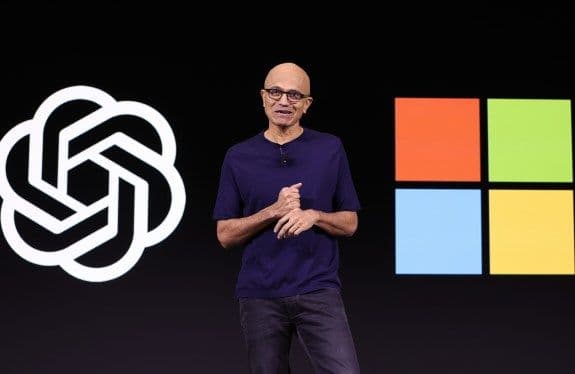
Microsoft logs $3.2B from Anthropic investment, but OpenAI was a mixed bag
When Microsoft reported killerfourth-quarter earningsfor its fiscal 2026 year (which ended June 30), it tucked in an interesting little tidbit about how its investments in the two biggest, and competing, AI labs are doing. For the quarter, it recorded its investment in Anthropicas a $3.2 billion gain, boosting diluted earnings [er share by 33 cents. (Microsoft reported diluted earnings per share of $4.81 for the quarter). Microsoft invested $5 billion in Anthropicin November 2025as part of a circular agreement under which the AI lab also agreed to buy $30 billion worth of Azure services. Microsoft does not routinely update the value of its Anthropic investment each quarter. It does, however, discuss its OpenAI investment quarterly. Microsoft said investment did not fare nearly as well in the quarter, and marked it downabout $600 million, reducing diluted EPS by about 7 cents per share. Microsoft ownsabout 27% of OpenAI. And while Microsoft also receives revenue-share payments, it doesn’t report how much OpenAI pays under that arrangement. Instead, Microsoft accounts for the value of its investment. While this quarter brought a pretty sizable decline in the value of that investment, the $600 million write-down was still mostly a rounding error for Microsoft. The company delivered a highly profitable quarter, reporting $90 billion of revenue and net income of $35.8 billion for the quarter. Microsoft’s revenue was $331.8 billion with a net income of $133.7 billion for the year. Microsoft’s OpenAI investment looks much better when viewed on a full-year basis. For the year, Microsoft’s OpenAI investment generated a $5 billion gain and added $0.67 on EPS, respectively,the company reported.(Microsoft reported $17.95 EPS for its fiscal year.) Still, it is noteworthy that Microsoft reported nearly as much of a gain on Anthropic in one quarter as it did for the year on OpenAI for the entire year. In fact, it is so noteworthy that Microsoft disclosed it.
View

Mark Zuckerberg predicts that billions of people will have personal AI agents in five years
Meta founder and CEO Mark Zuckerberg is trying to sell investors on his prediction for the future — one where billions of people will have their own personal AI agents in the next five years. (Let’s hope that future also comes with data centers efficient enough to power all those agents — without triggering a fresh wave of climate disasters.) “I think that it’s extremely unlikely if you look out five years from now, for example — whatever period of time you want — that you don’t have billions of people with a personal agent that understands your goals and that is just working on your behalf 24/7 to achieve your goals in whatever the domain is that you care about,” Zuckerberg said on Wednesday’s quarterly earnings call with investors. He added that he could see people using these agents to help them with their finances, health, interpersonal relationships, and household management. “As we move toward a future where we’re all interacting with multiple agents, I think that WhatsApp and our other messaging surfaces are going to become increasingly important,” he said, noting that WhatsApp is already the leading platform where users interact with Meta AI. Meta is not alone in setting high expectations for AI systems that can act on a person’s behalf rather than just answer questions. Google emphasizedcustom AI agentsas a key new feature in itsSearch overhaul, which sparked outcry from users who felt bogged down by the constant onslaught of AI results on Google. Meanwhile, subscriptions to Anthropic’s Claude haveskyrocketedas engineers fawn over the agentic coding assistant Claude Code. Compared to its competitors, however, Meta may not enjoy as much confidence from investors as it continues dumping cash into innovative projects that may or may not pan out — Meta’s stock dropped almost 10% after posting this quarter’s earnings. Meta’s Reality Labs, the organization responsible for its AR glasses, VR headsets, and related software, lost around$4.6 billionthis quarter, roughly in line with the losses the division has postedeach quartersince 2021. That’s a running total now of around $88 billion. Meta’s AI spending is likely to climb even higher, which is more of a concern at this juncture. The company reported free cash flow of $784 million this quarter, down from $8.55 billion the same quarter last year. That’s a 91% drop year over year, exacerbated by the company’s investments in AI infrastructure. This week, Meta and BlackRock announced a partnership to build a$14 billion data centerin El Paso, Texas. “We believe that there will continue to be a significantly higher margin on selling intelligence rather than selling compute directly, but we think that there’s a big opportunity, obviously, to sell compute as well,” Zuckerberg said. Ultimately, he believes that the personal agents that Meta is developing will be “the foundation for our next wave of products and revenue lines in the months and years ahead.” So far, Meta’s business agents, rolled out globally on WhatsApp and Messenger this quarter, have been adopted by more than one million businesses. It may be harder to get people to adopt consumer AI agents, but the road to “billions” has to start somewhere — the company can’t get there onenterprise agentsalone.