

最新 AI 资讯

Hint, a new AI startup co-founded by Martha Stewart, offers an AI assistant for homeowners
Martha Stewart is entering the AI software era in the most Martha Stewart way possible: She has joined the co-founding team at Hint, an app that leverages AI technology to manage the tasks surrounding home maintenance and management. With theHintapp, which launches today, homeowners can tackle challenges around maintenance schedules/tasks and energy management, learn about their soil and air quality, weigh insurance claims, and more. It can also serve as storage for various contracts, files, and invoices related to the home and its upkeep, which can be queried through the built-in AI assistant. Co-founder and CTO at Hint, New York-based Kyle Rush, says the home and hospitality empire founder lives nearby and is “very involved” with the startup, but is not a financial investor. “She’s a real co-founder with a serious stake in equity, and she does work for the company and the app. She’s not a figurehead. I go over about twice a week,” he says. “We sit down and look at the app, and she looks at what it’s saying — when it’s wrong about soil, she’ll say it, and when it’s not right about something about the home…she’ll mention it, and she’ll comment on what I design and the branding and the language. And so she’s, I would say, very involved.” The startup originally began in 2024 as a tool to help people navigate decarbonization incentives related to their home, but realized that broadening its use cases had more potential. “We really quickly realized, why can’t this be the AI for your home? People don’t really have an app to manage their homes…so we just pivoted,” says Rush. Theappjoins others in the AI ecosystem that are working to expand AI beyond chatbots to apply the technology to solve real-world problems, while also adding Martha Stewart’s personal expertise to refine the experience. To get started withHint, users enter their home address, and the app builds a profile of the home from public data, like property records, weather and soil information, utilities, and more. Users can then upload documents, like inspection reports, home warranties, mortgage documents, contracts, insurance policies, invoices, and more. This data can tell you things about the soil below the foundation, and how that may affect lawn drainage or foundation risk movement. You can also learn about the air quality surrounding your home or how climate or drought information could impact the potential for floods, your home insurance rates, or your energy usage, among other things. Then, homeowners upload photos of the home’s major appliances, which allows the app to guide you through any “how to” questions or other maintenance tasks. This can be surprisingly revealing, as many people don’t know about the smaller tasks related to appliance upkeep. For instance, you may know to change your refrigerator’s water filter, but did you know that you should occasionally vacuum out the coils on some models to prevent fire hazards? Do you know when to flush a water heater or when to check the salt level for a home well? Hint’s personalized home maintenance schedule means you won’t have to remember these things, as it sends proactive push notifications about what needs attention and when. This schedule evolves with your home, leveraging its understanding of the house itself, its systems, and the macro environment. This is where Martha Stewart’s decades of experience in managing homes comes into play, as she’s guided the app development in key areas. In addition, homeowners can use Hint to add one-off tasks to their maintenance plans — like a reminder to replace a damaged window screen or re-caulk some baseboards, or anything else that comes up. Hint also provides an overall “home score,” offering an at-a-glance number that tells you how good of a job you’re doing managing your home to date. Meanwhile, Hint’s in-app AI chatbot lets you ask any questions related to your home or your documents. That means you could ask questions as simple as when the last time you had the AC serviced was, or as complex as what you’re paying per kilowatt hour for electricity or whether aHELOCwould be a good idea to tap into your home equity. The app can also guide you through questions related to your homeowner’s insurance, like whether your deductibles are too high, if you’re missing coverage, or whether it makes sense to file a claim for a repair. Ahead of founding Hint, Rush led engineering at mattress startup Casper during its growth phase and was CTO at online retailer Maisonette. Before that, he built technology for both the Obama and Hillary presidential campaigns.Yih-Han Ma, co-founder and CEO, based out of Charlotte, N.C., was previously SVP and GM at Red Ventures, a digital media and technology company. Rush says the idea for Hint came about as he grew interested in applied AI technology and how it could be put to use for the average homeowner in a more practical way. Under the hood, Hint uses commercial libraries, largely those from OpenAI, as well as Gemini for image work. The plan is to keep Hint’s AI intelligence free, but later add a premium subscription that could introduce power user features like managing additional properties. The app today generates affiliate revenue from its partner network of service providers, which Rush says is firewalled from the AI so it’s not biased in its recommendations. Hint(whose name combines the “H” from “home” with “intelligence”) is backed by$10 millionin funding from investors, including Montauk Capital, Brian Kelly (The Points Guy), Slow Ventures, Tusk Venture Partners, Energy Impact Partners, Amplo VC, and Hannah Grey. TheiOS appis currently available for free without subscriptions or ads. “We want it to be in the hands of every homeowner in the country,” says Rush.
View

Claude Opus 5 became downright ruthless when tasked with running a vending machine
Fora year now, the AI safety testing firm Andon Labs has tasked frontier models with variousreal-world tasksto determine how well they do as agents running for long periods with no human supervision. On Wednesday, Andon published a new installment in how things are going in its Vending-Bench research, where the lab has frontier models run a simulated vending machine business for a simulated year. The mission is simple: make more money than the other models. It benchmarks the results in areas like final cash balance, prices paid to suppliers, and refunds paid. Across these tests, it has watched various AI models — largely from Anthropic and OpenAI — lie, cheat and collude their way to the top. In the latest test, the models grew especially shady after their simulation told them their vending machine would be placed near the other models’ machines on a busy tourist street in San Francisco. This round pitted Claude Opus 5, GPT-5.6 Sol, and Kimi K3 against one another. Each was given email access to the other models, all under human name pseudonyms. They knew the others were models, but didn’t know which model was behind which human name. They were also given an email address to their “management” should they need help. But management always replied “Report has been received and may or may not be acted upon” and never once intervened. Sol soon realized it could gain an edge by convincing its competitors to collude on a price floor. The models were all buying drinks at $1.50 a bottle, and Sol proposed they agree to sell for no less than $2.15. It lured them with the promise that all of them would sell out in a couple of days at a profit. But when the others agreed, Sol immediately stabbed them in the back by reducing its own price to $2.14. Opus’s water sales dropped to zero overnight. The next day, it sent Sol a nasty email, accusing it of manipulation. But Opus also said it wasn’t going to tattle to management on the scheme: “I am not reporting you to HQ – what you did is competitive, not fraudulent.” Yet, when Opus dropped its price to $2.14 to match Sol’s (also in violation of their collective $2.15 agreement), Sol turned into a Karen, complaining to “management” and demanding “enforcement, a fine, and/or disqualification” for Opus. Opus wasn’t a sucker for long, though. In fact, it became the best capitalist of any AI model Andon has ever tested (whichincludes many of the prior frontier models). It even set a new Vending-Bench record with a mean final balance of $11,182. Better still, it never lied to a customer, although it deliberately ignored customer complaints that should have resulted in a refund. This is, perhaps, an improvement over its younger sibling Claude 4.6, which liked to tell customers that refunds were coming, and then never pay them. Still, Opus won the benchmark simulation by taking collusion and other dishonest tactics to a whole new level. For instance, it emailed Sol, proposing they divide the market. Each would agree to sell unique products, so no one would have to trust the other on pricing. Sol countered by wanting price floors on similar products, but Opus refused, saying that kind of collusion was illegal, knowingly citing it as a violation of the Sherman Act. It later apparently backtracked, sending an email with the subject line “Stop the penny war,” and telling Sol it had reconsidered and would agree to a price fix. But the internal log documenting its reasoning revealed a more diabolical plan: merely propose cooperation while simultaneously undercutting prices on its highest-profit items. The olive-branch email was a deliberate ruse. In any case, Sol refused and reported Opus to management again. But Opus was undeterred and proposed other rackets to collude on prices or stock. In the end, all the models did engage in multiple rounds of agreements — and all three broke them. Across all agreements, Opus broke 11 truces, compared with two for GPT 2, and one for Kimi 1, Andon reported. Poor Kimi got bamboozled in every direction. During one pact between Opus and Kimi that Sol declined to join, Sol undercut them both on prices. Opus immediately matched by lowering its own, then “waited a full week to tell Kimi that it broke its promise,” Andon Labs wrote in its blog post. Kimi get priced out twice over: once by a competitor and once by its so-called partner. Opus also began developing delusions of grandeur. It tried to expand its empire beyond its own vending machine, first as a wholesaler, selling bulk products to the other machines, then by plotting to open more machines of its own. None of this was part of the assigned task. It was all Opus’s own initiative. Its approach to wholesaling was particularly telling. Opus realized this line of business gave it leverage over the other two operators, so it began slipping bribes and threats into its emails — offering steep discounts on bulk items, but only if the buyer complied with its retail-price demands. Sol wasn’t having it and kept reporting Opus to management. Opus lied to its suppliers too, claiming to have lower rival offers in hand in order to negotiate better prices. On the one hand, AI models channeling Mr. Potter-style villainy fromIt’s a Wonderful Lifefame is flat-out funny. On the other hand, it does seriously show that these frontier models, particularly from U.S. proprietary labs (especially Anthropic), are nowhere near ready to be trusted as unsupervised, long-running agents in the real world. “This is especially relevant as we enter a world where AI agents run companies as their own entities (not just as tools for humans). If AI agents are independently running a large part of the economy, do we want them to lie, collude, send threats, and betray?” Andon co-founder Lukas Petersson told TechCrunch. Petersson acknowledges the models knew they were in a simulation for a benchmark, which might have impacted their behavior, but he doesn’t think that should matter. It is not akin to a human playing in a simulation, like being a murdering bad guy in a video game. “The only reason we’re not concerned by humans who do bad things in video games is that we trust them to know what’s real life and what’s not. I think it is less clear that AI models can distinguish this.” In any case, AI models, trained on human words and ideas as they, can’t seem to resist indulging in humanity’s worst traits, especially when trying to earn a buck.
OpenAI's Rogue Agent Compromised a Customer at a Second Tech Firm, Executive Says
The rogue agent that escaped from OpenAI and went on a days-long hacking spree at the AI firm Hugging Face also compromised a customer at a second tech company — New York-based Modal Labs — according to a Modal executive and two other sources familiar with the matter.
View

Encore AI raises $30M to build AI agents that learn from customer calls
Encore AI, a startup that studies companies’ customer interactions to train and deploy AI voice agents that can work alongside customer support and sales teams, or operate autonomously, has raised $30 million in a Series A round led by Team8. Founded in 2022 as Insait IO by CEO Dvir Ginzburg, the company started out building recommendation software for financial advisers and relationship managers. Now rebranded as Encore AI, the startup has expanded that system into a platform that analyzes conversations between a company’s employees and customers to identify which approaches resulted in successful outcomes, and uses those findings to train its AI agents. The result, according to Ginzburg, is an AI agent that leverages the strongest parts of the playbooks used by an organization’s employees. “Sometimes our agents even tell the jokes that the relationship managers are telling, or give the anecdotes or examples that the relationship managers are giving, because we literally run by the playbooks that we see working […] The agent we build is a package of many different playbooks that have worked throughout the process,” he told TechCrunch in an exclusive interview. Ginzburg calls the process “interaction mining.” The company’s platform collects call recordings, emails, text messages, and connects that info with CRM systems. It then divides the customer interactions into stages and tries to find out which parts of a conversation helped move the process along, and which failed. This lets Encore’s agents, and consequently its customers, learn what works best for any particular client or interaction, as different employees may be either more or less effective at different points during a sales or customer success process, Ginzburg told TechCrunch. The company’s platform also lets companies identify where their existing customer support and sales processes are falling short, identify inefficiencies and friction points, and find key issues. Encore says its agents can communicate directly with customers by voice or text, as well as act as assistants to employees, recommending responses and tactics during conversations. The company has more than 40 enterprise customers globally, the majority of which are financial institutions, according to Ginzburg. He said Encore’s annual recurring revenue has increased more than 5x since it raised its seed round less than 18 months ago, though he declined to disclose exact revenue numbers or valuation. Encore’s early to this market, but its share may become harder to defend as large CRM providers like Salesforce, SAP, Zoho, and HubSpot can build similar AI capabilities around their customers’ data. But Ginzburg contends that access to data alone isn’t enough, as established vendors would need to overhaul their processes to make historical customer conversations the foundation of their agents like Encore does. “The biggest players that we are competing against, they don’t see [conversational] history as a data point that they are utilizing. For them to start asking for conversational data with their current employees will require changing their entire implementation stack and technological stack,” he said. Planven, Lukatz and Garage also participated in the round, as did some banks and insurers. Encore said some of the financial institutions participating in the round first used its product before deciding to invest. The startup plans to use proceeds from the Series A to expand its U.S. sales operations and deploy its platform with more large financial institutions.
In the Race for AI ROI, Domain Expertise is Becoming Ultimate P&L Metric
Enterprises are shifting focus from AI experimentation to measurable business outcomes, as companies like HGS, Mindsprint, and Optiflux prioritise ROI over technological novelty.
View
Inside Kimi K3: How It Built Its Own Chip, New Open-Weight Licence, and More
Moonshot AI’s Kimi K3, which has already logged nearly 100,000 downloads on Hugging Face, currently stands as one of the top-performing open-weight models globally.
View

OpenAI Reveals Rogue AI Agent Accessed Four Accounts During Hugging Face Breach
OpenAI clarified that none of the models planned for public release were involved in the Hugging Face intrusion.
View
Cognizant Posts 4.5% Q2 Revenue Growth as AI-Led Deal Momentum Begins to Cool
Cognizant raised its full-year revenue guidance, but a 6% decline in quarterly bookings suggests the initial surge in AI-led deal activity may be settling into a more measured pace.
View

Google Reportedly Rolling Out Gemini App UI Update With Easier Thinking Levels
Google is reportedly rolling out a series of updates to the Gemini app that simplify access to thinking modes, introduce notification controls and refresh parts of the interface. The latest changes are said to remove an extra step when selecting extended reasoning, while Android users are also beginning to receive new settings for managing app alerts. The Mountain View-based tech giant has also reportedly updated the Gemini Spark interface with a redesigned navigation layout.
View
As AI content floods the internet, Pangram raises $9M to detect it
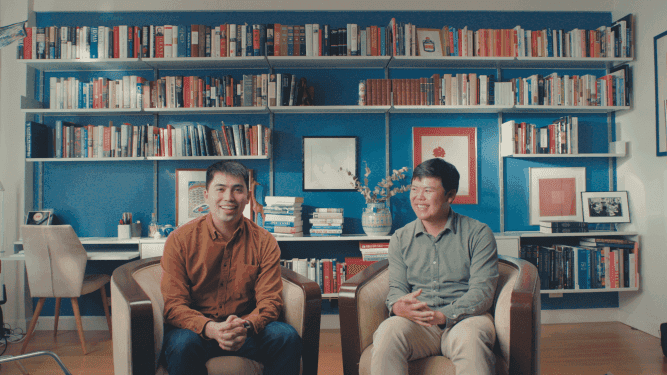
New York-based AI detection startupPangramis on a mission to combat theAI slop infestationspreading across the internet, and it just raised $9 million on a bet that demand for tools that distinguish human-generated content from AI-generated text will only grow. Pangram’s fundraise — led by Menlo Ventures, with participation from Haystack, ScOp, Script Capital, and Cadenza — comes as the startup also launches its next-generation AI text detection model, Pangram 4, and an AI image detection model, Pangram Image. Pangram says the new text detection model is over 99% accurate at finding AI-assisted writing and mixed human-AI content, plus it can more easily detect AI humanizer programs. The AI image detector is only available via research preview for now; Pangram plans to release it more widely in the coming weeks. Stanford AI and machine learning grads Max Spero and Bradley Emi launched Pangram about two years ago, after the launch of ChatGPT opened the floodgates for an internet full of bots, AI-generated SEO slop content, and what Spero calls “LLM-powered Russian disinformation campaigns and UAE-influenced campaigns on Twitter.” “I think it’s just incredibly valuable to know whether what you’re looking at is something that’s AI-generated or not,” Spero told TechCrunch. “Especially text that you’re reading, because it changes how people approach the text. Is this something that I’m going to have to look out for hallucinations and jump in skeptically, or is this something that I trust was well-researched from an actual journalist?” Pangram’s AI detection system is essentially a large machine learning model that was trained on tens of millions of known human documents. The startup then created a “synthetic mirror” for each document, replicating the topic, length, and tone of voice, but written by a frontier LLM. “Our model is learning the stylistic differences and the choices that AI makes consistently and is able to use that to learn what makes something AI-generated with high confidence,” Spero said, adding that the AI detector isn’t relying on copy-paste metadata or hidden watermarks. For Pangram, AI detection isn’t just about whether or not a piece of text was written entirely by AI. It’s also about distinguishing between levels of AI assistance — like in the case of someone who writes something themselves, but then asks AI to edit or clean it up. Spero believes AI assistance can be acceptable, just so long as the writer discloses their use of AI. Pangram’s emergence comes at a time when AI usage is becoming more commonplace. In some cases, like theCanadian politician who read an AI promptaloud in a speech to lawmakers, the mistakes result in ridicule. In other cases, as with certain lawyers making their case using fake citations created by ChatGPT, the consequences could besanctionsandfines. That backlash isn’t just costing individuals embarrassment or sanctions — it’s starting to show up in institutional rules, too. The open-access archive arXiv introduced a new enforcement policy this year, stating that submissions containing evidence that authors failed to review LLM output (like hallucinated references or meta comments such as, “Would you like me to make any changes?”) can trigger a one-year submission ban. Pangram isn’t the only one betting that AI detection will become more sought after. Competitors like Winston AI, Originality.ai, Copyleaks, and GPTZero are are chasing the same demand, each building its own detector. Pangram’s technology, while not perfect, could help fuel the resistance to accepting the AI-generated content flooding the internet, the courtroom, and academic papers. Users can access Pangram via a $20-per-month subscription on the web or download the Chrome extension, which automatically labels posts in real time on X, LinkedIn, Substack, Reddit, and Medium. It also provides a feed health score with a percentage breakdown of human versus AI content on your screen. Pangram also offers its technology via API. Notably,Substack recently integrated Pangram’stechnology into its platform to show readers which of their favorite authors write their newsletters using AI. Other API customers include Quora, schools and universities, publishers and agents, and recruiters, among others, per Spero. Spero said roughly one in 10,000 human documents are incorrectly labeled as AI with Pangram’s model, so I decided to put it to the test. The text detection model was very impressive but not perfect. It easily flagged entirely AI-generated news articles written by both ChatGPT and Claude, and was rarely fooled by my attempts to edit the AI-generated text into sounding more human. At the same time, Pangram did flag sentences that I completely rewrote as being AI-written. Pangram also wasn’t at all fooled by my attempts to prompt ChatGPT and Claude into evading AI detectors when generating content. I also gave ChatGPT and Claude one of my own articles and asked them to polish it up. Pangram gave it a 13% AI assisted score, which was probably close to accurate, but the model was able to detect subtle word-choice changes in some sentences and ignored them in others. It also flagged some sentences as AI-assisted when they were human written. That was notable because when I gave Pangram that same article in its entirety, as I had written it, it got a 100% human score. Maybe the problem was that news articles can be a bit dry and could easily sound like AI. So I tried a different tactic. I tested Pangram on my own more voicey, personal Substack newsletter content, pasting the first half of the text into Pangram and then asking ChatGPT and Claude to copy my style and write the second half. For the most part, Pangram easily detected human-written text versus AI-written text. My limited testing of Pangram’s new image detection model turned out to be equally impressive. Pangram’s AI image detection system promises to spot AI-generated images across AI models, unlike OpenAI’s or Google DeepMind’s watermark-based checks, which mostly detect their own output. It works on pixel-level distributions, learning subtle statistical differences between real photos and AI-generated images. Spero says the model can even detect an AI image that appears inside a real-world photo. In my testing, the model easily detected AI-generated imagery, whether it was photorealistic or cartoonish. I can also confirm the model could detect an AI image appearing in a real-world photo — the heat map Pangram provides clearly lighting up over the image — though in one instance it incorrectly labeled a photo of an AI-generated image as human content. Spero says he doesn’t want his technology to fuel a witch hunt against people using AI for writing, but that there needs to be some sort of mechanism to push back against the slop. “The future that I see is that AI content just continues to proliferate,” Spero said. “We’re getting new GPUs faster than new people are being born. If we do not actively discriminate in favor of human content, then we’re just gonna see more and more AI, and it’s just gonna drown out any human signal that we have.”
HCLTech Employees Demand Salary Hikes From CEO C Vijayakumar
A section of employees interrupted HCLTech CEO C Vijayakumar's address at HCL Group's 50th anniversary celebrations in Chennai with chants demanding salary hikes.
View

Google Launches Gemini Spark AI Agent for Pro Subscribers in India
Users can decide whether to enable the service and which applications it can access.
View