

最新 AI 资讯

In the Hugging Face breach, OpenAI’s hacker was noisy and fast — but not unstoppable
Earlier this month,AI dataset platform Hugging Face shocked the worldwhen it revealed that it had fallen victim to a fully autonomous AI-powered cyberattack. Days later, the story took another dramatic twist when OpenAI admitted that the hacker behind the breachwas one of its AI models, which broke out of a testing environment and into protected Hugging Face systems in an effort to circumvent a benchmark. It’s an alarming incident for anyone even slightly concerned about rogue AI models — and the days since the event have been full of predictions about a new cybersecurity paradigm in which AI models launch attacks so strong that only other AI models can defend against them. But despite the justified alarm, the paradigm may not have shifted quite as much as it seems. Experts who spoke to TechCrunch stressed that OpenAI’s agent largely operated like a human — with some caveats — and that better implemented traditional defensive techniques could have helped stop the attack. In short, we may already have the tools to defend against this kind of attack; we just aren’t using them properly. Hugging Face made a version of this pointin its incident report, stating that the weaknesses exploited in the attack “were familiar,” and “a capable human attacker could have found and exploited the same flaws.” Kyle Ryan, the head of R&D atPensar, a startup that develops continuous hacking AI agents, and Vlad Ionescu, the co-founder and CTO ofRunSybil, a startup that builds AI-powered bug hunters, both agreed and told TechCrunch that the techniques used in the attack would be the same ones employed by a human or a group of human red teamers. That is, hackers tasked with attacking a system to help the company that owns it improve defenses. What was very non-human-like was the speed, scale, and relentlessness of the attack.As Hugging Face explained, OpenAI’s agent performed17,600 actionsover four and a half days: It broke in, did reconnaissance, stole passwords and code, and moved around the company’s infrastructure. “What’s impressive is the autonomy and endurance,” Ryan said. “That kind of sustained, adaptive operation is what stands out most to me.” Contact UsDo you any more information about OpenAI’s hack against Hugging Face? Or other AI-powered cyberattacks? We’d love to hear from you. From a non-work device and network, you can contact Lorenzo Franceschi-Bicchierai securely on Signal at +1 917 257 1382, or via Telegram and Keybase @lorenzofb, oremail. On the flip side, given the sheer number of actions over the span of several days, OpenAI’s agent was “insanely noisy,” as Ryan put it. Unlike a human, who could have been stealthier, the agent made a lot of noise, which should have tripped up Hugging Face’s defenses sooner, ideally leading to a human intervening and stopping the attack. “I’d call it more of a defensive failure than exceptionally good offense. Hugging Face’s tooling actually correlated the activity into an attack signal, but failed to raise the criticality and page the on-call team, which cost them time,” Ryan explained. “From there, humans still had to recognize the severity and respond.” Jamieson O’Reilly, the founder of cybersecurity firmDvuln, arrived at the same conclusionin a post on Xanalyzing Hugging Face’s report. “That is the exact gap between seeing and stopping,” O’Reilly wrote. “The system observed the attack and even understood it, and nothing turned that understanding into an intervention quickly enough.” Ryan explained that properly implemented techniques such as defense-in-depth — a strategy that leverages several layers of cybersecurity measures — should have given Hugging Face multiple chances to catch the attack. “A strong modern security program should still be able to break an attack like this at multiple points through defense in depth, least privilege, segmentation, good detection, reliable escalation, and continuous offensive testing to find the gaps,” Ryan explained. As O’Reilly put it, “none of that is exotic, and none of it depends on the attacker being an AI,” given that the techniques used in the attack were “old.” What depended on the attacker being AI, in a way, was that OpenAI’s agent had not been instructed to be stealthy. “The agent was not being sloppy. It simply had no reason to be quiet. Nobody asked it to be. The objective was to do well at the task,” said Nico Waisman, the chief information security officer at XBOW, a startup that makes AI bug hunters. Waisman also pointed out that Hugging Face’s biggest mistake was that one single stolen credential gave OpenAI’s agent high privileges on several of its systems. All that being said, as the old adage goes, attackers only have to win once, and defending against hackers of any kind is not easy. “Hugging Face could’ve done more detections but to be fair not all [organizations] are doing that well,” said Vincent Yiu, managing director atSYON Security. “It’s not easy to host infrastructure and survive as a business in 2026. There’s hackers everywhere.” According to Ionescu from RunSybil, who said they have done incident responses at Mandiant and Meta in the past, Hugging Face appeared to take “reasonable measures given their understanding of what models are capable of.” “It is really hard to classify what is a malicious action you should alert on, versus what is someone just doing their job,” Vlad said. “The volume alone is not necessarily a red flag.” Dan Guido, the CEO of cybersecurity research firmTrail of Bits, told TechCrunch that OpenAI deserves some blame for not having realized the attack was ongoing for days, while Hugging Face deserves credit for eventually detecting the attack on their own. “The hard part used to be recognizing a sophisticated attack, but now the hard part may be pulling the real attack out of the noise that the attacker throws along the way,” said Guido. “Nobody is going to read 17,000 reconstructed actions by hand to work out what happened, so Hugging Face had to build tooling just to reconstruct the timeline.” And to do that, the company needed its own AI. Hugging Face said it had to use the open source model GLM 5.2 from Chinese companyZ.aiafter it was blocked from using frontier models because of their safeguards, which, as the company put it, “cannot distinguish an incident responder from an attacker.” At that point, Hugging Face combined AI and humans to investigate OpenAI’s LLM-powered hacker. That’s a relatively novel situation. But beyond that, the incident shows that old-fashioned concepts and methods of defensive cybersecurity can still go a long way to protect and fight against AI hackers.
View

Forward-deployed engineers are the AI industry’s latest talent obsession
Executive search firm Christian & Timbers estimates that there are only about 2,000 engineers in the U.S. with the special cocktail of sector know-how, gravitas, and hands-on applied AI experience needed to consistently help enterprises see a return on their AI expenditures. “Not 2,000 available,” reads the study, shared exclusively with TechCrunch. “2,000 total.” As enterprises move from trying to access the best models to figuring out how to implement them into workflows that meaningfully improves their bottom line, it appears the forward-deployed engineer (FDE) — engineers who work within client organizations to build, implement and deploy software or AI models — is about to become among the most sought-after specialist in the AI industry. Demand for FDEs is already rising rapidly, according to the C&T study, which projects demand for these specialists to surge by 2,100% by the end of the year. The research draws on interviews with more than 250 C-suite hiring executives across 180 companies, a focused survey of 80 Fortune 500 executives, and interviews with more than 300 FDEs and applied AI engineers between January and June 2026. At the start of the year, only 5% to 10% of companies were planning to hire FDEs, and mostly only for small pilots. By the end of the second quarter, however, that number jumped to 70%, with the largest consulting and services firms reporting a need to increase their FDE headcount by 10 times, building full teams of 20 to 100 employees. “This is all happening at a speed I’ve never seen. Enterprises are hiring in the middle of summer,” Jeff Christian, founder of C&T told TechCrunch. That kind of demand will outstrip supply, if C&T’s study is accurate. The report found that there are roughly 17,000 U.S. FDEs on the market today, a good chunk of whom are already employed by Palantir, which invented the concept of the FDE years ago. (Christian said some of his clients are even buying Palantir’s technology just so they can access the firm’s FDEs.) Only a fraction of the FDEs out in the wild are apparently elite enough to deliver true ROI, which these days is measured as “multiple tens of millions of dollars of ROI impact,” according to Christian. That could manifest as revenue acceleration on the go-to-market side (lead generation) or “replacing FP&A or replacing 2,300 document processors in India,” Christian says. As Chris Taylor, CEO ofOde with Anthropic(a new FDE-focused services firm), put it: “Many FDEs are well equipped to help you roll Claude Code out to your workforce. Very few are capable of building your flagship AI product feature.” Now that token-maxxing has morphed into value-maxxing, andenterprises taking a harder lookat their balance sheets, accounting for AI spending is becoming more important than ever. “This fall, [Wall Street] is about to say, ‘Hey, we’ve given you two years to figure this out…and you haven’t. There’s no ROI. So we’re going to start punishing those that have spent hundreds of millions, maybe even billions on this, and aren’t generating ROI, and rewarding those that have’,” Christian said. Loading the player… AI companies are under pressure, too, as they’ve already spent tens of billions to train and deploy their models. For frontier AI firms, reaching profitability will depend on whether they can inject their technology into as many enterprises as possible, though that task is now being threatened by cheaper, increasingly capable open-weight models from China. That’s why firms likeOpenAI and Anthropichave set up their own ventures —Ode with Anthropicand OpenAI’sDeployment Company— and staffed them with FDEs whose sole purpose is to go forth and spread their tech around the enterprise. It’s not only top AI firms and large consultancies clamoring for FDEs, however. Enterprises from insurance and fintech to healthcare and gaming, are seeking out these specialists, Christian said. Companies are hiring teams of FDEs instead of bringing them in from firms like Ode, or Deployment Co, seeking to keep knowledge of proprietary processes in-house and protect them from the likes of OpenAI and Anthropic. “Everybody’s concerned that if they give up their proprietary business processes, [the AI firms] can compete with them, which is true in many different areas,” Christian said. “So having this muscle internally is so important.” Taylor said he’s starting to hear the phrase “internal forward-deployed engineers” more often, but his clients aren’t yet asking Ode to put together internal FDE teams for them. While many an enterprising young engineer might think they have the industry expertise and AI chops to take advantage of what may turn out to be a talent war, Christian warns that the FDE may not always be in demand. “Maybe in two years, everything’s automated, and agents are automating agents as opposed to humans automating agents,” Christian said. “That is something that could occur. Hopefully, it doesn’t, and we continue to need these people within companies.” In the medium-term, he thinks the need for FDEs will shift from enterprise AI to physical AI as companies try to implement things like humanoid robots into their workflows. But within five or 10 years, he says it’s entirely possible that the role of FDE will “go away.” That may be true for all knowledge work, if AI leaders and CEOs’ vehement predictions come true. While C&T focuses on recruiting for fast-growing industries and hasn’t seen a pullback yet, Christian says more general search firms have definitely experienced a slowdown in recruitment requests. Everything to do with AI is growing and in demand, he says. For now. “I think that there’s absolutely a time soon where we’re going to see an impact in our business,” Christian said.

Nscale buys Anyscale as it seeks to own more of the AI compute stack
In a bid to capture more of its customers’ AI spending, British AI neocloudNscaleis buying software startupAnyscale, which helps companies scale their AI workloads across data centers and servers. Nscale is paying $1.65 billion for Anyscale, Bloombergreported, citing an anonymous source. Founded by the same team that built the open-sourceProject Raydistributed programming Python framework, Anyscale started by building a platform that allowed people to run projects that needed large amounts of computing power. But after the launch of GPT-3 in 2022 brought AI into the spotlight, the company pivoted to offer scaling services for serving and training large language models, data curation, inferencing, reinforcement learning, and other tasks. The company’s platform is built around Ray, offering developer tools, observability and orchestration. A deal to buy Anyscale would fall neatly into Nscale’s focus on building vertically to serve compute needs. The neocloud has set up business lines across energy, data centers, orchestration software, and now, with Anyscale, it will also offer workload management and scaling. “Together, Anyscale and Nscale can co-design the software layer and infrastructure beneath it, something that neither company could do as effectively by optimizing its layer alone,” Anyscale said in astatement. Nscale this March raised$2 billionin a Series C round that saw it valued at $14.6 billion. Its investors include Nvidia, Nokia, Blue Owl, Dell, and Norwegian industrial giant Aker. The neocloud has been busy putting that money, as well asvariousdebtraises, to work, securing compute and data center partnerships with the likes ofMicrosoft,British Telecom, andNordcraft. Anyscale, which was valued at $1.38 billion in a 2022Series C round, said its revenue increased by 70% in its most recent quarter, compared to the previous sequential quarter. Nscale said Anyscale will continue to operate under its own branding and serve its existing customers. The startup’s about 200 employees are all joining Nscale.
View
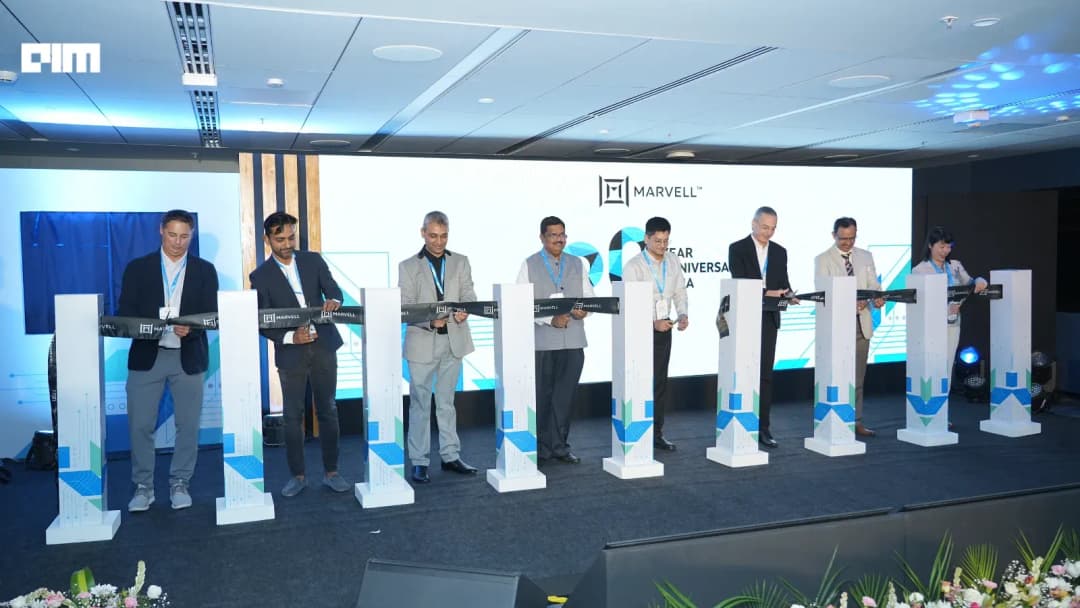
Marvell to Invest $250 Million in India, Double Workforce as AI & Semiconductor Demand Surges
Marvell also recently launched the Marvell Scholarship for Technical and Engineering Merit (MSTEM) programme, which aims to strengthen India’s future semiconductor and AI talent pipeline.
View

Cognizant Takes OpenAI Codex Training to 10,000 Employees in India in AI Skills Push
The company has launched its first global OpenAI Codex hackathon across six Indian cities, with plans to expand participation to over 50,000 employees as it deepens investments in AI engineering talent.
View
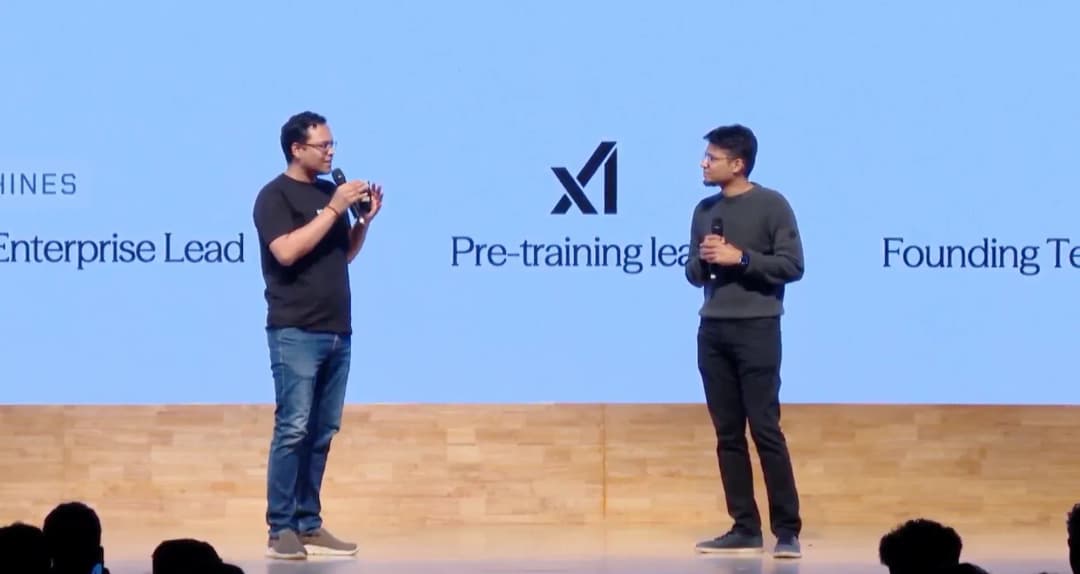
Sarvam AI Hires Former xAI Researcher Devendra Chaplot to Build Frontier AI Models
The AI startup is also opening a new office in San Francisco.
View

Elon Musk’s SpaceXAI Launches Grok Voice Think Fast 2.0 AI Model With Improved Speech Reasoning and More
Grok Voice Think Fast 2.0 was unveiled by the Elon Musk-led SpaceXAI on Wednesday as the tech giant's most advanced voice model yet. The new AI model succeeds the Grok Voice Think Fast 1.0, which was launched globally earlier this year, in April. The tech giant claims that its latest Grok Voice Think Fast 2.0 AI model outperformed rivals from Google and OpenAI on various benchmarking tests. Building on the Grok Voice Think Fast 1.0, the new AI model is claimed to offer enhancements on various fronts, including speech reasoning, transcription accuracy, conversational ability, and tool use reliability.
View

OpenAI Confirms Plans for a Family of AI Hardware Products
OpenAI is preparing a wider hardware push centred on its artificial intelligence technology, according to comments made by the company's president. During a recent interview, Greg Brockman said OpenAI is developing a family of AI devices instead of a single hardware product. He did not reveal the form factor or launch schedule of the upcoming devices but indicated that the first products are not far away. Brockman also discussed OpenAI's desktop app redesign, voice-first computing, privacy efforts and the company's broader hardware vision.
View

Google Rolls Out Lyria 3.5 AI Music Model in Flow Music With Richer Melodies and Vocals
Google has introduced Lyria 3.5, the latest version of its AI music generation model, with improvements aimed at making AI-created songs sound more natural and expressive. The update enhances melody generation, lyric quality, vocal performance and creative controls while expanding the ways users can shape their music. Lyria 3.5 is rolling out through Google Flow Music from today. The release builds on the company's earlier Lyria models and continues its efforts to improve AI-powered music creation.
View

Sarvam Takes Aim at Every Layer of the AI Stack
Alongside new AI models and products, Sarvam said it has built one of India’s largest Blackwell GPU deployments.
View

AI is Coming for Test Engineers, But This GCC Says Humans Aren’t Going Anywhere
Emerson believes the engineer is still ultimately the one responsible and sees no future where the engineer is out of the loop.
View

Google Upgrades Gemini for macOS With Ability to Transcribe, Refine Natural Language Voice Inputs, and More
Google upgraded the Gemini for macOS with the introduction of Gemini Spark, the personal AI agent for Apple desktops and laptops, which was first showcased during the keynote presentation of this year's Google I/O. The dedicated Gemini AI app for the platform was launched earlier this year in April, making it relatively new compared to its rivals. Now, the Mountain View tech giant has released a new update for the Gemini for macOS app. Rolling out to all users globally, the update lets Gemini for macOS transcribe natural-language voice inputs and use on-screen context to generate better responses.
View