BlogHow to Build a Brand Voice Brief for AI Writing Tools
How to Build a Brand Voice Brief for AI Writing Tools
 Shashank Jain
5 Nov 2026
4 min read
You ask an AI writing assistant for a friendly product announcement. The result is cheerful, polished, and completely unlike anything your team would publish. After several rounds of corrections, the draft finally sounds right, but the next assignment starts the same cycle.
How to Build a Brand Voice Brief for AI Writing Tools
You ask an AI writing assistant for a friendly product announcement. The result is cheerful, polished, and completely unlike anything your team would publish. After several rounds of corrections, the draft finally sounds right, but the next assignment starts the same cycle.
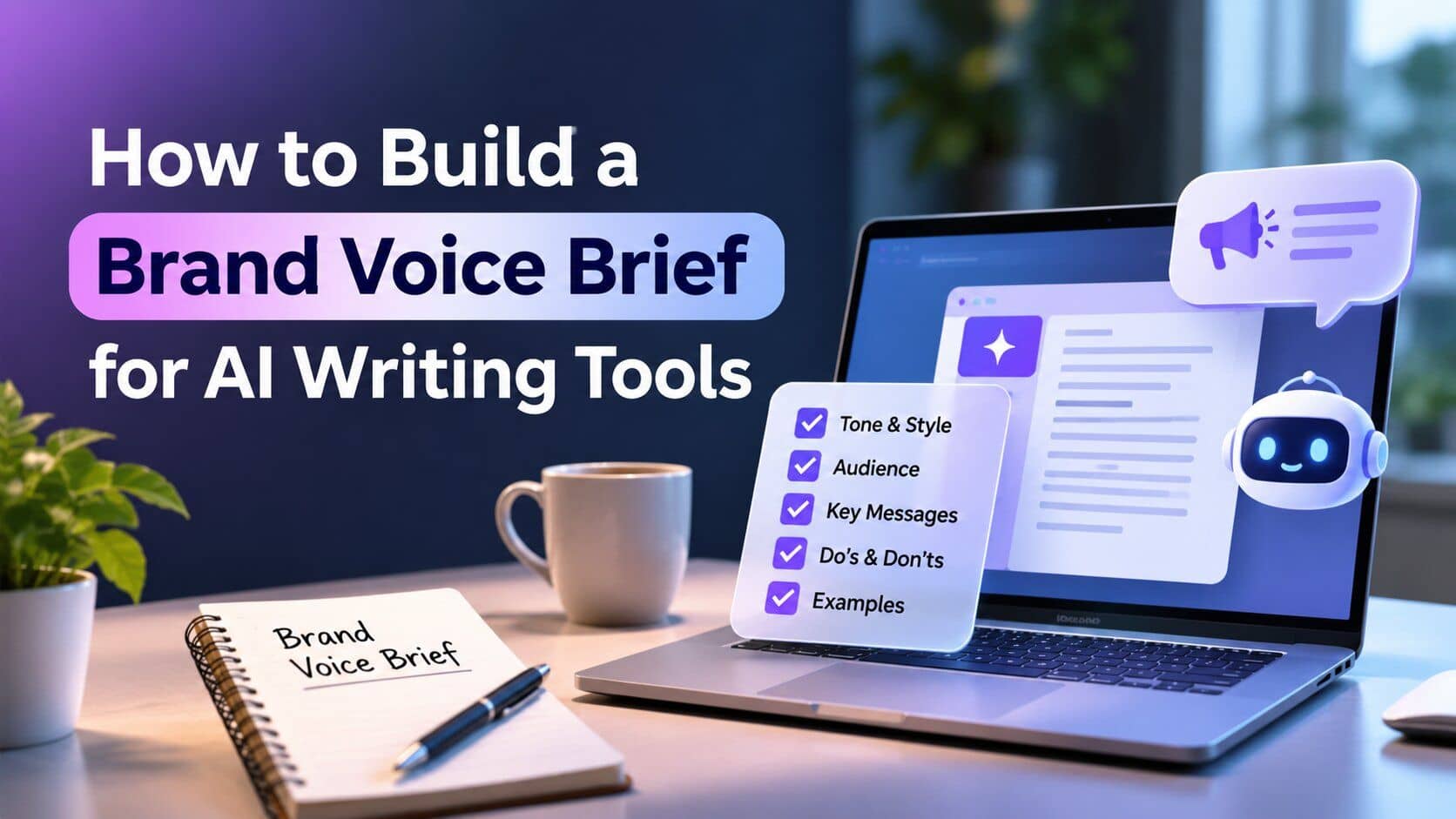
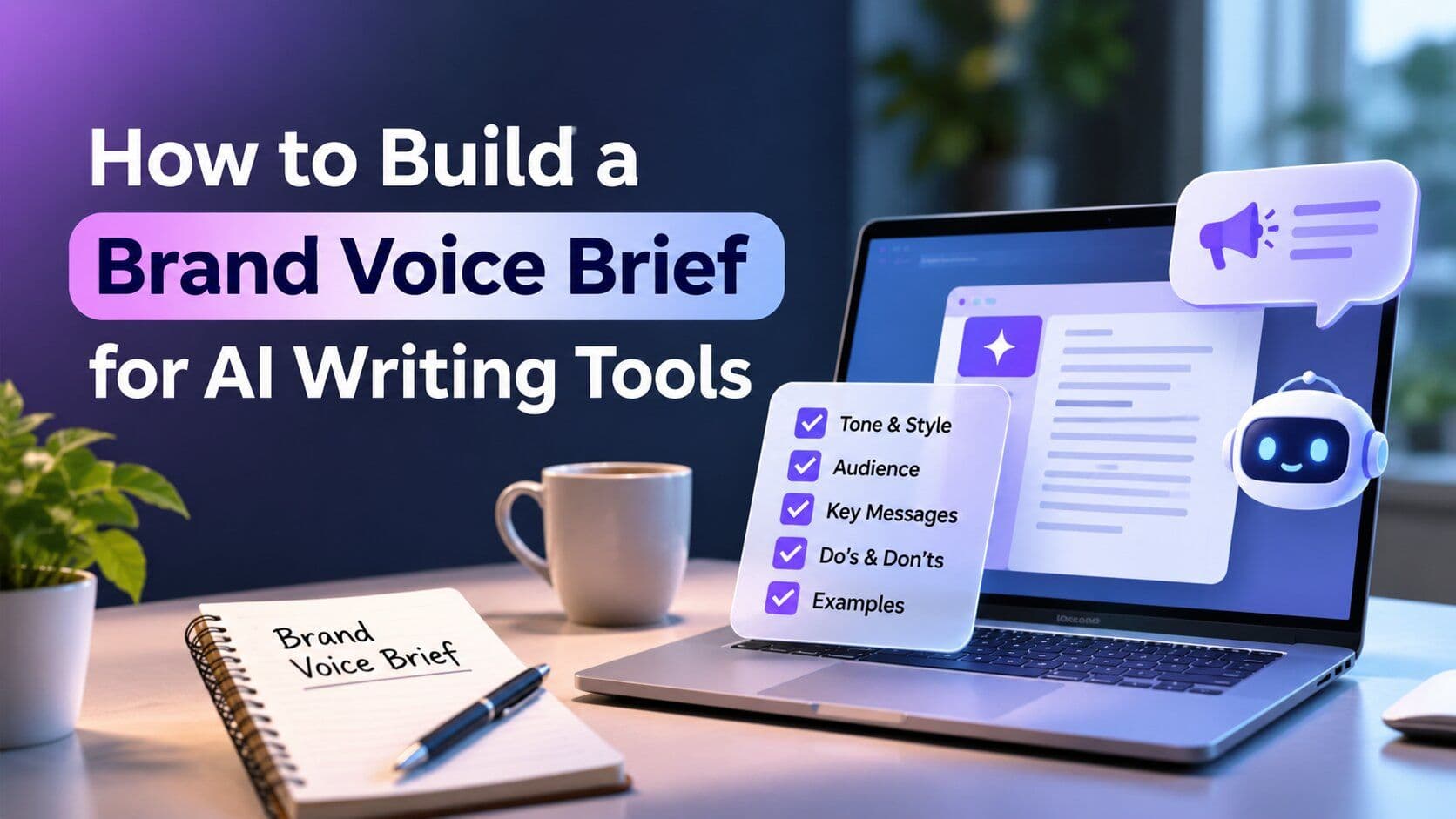
A reusable brand voice brief gives those corrections a permanent home. It tells a writing tool who the reader is, how your business communicates, and what an acceptable draft looks like. You can also use the same brief when comparing platforms, giving each tool consistent instructions before judging its output.
Start With the Reader and the Outcome
Define the audience in practical terms. A label such as small business owners leaves plenty of room for interpretation. Describe what readers already know, what they need help with, and what they should do after reading.
For example, a scheduling platform might address independent salon owners setting up online appointments for the first time. Those readers may need plain explanations, familiar examples, and one manageable next step.
Add the purpose of the content. A welcome email should help someone begin, while a troubleshooting article should help them resolve a specific problem. Give each assignment its own outcome within the broader voice brief.
Collect Examples Your Team Would Approve
Choose two or three short samples from material your team has already approved. Include different situations, such as an announcement, a support response, and an educational paragraph.
Explain what each sample demonstrates. Perhaps the introduction identifies the reader's problem quickly, or the support message acknowledges frustration before giving instructions. These notes help turn examples into usable guidance.
You can also include a short example that needs improvement, followed by an edited version. Label the change clearly: a vague promise becomes a specific benefit, or an inflated description becomes a direct explanation.
Remove confidential details before adding samples to any shared document or external tool.
Translate Tone Into Editing Rules
Words like friendly, confident, and professional become more useful when you explain how they should affect the writing.
Friendly could mean using contractions, addressing the reader directly, and explaining unfamiliar terms. Confident could mean making clear statements supported by evidence. Professional could mean preserving technical terminology and avoiding jokes in sensitive messages.
Keep the rules short enough to scan. A practical instruction might read: Use everyday words, keep paragraphs focused on one idea, and end with a clear next step.
For a hypothetical booking product, “Customers choose an open appointment online” communicates more than “Transform your scheduling experience.” Use examples that show the level of detail you expect.
Include preferences about capitalization, punctuation, spelling, and product names. These details give editors something concrete to check and help prevent different tools from producing visibly inconsistent copy.
Set Boundaries Around Facts and Claims
A voice brief should explain where factual information comes from. Identify approved sources, such as current product documentation, release notes, and material supplied with the assignment.
State how the tool should handle gaps. Ask it to flag missing information or request clarification instead of filling the space with an assumed benefit, deadline, or customer result.
Keep factual instructions separate from style examples. A sample showing how to introduce a feature should not become evidence that every feature has the same capabilities.
A compact assignment prompt can combine these elements: Write a welcome email for the audience below. Follow the attached voice brief. Use only the supplied product facts. Mark missing details for review.
Carry the Brief Through Every Tool
The same guidance should travel with a draft as it moves from generation to editing. Otherwise, a second tool may replace the choices that made the first version appropriate.
When you humanize AI drafts, compare the revised wording with both the original facts and your voice rules. Check that names, qualifications, and instructions still mean the same thing.
Keep a plain text version of the brief that you can paste into different applications. Where a platform supports reusable instructions or reference documents, confirm which guidance is active for the current assignment.
Separate permanent brand rules from temporary campaign details so old offers do not enter new drafts.
Test the Brief and Keep It Current
Try the brief on several realistic tasks before sharing it widely. Use examples your team regularly handles, then ask an editor to note where the output requires correction.
Look for repeated issues. If drafts remain too formal, add a clearer example. If product descriptions become vague, tighten the instructions about specificity.
Change one part of the brief at a time and repeat the relevant test. Record the version, date, and reason for the update.
When comparing tools, track the corrections each draft needs: factual changes, tone adjustments, structural edits, and formatting repairs. Keep the prompts and source material identical for the comparison, then choose the tool that consistently leaves your team with the most usable starting point.
Assign someone to maintain the document. As products and audiences change, refresh the examples and retire outdated guidance. Store the current brief where writers can find it before starting their next assignment.
Related Tags
AI ToolsRelated Categories
AI ToolsGet your AI tool featured in articles like this
Reach users actively discovering AI tools on PoweredbyAI and build SEO backlinks that improve your visibility on Google.
Trusted by 25,000+ AI tools and growing startups
Get Your AI Tool Featured in High-Traffic Blogs & Articles
Get featured on PoweredByAI and reach users actively discovering tools like yours. Build powerful SEO backlinks that help you rank on Google and drive consistent organic traffic.
Sponsored blog features with targeted reach
Guest articles with do-follow backlinks
Contextual link placements for SEO boost
Trusted by 25,000+ AI tools and growing startups
Enjoyed this? Talk AI tools with other founders and builders.
Join our Slack community