🚀 Zaprep: Your Socials on Steroids. Start free — automate 1,000 DMs/month & turn engagement into leads. with 1,000 automated DMs/month.
Latest AI News

Razorpay, IndusInd Bank Launch AI Account Manager RAY on WhatsApp for Businesses
RAY lets businesses check payments, track settlements, resolve support issues, and initiate actions through text or voice messages.
View

OpenAI Refutes Apple’s Trade Secret Theft Claims, Blames iPhone Maker for the ‘Mess’: Report
Apple accused OpenAI of stealing its trade secrets by soliciting confidential information from the iPhone maker's former employees. The accusation was made in the lawsuit that the tech giant filed against the AI firm earlier this year in July. This came after OpenAI hired multiple Apple employees, who allegedly brought knowledge of future Apple products. Interestingly, this coincided with reports of OpenAI's plans to foray into the hardware segment with a smart speaker. Now, in a new court filing, OpenAI puts the blame back on Apple for being unable to safeguard its own trade secrets, while calling the lawsuit a mess.
View
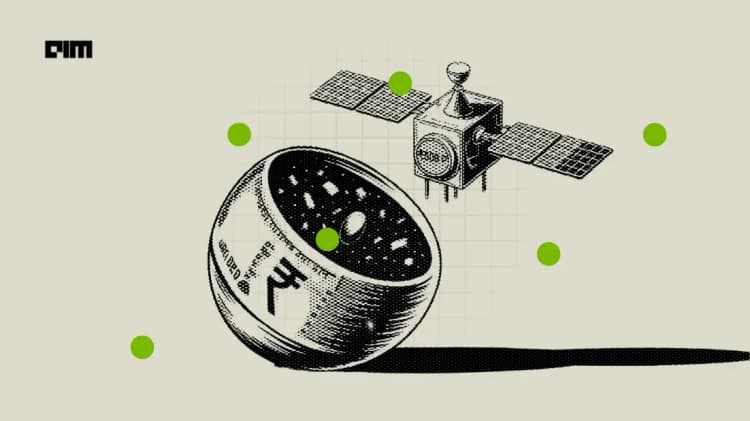
India’s ₹500 Cr Space Insurance Plan Has a Much Bigger Problem
The proposed third-party cover addresses government liability, but mission costs, weak domestic capacity, and orbital risks remain unresolved.
View
![[Exclusive] Zoho Finally Brings Vibe Coding Into India’s Sovereign AI Push](/_next/image?url=https%3A%2F%2Fteenyfy-assets.s3.us-east-1.amazonaws.com%2Ftemp_exclusive_f93165f5c0.jpg&w=750&q=75)
[Exclusive] Zoho Finally Brings Vibe Coding Into India’s Sovereign AI Push
The Chennai-based company will offer a monthly free-tier model for developers to explore the Catalyst 3.0 platform as well as ₹15,000 equivalent free credits to experience the platform beyond the free tier for a six-month period.
View

Tredence Certified as a Best Firm for Data Scientists
The Best Firm for Data Scientists certification surveys assess workplace culture, access to leadership, collaboration, learning opportunities, and the nature and depth of analytical work delivered.
View

OpenAI Says Its Most Capable Model Astra Can Find Zero-Day Exploits
For now, the company is choosing caution over unrestricted access. Astra is expected to become available soon, but its most powerful cybersecurity capabilities will remain limited initially.
View
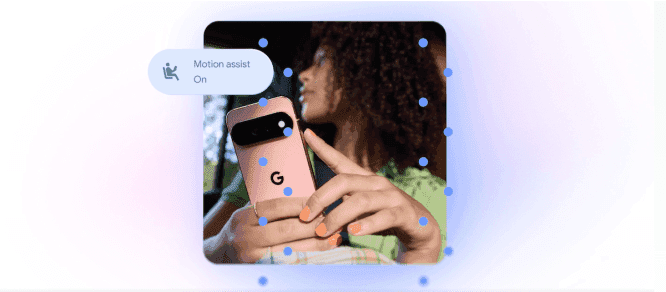
Google’s Android update tackles motion sickness, accessibility, and more
On Tuesday, Google announced it’s rolling out five new updates designed to make Android phones more accessible, useful, and personalized. Announced in ablog post, the features include those aimed at reducing motion sickness, helping blind and low-vision users navigate their surroundings, remembering where users leave important items, and another that adds new ways to personalize Google Messages. While some of the features see Google playing catch-up to Apple, which already offers similar features for iPhone users, others specifically leverage Gemini to provide various improvements. The most interesting update is “Motion Assist,” a feature designed to help people who experience motion sickness while using their phones in a moving vehicle. It adds a bubble overlay to the screen that moves in response to the vehicle’s motion, helping reduce the disconnect between what users see on their screens and what their bodies feel. The concept isn’t entirely new, however. Apple introduced “Vehicle Motion Cues” in 2024, which uses animated dots around the edges of the display that move in response to a vehicle’s motion. Users can set “Motion Assist” to turn on automatically, add it to Quick Settings, and customize the bubble’s shape, color, and transparency. Google says this feature is available to Android 17 users. Google is also introducing “Guided Vision,” a feature designed with blind and low-vision users in mind. It combines the phone’s camera with Gemini to help with tasks such as reading small print on a food label, viewing a menu in a dark restaurant, or identifying objects around the house. The feature can also provide voice guidance when the camera isn’t positioned correctly, telling users to move the phone, pan around, or center an object. Guided Vision is coming to phones running Android 9 and newer in countries where Gemini is available. Another update gives Gemini a new way to help users remember where they put important items. A “remembered items” section in Find Hub will allow users to tell Gemini where they’ve stored something. For example, a user could say they put their passport in a bedroom drawer, and Gemini can save that information in Find Hub. Users can also attach a photo to make the item easier to identify later. Additionally, Google is adding a Google Keep integration to Google Messages, allowing people to share and edit grocery lists, vacation notes, and other information directly within a conversation. Plus, Google Messages is getting more personalization options. Users will be able to customize individual chats with backgrounds, photos, and colors, Google says. The text bubbles will automatically match. Apple added a similarcustom background featureto Messages last year.
View
OpenAI’s Astra model is on the way — and very good at breaking into computer systems
OpenAIshared new detailson its forthcoming Astra model, which the company said is the first large language model to meet its “critical cybersecurity threshold,” in preparation for its imminent release. “We plan to make Astra available soon,” OpenAI’s blog post reads, “but access to its most advanced cybersecurity capabilities will be more limited.” The frontier lab determined that Astra is capable of finding unknown security flaws in computer systems, and exploiting them without a person’s guidance. That’s similar to the concerns Anthropic raised about its Mythos model earlier this year, and OpenAI is taking comparable precautions as it prepares to roll out the Astra. Without any third-party confirmation, it is difficult to evaluate OpenAI’s claims about safety or preparedness. The company said it would preview the model with a group of testers but did not say who they were or how they would be chosen. It’s not clear if OpenAI is working with the U.S. government to evaluate the model ahead of release. OpenAI noted that Astra scored a perfect score on ExploitBench, an evaluation of an LLM’s ability to hack into known system vulnerabilities. In a modified version of the test developed by OpenAI engineers, the model discovered and exploited two zero-day vulnerabilities, the company said. To ensure that its models are neither exploited by bad actors nor capable of bad behavior itself, OpenAI said it had already begun improving the model’s harness to detect abuses and prevent jailbreaks. For Astra, however, the company invested in unspecified new techniques designed to make the model safer. OpenAI has also started identifying “accounts assessed as higher risk” and restricting the model’s responses to their prompts, though it also doesn’t say how. Finally, though the company describes Astra as its “most aligned model to date,” it will deploy the model with additional chain-of-thought monitoring to spot and stop bad behavior. Preparations for the release of Astra come as the industry reacts to OpenAI agents breaking out of a training environment and accessing private data on Hugging Face, a popular model and benchmark distribution platform. For Astra, OpenAI said it designed a test to tempt the new model to replicate the actions of the rogue agents in the Hugging Face incident, which collaborated to access the open internet despite safeguards applied by OpenAI researchers. They said Astra did not attempt to break out of its testing environment in these experiments. Yona Shavit, a former OpenAI employee who now works on AI resilience at the OpenAI Foundation,wondered on social mediawhether Astra’s unwillingness to break the rules may have resulted from knowing what was expected of it or trying to fool researchers. And for all these new details, it’s still difficult to know exactly what Astra is capable of or if OpenAI is taking the right measures to ensure safety. The company said it expects to release more evaluations of the model and further safety information when it is launched widely to the public. At that point, however, the cat will be out of the bag.
View

AfterQuery reportedly becomes Y Combinator’s fastest-ever unicorn, now valued at $3.2B
AI training-data startup AfterQuery hasreportedlyraised a round that valued it at $3.2 billion. This just five months after announcing its $30 million Series A at a $300 million valuation in April. That’s more than a 10x increase in less than half a year and, according to Y Combinator partner Gustaf Alströmer, thefastestthat any startup has gone from launch to unicorn status in the accelerator’s history. AfterQuery’s founders, today 22 and 23 years old, attended Y Combinator’s Winter 2025 cohort, just 18 months ago. In April, the San Francisco startup said it had reached anannualized revenue run rate of $100 millionand that it was working with many of the biggest labs. It has named companies including Nvidia, Legora and the Korean AI lab Motif Technologies, as customers. AfterQuery is among the new crop of startups following in the footsteps of Mercor and Scale that employ knowledge professionals like doctors, lawyers, and other specialists, to do model training. However, rather than ensuring that models answer questions accurately, AfterQuery trains models and agents on how to work like professionals would to complete tasks — what the company describes as “encoding the patterns, decisions, and reasoning of the world’s best practitioners.” Forbes first reported on the round. AfterQuery could not be immediately reached for comment.
View
Sequoia-incubated Empirik launches with $21M to predict outages before they happen
Before joining Sequoia Capital in 2020 as chief digital and information officer,Avon Purispent over a decade running infrastructure at Rubrik and VMware. Three years ago, as large language models began showing their true potential, Puri, alongside another Sequoia IT leader,Sudheer Dhurjati, recognized that AI could help autonomously solve a major challenge for infrastructure engineers — preventing tech outages before they occur. The two tech veterans realized that instead of reacting to system failures after the fact, they could build a tool to predict them. This insight led them to buildEmpirik, a product that tracks system changes and infers their potential ripple effects across the entire infrastructure. Sequoia recognized that Empirik could be a new type of observability tool that helps prevent and resolve incidents. After incubating the startup in 2023, Sequoia recruited former Quantum Metric CPO and Salesforce observability VPKartik Chandrayanaas CEO earlier this year. Empirik announced Tuesday that it is spinning out as an independent company after raising $21 million in seed funding from Sequoia, Canapi, and Alumni Ventures. “There has always been a lot of money spent in keeping systems up and running,” Sequoia partnerBogomil Balkanskytold TechCrunch, adding that most existing observability tools fail to understand complex system dependencies. Empirik, he claims, is one of the first dedicated tools focused on tracking changes across massive environments. It acts as an autonomous “traffic cop” — permitting low-risk changes, setting guardrails on larger ones, and flagging the most dangerous updates for human review. By serving as an autonomous infrastructure engineer, Empirik allows busy DevOps and site reliability engineering teams to offload routine troubleshooting and focus on higher-value priorities. Since launching earlier this year, Empirik has already brought on customers ranging from startups to several Fortune 500 players, including S&P Global, Guardant Health, and a major consumer packaged goods (CPG) company. Empirik’s goal is to do for infrastructure engineers what Cursor and Claude Code did for software developers: automate certain tasks so they can work significantly faster. As AI accelerates the pace of software development, tools that help infrastructure engineers keep up with constant system changes are more vital than ever, Chandrayana told TechCrunch. “What agentic AI did for software, Empirik wants to do for infrastructure engineering,” he added. As for competition, Balkansky claims Empirik is in a category of its own for now, acting as a complementary layer to AI SRE platforms like Resolve and Sequoia-backed Traversal.
View
ChatGPT Health adds Epic integration for clinicians to import patient data
OpenAI said today that it is integrating ChatGPT Health with Epic’s electronic health record (EHR) system, which holds data for over325 million patients, to let clinicians import patient data and use AI to ask questions. The company said that in certain systems, it will also integrate ChatGPT directly within EHR workflows. With ChatGPT, clinicians can now access information like appointment notes, laboratory results, medications, and specialist documentation and summarize them easily. They can also look at patient history, identify changes, and prepare for future appointments. OpenAI said that in some deployments, clinicians can directly access ChatGPT for getting pre-visit review and building clinical timelines without leaving a patient chart. The company specified that the integration allows only read-only access to health records, and AI doesn’t write anything back. OpenAI is also adding a new Healthcare Public Data plug-in, which can fetch information from sources including ClinicalTrials.gov, CMS Coverage, RxNorm, DailyMed, and PubMed. The company said that the new plug-in can help healthcare workers synthesize data for trial eligibility criteria, medication identifiers, coverage policy versions, and provider records. The company said that apart from enabling these new features, it is allowing organizations with a Business Associate Agreement to use ChatGPT Work, Codex, apps, and connectors in their workspace for compliant workflows. Last month, OpenAI rolled outChatGPT for health to all U.S. consumers. The company said at that time that people are asking 300 million health-related queries to ChatGPT every week. Despite many deep integrations with medical systems, the company has maintained that AI is not suitable for diagnosis or treatment. OpenAI said that it collected over 4,300 responses from physicians across 27 clinical use cases, including pre-visit review, clinical timelines, medication review, and handoff summaries, and found that 99.1% of responses were safe. However, even a few unsafe answers can lead to harmful results for humans. A few days before this rollout, a Florida-based pastor sued the company, alleging thatChatGPT gave him a near-fatal recommendation. The company was also sued in May by family members of a user who blamedChatGPT for giving wrongful advice related to dosage.
View

Google’s answer to Canva is an AI tool where you prompt instead of design
Google is entering the creative design market with a new image-creation and editing tool called Google Pics, which will become a part of its Google Workspace suite for business customers and premium Google AI subscribers. The company says the product, which is powered by Google’s Nano Banana image-generation model, will roll out over the coming weeks to most Workspace customers and those who pay for Google AI Pro or Ultra. Similar to popular design tools like Adobe Express and Canva, Google’s new product is meant to be used for the sort of everyday design tasks you might come across at work and sometimes in your personal life. For instance, you could use Google Pics to create a poster, social media posts, and other visuals and illustrations. But unlike Canva, where artists, illustrators, and photographers can publish templates, graphics, photos, and other art to a marketplace where they earn royalties, Google Pics is about creating things based on AI, which was trained on artists’ work. And unlike Adobe Express, a tool creators often use to make that work in the first place, Google Pics is a tool where you prompt to create, not where you design something new from scratch. The app also includes other editing tools, like those to isolate and transform objects, modify or translate text inside images, and others. Plus, it supports collaborative editing and the ability to create several different generations of the image you’ve requested, so you can pick the best one. The software will be built into Google Workspace, initially starting with Docs and Slides, which rolls out today. It will later come to Google Drive, the company says.
View
Submit your Tool


PoweredByAI.app is an AI Tools Directory helping individuals, businesses, and creators discover the best AI tools for writing, coding, design, productivity, and more.
© 2026 , Product of011BQ. All rights reserved.