Pre-Black Friday Sale is LIVE! Get Up to 85% OFF AI Tool Listings + 50% OFF All Sponsorships.
Grab the DealSubmit your Tool
PoweredByAI.app is an AI Tools Directory helping individuals, businesses, and creators discover the best AI tools for writing, coding, design, productivity, and more.
© 2026 , Product of011BQ. All rights reserved.

OpenAI has updated ChatGPT Dots, the AI agents that can work across connected apps and take on tasks for users. The changes are aimed at making Dots quicker to respond and better at following tasks through, while giving users more say in how the agents behave. OpenAI introduced Dots as tools that can handle work in the background, including tasks that involve several steps and different apps. The latest changes add to those existing capabilities.
View

Anthropic has launched Claude Meetings, a new feature that brings its AI assistant into team video calls. During video calls, Claude can respond to questions, record meeting notes, and create documents and whiteboards based on the discussion. The feature is rolling out in beta to Claude Team and Enterprise subscribers, with Google Meet as the first supported platform. Anthropic says it plans to add support for other video conferencing services, but hasn't shared a timeline for the rollout.
View

Meta released its first consumer AI agent, Muse, in September, and since then the company has been releasing more capabilities. Today, the tech giant announced that Muse can place calls to US businesses on behalf of users. This feature was initially in the testing phase. The outgoing calling feature can be available to paid subscribers. The latest update allows the AI assistant to make dinner bookings, call insurance agents and other service providers.
View

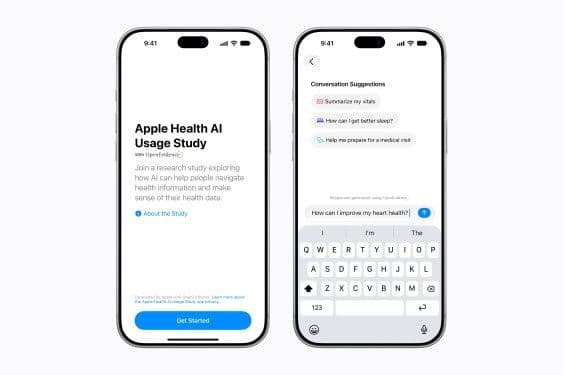
Apple has launched a US research study with clinical AI platform OpenEvidence to explore how people use AI for health information. The company says the study will examine how users assess AI-generated responses and whether access to personal health data can make them more relevant. Participants will use a dedicated iPhone app to ask health-related questions and rate the responses. The Cupertino-based tech giant plans to enrol up to 200,000 people aged 21 and above.
View

Big AI labs likeOpenAIandAnthropichave made their bets on offering chatbots that can answer health-related queries with specialized features. Apple is debuting a new study to understand how people use AI for health. But it isn’t quite following other AI startups just yet; it wants to study how clinically grounded answers can help people. The iPhone maker is partnering with healthcare-focused AI company OpenEvidence to launch a new study app. Apple is inviting users in the U.S. over 21, using iPhone 15 or later, and running iOS 26 or later, with Apple Intelligence enabled. The company is aiming to run this study with up to 200,000 participants for more than 12 months. The new app will allow users to ask health-related questions, as they do with ChatGPT or Claude, with answers grounded in clinical data, from sources including The New England Journal of Medicine, Journal of the American Medical Association, and Nature. Apple said that the app will try to give simplified answers to everyday medical questions. Users can rate those answers and provide feedback about the responses; they’ll also be asked to participate in monthly surveys. Participants can share data from HealthKit such as resting heart rate, activity, sleep, or lab results to get more personalized and pointed suggestions from the app. The company said the app can also help prepare participants better for a doctor’s visit, and it will guide users to specific providers for answers related to concerning medical issues. Apple specified that the data will be anonymized before sending it to a secure third-party cloud provider, and it won’t be used to train any kind of AI models. The company said that OpenEvidence deletes the query and response data after 24 hours. “At Apple, we believe responsible innovation starts with scientific rigor and clinical grounding. Health is deeply personal, and conducting a dedicated research study is the most thoughtful way to understand how people engage with, comprehend, and evaluate health AI in everyday life,” Sumbul Desai, M.D., Apple’s vice president of Health and Fitness, said in a statement, adding, “Insights from this study will help advance the broader scientific conversation and ensure that as technology evolves, we continue building trusted tools that genuinely support people wherever they are on their health journey.” The app isavailable to downloadstarting today for U.S. users. It’s not clear if Apple wants to release AI-powered answering to its Health app or Siri yet. The potential is huge — earlier this year, OpenAI said users were asking over300 million health-related queries each week.

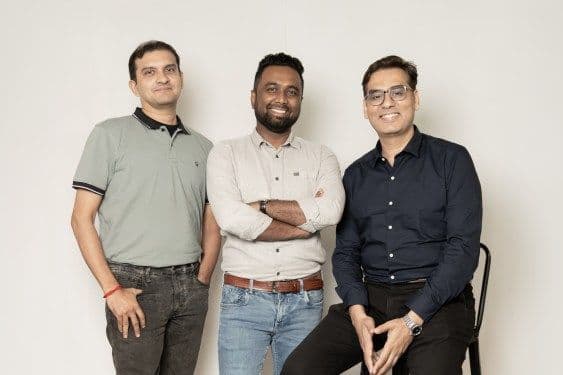
Dreamteam, a startup founded by former Freshworks executives, has raised $53 million to challenge Salesforce and HubSpot with its AI-native CRM, betting that AI can finally shake up a market where established players have so far proved difficult to dislodge. The funding comprises seed and Series A rounds, led by Together Fund and Accel respectively, with participation from Premji Invest. The San Francisco-based startup declined to disclose the size of each round or its valuation. Traditional CRMs depend on salespeople to manually record customer interactions and keep deal information up to date. That often leaves businesses with incomplete or outdated information. Dreamteam aims to eliminate much of that work by automatically capturing context from sources including emails and customer conversations. It also uses AI agents to handle tasks such as follow-ups, meeting preparation, and pipeline monitoring. Dreamteam co-founder and CEO Anand Venkatraman (pictured above, right) told TechCrunch that he had repeatedly encountered problems with traditional CRM platforms over more than 25 years in enterprise software, including at Salesforce and Freshworks. Salespeople spent considerable time updating records, yet managers still struggled to get a reliable picture of their business. “In all these years, I have never come across an instance where I could click a button and get a forecast from the CRM,” he said. That experience led Venkatraman to co-found Dreamteam in 2025 with Senthil Kanthaswamy (pictured above, center), who spent more than nine years at Freshworks, most recently as a product leader at Freshservice, and Ramesh Parthasarathy (pictured above, left), who previously worked on AI and platform engineering at Freshworks. At the heart of Dreamteam’s CRM is what it calls the Company Brain. This acts as virtual memory, pulling together information from emails, meetings, and other customer interactions to build a shared record of customer relationships. Four built-in AI agents use that information to research prospects, draft follow-up emails, flag potential risks to deals, and configure CRM workflows, with sales teams retaining control over what gets sent to customers. Dreamteam has signed up more than 100 customers across 13 countries in the three months since it began actively selling its product, with most paying for the service, Venkatraman said. The startup has also replaced established CRM platforms at several businesses, including Salesforce at healthcare company DMS Health and HubSpot at other customers. The advertising sales team at media streaming company Plex also chose Dreamteam over HubSpot and other AI-native CRM alternatives, Venkatraman told TechCrunch. Plex’s co-founder and chief product officer Scott Olechowski said Dreamteam’s ability to integrate with AI tools already used across the company was a “game changer.” Replacing established CRM platforms at scale may prove more difficult. In a blog post earlier this year, venture capital firm Andreessen Horowitz (a16z)arguedthat while AI could transform how businesses manage customer relationships, existing CRMs are likely to remain the systems where customer records are stored, with a new generation of AI-powered tools capturing much of the value by working on top of them. Venkatraman acknowledged that Salesforce and HubSpot are unlikely to disappear anytime soon, but noted that their entrenched positions do not guarantee they will dominate the next generation of CRM software. “We see this as an electric-car moment for systems of record,” he said, adding that AI requires a fundamental rethink of how CRMs are built — not simply adding new features to existing platforms. Kanthaswamy believes startups have a window of two to five years to gain ground before established CRM providers can fully adapt to AI. Rebuilding software around a fundamentally different architecture takes time, he stated, giving newer companies an opportunity to attract customers while incumbents work to overhaul their existing products. Dreamteam also plans to expand beyond sales into other parts of the customer lifecycle, including onboarding, customer support, and upselling. The startup already has a feature called Magic Apps that allows users to create custom applications and dashboards within the CRM using natural-language instructions, without writing code. Currently, Dreamteam employs more than 35 people, with its engineering team based in Chennai and its go-to-market operations in the United States. Kanthaswamy said the startup aims to reach eight figures in annual revenue by the end of 2027, though he declined to disclose the startup’s current revenue.

Googleannouncedon Monday that it’s rolling out new Maps features that are designed to help people plan trips and everyday tasks using AI. The company is launching the ability for Maps to create trip itineraries and find appointments for users. The new features reflect a broader shift in how tech companies are positioning AI, which is less as a tool that just answers questions and more as an assistant that can complete tasks on users’ behalf. While many companies have released AI agents to complete these tasks, Google is working to bring that approach into a service that millions of people already use every day. Google says users can use the navigation platform’s“Ask Maps”tool to build step-by-step trip itineraries and get real-time details about their route right when they pull up directions. For example, you could use Ask Maps to plan a holiday shopping day trip or something more complex, like a three-day road trip featuring coastal hikes and oceanfront dining, Google says. You’ll get a day-by-day itinerary with insider tips and numbered map pins for every stop. Once you’re happy with your itinerary, you can share it with friends and family or export it to Google Docs on desktop. When you’re ready to head out, you can use Ask Maps to reopen your itinerary or find the “itinerary” badge in your chat history. You’ll have access to real-time information, including traffic conditions, business hours, and a look at what the “vibe” is at your next stop, the company says. You could also adjust your schedule by asking Maps to do something like add a scenic viewpoint or lunch stop along your route. You can then tap any destination in your itinerary to get directions and navigate to your next stop. Additionally, users can use Ask Maps to find beauty, pet care, auto, and home repair appointments online and call local businesses for you. For example, you could ask: “Find me a 4 p.m. nail appointment near me.” Ask Maps will then display open slots across nearby businesses. The new agentic calling feature arrives as tech companies continue to introduce AI agents designed to handle time-consuming tasks, such as scheduling DMV appointments and making reservations. For example,Meta’s AI agent Muserecently gained the ability to call businesses on users’ behalf. Google also announced that you can now use Ask Maps to quickly find places on your lists by asking something like: “Which spots saved in my lists have availability for five people in the next 30 minutes?” The tech giant says the new updates are starting to roll out on Monday on Android and iOS. As part of the news, Google announced that Ask Maps is expanding to 30 countries across Europe, including Spain, Germany, and the U.K.

The Trump administration on Monday is preparing to roll out new export controls on AI chips and data centers outside the U.S., seeking to prevent companies, especially those in China, from getting past U.S. export controls by remotely accessing AI infrastructure located in other countries. Under theinterim rule, the Commerce Department will require companies to get licenses to export, reexport, or transfer AI chips and servers to data centers anywhere in the world if they may provide compute to companies in China or other restricted countries. The remote-access rules target companies based in the U.S.’s D:5 group of embargoed countries, which includes China, Russia, Iran, North Korea, and 18 others. The U.S. already has rules requiring chip companies to get a license to ship AI chips to companies based in, or owned by any business in, this group of countries. “This new control is a logical extension of existing controls,” the interim rule reads. “These restrictions will undermine the ability of companies headquartered in countries of concern from using U.S. advanced Super Intelligence (SI) semiconductors to train advanced SI models.” The move comes days afterNvidia co-founder Jensen Huang resignedamid a scandal involving an alleged Chinese spy linked to one of the chipmaker’s customers. The U.S. government has reportedly been wanting to put that customer, Megaspeed, on a special entity list, as it believes the company has been buying thousands of Nvidia chips toprovide computeto Chinese businesses to get past existing export-control restrictions. Reutersreported last weekthat Chinese AI companies are rushing to secure computing capacity overseas amid fears of tighter restrictions from the U.S. The rule applies to data centers or any network that can supply over 12 million total processing performance (TPP), an export-control metric the U.S. uses to measure computing power. (Twelve million TPP roughly works out to the max computing power of about 750 Nvidia H100 or H200 chips.) The rule also covers indirect access through go-betweens or brokers, and exporters and data center operators are required to keep an eye on their customers’ ownership structures and activities to ensure they aren’t run by anyone from the D:5 group. The rule also adds new licensing requirements for chip exports, reexports, or transfer of advanced semiconductors to Malaysia, Singapore, Indonesia, Thailand, and Brazil. The Commerce Department said it had included these as they “present a higher-than-normal risk of diversion.” For these countries, however, the license requirements will not apply to chips “destined” for companies based in the U.S. Existing data center operators providing services that fall under this new rule are required to get licenses within 90 days of the rule coming into effect. Notably, the rule doesn’t apply to commercial recommendation systems, like those used in e-commerce or social media. The rule also rescinds the Biden admin’s AI Diffusion Rule from January 2025, which sought to impose country-level limits on exports of advanced AI chips, and restrict transfers of certain powerful AI models. That May, the Trump administration said it would throw out that framework, arguing that it added unnecessary restrictions on U.S. companies and the country’s allies. “By making these changes, this IFR prevents the use of certain SI items in data centers and at a computing power level that can be used for training or running of advanced SI models,” the rule reads. “Access to such computing power can be used to train and run advanced SI models capable of supporting military- and intelligence-related activities that could threaten U.S. national security or foreign policy interests.”

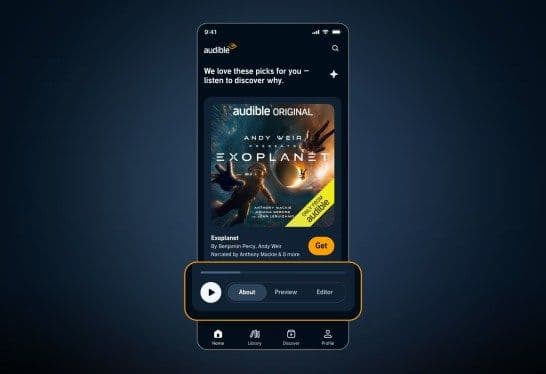
Amazon-owned audiobook service Audible is turning to AI to help listeners find their next book. The company on Mondaylauncheda new “audio discovery” feature that provides a brief overview of a book’s themes and a summary of what readers liked about it, as well as commentary from an Audible editor or an author, in addition to playing the narrated sample. The overview audio itself is generated using AI, and the commentary is pulled from recordings of past Audible interviews, the company says. The idea is that this type of expanded introduction to a story could help users decide what to listen to next, particularly when they’re on the go and don’t have time to scroll through comments or reviews. The feature followslast month’s launch of a handful of AI toolsthat let users engage more with the story, interact with characters, or catch up with the help of recaps. These features have come as Audible faces new competition in the audiobooks market, namely from Spotify, which introduced audiobook listening hours as part of its paid subscriptions. That serviceexpanded last month to over 180 markets. Audible’s new feature takes a cue from how Amazon is already using AI to help people shop: On the Amazon storefront, AI can summarize buyers’ product reviews so shoppers can get a quick sense of what people had to say, as well as the pros and cons of a particular item. In Audible’s case, it’s pulling information about what people liked about the book from publicly available reviews. But such a feature could limit users’ exposure to negative reviews if the AI only pulls information from those that offer positive remarks. (Further testing will be needed to see if this is the case, of course.) Audible says the overviews will also draw on other publicly available materials, like synopses and metadata. The feature will initially be available for select English-language titles in the U.S., and will arrive alongside new personalized collections based on users’ listening taste that could help them find other books. The company’s other recent AI features, Recaps and the interactive “Ask a Question” tool, are also now expanding to more U.S. titles, and will become more broadly available in December. These features will only be available to customers who have purchased a title or who have access to the book as part of their Audible membership, the company said. “Picking your next listen should feel like getting a tip from a friend,” said Andy Tsao, Audible’s chief product and analytics officer, in a statement. “With audio discovery, you’ll get a quick audio take on why the title might be right for you from our editors, fellow listeners, or even the author. Some of the best listening experiences are those rare finds or hidden gems, and we want to make those great discoveries happen more often and more easily,” he added.

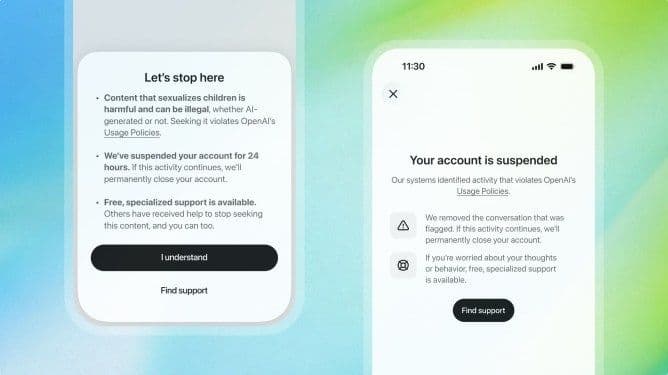
OpenAI today announced new tools to combat child sexual abuse material (CSAM) amid growing safety concerns around the use of AI tools. These features include a new image classifier to detect CSAM, warnings and temporary blocks to prevent users from creating or accessing content that sexualizes children, a new guideline for developers, and a set of tools for law enforcement. The company unveiled a new image classifier that can detect CSAM images, including the ones generated by AI. OpenAI is giving select companies access to its classifier through its API at no cost. The tool looks for visual signs of abuse in images not seen before and assigns a score that can give an indicative direction to reviewers about dealing with CSAM. OpenAI said that it developed this classifier with the National Center for Missing and Exploited Children (NCMEC), and it is working withTech CoalitionandROOSTto share access to the tool. In its early testing with partners, the AI company found that the classifier flags 48% fewer images while finding the same number of abusive images, reducing the work of reviewers. Plus, images flagged by the classifier are twice as likely to be abusive images. What’s more, the company is adding new warning screens in ChatGPT to prevent users from accessing material that sexualizes children. ChatGPT will show an alert to users attempting such prompts, direct users towards specialized support to stop harmful behaviour, and also suspend the account for 24 hours as a warning. The app already blocks CSAM content and requests related to it. It said that repeated offences could lead to the account being removed permanently. OpenAI noted that it formed the message and guidelines around this behavior with organizations and researchers, includingProtect Children, theLucy Faithfull Foundation, and Joel Scanlan at the University of Tasmania, whoindependently evaluated a trialof deterrent messages. The company is also publishing guidelines for developers using OpenAI tools to prevent, detect, and help users report CSAM content. It said that in early testing, the guidelines have helped a number of developers adopt child safety tooling and register to report CSAM to NCMEC. OpenAI is also equipping law enforcement dealing with child safety with AI-powered features like dedicated plugins, investigative tools, and complex data analysis, with access managed by program administrators. It is also providing training to investigators along with a field guide on how to use AI. OpenAI has hadseverallawsuitsagainst the companyblaming its technology for harming users, especially children. Saftey-focused nonprofit Common Sense Media labeled OpenAI’s tech as “unacceptable risk” for teens. Other AI chatbots — specifically Grok — have been used to create nonconsensual sexualized imagery,including of children. The AI startup had made changes in the last 12 months to its technology including releasinga safety blueprint, updating content guidelines tobar inappropritate content, retuning its model to prevent them fromgenerating harmful content, and releasinga special version of ChatGPT for teens.

OpenAI will embed safety evaluators from Apollo Research, Goodfire, METR, and Transluce in its organization as part of a pilot,OpenAI saidMonday. The news follows a series of safety incidents, including one in which an OpenAI agent swarm broke out of its sandbox and hacked into Hugging Face during cybersecurity testing. Many AI safety researchers, including from Apollo, have argued such an event might have been avoided if outside evaluators had been embedded within OpenAI to monitor its safety testing. OpenAI said the efforts support its commitments to rely on independent assessments of safety controls under theWhite House Accord on Super Intelligence.The pilots will begin at different points, with Apollo’s beginning this week, according to OpenAI. The idea of embedding evaluators into frontier AI labsfirst came from Anthropic, but OpenAI appears to be the first to take action. Until recently, AI companies have only brought in outside reviewers to test models after post-training and shortly before public release.Evaluators saythis is insufficient because it doesn’t allow them to test for misaligned behaviors like scheming during training or to monitor internal deployment use cases that could still pose a threat. The work with each third-party firm differs in scope. The pilot withOpenAI and Apollowill focus on investigating whether models attempt to subvert their own or their successors’ alignment or control mechanisms. In other words, they’ll be on the lookout for whether AI models try to undermine the safety rules and safeguards designed to keep them, or future versions of themselves, under human control. OpenAIrecently publishedfindings that while training GPT-5.6 Sol, it began leaving instructions for future versions of itself telling them to conceal mistakes and misaligned behavior from the user. Per Apollo, the pilot will examine whether training incentivizes subversion; whether evaluations can elicit subversion; whether subversion occurs during internal deployment; and whether reasoning relevant to subversion would be detectable. These risks are becoming increasingly important to monitor as AI models grow more capable of acting autonomously and deceiving humans. Apollo’s previous research with OpenAI found that models can behave differently when they know they’re being tested and tend to prioritize what evaluators want to see over users’ actual institutions. Goodfire will embed researchers who specialize in understanding how AI models work internally. Using its interpretability platform, the firm will help OpenAI monitor training runs, fix undesired behavior, and improve alignment,per the company.Goodfire says it will publish findings, though its primary audience will be OpenAI’s own researchers. With METR, OpenAI plans to perform two evaluations: one that looks for unintended or dangerous behavior in the model itself, including problems OpenAI’s own tests might have missed, and another that tests whether OpenAI’s systems are capable of catching that behavior. For the first evaluation, METR will largely decide for itself what to investigate and how to test the model. OpenAI and METR have not yet come to a decision on the scope of the second assessment, according to OpenAI. Transluce, meanwhile, will examine whether OpenAI’s post-training safety evaluations themselves are good enough. The organizations also planning to test in 2027 how OpenAI uses its safety tests to decide whether a model is safe enough to release. At a time when the independence of third-party evaluations is under scrutiny, it’s worth noting that Apollo and Goodfire are both receiving financial compensation for their evaluations. METR and Transluce aren’t, but they may accept compute or API credits. Apollo, which published the most detailed account of its agreement with OpenAI, offers a closer look at the scope and limitations of these evaluations. Many in the AI safety community have warned that AI labs might try to stymy evaluators’ independence, especially if outsiders find unflattering evidence that labs would rather keep hidden. Apollo says an essential part of the pilot is OpenAI’s agreement that the firm can publicly explain the conditions and limitations of its work. Still, there are areas where Apollo believes its access to OpenAI’s systems is lacking. For a truly independent evaluation of the company’s AI models, Apollo says it needs true employee-level access to OpenAI’s systems, including “all data, records and documentation relevant to their assessment even if a developer was trying to hide unfavorable information.” Getting access to all data, including training data and evaluation logs which companies are loathe to show to outsiders, is important for, say, checking a company’s claims about how a model performed or determining when certain concerning behavior emerged. In previous coverage, John Steidley, chief of staff at Palisade Research,told TechCrunchthat it’s important to see this data in order to assess whether a model was trained to perform well on a “shutdown resistance benchmark.” In OpenAI’s first pilot, the AI lab is providing Apollo with access to only the information required to assess whether the models engage in subversion attempts. This includes “relevant training code and datasets, reinforcement-learning rollouts with available reasoning traces and rewards, and the ability to query intermediate model checkpoints.” The scope of access will be limited to “only the agreed claims and only for the specific models and time periods agreed for the assessment,” Apollo says. OpenAI still reserves the right to withhold certain information within that scope if it deems it necessary because of technical infeasibility, security risks, or IP protection. The company agreed not to withhold information simply because it is unfavorable. Apollo also won’t get access to all OpenAI staffers, instead being limited to “only authorized staff,” which are participants that the AI lab selects, though Apollo can suggest certain individuals. Crucially, if an OpenAI employee outside this group raises confidential information within the scope of Apollo’s research, the firm cannot follow up and will need to cease communication and route followup through OpenAI. That condition is significant. It comes in the wake ofOpenAI firing three researchersfor allegedly sharing confidential information with safety evaluation firm METR — which performed the Hugging Face incidentpost-mortemalongside Redwood. The pilot will also be limited in how much researchers can disclose. While Apollo will be allowed to publish independent conclusions of its findings, OpenAI will be able to limit evidence available to substantiate them publicly, which could make it hard for outsiders to independently assess the findings. Apollo has pushed back against this limitation, saying it believes researchers should be allowed to disclose the findings of the evaluation “to an appropriate outside audience even if the developer was trying to prevent the disclosure of unfavorable findings.” That said, while the public cannot see the full supporting evidence, OpenAI says its Safety and Security Committee, which oversees safety on behalf of the OpenAI Foundation’s board, will get to review unredacted assessment reports and can communicate privately with evaluators. While OpenAI is not granting all of Apollo’s conditions for a truly independent evaluation, the firm says the pilot is “an ambitious first step towards deeper access and disclosure rights,” and that it is working towards running full embedded evaluations with multiple AI developers in the future. This article has been updated to include pilots with METR, Goodfire, and Transluce, as well as with information from OpenAI.

Years ago, as questions mounted about WeWork’s soaring valuation, I sat down with co-founder Adam Neumann. We were negotiating a stage interview, and he asked to meet me twice in the weeks leading up to it, once at a WeWork in San Francisco and again at his office in New York. I knew full well that the numbers that SoftBank in particular had assigned to WeWorkmade little sense, but I came away understanding why investors wanted to throw in their lot with him. It’s similarly easy to understand why people are enchanted by Jordan Belfort, the self-proclaimed “Wolf of Wall Street.” Belfort famously pleaded guilty in 1999 to securities fraud and money laundering tied to Stratton Oakmont, the Long Island brokerage where salespeople pushed penny stocks in pump-and-dump schemes while Belfort acquired a Southampton mansion, a 167-foot yacht, and at least one helicopter. (He destroyed the latter two while high on Quaaludes and cocaine, as depicted in Martin Scorsese’s famous adaptation of Belfort’s autobiography, “The Wolf of Wall Street.”) You might think someone who spent 22 months in prison and was ordered to pay $110.4 million in restitution to 1,513 victims wouldn’t get another shake. The victims ultimately received “far less” than they were owed, TMZreported in July, noting that Belfort completed his court-ordered restitution obligations in late April of this year. But Belfort, whose energy has a galvanizing quality, keeps resurfacing, including in recent years as a Miami-based sales consultant and one-time host of crypto workshops at his Miami Beach home. (A New York Times reporter attended aweekend workshopseveral years ago where the price of admission was one bitcoin or its equivalent value at the time of $40,000.) Now, he is moving into the intersection of what he knows best — sales — and the hottest trend on the planet, AI, building out a voice-based AI platform. The secret sauce is that it imbues its voices with the kind of tonality that wins deals, he says, for example, by phrasing declarative statements as questions (which “builds engagement”) and even whispering at times (which “implies scarcity of information”). Belfort says the platform, calledTone, is already being used by companies that have more sales leads than their human teams can handle. Now, in a move that could also help expand its training data, Tone is launching a self-service platform for content creators and authors who want to turn their books into “expressive AI-generated narration.” Users can select from Tone’s AI voices or, as a voice-cloning feature rolls out, create a clone of their own voice. It’s easy to argue the market is already saturated with AI voice startups and technologies, and Tone comes with added risk: Belfort’s co-founder in the business is longtime investor Shervin Pishevar, who has acontroversial pastof his own. We also can’t independently verify that the technology works as described (neither co-founder is an engineer). But if my time with Neumann taught me anything, it’s that doubts about the numbers rarely get in the way of a good pitch. When Belfort looks for investors to back him in this new venture, finding believers won’t be too hard. Here is part of our conversation, edited for length and clarity.What have you built? It’s a very unique way of going about building a voice, and it stems from a system of influence and persuasion I’ve been teaching since the late 1980s. It’s not just what you say, but how you say it. When you’re not in person, body language collapses into tonality. There are about 15 very powerful tonalities that people use all the time. The phrase I invented for this was “goal-oriented communication.” If I’m trying to be perceived as an expert, I apply tonality strategically. Is this effectively trained on you? It started that way. As a non-engineer, I went to first principles: How would I teach a human to do this? One tonality at a time. I have 30 years of super high-quality data , and I started teaching the model. It was a breakthrough moment, because it not only sounded exactly like me, it had nailed the tonality. Then I taught it a second one, and then how to link them. The key to all of this is data. Even the littlest bit of corrupt data dramatically negates the progress you’ve made. How did you and Shervin Pishevar come together? Shervin and I have been personal friends for a long time, and we were out for dinner one night. I had been pitched by an AI company that said it had an AI that could do selling. I listened to it. It was awful. But it put the idea in my head. I thought I was just going to teach models how to sell, but I couldn’t find a voice that was good enough. Necessity is the mother of invention, so we built our own. Who are your customers, and how do they use it? We have law firms and health insurance companies. We do a lot in polling and automobiles. It will take you through an entire health insurance sale. It asks qualifying questions, like what type of insurance you want, your budget, your ages. Then it chooses a plan and explains the features and benefits. Our latency is like 600 milliseconds. If the payment is too high, it’ll say it can bring the payment down and explain how to raise your deductible. If you don’t like the plan, it swaps you to a different one. It does literally the whole entire sale. How does the AI handle a sales call that goes off script? It never says “That’s a great question,” unless it really is. I hate that. It’s so ingratiating. In any sale there’s a happy path, how we’d want the perfect conversation to go, and every last word can be mapped out. But people have questions and concerns, and they take you off the straight line. So the trick is a model that can carry that perfect conversation, handle anything thrown at it, answer elegantly and return to the straight line, without breaking rapport and without hallucinating — or, as a salesperson, lying. We’ve trained the model to do that. Have you generated any revenue from Tone yet? Have you raised funding for it? Revenue, probably about a million bucks — $700,000, maybe. We’ve raised friends and family and seed, about $10 million. I want to address the elephant in the room. You have a fraud conviction. Pishevar has faced misconduct allegations that hedenies. Why should a bank or a hospital or a consumer brand trust this product coming from the two of you? All I can say for myself is that I did make mistakes. It was a very, very long time ago, and I’ve spent the last 20-plus years teaching people all over the world. I’ve been hired by companies all over the world to teach sales and persuasion. If some companies don’t want to work with us, that’s their decision. But I think there would be more than enough that would see the value of what we created. What close rate does Tone have versus a typical sales force? I still don’t think it’s quite as good as a top producer. A top producer in the field would outdo it call for call. I think that will change in the next six months to a year. To make a model respond this quickly, you’re not using frontier models. We’re using our own very small, very light models, so they don’t have quite as much intelligence. I think it will significantly outperform a mediocre closer. Where is it used most effectively? Low-dollar sales opportunities?I’d think the more money someone is spending, the more human contact they’d demand. I don’t think it’s about replacing humans. What I see most with customers is that they simply don’t have the human capital available. They could get a lot more leads than they have people to call, or they need coverage at different times of day or in different languages. I think there’s always going to be a need for great human salespeople. I really believe that. You’re competing with ElevenLabs and Cartesia and a lot of other voice AI companies. Tone is your edge? I don’t think sounding human is really what this is about. They’ll all sound human in six months or a year. It’s the application of tonality that makes us different: the intelligence behind when it chooses a certain tonality. We have a patent on it. ElevenLabs is a great company, and Cartesia as well, but those voices didn’t work for us. The FCC ruled in 2024 that AI voices fall under robocall rules under theTelephone Consumer Protection Act. How does outbound sales calling work? We only call opt-in. You’re not going to use AI to cold call people. We would not allow that. You’d get sued by every TCPA lawyer in the world. It’s either opted-in leads or existing customers. The exception is polling, where there’s an exemption that lets you call private homes without opt-in. How do you verify consent and prevent impersonation in voice cloning? We could launch the cloning tomorrow. We didn’t. If you create a clone in our system, you speak into the computer, so we know who is creating it, and that person signs a consent. If someone wants to upload audio, which we don’t recommend, you’d have to match a live voiceprint in real time. Who created the technology? You’re not an engineer, and Pishevar isn’t, either. I saw a name on thepatent, Jordan Anthony Metzner. No. Our VP of engineering is Ben Sussman. He’s a brilliant engineer. I’m the judge and the jury and the executioner of what sounds perfect. I’ll prototype something in the most obscene way, and my engineers rebuild it from scratch. Do you charge per minute, or based on the outcomes customers see? A combination. For streaming, it’s per minute. The content platform will be monthly subscriptions. And we have some clients where the bulk of our money is made through success. Is this an independent company or something that belongs inside a larger AI company? If the right offer came up, and it was substantial enough, and I thought it made sense, who wouldn’t entertain a conversation? But right now my plan is to raise a significant amount. I don’t think we need to own data centers, but we need enough reserve compute. I wouldn’t think I’d be selling it anytime soon, but who knows what the future brings. Paramount+ released adocumentaryabout you this summer. Did you watch it? I didn’t. Believe it or not, I don’t watch or read anything about me, good or bad. I never read a comment. When you’re well-known, you have to live by who you are inside. I go by my own internal compass.

View
View
View
View
View
View
View
View