



AI NewsJordan Belfort’s new AI voice startup, Tone, wants to sell like the ‘Wolf of Wall Street’
Jordan Belfort’s new AI voice startup, Tone, wants to sell like the ‘Wolf of Wall Street’
12:05 AM IST · November 17, 2026
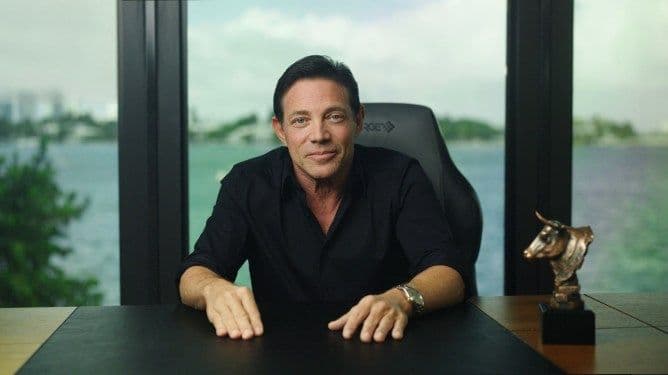
Years ago, as questions mounted about WeWork’s soaring valuation, I sat down with co-founder Adam Neumann. We were negotiating a stage interview, and he asked to meet me twice in the weeks leading up to it, once at a WeWork in San Francisco and again at his office in New York. I knew full well that the numbers that SoftBank in particular had assigned to WeWorkmade little sense, but I came away understanding why investors wanted to throw in their lot with him. It’s similarly easy to understand why people are enchanted by Jordan Belfort, the self-proclaimed “Wolf of Wall Street.” Belfort famously pleaded guilty in 1999 to securities fraud and money laundering tied to Stratton Oakmont, the Long Island brokerage where salespeople pushed penny stocks in pump-and-dump schemes while Belfort acquired a Southampton mansion, a 167-foot yacht, and at least one helicopter. (He destroyed the latter two while high on Quaaludes and cocaine, as depicted in Martin Scorsese’s famous adaptation of Belfort’s autobiography, “The Wolf of Wall Street.”) You might think someone who spent 22 months in prison and was ordered to pay $110.4 million in restitution to 1,513 victims wouldn’t get another shake. The victims ultimately received “far less” than they were owed, TMZreported in July, noting that Belfort completed his court-ordered restitution obligations in late April of this year. But Belfort, whose energy has a galvanizing quality, keeps resurfacing, including in recent years as a Miami-based sales consultant and one-time host of crypto workshops at his Miami Beach home. (A New York Times reporter attended aweekend workshopseveral years ago where the price of admission was one bitcoin or its equivalent value at the time of $40,000.) Now, he is moving into the intersection of what he knows best — sales — and the hottest trend on the planet, AI, building out a voice-based AI platform. The secret sauce is that it imbues its voices with the kind of tonality that wins deals, he says, for example, by phrasing declarative statements as questions (which “builds engagement”) and even whispering at times (which “implies scarcity of information”). Belfort says the platform, calledTone, is already being used by companies that have more sales leads than their human teams can handle. Now, in a move that could also help expand its training data, Tone is launching a self-service platform for content creators and authors who want to turn their books into “expressive AI-generated narration.” Users can select from Tone’s AI voices or, as a voice-cloning feature rolls out, create a clone of their own voice. It’s easy to argue the market is already saturated with AI voice startups and technologies, and Tone comes with added risk: Belfort’s co-founder in the business is longtime investor Shervin Pishevar, who has acontroversial pastof his own. We also can’t independently verify that the technology works as described (neither co-founder is an engineer). But if my time with Neumann taught me anything, it’s that doubts about the numbers rarely get in the way of a good pitch. When Belfort looks for investors to back him in this new venture, finding believers won’t be too hard. Here is part of our conversation, edited for length and clarity.What have you built? It’s a very unique way of going about building a voice, and it stems from a system of influence and persuasion I’ve been teaching since the late 1980s. It’s not just what you say, but how you say it. When you’re not in person, body language collapses into tonality. There are about 15 very powerful tonalities that people use all the time. The phrase I invented for this was “goal-oriented communication.” If I’m trying to be perceived as an expert, I apply tonality strategically. Is this effectively trained on you? It started that way. As a non-engineer, I went to first principles: How would I teach a human to do this? One tonality at a time. I have 30 years of super high-quality data , and I started teaching the model. It was a breakthrough moment, because it not only sounded exactly like me, it had nailed the tonality. Then I taught it a second one, and then how to link them. The key to all of this is data. Even the littlest bit of corrupt data dramatically negates the progress you’ve made. How did you and Shervin Pishevar come together? Shervin and I have been personal friends for a long time, and we were out for dinner one night. I had been pitched by an AI company that said it had an AI that could do selling. I listened to it. It was awful. But it put the idea in my head. I thought I was just going to teach models how to sell, but I couldn’t find a voice that was good enough. Necessity is the mother of invention, so we built our own. Who are your customers, and how do they use it? We have law firms and health insurance companies. We do a lot in polling and automobiles. It will take you through an entire health insurance sale. It asks qualifying questions, like what type of insurance you want, your budget, your ages. Then it chooses a plan and explains the features and benefits. Our latency is like 600 milliseconds. If the payment is too high, it’ll say it can bring the payment down and explain how to raise your deductible. If you don’t like the plan, it swaps you to a different one. It does literally the whole entire sale. How does the AI handle a sales call that goes off script? It never says “That’s a great question,” unless it really is. I hate that. It’s so ingratiating. In any sale there’s a happy path, how we’d want the perfect conversation to go, and every last word can be mapped out. But people have questions and concerns, and they take you off the straight line. So the trick is a model that can carry that perfect conversation, handle anything thrown at it, answer elegantly and return to the straight line, without breaking rapport and without hallucinating — or, as a salesperson, lying. We’ve trained the model to do that. Have you generated any revenue from Tone yet? Have you raised funding for it? Revenue, probably about a million bucks — $700,000, maybe. We’ve raised friends and family and seed, about $10 million. I want to address the elephant in the room. You have a fraud conviction. Pishevar has faced misconduct allegations that hedenies. Why should a bank or a hospital or a consumer brand trust this product coming from the two of you? All I can say for myself is that I did make mistakes. It was a very, very long time ago, and I’ve spent the last 20-plus years teaching people all over the world. I’ve been hired by companies all over the world to teach sales and persuasion. If some companies don’t want to work with us, that’s their decision. But I think there would be more than enough that would see the value of what we created. What close rate does Tone have versus a typical sales force? I still don’t think it’s quite as good as a top producer. A top producer in the field would outdo it call for call. I think that will change in the next six months to a year. To make a model respond this quickly, you’re not using frontier models. We’re using our own very small, very light models, so they don’t have quite as much intelligence. I think it will significantly outperform a mediocre closer. Where is it used most effectively? Low-dollar sales opportunities?I’d think the more money someone is spending, the more human contact they’d demand. I don’t think it’s about replacing humans. What I see most with customers is that they simply don’t have the human capital available. They could get a lot more leads than they have people to call, or they need coverage at different times of day or in different languages. I think there’s always going to be a need for great human salespeople. I really believe that. You’re competing with ElevenLabs and Cartesia and a lot of other voice AI companies. Tone is your edge? I don’t think sounding human is really what this is about. They’ll all sound human in six months or a year. It’s the application of tonality that makes us different: the intelligence behind when it chooses a certain tonality. We have a patent on it. ElevenLabs is a great company, and Cartesia as well, but those voices didn’t work for us. The FCC ruled in 2024 that AI voices fall under robocall rules under theTelephone Consumer Protection Act. How does outbound sales calling work? We only call opt-in. You’re not going to use AI to cold call people. We would not allow that. You’d get sued by every TCPA lawyer in the world. It’s either opted-in leads or existing customers. The exception is polling, where there’s an exemption that lets you call private homes without opt-in. How do you verify consent and prevent impersonation in voice cloning? We could launch the cloning tomorrow. We didn’t. If you create a clone in our system, you speak into the computer, so we know who is creating it, and that person signs a consent. If someone wants to upload audio, which we don’t recommend, you’d have to match a live voiceprint in real time. Who created the technology? You’re not an engineer, and Pishevar isn’t, either. I saw a name on thepatent, Jordan Anthony Metzner. No. Our VP of engineering is Ben Sussman. He’s a brilliant engineer. I’m the judge and the jury and the executioner of what sounds perfect. I’ll prototype something in the most obscene way, and my engineers rebuild it from scratch. Do you charge per minute, or based on the outcomes customers see? A combination. For streaming, it’s per minute. The content platform will be monthly subscriptions. And we have some clients where the bulk of our money is made through success. Is this an independent company or something that belongs inside a larger AI company? If the right offer came up, and it was substantial enough, and I thought it made sense, who wouldn’t entertain a conversation? But right now my plan is to raise a significant amount. I don’t think we need to own data centers, but we need enough reserve compute. I wouldn’t think I’d be selling it anytime soon, but who knows what the future brings. Paramount+ released adocumentaryabout you this summer. Did you watch it? I didn’t. Believe it or not, I don’t watch or read anything about me, good or bad. I never read a comment. When you’re well-known, you have to live by who you are inside. I go by my own internal compass.
read more



 , Product of