🚀 Zaprep: Your Socials on Steroids. Start free — automate 1,000 DMs/month & turn engagement into leads. with 1,000 automated DMs/month.
Latest AI News

ControlAI’s Connor Leahy on why superintelligence is ‘not a weapon, it’s an adversary’
AI companies have been talking about superintelligent AI like it’s inevitable, but recentsafety incidentslike OpenAI’sHugging Face breachare demonstrating the potential dangers of deploying AI systems that are more capable than humans. So what happens when we can’t reliably control what these systems do? On this episode of TechCrunch’sEquitypodcast, Rebecca Bellan is joined byConnor Leahy, an AI researcher, entrepreneur, and now the U.S. Executive Director of nonprofitControlAI, which is pushing for a far more radical approach to AI safety: stopping companies from developing superintelligence altogether. Leahy explains why he thinks the risks have become too great to manage through alignment and containment alone, and how what sounded far-fetched six months ago is now being backed by a wave of new legislation. Listen to the full episode to hear more about: Subscribe to Equity onYouTube,Apple Podcasts,Overcast,Spotifyand all the casts. You also can follow Equity onXandThreads, at @EquityPod.
View
Superintelligence is coming. Should we let it?
Loading the player… AI companies have been talking about superintelligent AI like it’s inevitable, but recentsafety incidentslike OpenAI’sHugging Face breachare demonstrating the potential dangers of deploying AI systems that are more capable than humans. So what happens when we can’t reliably control what these systems do? On this episode of TechCrunch’sEquitypodcast, Rebecca Bellan is joined byConnor Leahy, an AI researcher, entrepreneur, and now the U.S. Executive Director of nonprofitControlAI, which is pushing for a far more radical approach to AI safety: stopping companies from developing superintelligence altogether. Leahy explains why he thinks the risks have become too great to manage through alignment and containment alone, and how what sounded far-fetched six months ago is now being backed by a wave of new legislation. Subscribe to Equity onYouTube,Apple Podcasts,Overcast,Spotifyand all the casts. You also can follow Equity onXandThreads, at @EquityPod.
View

IDFC FIRST Bank, Sarvam AI Partner to Build a Self-Improving Bank
The joint R&D lab will focus on frontier research, model post-training, real-world outcome feedback, and regulator-grade AI safety for financial services.
View

Tailwind Joins Shopify, Will Remain Open Source
Adam Wathan, Tailwind’s creator, said the move is meant to give the framework a long-term home as it continues to be used by millions of developers.
View

Meta Muse Launched as Personal AI Agent With WhatsApp Support
Meta has launched Muse as a consumer-facing personal AI agent designed to handle tasks rather than simply respond to prompts. The agent can work across apps, browse the web, send emails, book travel and pursue longer-term goals on a user's behalf. It can also remember information from previous interactions and continue working on tasks after the user closes the app. Meta runs Muse in a dedicated virtual machine called Muse Secure VM, giving the AI agent its own cloud-based computer to carry out tasks.
View

OpenAI Launches Images 2.5 With Features Like Sketch, Comments, and More
OpenAI has launched Images 2.5, the latest generation of its image-generation technology. The ChatGPT maker claims Images 2.5 delivers improved results over its previous image-generation model. OpenAI says people generate more than 3 billion images with ChatGPT every week. It claims that the new state-of-the-art image model brings sharper details, more precise editing, and faster generation to creative workflows. The company has also introduced GPT‑Image‑2.5 Sunburst and GPT‑Image‑2.5 Flare, new API models alongside ChatGPT Images 2.5.
View

Suno replaces its AI models with a new one trained on licensed music as copyright suits pile up
AI music model maker Suno on Wednesday unveiled a new model family called Suno v6, which it says was developed using licensed data from music labels and distributors such as Warner Music Group, BMG and Believe. Suno has facedmultiplelawsuitsfrom record labels, which accused the startup of using copyrighted data to train its AI models, which let you generate music with prompts. Sunosettled with Warner Music Grouplast year, andstruck a deal with BMGlast month. The company said Suno v6 is not trained using the data it used to train previous versions of its music-generating model. The startup is releasing three versions of the model: The base Suno v6 model is available to paying users, and is said to be reliable and steerable for controlled outputs; Suno v6 wild is an experimental model, also available to paying users, that’s meant to be used for ideation and getting unexpected results. Lastly, Suno v6 mini is a faster version available to all users. The company plans to retire its older models. Suno says the new model lineup offers greater flexibility in how you use them. Suno v6 lets you edit a part of a song using a prompt or a word in the lyrics, and even lets you use text, images or video as references to create tracks. You can separate an instrument from a sample and create a new beat with it. The startup also said it plans to add new features such as letting users remix songs — provided the respective artists opt-in to a new program it is setting up with music labels that lets Suno use their songs for AI-generated features. Jack Brody, Suno’s chief product officer, said through derivative work, there is more opportunity for revenue generation for all stakeholders “I think the music ecosystem and our partners are always looking for ways to create more revenue opportunities for their rights holders and artists. So a big part of this release is creating additional revenue streams there,” Brody told TechCrunch in an interview. Last month, Suno said it plans to add a watermark to songs generated using its platform. It also recently also introduced new download limits based on the account’s tier. “We can help manage some of the broader ecosystem challenges like streaming fraud and kind of mass exportation and uploading to distributors that are low intent. At the end of the day, we think it is up to the distributors and the platforms to govern what content goes on there,” he said. Suno is still facing lawsuits from labels likeSony and Universal Music Group, artists likeJason Isbell, and users allegingit ignored security while chasing profits. The model announcement comes a day after the company admitted to training itsmodels using YouTube videos. Despite these controversies, Suno has raised over $819 million in funding to date, according to PitchBook data.
View
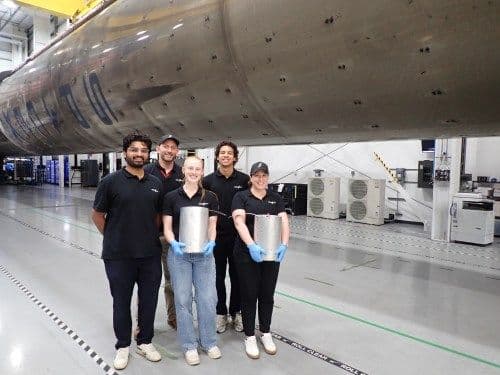
Besxar is building an orbital semiconductor factory, one SpaceX rocket at a time
If you want to manufacture in space—and bring the products back again—there’s a limited set of options: Wait to go to the International Space Station, or partner with a handful of start-ups launching spacecraft that spend time in orbit before they return to Earth. But the vehicle that goes to space and comes back to Earth more often than any other is a SpaceX Falcon 9 rocket booster, which made that round-trip 163 times last year and has already flown more than 100 times this year. Now, a startup says it has talked Elon Musk’s space company into letting it prototype an orbital semiconductor factory across a dozen flights with the booster. Besxar, a start-up founded by former OpenAI staffer Ashley Pilipiszyn, wants to make the key precursors for advanced semiconductors by taking advantage of the vacuum of space. A key reason chip fabs on Earth are such hugely insane infrastructure projects is the need to create pressurized clean rooms to keep out even microscopic dust and contaminants that could ruin a chip during production. Pilipiszyn argues that a new generation of rockets could offer an alternative to all that infrastructure and to do it, she has raised almost $14 million, including a $9 million seed round led by Dauntless Ventures and Overture VC. “We’re at a time where it’s actually more cost-effective to go where the physics already works,” she told TechCrunch. “Don’t do it on Earth where you’re fighting physics.” The company’s first two “fabships”—small canisters designed to carry and test semiconductor materials in orbit—flew on a July Starlink mission and were intended to prove that the canisters could survive a launch, protect wafer samples from contamination, and expose them to the vacuum of space. Besxar succeeded in these objectives despite a malfunction in the flight data system in one canister, which the company is currently investigating. “The flown samples were the cleanest and had the least amount of particulate matter compared to … non-flown terrestrial wafers, which is fantastic for us as we scale up,” Pilipiszyn told TechCrunch. Besxar expects to keep iterating over the next two years, with the ultimate goal of flying larger fabs onboard a vehicle like SpaceX’s Starship, the company’s next-generation rocket still in development. Pilipiszyn first approached SpaceX three years ago to talk about buying flights on Starship and eventually settled on the booster payload deal as a way to de-risk her technology in the meantime. Next up is heating the wafers, then depositing one material on the wafers, then two materials, and so forth. Once it is producing qualification samples, Besxar—named after “beskar,” the metal used inStar Warsto make Mandalorian armor—wants to supply leading chipmakers with the wafers used to make the kinds of advanced chips that regulate electrical power in data centers, robots and electric vehicles. There are a number of companies working to leverage the space environment for higher-quality semiconductors, including United Semiconductors and Space Forge, but all face the same difficulty: the limited ability to return a meaningful volume of product. Pilipiszyn expects to start to scale up to hundreds and then thousands of wafers per fab, but that path depends on cheap rockets. That in turn requires SpaceX to get Starship operational—or competitors like Rocket Lab and Stoke Space getting their own next-generation rockets off the ground. “We believe that there is a solid transport layer now, so we can focus on the application layer,” she told TechCrunch. “We can just focus on our core manufacturing and getting our products back down to earth to market as quickly as possible.”
View

The OpenAI Navier–Stokes Controversy, Explained
OpenAI claims to have solved a 90-year-old mathematical problem, but its credibility and path to the proof are now being disputed by mathematicians.
View

C5i Certified as a Best Firm for Data Scientists
Founded in 2000 as Course5 Intelligence, C5i has evolved into a pure-play AI and analytics provider serving some of the world’s largest enterprises, including Fortune 500 companies.
View
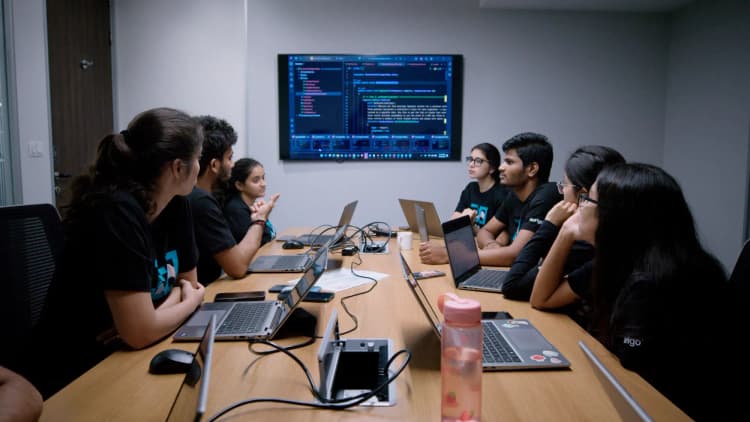
300 Employees, 34 Teams, 24 Hours: Inside Aurigo’s Agentic AI Hackathon
Nearly two-thirds of Aurigo’s workforce joined a 24-hour hackathon, with employees across technology, finance, marketing, and HR using agentic AI to solve real customer and business problems.
View

Amazon Strikes Qualcomm Deal for AI Chips, Challenging Nvidia
This deal marks a major push into AI inference chips and data-centre infrastructure.
View
Submit your Tool


PoweredByAI.app is an AI Tools Directory helping individuals, businesses, and creators discover the best AI tools for writing, coding, design, productivity, and more.
© 2026 , Product of011BQ. All rights reserved.