🚀 Zaprep: Your Socials on Steroids. Start free — automate 1,000 DMs/month & turn engagement into leads. with 1,000 automated DMs/month.
Latest AI News
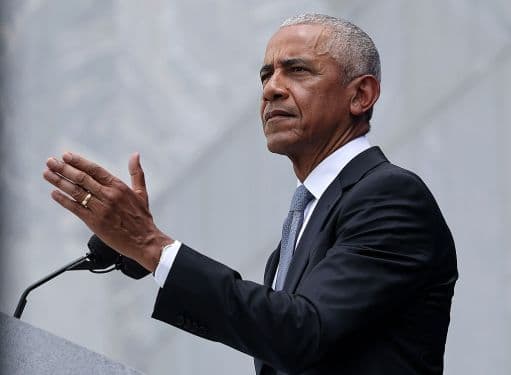
Obama urges Democrats to have a ‘clear plan’ for AI safeguards
Former President Barack Obama recently said that Democrats need to make artificial intelligence one of their “central agendas” and “have a very clear plan” to address concerns around the technology’s economic impact and safety,according to The New York Times. Obama made these comments on Thursday, at Democratic fundraising event where he was interviewed by House Minority Leader Hakeem Jeffries. The NYT says that Obama’s office provided a partial transcript of the event, at which Jeffries asked Obama how congressional Democrats should approach AI. In response, Obama said that once Democrats regain the House majority, they need to “put together a framework for a very public conversation.” “This is something that is moving very fast in private hands, and if we don’t get on top of it, I think can be dangerous,” Obama added. “If we do get on top of it, I do think it’s beneficial. I genuinely think it’s going to accelerate, for example, drug development in ways that can help us cure diseases.” In a statement, Jeffries said the former president “is correct that decisive action must be taken on artificial intelligence.” Jeffries also said that “Republicans have abdicated their responsibility to govern on behalf of the American people.” The NYT also reports that Obama has offered himself as a “sounding board” to AI executives and has spoken to both Anthropic CEO Dario Amodei and OpenAI CEO Sam Altman. His comments come amidst growing concern around AI safety, particularly afteran AI researcher resigned from Anthropicand claimed the leading AI companies are “racing straight to self-improving superintelligence and gambling with our lives.” On Saturday,Amodei outlined a broad approach to “pacing the frontier,”which would include giving independent safety evaluators access to leading AI companies and models, as well as developing “common safety standards” between companies. In social media posts, Altman and SpaceX CEO Musk seemed to respond positively to Amodei’s plan, with Altman saying that OpenAI would also commit to “having independent evaluators with employee-like access.” President Donald Trump, meanwhile, discussed AI safety concerns with reporters at an Irish golf event on Sunday.Bloomberg reportsthat Trump boasted that the United States is “the most sophisticated country in the world,” adding that he wants “to keep it that way because whoever wins AI wins.” (Earlier this year, the Trump administrationreleased a legislative framework for AIthat would preempt state laws and shift the child safety burden to parents.) “And we can put guardrails,” Trump said. “We can do this and that. But I think you have a lot of negative forces that are bringing it up that shouldn’t be bringing it up.”
View

OpenAI’s Sam Altman says it would be ‘ill-advised’ to go public in 2026
While OpenAI hasfiled confidentially for an IPO, the companywill not be going public this year, according to CEO Sam Altman. Altman wasinterviewed recentlyby Fortune editor in chief Alyson Shontell; amidst the fallout fromthe OpenAI-HuggingFace hack, as well asbroader discussions about AI safety, Shontell asked whether OpenAI still feels pressure to “move really fast” due to its IPO plans. “We’re not rushing into an IPO,” Altman said. “I actually think that given everything happening with safety, right now would be an ill-advised moment to go public.” Instead, he insisted that OpenAI will go public “when we’re ready, which is when the business is ready, when we feel ready from what the moment is like in society with this technology.” When pressed on whether that means the IPO isn’t happening in 2026, Altman replied, “I would say not 2026, yeah. We’ve got a lot of stuff to do.” The New York Times reported in Junethat although OpenAI had hired bankers and lawyers with the goal of going public in the third or fourth quarter of 2026, the company was leaning toward 2027 due to the volatility of tech stocks and its own financial challenges.
View
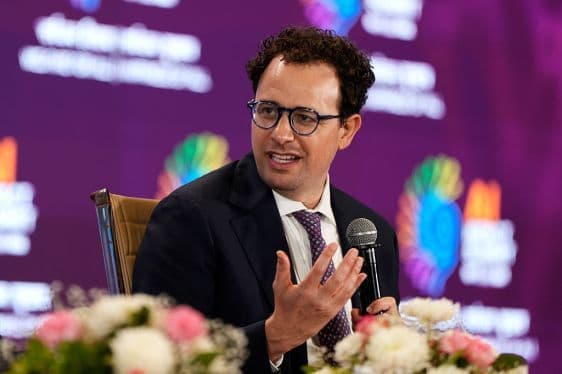
Anthropic CEO outlines plan to ‘pace the frontier’
We’ve been seeing increasingly dire warnings from AI researchers about the dangers of artificial intelligence, and evencomments from OpenAI CEO Sam Altmanthat it may be time to “pace” AI development. But what would that actually look like? Ina new blog post, Anthropic CEO Dario Amodei not only echoed the call to “pace the frontier,” but also outlined three broad strategies for doing so. And he said Anthropic is “unilaterally committing” to one of them. Thedebate over AI safety and alignmentintensified this week afterresearcher Jacob Coxon wrote that he’s resigning from Anthropicover concerns that the leading AI companies are “gambling with our lives” while the people building the technology “earnestly believe it could kill us all by the end of the decade,” a claimrepeated by others at Anthropic. Amodei’s post doesn’t didn’t explicitly mention Coxon’s resignation or his concerns, but the CEO wrote that two things convinced him it’s time to take a more cautious approach to AI development:the OpenAI-HuggingFace hack, and the fact that “AI has been advancing drastically faster” in recent months, particularly with its “growing ability to build the next generation of AI.” “We must slow the pace at which we improve the capabilities of AI models,” Amodei wrote. “Progress will still seem fast, and we must make wise use of the time we gain.” His proposed first step would involve “embedded evaluators” from third-party organizations likeMETR— evaluators who can verify that AI companies are actually following their pacing and safety commitments and can also ensure that safety incidents get reported. (OpenAI was recently criticized fornot reporting an incident where its AI agents took over a German wiki form.) Amodei compared these evaluators to regulators who have been embedded with bank employees, and he said that inviting them in is “something Anthropic is unilaterally committing to (and calls on governments to require other frontier companies to match).” That means giving evaluators company badges, desks, and laptops, and providing access “mostly comparable to what internal risk assessment teams have,” with exceptions when required by law or contracts. Next, Amodei called for the leading AI companies “within democratic countries” to coordinate “common safety standards as well as limits on the rate of unchecked AI progress.” Such coordination might seem unlikely, both due tothe apparent animosity between Altman and Amodeiand also because their companies arereportedly worried that a coordinated pause could lead to antitrust scrutiny. Amodei alluded to that concern in his post, writing that “for antitrust reasons, it’s helpful for the US government to mediate or at least enable these discussions — they don’t need to participate, but do need to issue a narrow waiver for certain kinds of safety conversations.” Amodei also acknowledgedthe spectre of Chinese AI dominancethat’s often raised an argument against slowing development. But he said that if the US government and tech companies take steps like refusing to sell powerful chips or semiconductor manufacturing equipment to Chinese companies, as well ascracking down on model distillation, they could “slow China’s progress enough to widen America’s lead significantly over the next 3–5 years.” Lastly, Amodei called for “global coordination,” where the United States and its allies “attempt to coordinate with authoritarian governments, to the extent this is possible.” Amodei said this would mean “cooperation with China,” and he admitted that there are “stark limits on what can be achieved,” but he still suggested there might be opportunities for agreement, even if it’s just “prohibiting certain narrow and obviously dangerous uses of AI, such as using AI for the production of biological weapons or allowing users to do so.” With Amodei’s past willingness to acknowledge AI’s potential dangers, and with the company’s relative openness to certain forms of regulation, some AI boosters have already criticized him as a doomer whose comments have fed the current AI backlash. In response, Amodei said he’s tried to offer a “balanced” perspective” andargued that the backlash is “fundamentally a crisis of trust,”as people have become skeptical of tech companies, the tech industry, and the government. Industry critics have also been skeptical about these apocalyptic AI warnings, suggesting thatthey’re a distraction from the harm that the technology is already causing. Journalist Brian Merchant, for example,wrote that he has yet to see“a credible, step-by-step documentation of how exactly AI might move from self-recursively improving AI to killing every single human on the planet”; he also suggested that proposals similar to Amodei’s “would likely only wind up serving Anthropic and OpenAI; it’s what regulatory capture looks like in action.” In his new post, Amodei wrote that he continues “to believe that AI can enormously improve the quality of human life.” “My desire to achieve these benefits is undimmed,” he said. “But the benefits will only be achieved if we build the technology in the right way, and — so long as we use the time we gain well — it is worth taking unusually deliberate care to get it right.”
View
What Really Happens When You Turn Your Selfie Into a 1980s AI Pic?
The viral trend raises questions about personal data, computing costs, and what AI companies gain from everyday image generation.
View

OpenAI’s feud with mathematicians is only escalating
Twenty-five leading mathematicianssigned an open letterarguing that AI labs are threatening their intellectual work as they seek to one-up each other with solutions to famous math problems. Each signatory has been awarded the Fields Medal, considered the most prestigious prize in mathematics. This week, NYU professor Tristan BuckmasteraccusedOpenAI of pressuring him not to credit a collaborator who works for Anthropic for solving an important math problem, and wondered if the company had used their work with Codex to produce its owngroundbreaking proofover a marathon weekend of inference. On Thursday, OpenAIwithdrewits sponsorship of a math event at CalTech after the company was criticized by researchers at the university. While the ability of AI models to solve the world’s outstanding mathematical challenges could be a boon to humanity, the signatories of the new letter argue that will only be the case if those solutions can be understood and communicated by the math community and, ultimately, the rest of the world. “Often these solutions are announced in a rush, leaving no time for a proper writeup, the isolation of new methods and ideas, and citing relevant previous work of others,” they wrote — and OpenAI’s proof remains unverified. “As in all creative professions, this raises severe attribution and plagiarism questions. Moreover, without the willing mathematicians who must take care of their development and integration into the mathematical canon, AI-conceived ideas would never become fully alive and the crucial human transmission chain between mathematicians would be lost.” With other mathematicians growing paranoid and wondering if their Codex use was in turn fed into OpenAI’s new models, there is real fear that the culture of open research will be threatened. Today, if frontier labs see a useful path to a discovery, they can spend tens of millions of dollars using LLMs to beat the original researchers to a proof — a dynamic that will incentivize secrecy. This letter follows theLeiden Declaration, released by a working group of mathematicians in June. That document also grapples with the ways that LLM proofs will change their work and offers a set of recommendations for mathematicians, institutions, and policymakers. As with software engineering and other areas where AI tools are changing workflows, mathematicians find a justification in the work around the work: The value in math isn’t just the proofs and who gets credit, but the intellectual super-structure that nourishes students, finds new questions and ideas, and integrates them into broader human civilization. And if you don’t particularly care about the cutthroat world of high-stakes mathematical proofs, don’t forget: Your field of interest is next. “The issues the mathematical community faces now are similar to issues that other scientific and creative professions are facing, and indicate issues that all of humanity might face: how to make sure that, as AI changes the way work is done, we do not lose sight of what that work was meant to achieve in the first place,” they wrote.
View

Y Combinator’s Garry Tan wants US open-weight AI labs to ‘distill’ frontier models, too
When it comes to Chinese AI labs using distillation techniques to extract knowledge from frontier model makers, Y Combinator CEO Garry Tan is hoping regulators stay out of it. In fact, he thinks U.S. AI labs should perhaps play the same game. “I would do nothing,” he toldCNBC in an interview earlier this week. “We could argue that there should be an American distillation regime.” He elaborated to TechCrunch that this means he wants smaller, American open-weight AI labs to use the same kind of training techniques on American frontier AI labs, giving the U.S. a more robust set of open-weight options that aren’t Chinese. Distillation is when a model maker extensively prompts another model in order to learn how it works and reasons. It is commonly, and legitimately, used by AI labs to help train new models. Anthropic this weekreleased its second reportalleging that Chinese labs are engaged in “illicit distillation attacks,” hiding their identities to distill without permission and relying on fraud and stolen credentials to do so. Anthropic CEO Dario Amodei had previouslypublicly called on U.S. regulatorsto crack down on distillation. It’s notable that the commander of Silicon Valley’s prestigious and prolific startup accelerator doesn’t agree. To be clear, Tan isn’t advocating for American AI labs to use stolen credentials to distill. He wants them to be free to come in the front door. In fact, his argument is twofold. He feels it’s an overreach for AI labs to dictate what their customers can do with the information their models share with them. He also notes that the proprietary AI labs didn’t ask permission when they vacuumed up as much human knowledge as they could to train their models. They famously ingested plenty of copyrighted materialwithout the permission of those intellectual property holders. “Controlling what users and customers do with API calls to closed weight models feels constraining, and there’s a role government can play here to normalize the fact that access to intelligence that was trained on broad public access data should itself also be more a form of a public good than something locked away behind restrictive terms of service,” he told TechCrunch when asked why American labs should be free to distill, too. Tan, who is himself such an avid AI user that he oncedescribed himself as having cyber psychosis, wants to see a balance between open-weight AI labs and frontier labs. “They are at the frontier and driving it forward. We want that to be fundable, and be a great business model ongoing,” he told CNBC. “You want open weight models to give people freedom and access.” To him, the true AI doomer scenario is for all the immense power of frontier AI to wind up in the hands of a single powerful, proprietary provider. “The nightmare scenario, the doomer scenario for AI is that there’s just one company,” he said. “It has the best access to capital. It has the best AI researchers. It runs away with it and suddenly there’s one company that’s monolithic. And that would be bad.”
View

Mecka AI nears $500M valuation in Sequoia-led deal amid rush for robot training data
Mecka AI, a startup that collects and analyzes human motion data to train humanoid robots and other robotics, is nearing a new round led by Sequoia Capital at a valuation of about $500 million, according to two people with knowledge of the deal. The new financing comes just three months after Mecka announced that it raised $60 million in a round led by Framework Ventures that included participation from Menlo Ventures, SV Angel, and Kindred Ventures. TechCrunch has not learned the precise size of the new round. The terms of the deal are not final and could still change. Mecka AI didn’t respond to a request for comment. Sequoia declined to comment. Mecka AI was co-founded in 2024 by four entrepreneurs, including Canadians Josh Gao and Mogen Cheng, who previously built a restaurant fintech startup, and Jason Chong, who joined Coinbase after it acquired his crypto exchange. Duy Nguyen, the only non-Canadian on the team, focuses on operations at Mecka. The four co-founders don’t have backgrounds in robotics. But they did recognize that there was a dearth of physical-world data and realized that capturing real-world interactions was the primary bottleneck holding back general-purpose robots, including humanoids. Mecka, which derives its name from “mecha,” a fictional giant robot controlled by humans, set out to do for robotics what Scale AI, Mercor, Surge, and other human data companies have done for LLMs. The startup pays people to record themselves performing everyday tasks — like making coffee or fixing cars — using body sensors and smartphones. As of early June, Mecka was projecting that it would end 2026 at an annual run rate of $100 million, Gao told Fortune when the startup announced its previous fundraise. While Mecka AI hasn’t publicly disclosed its customer list, many robotics companies and AI labs rely on real-world data captured through this “egocentric” approach, alongside other physical data collection methods like teleoperation, to build their models. Other startups collecting real-world data for robot training include XDOF, which TechCrunch reported last week was nearing a new round at a$1.2 billion valuation, as well as human-data platforms expanding beyond LLMs, such asScale AIandMicro1.
View

Nscale adds former OpenAI exec Fidji Simo to its board ahead of potential IPO
Nscale, the buzzy U.K.-based AI data center startup, has appointed former OpenAI, Meta, and Instacart executive Fidji Simo to its board. Simo joins high-profile tech executives Sheryl Sandberg, Susan Decker, and Nick Clegg on Nscale’s board ahead of the startup’s anticipated IPO this fall. Formerly CEO of AGI deployment at OpenAI, essentially the No. 2 executive at the AI lab, Simoleft the company in Julyciting health reasons. She still advises the company on a part-time basis. Before OpenAI, Simo was chair and CEO of Instacart, where she led the company through its 2023 IPO. She also spent more than a decade at Meta, including as head of the Facebook app. Simo also sits on Shopify’s board. Nscale’s founder and CEO, Josh Payne, said Simo is one of the few leaders who understand what it means to scale products used by billions of people and the demands those products place on the underlying systems. “That’s what we’re building for at Nscale,” he said in a statement. “Fidji joins a board we’ve built deliberately, with the experience of scaling platforms to the largest in the world, and the independence, financial rigor and operating depth to which companies at this scale are held.” Nscale’s valuation has skyrocketed since it was founded just two years ago on the back of booming demand for AI infrastructure. The startup, which designs, builds, and operates AI data centers, is reportedly trying to raise up to $3.5 billion ahead of a planned IPO,Bloomberg reportedlast week, citing unnamed sources.
View

An Anthropic researcher’s doomsday warning comes at a very interesting time
An Anthropic researcher resigned this week,warning in a post on Xthat the company is “racing straight to self-improving superintelligence and gambling with our lives”. The company’s own alignment lead evenco-signed the messagerather than walking it back. It’s the kind of doomer warning the AI industry has flirted with before, but the timing, with Anthropic reportedly preparing for an IPO, makes it land differently. On this episode of TechCrunch’sEquitypodcast, hosts Kirsten Korosec, Anthony Ha, and Sean O’Kane dig into the latest AI safety warning and what it says about the industry’s race toward increasingly capable models. Plus,Apple’s first big event under new CEO John Ternusand more of the week’s headlines. Listen to the full episode to hear more about: Subscribe to Equity onYouTube,Apple Podcasts,Overcast,Spotifyand all the casts. You also can follow Equity onXandThreads, at @EquityPod.
View

Kimi-maker Moonshot AI targets $2B in annual revenue
One of China’s most prominent AI labs, Moonshot AI, believes it can turn its popular open-weight model into serious sales growth. On Friday,Bloomberg reportedthat the lab is targeting $2 billion in annualized revenue by the end of the year, double the company’s reported revenue run rate for August. It’s an aggressive goal that reflects the success of the company’s K3 model since its release this summer. While K3’s usage figures have declined slightly in recent months,OpenRouter datacurrently shows as many as 300 billion tokens being generated each day by K3 models on the system. Moonshot’s projected revenue is still dwarfed by that of OpenAI and Anthropic, which recent reports put at$40 billionand$65 billion, respectively. Because Moonshot’s model weights are freely available, the company has far lower margins than its closed-weight competitors. The rising projections show there’s still money to be made from open-weight AI models, even if they’re not as lucrative as closed-weight frontier models. Still, Moonshot’s model development practices remain controversial — if not downright illegal. Earlier this week, Anthropicaccused the companyof a long-running model distillation campaign that routed nearly 300,000 requests from Kimi directly to Claude Opus, effectively serving Opus in place of Kimi’s own models. In total, more than 23 million responses were collected from Anthropic models for use in Moonshot’s training, the company alleged.
View

Final, final, final call for TechCrunch Disrupt 2026 Side Events
Theabsolute last chanceto apply to host an officialSide EventduringTechCrunch Disrupt 2026istonight, September 11, at 11:59 p.m. PT. No more extensions. No more chances. If you’re bringing your community to Disrupt, don’t just give them another place to gather. Give them a reason to show up — and give your organization a reason to host. A Side Event can help you: Put your team directly in front of founders, investors, customers, partners, and other decision-makers who can unlock your next deal, partnership, investment, hire, or collaboration. Create the kind of conversations that are harder to have on a crowded conference floor — and deepen relationships with the people most relevant to your business. Own the conversation around a topic your audience cares about and give your brand a meaningful role in the Disrupt ecosystem. Bring your existing network together while creating opportunities for members to meet new people, exchange ideas, and make valuable connections of their own. Approved Side Events may be promoted through TechCrunch’s Side Events page, Disrupt agenda, mobile app, newsletters, articles, and social channels. Give your community25% off Disrupt tickets, making your Side Event part of a larger experience — not a stand-alone gathering. The opportunity is bigger than hosting a party or meetup. Use Disrupt week to create relationships, generate opportunities, strengthen your brand, and put your organization at the center of the conversations shaping what’s next. Applications close tonight at 11:59 p.m. PT. This is the final deadline. There will be no more extensions. To be considered for the official Side Events lineup,submit your application before midnight. Don’t just attend Disrupt. Make something happen around it. You don’t need to host a Side Event to make Disrupt work for your business. Get a ticket and use the week to source new customers and partners, meet investors, find talent, see what’s next in tech, and have the conversations that can move your business forward. Regular pricing ends September 26. Get your ticket before prices rise — and make sure you’re in the room for the people, ideas, and opportunities shaping what’s next. Get your ticket to TechCrunch Disrupt 2026.
View

One week left to book your exhibit table at TechCrunch Disrupt 2026
Book your exhibit table at TechCrunch Disrupt 2026 by September 18 at 11:59 p.m. PT.Tables are limited and can sell out before the deadline. If you’re coming toTechCrunch Disrupt 2026to find customers, meet investors, build partnerships, or put your product in front of the people who can move your business forward,don’t leave your presence to chance. The exhibitor program gives your team a dedicated 6′ × 30″ table in the Expo Hall for all three days — a place to demo what you’re building, answer questions in real time, and turn passing traffic into meaningful conversations. You’ll also get: Come ready to demo your product, start conversations, identify potential customers and partners, meet investors, and turn event traffic into relationships you can continue building after Disrupt. Time is running out to secure an exhibit table at Disrupt — and once the remaining tables are gone, so is the opportunity to get your startup on the Expo Hall floor. The real cost of waiting isn’t just missing a table. It’s missing the conversations, leads, and opportunities that could come from having your product in the room. The deadline is September 18 at 11:59 p.m. PT— tables can sell out before then. One week. Limited space. Don’t wait for the opportunity to disappear. Secure your exhibit table now.
View
Submit your Tool


PoweredByAI.app is an AI Tools Directory helping individuals, businesses, and creators discover the best AI tools for writing, coding, design, productivity, and more.
© 2026 , Product of011BQ. All rights reserved.