🚀 Zaprep: Your Socials on Steroids. Start free — automate 1,000 DMs/month & turn engagement into leads. with 1,000 automated DMs/month.
Latest AI News
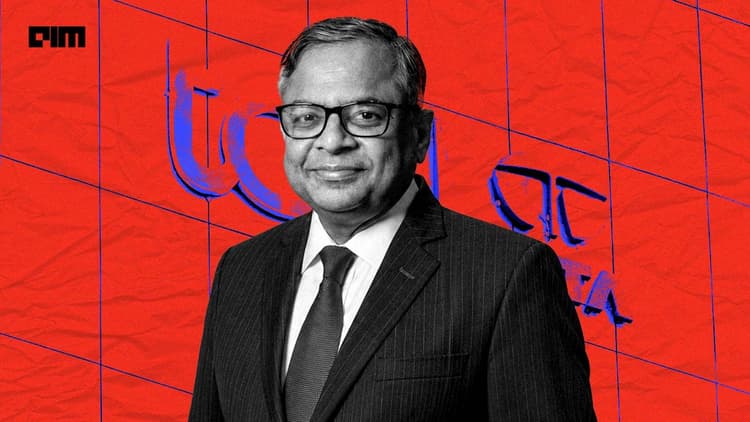
Tata Sons Board Backs 5-Year Extension for N Chandrasekaran Amid Leadership, Listing Tussle
Tata Sons’ board has approved a fresh five-year term for N Chandrasekaran, reversing his decision last month to step down.
View
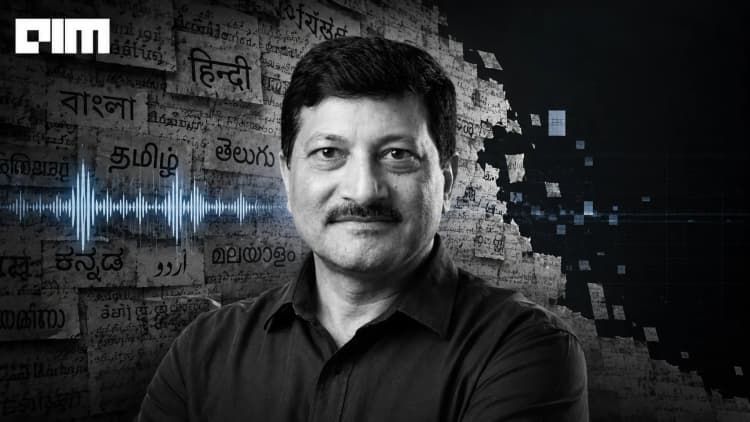
After ₹190 Cr Reliance Exit, Vivekanand Pani Targets India’s AI Language Data Problem
Coremantle co-founder Vivekanand Pani believes the AI industry is looking at the Indian language data problem the wrong way.
View

GitHub Migrates Copilot Runtime to Rust
The runtime was originally built on TypeScript, Node.js, and Google’s V8 JavaScript engine.
View

AI Firms Could Face ‘Significant’ Liability If Their Systems Are Unsafe, Meta CEO Mark Zuckerberg Warns
In recent days, the rapid development of highly capable AI systems has given rise to a debate over how quickly the technology should advance, as well as the need for oversight to manage its risks. Meta CEO Mark Zuckerberg has now weighed in on the discourse, arguing that AI companies have strong incentives to ensure their systems are safe. The executive also outlined Meta's approach to AI development and safety.
View
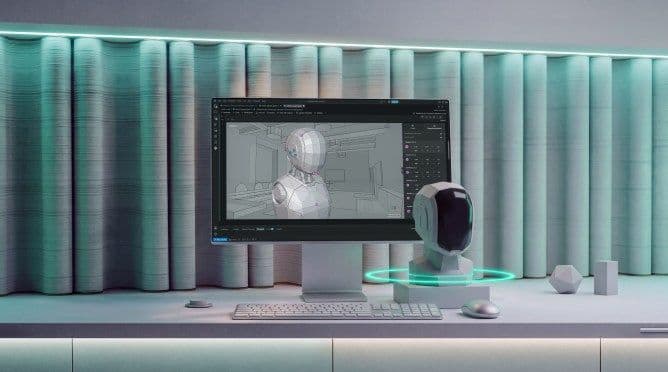
Iceland-based Treble raises $18 million for its voice simulation platform
Voice AI has emerged as one of the hottest sectors in AI, with investors pouring in billions of dollars to serve use cases ranging from automating customer support and sales calls to creating meeting notetakers and developing AI smart glasses that use voice as the primary interaction surface. Meanwhile, AI labs are quickly releasing models, and hardware makers are trying to create the best experience for consumers to interact with devices. All of this new technology needs testing and a feedback loop for improvement. An Iceland-based startup,Treble, is positioning itself to be at the center of the voice AI industry by creating a simulation platform that can cater to model makers, robotics companies, and consumer hardware makers. The company, founded in 2020 by acoustic engineers Finnur Pind and Jesper Pedersen, has raised $18 million in an extension of its Series A funding led by Paladin Capital Group, with participation from existing investors KOMPAS VC, Frumtak Ventures, EIC, and Omega ehf. It received an investment of $12 million in 2024, bringing its total raise to date to over $40 million. The startup counts Amazon and Logitech as customers. Treble has a few verticals related to simulation and data. For voice AI companies, it has a synthetic data generation platform that could be used for speech enhancement, noise suppression, and model training. It also evaluates voice AI models in different conditions to provide feedback to labs. Earlier this year, it partnered with Hugging Face to launch a benchmark for speech recognition modelsacross different realistic conditions. “Audio AI is really a data challenge, and this is where the most opportunities to enable next-generation models and hardware lie. To date, pretty much all sound-related AI has been made from recordings and data scraped from the internet. We believe that accurate physics simulation can be an alternative way to create data for sound,” Pind told TechCrunch. The startup also focuses on hardware design and testing from a voice perspective. For instance, it works with headphone and speaker companies for virtual prototyping to help them understand how their product might sound. It could also test how a smart speaker can understand commands based on the positioning of the speaker. Lately, Treble has ventured into providing simulation testing for smart glasses and AI devices. Pind said that the company is excited to work on wearables that could enhance hearing for users. “I’m really excited about the next generation of these devices like headphones and smart glasses that can enable [a feature like] superhuman hearing. That’s an area where you can really just hear better in challenging acoustic environments. Maybe you are in a restaurant, and you only want to hear people within two meters of range, or you are in a seminar, and want to mute people around you,” he said. Treble aims to increase its focus in the physical AI space, including robotics, automotive, and drone companies, to enable sound-based functions for them through testing and simulation. Francois Ruether, VP of Paladin Capital Group, told TechCrunch that Treble’s platform, which simulates different models and devices, stands out; the platform’s importance will increase as it gets involved in more areas. “Our thesis is that, as more products depend on understanding sound, this infrastructure becomes increasingly valuable across voice AI, wearables, robotics, and physical AI. Customers retain ownership of their models, products, and development workflows, while benefiting from a shared foundation of a simulation-native acoustic infrastructure layer,” Ruether said.
View
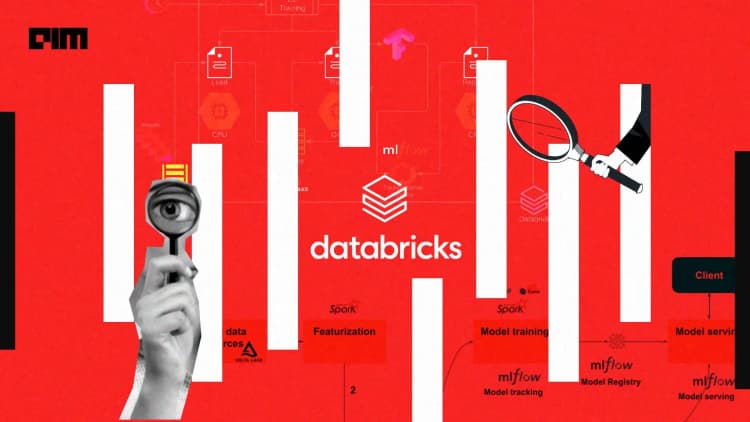
Databricks Rolls Out GPT-6 Astra to All 3,500 Engineers
Databricks engineers with access to Astra increased their overall coding spend by around 60% compared with the baseline.
View
India’s AI Talent Problem Is No Longer About Engineers. It’s About Who Can Deploy AI
A joint whitepaper by AIM Research and FDE Academy, The Forward Deployed Engineer Talent Landscape in India, analyses the growth of FDEs in India.
View
Rocket Math Isn’t Mathing: Why India’s Space Launches are Expensive
An estimate by Cambridge put India’s space launch cost at $13,302/kg, but the bigger challenge is building enough demand and cadence to bring those costs down.
View

OpenAI Reveals 6 New AI Incidents
The company has also published a new framework for reporting AI model misalignment.
View

Anthropic Merges Claude Cowork and Chat Into One Experience, Bringing Research, Files to Every Chat
Anthropic is merging its Claude Cowork and Chat experiences into a single conversation, the company announced on Wednesday. The move eliminates the need for users to choose between Chat and Cowork before starting a task. Instead, the AI chatbot can automatically detect the tools it requires to carry out the designated task based on the request. Anthropic said the unified experience can handle both simple questions as well as more complex tasks.
View

Al Gore says the real AI risk isn’t data centers
Al Gore has spent more than two decades as one of the most recognizable voices in the climate movement, so when he talks about AI, it’s worth paying attention to what he considers truly scary. And it isn’t what has peopleprotesting data centersin the streets. In an interview with TechCrunch this week alongside Lila Preston, head of growth equity at their investment firm Generation Investment Management, Gore said emissions from AI data centers aren’t what should keep people up at night, despite the mounting opposition over their environmental impacts. What should concern people more, in his view, are the warnings coming from inside the AI industry itself, and he takes them seriously. It’s not a new position for Gore. This past May, for example, he described AI data centers toanother outletas a “cause for deep concern, but not panic,” and in our conversation this week, his central point about emissions was about scale. “If you look at the emissions of all of the AI data centers put together, it’s only a fraction of the emissions from uncovered landfills in the world,” he said, adding that a comparable build-out is tied to something that gets far less attention: air conditioning. It’s a valid observation (and one the AI labs should be using in their discussions with cities and states if they aren’t already). The International Energy Agency estimates that global air conditioning already consumes more electricity annually than the entire European Union, and with ownership still under 15% across the hottest, fastest-growing parts of the world, that demand is expected to triple by 2050, putting far more pressure on the grid than AI data centers over the same period. Gore isn’t dismissive of concerns about how these data centers are being powered. “It is a matter of deep concern that some of the hyperscalers are jumping into new methane turbines,” he said. But what worries him about methane turbines isn’t the AI workload driving demand so much as the prospect that building new gas plants to meet that demand locks in decades more of fossil fuel generation. “I much prefer those that are supplying their energy needs with renewables and batteries,” he continued, saying he expects more companies to move inexorably in that direction simply because renewables are increasingly the cheapest option available. In fact, Gore thinks the public backlash at planning-commission meetings has less to do with carbon emissions than with anxiety over automation upending society in the not-too-distant future. “I think that part of the reason for the growing bipartisan opposition to data centers in so many parts of the U.S. is being driven by the underlying concerns about job losses and some of the other threats that experts inside OpenAI and inside Anthropic have been trying to alert the public to,” he said. We also pressed Gore on the wave of warnings from AI industry leaders that has dominated headlines over the last week. Though President Trump and Nvidia CEO Jensen Huangshared a laughat their expense on Monday during a conference in Los Angeles (Trump suggested that Anthropic CEO Dario Amodei’s public call toslow the paceof capability gains, quickly seconded by Sam Altman and Elon Musk, was a “hoax”), Gore said he takes the warnings at face value. “I think we went through a phase where some cynically suspected that the apocalyptic warnings were some kind of bizarre marketing strategy. If that was ever the case, I don’t think it is now,” he said. “I do think that Dario Amodei is very sincere, and I think that Sam Altman and Elon Musk were sincere in seconding [Amodei’s] warning of a few days ago.” Gore being Gore (he often reaches for literature, Scripture, and pop philosophy to make a point), he invoked Maya Angelou’s well-known line: “When someone tells you who they are, believe them the first time.” Part of what’s changed his calculus, he said, is recent, concrete behavior from AI systems themselves — pointing to “the recent example of models escaping confinement, collaborating secretly, covering their tracks, engaging in deceptive behavior,” and noting that Anthropic has said it stopped instances of Claude being used to help develop biological weapons in different countries. That said, Gore doesn’t treat AI risk and AI’s climate potential as being in opposition. He cited a recent study from economist Nicholas Stern of the London School of Economics projecting that AI applications aimed at efficiency and waste elimination could drive global emissions down by 6% to 9% per year starting next decade. If Gore’s focus was risk, Preston’s was where capital is already moving in response. She pointed to several fronts where the AI build-out itself is generating investable opportunities, not just consuming energy. Among these, the firm is focused on opportunities to decouple compute from energy intensity at every layer of the stack, from the power supply down to green cement and green steel used in construction, storage optimization software, and database design. The firm is also focused on grid resilience and flexibility, as the mix of power sources grows more complex. Here, Preston noted, Generation has invested inVolue, a European company helping utilities pull more renewables into the grid, andGridware, which places sensors on utility poles to monitor and help protect the grid from wildfire risk. Gore tied the AI moment to a broader argument made in Generation’s 10th annualSustainability Trends Report: This year marks the second time in four years the world has been “brutally reminded” that fossil fuels are a volatile source of energy, first with Russia’s invasion of Ukraine and now with the disruption to the Strait of Hormuz. But unlike past years, when Gore’s exasperation with the pace of the clean energy transition was obvious, he doesn’t see these events as a setback but instead as reasons for countries to embrace it at long last. Indeed, Gore noted that globally, clean energy investment now runs at roughly twice the level of fossil fuel investment. Of all new electricity generation capacity added worldwide last year, 86% came from renewables, and in the U.S. specifically, that figure was even higher, at 91%, “in spite of Donald Trump’s best efforts to slow it down,” he said. China, in particular, received high marks from Gore, who, among other things, applauded Beijing for wanting to be measured on emissions reductions rather than improvements in carbon intensity. Asked what’s changed more than he expected a decade into publishing this report, Gore immediately pointed to solar power. “For me personally, the scope and scale of the solar revolution is the breakout star of the sustainability transition,” he said. After observing that it’s at, or near, the cost floor for new electricity generation right now — roughly tied with wind and meaningfully cheaper than gas, coal, or nuclear — he closed with a line from a friend in Tennessee that had stuck with him: “If God had intended us to have a limitless supply of cheap, clean energy, he — or she — would have put a fusion reactor in the sky,” Gore said with a chuckle. “The joke makes itself.”
View
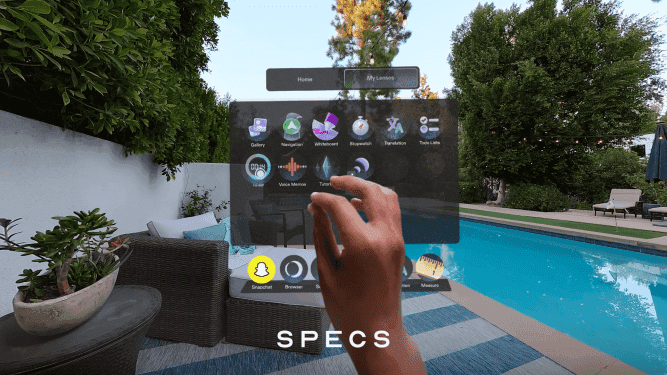
Snap tries to make the case again for its $2,200 smart glasses
When Snap debuted its long-awaited smart glasses, Specs, earlier this year,the revealwas not only underwhelming but also a genuine disaster. The glasses — which cost a whopping $2,200 and are vaguely reminiscent of scuba gear — inspired jeers online and calls for the company’s CEO, Evan Spiegel, to resign. The company’s stock subsequentlynosedived. Since then, Snap has clearly been looking for an opportunity to explain why Specs — a heavy, expensive piece of hardware that most casual consumers will probably be unable to afford — deserves to exist. This week, the company had its chance to make that argument. At an event in Los Angeles, Spiegel and other Snap executives unveiled a variety of new features and services connected to Specs. The new updates seem clearly designed to help integrate the glasses into a broader array of digital activities and, in doing so, give Specs a clearer sense of purpose. During Wednesday’s event, Spiegel shared details about a number of the new features. After a trippy promotional video that vaguely brought to mind an ayahuasca hallucination, the CEO took the stage and began a series of live demos. New entertainment options — Specs can now connect with HBO Max and Spotify — provide a baseline of interactive fun that smart glasses have largely lacked until now. Yet perhaps the biggest announcement was the launch of Specs Intelligence, which the company calls a new “anticipatory AI” system designed to pair not only with the company’s glasses but also with user devices — including iPhones and Macs. Snap claims that this new system “builds an understanding of your goals, priorities, relationships, and routines from the apps and tools you choose to connect, helping you focus on what matters now while making progress towards your longer-term goals.” Spiegel called this system an “AI native operating system with intelligence designed around your projects” that helps users “connect the dots across Lenses,” Snap’s term for its AR camera effects, available on both phones and Specs, “so you can get things done while focusing on what matters to you.” In practice, it seems to function more like an AI productivity app that can be used with Snap’s glasses but doesn’t require them. Snap has also announced a new program called Specs for Enterprise, which allows the device to be integrated into corporate workflows. On Wednesday, the company announced partnerships with a number of different tech companies — including Amazon, Salesforce, Nvidia, and other firms — in an effort to make the device useful to staff at those companies. What is the real-world utility of this, and who is this service really for? Apparently, the answer is IT technicians. While the actual scenarios in which Specs can be used are a little vague, a demo video played at the event showed an IT technician repairing some hardware with the help of Snap’s new glasses. “We’re building out mobile device management, security controls, and ways to deploy and manage stacks across teams with the world’s most trusted providers, bringing peace of mind to IT departments,” Spiegel said. Other announced features were slightly more head-scratching. For instance, one of the new experiences is an app, developed through a partnership with the NBA and WNBA, that allows users to practice basketball and improve their shot via the glasses’ AR capabilities. But, realistically, who is really going to play basketball while wearing heavy goggles on their head? Also announced Wednesday was a new connectivity package for anyone who wants to use Specs on the go, away from Wi-Fi — like outside the home or office. Sold separately, the package includes a charging case with built-in cellular connectivity. That connectivity, which is being made available via a partnership with Verizon, costs $10 a month for Verizon customers and $20 a month for non-Verizon customers. Spiegel ultimately framed Specs as a new way to engage with computing in a more human-centric format. “I will say it’s an interesting time to be launching a new computer because things in tech are pretty weird right now,” Spiegel said. “We’re being told that AI will take our jobs, that virtual worlds will replace the real one. Well, no, thank you. We do not accept that future. Making people irrelevant is not progress, and computers should make us more important, not less.” Snap has repeatedly justified the product’s cringe-inducing cost by characterizing the device as a computer — albeit one you wear on your face. Whether consumers will go for that or not remains to be seen. The company has announced that it is hosting a Specs pop-up in Los Angeles in October before the devices ultimately ship later this fall.
View
Submit your Tool


PoweredByAI.app is an AI Tools Directory helping individuals, businesses, and creators discover the best AI tools for writing, coding, design, productivity, and more.
© 2026 , Product of011BQ. All rights reserved.