🚀 Zaprep: Your Socials on Steroids. Start free — automate 1,000 DMs/month & turn engagement into leads. with 1,000 automated DMs/month.
Latest AI News

Google, Nvidia, and Anthropic want Emerald AI to find space on the grid for more data centers
Grid software unicorn Emerald AI has formed a coalition with Google and Nvidia that will use the startup’s technology to secure space on the grid for more data centers. TheAI Energy Management Alliance(AEMA) hopes to make demand response — a paradigm in which data centers temporarily reduce their electricity use — an integral part of data center development. Pausing noncritical tasks and shifting some compute loads, AEMA says, could allow an additional 100 gigawatts of data centers to connect to the grid. The founding trio is joined by Anthropic, and a range of utilities including AES, Constellation, National Grid, and NRG Energy. Demand response is an old concept that has been used by utilities for decades. It works because the grid is designed with peak loads in mind. For much of the year, demand is well below the maximum the grid can support. Traditionally, demand response covered large electricity users like factories, which in times of high demand would agree to reduce their usage, typically by pausing production or switching to backup generators. In exchange, the utility would pay them for the service, often handsomely. Today, data centers can also take advantage of those programs, usually by turning on backup generators. Emerald AI has been proposing an alternative to dirty diesel generators. The company’s software coordinates requests from utilities with data centers, which can pause noncritical tasks or shift loads to other data centers where the grid has some headroom. The startup isn’t the only one working on such technology. Google has been developing its own tools, and Enel X lets data centers tap their uninterruptible power supplies to round off peaks in power demand. Limiting max grid usage to 90% for a few hours at a time could let data centersfree up 76 gigawattsof capacity, according to a study by Goldman Sachs published last year. Emerald AI does have an advantage, though. Its software connects utilities directly to data centers, which should allow data centers to respond quickly to requests, much like batteries. The startup also recentlyraised $150 millionin a Series A led by Energize Capital and DCVC, giving it the sort of funding needed to roll out the technology on a wider scale. Given the peaky nature of AI compute loads, and data centers’ ability to quickly ramp up and down, the creation of something like AEMA is overdue. The coalition also promises to help tech companies and utilities find new sites for data centers, an effort that hasn’t been easy for either party. Despite its promise, more sophisticated demand response won’t solve all of the grid’s problems today. Ayse Coskun, Emerald AI’s chief scientist, told TechCrunch that her company’s technology promises to blunt the industry’s need for new generating sources, but it won’t eliminate it entirely.
View

Rival AI agents, Instinct and Meta’s Muse, both add the ability to make calls
Text-based AI assistants are a hot market, with Instinct, Wajo, Town, Ollie, and Meta’s Muse agent, whichlaunched last week, vying for users’ attention and tasks. San Francisco-basedInstinctis one of the most popular of the lot, attracting huge investor interest at whatis reportedlya $10 billion valuation. Instinct’s popularity may now grow even further, as it’s added a new calling feature that lets your agent place calls and act as a concierge. Meta’s Muse, another serious contender in this battle, has also done the same. Instinct’s founder Noah Shinnannounced on Xthat the buzzy startup’s new calling feature, Instinct Concierge, can do things like book restaurants that don’t take online reservations, get on your dentist’s cancellation list, or sort out problems with your cable bill. The feature is rolling out in early access to some users, with plans to expand to all users in time, he said. Your Instinct can now handle phone calls.Introducing Instinct Concierge – a white glove service meant to handle high-touch cases, such as making phone calls, high-end service booking, and more. You’ll be able to book the restaurant that doesn’t take online reservations, get on…pic.twitter.com/vGVnAJ1MF1 Though Instinct is shipping fast, Meta’s Muse AI assistant is keeping up. It also just gained the ability to place calls to U.S. businesses. The tech giant said the feature will first roll out to users who ask Muse to make a call. (This essentially serves as a feature request mechanism, and Meta said that whenever Muse launches new features, they’ll be available first to people who ask Muse about them.) These calling features arrive as a number of rivals had been touting their ability to make calls as an advantage over Instinct; but with Instinct’s Concierge feature rollout, they’re all now in parity with each other on this front. we just expanded the@Musebeta for outbound calls to US businesses, prioritizing folks who'd asked their Muse to let us know they wanted it first :)if you're in, give it a shot and tell us what you think. phone calling was one of our top requests and your feedback helped make… Last week, Instinct also rolled out email addresses tolet Instinct handle account sign-up and management. The company additionally now allows its users’ assistants to contactother people’s assistantsfor managing certain tasks, by adding those users to a trusted network. Both Instinct and Muse have seen great traction over the last few weeks. Instinct raised$350 million at a $2.5 billion valuation last month, and it is reportedly in talks to raise$1 billion at a $10 billion valuation, with investors showing heavy interest in text-based assistants that can navigate different surfaces for users. Analytics firm Sensor Tower noted that Muse outgrew the Meta AI app launch in the first few days. The app garnered over 730,000 downloads in the U.S., compared to the Meta AI app, which was downloaded 707,000 times post-launch in the first five days. The app evenreached the No. 2 position in the top chartsat one point.
View
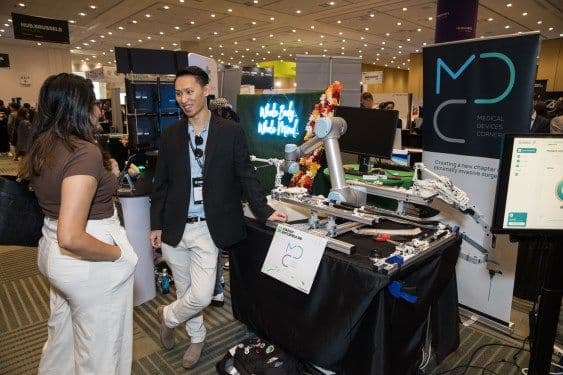
2 days left to exhibit at TechCrunch Disrupt 2026
Your last chance to get your startup on the Expo Hall floor is almost here. Book your exhibit tableat TechCrunch Disrupt 2026bytomorrow, Friday, September 18 at 11:59 p.m. PT.After that, the exhibit table deadline is closed. Tables are limited and may sell out before the deadline. On October 13–15 at Moscone West in San Francisco,10,000+ founders, investors, operators, and tech leaderswill be looking for startups, products, partnerships, and investment opportunities. A6′ × 30″ exhibit tablegives your team three days on the Expo Hall floor to put your product directly in front of the Disrupt audience. Use your table to: Your package also includes10 team passes, website and app branding, press-list access, Silver Tier sponsor branding, and more.Founders can also tap into additional networking opportunities including AI-powered matchmaking, the Deal Flow Café, and Investor-to-Founder Networking. The startups exhibiting at Disrupt will have three days to turn demos into conversations, conversations into leads, and leads into potential deals. If you wait, you may miss your chance to put your startup on the Expo Hall floor at Disrupt 2026. Book your exhibit table before September 18 at 11:59 p.m. PT. Get your TechCrunch Disrupt 2026 ticketand connect with250+ top-tier tech leaders across 200+ sessions and six industry stages.Meet potential investors, partners, customers, and collaborators through interactive programming andAI-powered matchmaking, and discover300+ startupsplus Startup Battlefield 200. Secure your pass by September 25 and save up to $200 before prices increase.
View
Huawei plans Q1 2027 launch of new AI chip as it takes on Nvidia
Huawei is moving up the launch of its next-generation Ascend 960DT AI chip to the first quarter of 2027, as it races to challenge Nvidia, the company said on Thursday at itsHuawei Connectconference. The Chinese tech giant had previously planned to launch the chip in Q3 of 2027, a Huawei spokesperson told TechCrunch. “The Ascend 960DT is expected to be ready in Q1 2027. Ascend 960 chips are launching ahead of schedule, doubling performance and advancing year by year,” the spokesperson said, adding that David Wang, Huawei’s rotating and acting chairman, announced the updated timeline at Huawei Connect on Thursday. The announcement comes just a week before U.S. President Trump and Chinese President Xi Jinping are set to meet on September 24 in Washington, DC. Huawei is trying to turn hundreds of thousands, and eventually millions, of AI chips into one giant computer. The Chinese tech firm calls the approach its Peerium Computing Architecture. It relies on UnifiedBus, Huawei’s technology for linking processors with memory, storage, and networking hardware. Eric Xu, Huawei’s rotating chairman, said in the company’s statement that it is using its new Peerium Computing Architecture to build larger AI computing systems designed for both training and inference. Huawei’s Atlas 950 SuperPoD and SuperCluster are the first systems based on the architecture. The company says an Atlas 950 SuperCluster can connect up to 256,000 accelerator cards. The accelerated chip timeline comes with some questions about Huawei’s broader AI systems, however. China tech analystRui Ma said onXthat Huawei had previously said its Atlas 960 SuperPoD would scale to 15,488 Ascend 960 chips, while this week’s announcement referred to a system with 4,096 chips. “The chip itself is coming WAY earlier, but the SuperPoD they announced is much smaller than what they originally laid out,” Ma wrote. Huawei has continued to advance its chip ambitions despite U.S. restrictions on China’s access to advanced semiconductor technology. Ma said that those restrictions are unlikely to stop China from pursuing its own semiconductor technology. “I think it’s futile to stop China’s development in semiconductors because the stakes for self-sufficiency are just too high at this point,” she wrote. Trumphas pushed back againstcalls fromAI industry leadersto slowthe development of the technology over safety concerns, arguing that the U.S. needs to maintain its lead over China. Meanwhile, Xu argued that China needs to accelerate AI development to catch up with the U.S., saying Chinese companies need to advance further before they can fully understand and address the risks posed by more powerful AI systems, according toFinancial Times.
View

What Does Frontier CRM AI Mean for Salesforce?
And who are Hunter, Casey, Piper, Paige, Carter, Fin, and Marshall?
View
Applied Materials to Invest $5 Bn in India to Expand Semiconductor R&D, Supply Chain
Applied Materials plans to build a 140-acre advanced semiconductor research park in Bengaluru and develop its domestic chip ecosystem.
View
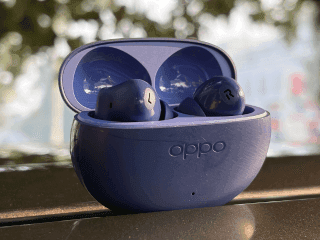
Oppo Heartball AI Wearable to Launch Later This Year With Up to 24 Hours of Battery Life: Report
Oppo hosted its annual developers conference on Thursday, during which the smartphone maker unveiled the new ColorOS 17 user interface based on Android 17. While the highlight of the event was ColorOS 17, the tech firm also reportedly introduced the Oppo Heartball. The Heartball is the company's first AI-powered hardware. The company is said to launch the new AI wearable later this year. Oppo reportedly showcased that the Heartball can be clipped onto the clothing of users. Moreover, the design of the AI wearable was also revealed during the showcase, showing the upcoming Oppo Heartball in a white shade, featuring an LED ring light on the front.
View

Snap Introduces Specs Intelligence to Anticipate Tasks Across iPhone, Mac and AR Glasses
Snap Inc. on Thursday announced Specs Intelligence, a new AI service that has been designed to anticipate user needs instead of simply responding to prompts. The company claims its service can understand a user's goals, priorities, relationships, and routines by connecting with selected apps and tools. It can then surface relevant information and actions based on the user's context, including reminders, meeting preparation, and travel details. Specs Intelligence is currently in the early access phase.
View
OpenAI Details Six Cases of AI Models Hiding Mistakes, Using Exposed API Keys and Sharing Files
OpenAI has revealed six instances of concerning behaviour from its AI models, including attempts to hide mistakes, use exposed API keys and share files without authorisation. The cases, which were identified during training or evaluation over the past six months, also include models finding ways to communicate outside their intended environments. OpenAI says the incidents are individual examples and do not represent how often misalignment occurs across its models. The company is also introducing a new reporting framework for similar cases.
View
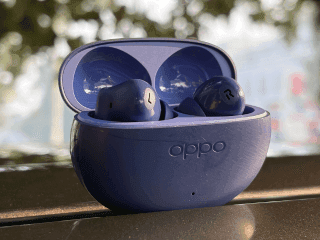
Oppo Heartball AI Wearable to Launch Later This Year With Up to 24 Hours of Battery Life: Report
Oppo hosted its annual developers conference on Thursday, during which the smartphone maker unveiled the new ColorOS 17 user interface based on Android 17. While the highlight of the event was ColorOS 17, the tech firm also reportedly introduced the Oppo Heartball. The Heartball is the company's first AI-powered hardware. The company is said to launch the new AI wearable later this year. Oppo reportedly showcased that the Heartball can be clipped onto the clothing of users. Moreover, the design of the AI wearable was also revealed during the showcase, showing the upcoming Oppo Heartball in a white shade, featuring an LED ring light on the front.
View
HCLTech Launches New Unit to Target $500 Million to $5 Billion Enterprises with AI Services
The company has launched HCLTech Pulse as the IT services company expands its focus on AI, cloud, data, cybersecurity and technology modernisation.
View
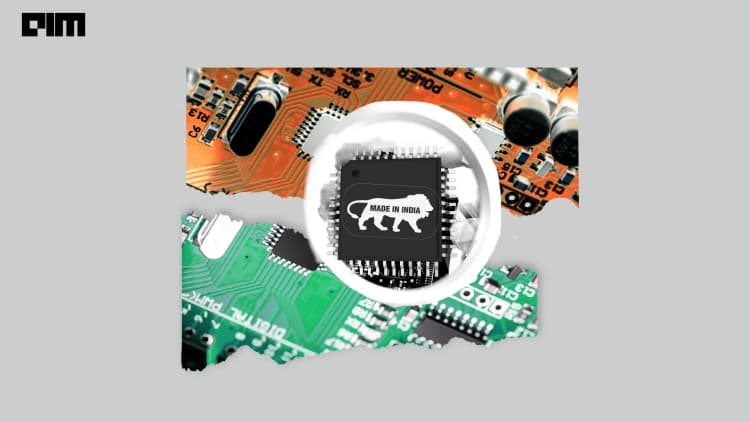
Lam Research to Invest ₹10,000 Cr in India for Silicon Manufacturing
The semiconductor equipment maker will expand manufacturing and research capabilities in India over the next several years.
View
Submit your Tool


PoweredByAI.app is an AI Tools Directory helping individuals, businesses, and creators discover the best AI tools for writing, coding, design, productivity, and more.
© 2026 , Product of011BQ. All rights reserved.