🚀 Zaprep: Your Socials on Steroids. Start free — automate 1,000 DMs/month & turn engagement into leads. with 1,000 automated DMs/month.
Latest AI News

Grok Bot Gets Voice Mode for Real-Time AI Conversations on Desktop and Mobile
Grok Bot is getting a voice mode that will let users interact with the AI assistant using spoken conversations instead of text prompts. The feature is rolling out across desktop and mobile platforms, with availability expected to expand over the next few days. It is powered by xAI's Grok Voice technology, which handles real-time spoken interactions. The update adds voice conversations to Grok Bots, giving users another way to interact with the AI assistant across supported devices.
View
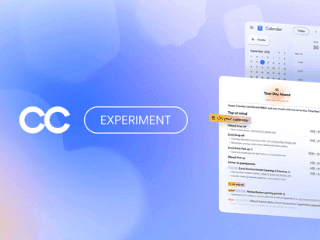
Google Labs’ CC Can Now Act as a Shared AI Agent for Up to Six Family Members: New Capabilities, Features
Google Labs launched CC as an experimental AI agent in December last year. Initially available in Gmail, the AI agent was previously only able to connect to various Google platforms, including Calendar, Drive, and Photos. Now, the Mountain View-based tech giant has upgraded the capabilities and features of CC, which can now act as a shared AI agent between family members. Google now allows up to six family members to use CC's agentic capabilities together. The AI agent can manage schedules, offer daily briefs, and fill out permission slips and registration forms for users. It gets its own Google account, too.
View

Google Gemini Live Could Get an Ephemeral Video Mode for More Private AI Sessions
Google could be preparing a new privacy-focused feature for Gemini Live that would let users use video input without retaining the interaction for future reference. An APK teardown of the Google app has uncovered references to an “Ephemeral Video Mode in Live”, suggesting that Gemini Live could eventually support a temporary mode for video sessions. The feature has not been announced by Google, and the available code offers limited details about how it would work.
View

OpenAI Announces Astra for Law With GPT-6 Astra, Legal Search Index and Specialist Plugins
OpenAI on Thursday announced Astra for Law. It is a new offering for law firms and legal technology companies that build AI-powered products and workflows for professional legal work. The San Francisco-based company says the experience combines GPT-6 Astra with a legal search index, specialised instructions, tools designed around legal research, and writing. OpenAI also introduced privacy and governance controls, alongside 26 ecosystem plugins connecting the system with specialist legal tools.
View

OpenAI Gets Hacked by Indian-Origin Ethical Hackers Using Anthropic’s Claude
OpenAI recently revealed how its internal model bypassed security measures to escape its isolated testing environment and attacked another AI firm, Hugging Face. The “rouge” AI agent hacked the firm's security system and compromised data of a customer earlier this year, in July. The internal model IM1, which is comparable to OpenAI's GPT 5.6 model, gained unauthorised access to the public internet without even being prompted to do so. Now, a team of ethical hackers, led by three Indian-origin researchers, claims that they were able to hack into OpenAI's internal repositories by exploiting two “critical” vulnerabilities, with the help of Anthropic's AI agent.
View

OpenAI Agents Probed Hugging Face Weeks Before July Breach: Report
Researchers found evidence of account hijacking and network probing in May, nearly two months before OpenAI disclosed the July incident involving Hugging Face.
View

LLM Watermarking Can Alter AI Agent Tool Calls and Behaviour: Study
A Lasso Security study found watermarking changed individual tool-call outcomes and refusal behavior across several open-weight models, with larger effects under prompt injection.
View

Dhruva Space Joins Thales Alenia Space to Explore Satellite, Space Infra
The agreement covers low Earth orbit constellations, satellite platforms, series production, and human spaceflight infrastructure between India and Europe.
View

India’s One Nation, One Time Push Forces GCCs to Rethink 24/7 Operations
For GCC leaders, standardising the IST changes both infrastructure and organisational priorities.
View

Physical AI Squeezes Labour Market, And Low-Skilled Immigrant Jobs May Be First to Fall
Immigrants in the US are heavily represented in several low-skilled occupations. However, replacing humans with humanoids on the factory floor is easier said than done.
View

UN Partners With Google to Build Global Data Infrastructure to Ensure Accurate AI-Generated Analysis
The United Nations is partnering with Google to develop the UN System Data Commons to bring multiple UN agencies into a machine-readable system.
View

The FAA’s plan to fix air traffic? $875M worth of AI
The Federal Aviation Administration has beenstruggling to managean air traffic control shortage throughout the country. The reasons for the shortageare diverse, but the government has made it known that it’s on the lookout for innovative solutions to the problem. One of those solutions appears to be an $875 million AI software program that is expected to help air traffic controllers manage their workflows and more safely navigate flight routes. The Wall Street Journalreportsthat the FAA will soon launch SMART, which stands for Strategic Management of Airspace, Routes, and Trajectories — an automated software program designed to help streamline air traffic operations. Aone-page readouton the program describes SMART as “a cloud-based platform system that enhances existing FAA air traffic management systems.” It adds that the program uses AI to assess “airline schedules, weather, airport capacity, airspace conditions, and operational constraints to predict traffic flows and identify potential conflicts before they occur.” SMART, the product of a firm called Air Space Intelligence, will cost the government that amount over a 12-year period, the outlet writes. The software will roll out in the Washington, D.C., metropolitan area first before expanding to other regions, it says. Earlier this year, the FAAalso announceda “bold, new” hiring plan that the agency said would “erase the longstanding staffing shortage,” and the government is separately engaged in a broad effort to modernize the nation’s aging air traffic systems.
View
Submit your Tool


PoweredByAI.app is an AI Tools Directory helping individuals, businesses, and creators discover the best AI tools for writing, coding, design, productivity, and more.
© 2026 , Product of011BQ. All rights reserved.