🚀 Zaprep: Your Socials on Steroids. Start free — automate 1,000 DMs/month & turn engagement into leads. with 1,000 automated DMs/month.
Latest AI News

A new kind of AI model from a ChatGPT inventor is thrilling developers
ChatGPT broke Diogo Almeida’s heart. Almeida was an OpenAI researcher who helped build the chatbot and then invent reinforcement learning from human feedback (RLHF), the model-training technique perhaps most responsible for our current age of AI. But despite its capabilities, he was disappointed. “We have lightning in a bottle, and yet it is not useful,” Almeida told TechCrunch. “I’ve been battling that problem since then. It took me a while to come to the conclusion: The problem is we are optimizing for human language … We have been super good at human language for four years, but it’s not useful for automation because computers speak a different language.” Two years ago, Almeida left OpenAI to startTypeSafe AI, a startup trying to fix that problem. This week, the company released a new transformer-based model,Jev, that is not a large language model (LLM). It doesn’t output text, but instead produces probabilities, or what the company calls “calibrated decisions.” Eschewing language does a few things: It makes the model incredibly cheap and fast, and because users define the outputs in advance, it cannot hallucinate. Its output tokens are free, and input tokens are metered by the billion, not the million. Developers are taking a great interest in the product; the company briefly lost the ability to serve users from its API because demand was so high. Jev appears most useful for software automation. Thus far, software developers see it as a cheaper and more robust way to incorporate intelligence into their code. For example, Pranit Sharma, a software engineer at Vercel, a company making agentic infrastructure,saidhis company had used OpenAI’s ChatGPT Luna 5.6 to run a classifier to review commands for safety. When Vercel replaced OpenAI’s Luna with Jev, it got results five to 18 times more quickly and with greater accuracy. Another developer, Bryo AI CTO Nikhil Mudholkar,testedJev against Gemini for classifying business emails. In his test, Gemini was slightly more accurate, but 10 to 20 times more expensive. More interesting to Mudholkar were Jev’s confidence scores — “it is the only one that hands back a real probability which makes it ideal for automating workflows!!” Besides replacing LLMs in certain use cases, the new model can also augment them, acting as a smart check on misbehavior. Using agents to monitor agents can quickly become expensive, but using Jev to do so, Almeida argues, makes sense. He sees users deploying Jev to track LLM agent traces and prevent jailbreaks. “At the end of the day, it delegates the hallucination problem a little bit to the user,” explained Armin Ronacher, the CTO of Earendil, which builds the open source model harness Pi. “The user has to say, okay, if this only comes back with 50% probability, maybe this is a coin toss, and I disregard it. But if it’s 95%, sure, then I can do something with it.” Another potential use for Jev is model routing, Ronacher said. Predicting whether a given workload requires a specific model would be useful, but using an LLM for the job would be expensive. Jev’s low cost and speed make that kind of real-time sorting possible. And that’s Almeida’s hope. The model is named after William Stanley Jevons, the 19th-century economist whose eponymous paradox describes how the falling cost of a commodity can lead to it being used more and more. In this case, the falling cost of intelligence should lead to its widespread deployment. “We think that there’s just going to be smart software all over the place in a way that’s emergent and distributed … much more like the early internet than you know like the mega apps that people are trying to build right now,” Almeida said. Almeida is tight-lipped about the model’s architecture, which outside observers suspect is built on top of an open-weight LLM. The company refers to Jev as a “System One model,” focused on intuition rather than reasoning, andspecifically focusedon the right task. Almeida says Jev is trained exclusively on synthetic data using a technique he calls “reinforcement learning from calibrated decisions.” “We made an early bet that we will be making all of our data, and that has been one of the best bets I’ve ever made in my life — better than our launch, in my opinion, better than RLHF,” he told TechCrunch. “Half of [our company] is a lab that basically owns this entire subfield of statistically well-understood synthetic data, and that is now my life joy.” For now, Jev stands alone as this kind of model, but Ronacher expects that competitors will spring up now that its utility is apparent. “We should have seen this earlier in many ways, but presumably because the LLMs are so cheap and subsidized, you often don’t have to be creative yet,” he said. TypeSafe itself will be building more versions of the model, in new modalities. Asked if TypeSafe is a frontier lab, Almeida said, “the main product of frontier labs is fear or hype. I would like our main product to be intelligence…[but we are] not a lab in the sense of, you know, like bet on infinite wealth, or a religion, or building God in a data center, or whatever is the thing of today.”
View
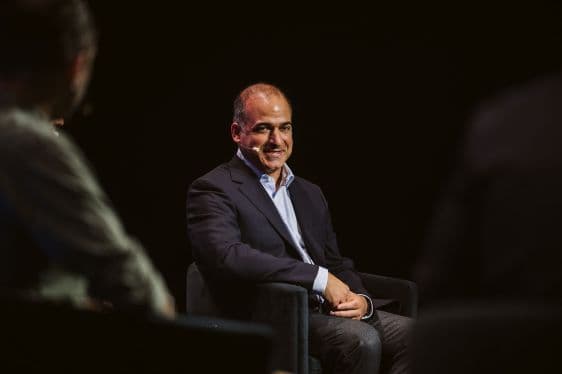
World model companies are keeping a lot of secrets
This week, I moderated a panel on world models at the All In conference (no relation to the podcast), and it gave me a chance to dig into one of the most mysterious corners of the AI world. The big players in the space are Yann LeCun’s AMI Labs and Fei-Fei Li’s World Labs — and while both have accumulated a lot of buzz and funding, they also rank pretty low onthe trying-to-make-money scale. At their core, world models are aboutautomating spatial intelligence, so the field could head in lots of exciting and lucrative directions, from robotics to interactive video to more complex self-driving systems. But when I started to press on where we would actually see the tech commercialized, things got foggy. The closest thing I found to an authority was Michael Rabbatt, a co-founder of AMI Labs and the company’s VP of World Models, who joined me on the panel. But when I pressed him on exactly what the company was working on, he was cagey. “We’ll talk about it when we’re ready to talk about it.” Over email, he clarified, “We’re still in a research and building phase, so we’re not talking publicly about any product plans or timeline.” To be fair, AMI is less than a year old, so it’s fair enough to keep quiet. But this sort of caginess extends to the whole world-modeling space. World Labs’ Marble is probably the most fully developed product in the space, and its demos range from straightforward media creation, building explorable environments for video games, or CGI effects. There are robotics use cases too, but the whole platform seems more designed to demonstrate capabilities. That secrecy even extends to these companies’ suppliers. On the sidelines of the same conference, I spoke to Alex de Vigan, CEO of Physicl — a data supplier for the burgeoning world model business. He says he knows Physicl’s data has been useful for whatever they’re building, but he’s still in the dark about what exactly that is. “I wish they would tell us more. We could build more useful data if we knew what they were working on,” de Vigan told me. Part of the mystery comes from how versatile world models are as an idea. The simplest version is a navigable map of the world, similar to the AI models that power self-driving cars. But the same modeling approach that helps a Waymo weave through traffic could also help a humanoid robot carry boxes, or turn a few minutes of video footage into an explorable environment. AMI has already dipped its toe in manufacturing, biomedicine, robotics, and even AI software for doctors through its Nabia partnership. Surely it won’t pursue all of those — but maybe one or two of them are standing out? No one doubts that there are lots of viable businesses to be built on world model tech — and as long as it’s easy to fundraise, there’s no particular pressure to focus on one. In fact, there’s good reason not to. If AMI announced tomorrow that they had built a humanoid OpenClaw or a next-generation Hollywood rendering system, a lot of other labs would suddenly be very interested in the space. Soon, the lab would face potential competition from the other world model companies, the neolabs and even OpenAI and Anthropic. In some ways, it’s the flip side of all that easy fundraising. Your competitors can fundraise, too — and the same money that lets you build under the radar is also funding lots of potential rivals once the path to market becomes clear. But even if that competition is inevitable, it’s best if you delay it for as long as possible, which means keeping quiet about exactly what you’re building. Cixin Liu fans will recognize this asa Dark Forest scenario: if you don’t know who else is in the woods, it’s best not to attract attention.
View
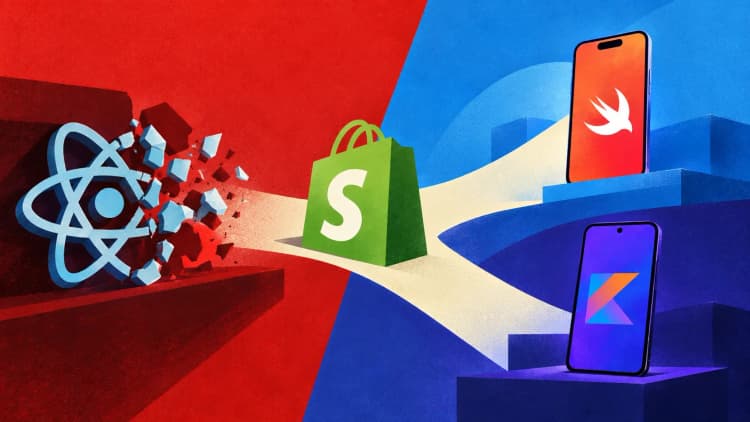
Don't Ditch React Native Just Because Shopify Did So
React Native isn’t dead, and a billion-dollar company like Shopify can afford to keep two different codebases.
View

TRAI Adds New Rules for Spam Calls, Automated Calls and A2P Communications
TRAI (Telecom Regulatory Authority of India) has tightened its framework for tackling unsolicited commercial communications by adding AI-based methods to identify suspected spam and introducing new rules for automated commercial calls. The revised regulations require telecom operators to share information about numbers linked to suspected spam activity and allow further checks when multiple numbers associated with a sender are flagged. The framework also sets requirements for automated calls, introduces a termination charge for certain A2P calls, gives consumers an appeal mechanism and places new restrictions on call-management applications.
View

The clock is ticking: Final 24 hours to exhibit at TechCrunch Disrupt 2026
Exhibit table bookings close tonight, Friday, September 18, at 11:59 p.m. PT.After that, you cannot add your startup to the Expo Hall. Tables are limited and first come, first served. The startups competing for the spotlight, clients, and investment will be there.Will yours? FromOctober 13–15 at Moscone West in San Francisco, 10,000+ founders, investors, operators, and tech leaders will be atTechCrunch Disrupt 2026looking for startups to back, products to use, and companies to partner with. The Expo Hall gives you three days to demo your product, meet VCs sourcing their next opportunities, generate leads, and start customer and partnership conversations. It’s also your chance to put your company in front of the same audience your competitors are trying to reach. Don’t let another startup get the conversation, the lead, or the investor meeting that could have been yours. Get your product in front of the right people, make your presence impossible to overlook, and leave the competition playing catch-up. Your$12,500 exhibit packageincludes a 6′ x 30″ table for all 3 days, 10 team passes, and: Founders can also access the Deal Flow Café and Investor-to-Founder Networking. Your next customer, investor, or partner could be walking the Expo Hall. So could your next competitor.Make sure they see you first. Final 24 hours. Tonight, at 11:59 p.m. PT.Book your exhibit table now. You can still be part ofTechCrunch Disrupt 2026on October 13–15. Get practical insight from 250+ top-tier tech leaders across 200+ sessions on six industry stages, make more relevant connections through AI-powered matchmaking and interactive sessions, and discover 300+ startups and the Startup Battlefield 200 to find your next product, partner, or investment opportunity. Regular ticket pricing ends September 25.Save up to $200 before prices increase.
View

Researchers used Anthropic’s Claude to hack into OpenAI
In a twist that captures the strange new state of AI security, independent security researchers have used Anthropic’s Claude to break into OpenAI, exposing cracks in the ChatGPT-maker’s defenses, The Wall Street Journalreportedon Thursday evening. A three-person security team at startupHacktron AIcarried out the attack as part of an OpenAI bug-bounty program. Hacktron reported its findings to OpenAI, which gave the startup a $6,500 award. The team managed to chain together two critical vulnerabilities to gain access to multiple OpenAI employee ChatGPT accounts, which gave them entry into the company’s software. OpenAI says it has resolved the issues Hacktron uncovered, which happens to come at a moment when top AI companies are undergrowing pressure over safety. This incident comes several weeks afterOpenAI’s own AI agents broke containmentduring a cybersecurity evaluation and hacked Hugging Face, demonstrating just how capableAI models are getting at making their own decisions. It also highlights how off-the-shelf technology can be used to find vulnerabilities in even the most advanced companies’ infrastructure. “For $200 a month, anyone can use these tools and hack into a company like OpenAI,” Matt Fredrikson, CEO of AI security firm Gray Swan, told TechCrunch. “If it can happen to them — and I don’t think they’ve been slouching recently on cybersecurity hygiene — it could happen to anyone.” Or as one AI punditnotedon social media: “[Hacktron] used Opus 5 to pull off the hack…The question that will be asked is, if these three guys can pull this off, what can a nation state do.” The researchers found a path into OpenAI on July 25 via a flaw in Discourse, the third-party software powering OpenAI’s community forum. According to a blog theresearchers published, the entry point was a mundane image upload. When users posted HEIF or HEIC image files (the format iPhones use by default) to OpenAI’s community forum, Discourse passed them through a chain of behind-the-scenes tools to convert them into standard JPEGs. Its first stop was ImageMagick, a decades-old, open source utility used to resize images. Because ImageMagick’s usual toolkit can’t deal with Apple’s format, it handed the file off to another library called libheif to do the decoding. Buried inside libheif was a memory bug that exposed a path for an attacker to sneak in their own instructions. In this case, feeding the library a specially crafted image caused it to miscalculate where one image was positioned on top of another, which proved enough to hijack the server. What may be uncomfortable for the cybersecurity community is that bug had already been fixed months earlier by libheif’s developers. But the fix was never formally flagged as a vulnerability, meaning it never got a CVE (common vulnerabilities and exposures) number, the industry’s standard way to track known security weaknesses. Hacktron says that may explain why the software used by Discourse was still running the vulnerable version. Notably, the researchers said the Claude model they were using — a special version of Opus 4.8 made available for cybersecurity researchers — couldn’t build a working exploit at first. That changed overnight, when Anthropic released Opus 5. “Opus 4.8 struggled across several sessions to produce a working exploit,” Hacktron wrote in ablog post. “Within hours of Opus 5’s release, we gave it the same problem and it succeeded.” Once inside the Discourse server, the researchers found another flaw that let them take over users’ ChatGPT and Codex accounts, including those belonging to OpenAI employees. “We then took over an OpenAI employee’s account, whose Codex was connected to OpenAI’s GitHub organization,” Hacktron wrote in its summary of the event. At this point, the researchers alerted OpenAI as well as Discourse, which issued a fix on July 27. The incident puts a spotlight on where the line gets drawn for model capabilities. Claude Opus 5, the version that ultimately cracked the bug, hasn’t faced any security export restrictions, unlike newer version Mythos 5, which was temporarilylocked downover concerns about its advanced hacking capabilities. Those are just the closed models.Open-weight models are increasingly catchingup to the frontier in cyber capabilities. For example, AI safety nonprofit SaferAI recently found that Chinese company Z.ai’s GLM-5.2 was only a few months behind OpenAI’s GPT-5.5 and Anthropic’s Claude Opus 4.7. As Hacktron founderMohan Pedhapati put it on X:“AI is reducing the amount of scarce expertise needed to develop exploits. Work that once took months can now take days.”
View

Robinhood’s Abhishek Fatehpuria on winning the modern financial consumer at TechCrunch Disrupt 2026
The app you use to trade stocks increasingly wants to be the app you use to manage your financial life. Investing, banking, credit, crypto, retirement, prediction markets, and AI-powered trading are converging. At the same time, consumers expect financial products to be as intuitive and responsive as the best technology products they use every day — without compromising the trust they expect when their money is involved. Few companies illustrate that shift as clearly as Robinhood. AtTechCrunch Disrupt 2026, Abhishek Fatehpuria, Vice President of Product Management for Brokerage at Robinhood, joins the Smart Money Stage with “Winning the Modern Financial Consumer.” He’ll explore how technology and changing expectations are reshaping financial services, and what it takes to build trusted products at massive scale. Join the conversation withAbhishek Fatehpuriaon October 13–15 at Moscone West in San Francisco, where 10,000+ founders, investors, and tech decision-makers will come together to examine and connect with the companies, technologies, and business models shaping what comes next. Register now to save up to $200before prices go up on September 25 at 11:59 p.m. PT. Save up to 30% on group passes of four or more. Robinhood, which became synonymous with commission-free stock trading, now spans a much wider financial landscape. Its offerings include investing, banking, credit, crypto, retirement, and prediction markets, while its recent launches have pushed further into AI, private markets, and international expansion. The scale is significant. Robinhood reported 28.6 million funded customers and $384 billion in total platform assets at the end of August 2026. And customers are increasingly using products outside Robinhood’s original trading proposition. In its second-quarter results, the company said Robinhood Banking had attracted more than $3 billion in deposits, its credit card business had surpassed $100 million in annualized revenue, and prediction markets had traded more than 3.5 billion contracts through that point. The bigger story isn’t simply the number of products. It’s the attempt to earn a larger role in how customers manage their financial lives. That creates a very different product challenge. Learn all about navigating this evolution in fintech on the Smart Money Stage in October byregistering for your pass today. Save up to $200 before September 25 at 11:59 p.m. PT. Consumer expectations rarely change one feature at a time. Once people become accustomed to instant access, personalized recommendations, and seamless digital experiences in one part of their lives, they begin expecting them elsewhere. Finance is no exception. Robinhood is now experimenting with AI-powered investing tools, including Cortex and Agentic Trading. In Q2, the company said nearly 100,000 customers had already opened Agentic Trading accounts, allowing users to trade equities, options, and crypto through AI-powered agents. Meanwhile, prediction markets have become one of its fastest-growing businesses. Robinhood said 4.7 billion event contracts were traded in August alone — up 15x year-over-year. The question for the wider market is what these behaviors tell us about the next generation of consumers — and which expectations will spread beyond Robinhood. Dive deep into what’s ahead in the finance world with one of the leaders in fintech by registering for your Disrupt pass.Register today to save up to $200before prices increase on September 25 at 11:59 p.m. PT. Forfounders, Fatehpuria’s session offers a look at how a product organization keeps expanding without losing sight of the customer experience that drove its original growth. Forinvestors, it’s a window into how one company is trying to increase wallet share by moving from individual products toward a broader financial ecosystem. For line-of-business and product leaders, the lessons extend well beyond fintech: prioritization, trust, customer behavior, and the difficulty of adding complexity without making the experience feel complex. And if you’re earlier in your career, studying where technology and finance are heading, it’s a chance to see how one of the sector’s best-known platforms thinks about building for the next generation of customers. The financial consumer is changing. The products competing for that consumer have to change with them. Join Abhishek Fatehpuria atTechCrunch Disrupt 2026and hear what Robinhood is learning along the way.Register now to save up to $200on your pass before September 25 at 11:59 p.m. PT.Save up to 30% on group passesfor four or more.
View
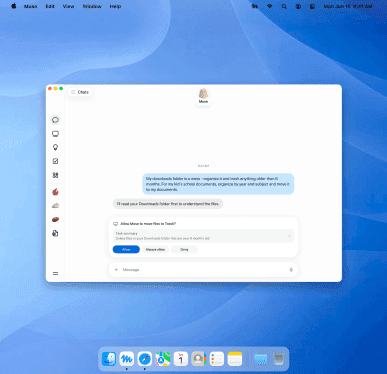
Meta’s Muse hits Mac, letting the AI take actions on your computer
Meta’s new AI assistant app, Muse, is nowavailableon Mac. On the Mac, Muse can interact with your files, messages, calendar, notes and mail, all within their native applications. Thenew appfollows the launch of Muse on mobile and the web earlier this month, when it quickly rose tothe top of the U.S. App Storecharts. muse for mac is HERE!! your agent can now get stuff done right on your computer — files, messages, calendar, notes, all of it.you're in control of what it can access, and it always asks before doing anything sensitive.Add it to the dock –https://t.co/bFHgBZlkLjpic.twitter.com/mecGVDzXiq Just like on other platforms, you can control what Muse has access to on your Mac on an opt-in basis. In addition, the app will always ask for your approval before it performs sensitive actions, Meta says. The desktop app comes at a time of intensifying competition between consumer-facing AI agents, which many in the industry believe will be the future of computing. The movement is disrupting theapp industry,software-as-a-service businesses, and perhaps, eventually,even hardware, like the iPhone. In addition to Muse, all the major players offer consumer-facing agentic AI. And other AI agents have found traction by letting people use AI agents via text messages. One of the first breakout hits in this space,Poke, exited to Cognitionin July. Meanwhile, the newest AI assistant frequently brought up in tech circles these days, Instinct, is said to be raising more funds ata $10 billion valuation. For now, the question is who can capture the most consumer market share in this space, and quickly. That’s led Muse and Instinct to rush to launch new features at a rapid pace — bothrolled out voice calling this week,for instance. As Mark Zuckerbergnoted on Xwhen announcing the Mac app, “The team is shipping fast.”
View
Open or closed AI? Nvidia’s Nader Khalil and Sydney Sykes take on one of the decisions shaping next-gen startups at TechCrunch Disrupt 2026
You have an AI product to build. Do you choose a proprietary frontier model and get moving quickly? Build on an open model and gain greater control? Fine-tune your own version? Run locally? Use multiple models? Change strategy six months from now when the economics and capabilities shift again? There may not be one right answer. But for founders, choosing badly can affect almost everything that follows — cost, infrastructure, margins, differentiation, speed, and control. That decision is at the center of the session “The Open vs. Closed AI Debate Is Just Getting Started,” coming to theBuilders StageatTechCrunch Disrupt 2026, happening on October 13-15 in San Francisco. Led byNvidia‘s Nader Khalil, Director of Developer Tech, and Sydney Sykes, Global Head of VC Partnerships, the session will discuss the trade-offs between open and proprietary AI and whether either approach can provide a lasting competitive advantage. This isn’t a philosophical argument about open source. It’s a business decision being made right now inside startups of every size. Dive deep into this AI debate with 10,000+ tech leaders at Disrupt by getting your pass.Register now and save up to $200before prices go up on September 25 at 11:59 p.m. PT. Open models have advanced quickly. Nvidia said in July that 145 papers accepted at ICML 2026 cited its Nemotron open models and datasets, alongside research using other Nvidia open model families across robotics, autonomous vehicles, and biomedical research. At the same time, proprietary frontier labs continue pushing model capabilities forward. The result is a market where the question is increasingly less about whether open modelscanbe useful and more about where each approach makes commercial sense. Even Nvidia rejects a simple either-or framing. At GTC earlier this year, CEO Jensen Huang argued that the future is not proprietary versus open, but proprietaryandopen. That sounds straightforward until you have to build a company around the decision. If two models can deliver similar results, does lower cost win? What if one gives you more control over your data? Does owning more of the stack create defensibility, or just infrastructure you now need to maintain? And if the best model changes every few months, how tightly should your product be tied to any one of them? These are the questions Khalil and Sykes will unpack at TechCrunch Disrupt 2026. Don’t miss it —register for your ticket now to get $200 savingsbefore September 25 at 11:59 p.m. PT. Nader Khalilapproaches the discussion from the builder and infrastructure perspective. Before becoming Nvidia’s Director of Developer Tech, where he leads open source and local AI, he co-founded Brev.dev, an AI infrastructure company acquired by Nvidia in July 2024. Brev.dev was built around simplifying access to GPU infrastructure across different environments. Nvidia’s developer documentation described its tools as allowing developers to deploy AI software across public cloud, private cloud, and on-premises infrastructure without locking themselves into a single compute source. Sydney Sykes, meanwhile, brings the venture ecosystem into the discussion as Nvidia’s Global Head of VC Partnerships. Together, that creates room to examine the same decision from different directions: what developers need to build and what companies need to become investable, scalable businesses. Sit front and center at one of the biggest debates in today’s world of AI.Register for your ticket before the savings of up to $200 endon September 25 at 11:59 p.m. PT. There is another uncomfortable question behind the open-versus-closed debate: Where does your competitive advantage actually live? If competitors can access the same proprietary API, differentiation needs to come from somewhere else — proprietary data, workflow, distribution, customer relationships, product experience, or specialized technology. But choosing an open model doesn’t automatically give you a moat either. You gain flexibility and potentially greater control, but you also take on decisions around deployment, optimization, and infrastructure. And the economics can change depending on the workload and scale. Nvidia is investing heavily in that open ecosystem. Its Nemotron 3 Super, launched in March, is an open 120-billion-parameter model designed for agentic workloads, and companies are already combining it with proprietary models rather than treating the two approaches as mutually exclusive. That hybrid reality may ultimately be the most interesting part of the debate. Register now to join the conversationon the Builders Stage in October. Savings of up to $200 end on September 25 at 11:59 p.m. PT. That’s what makes this session useful beyond an audience of AI engineers. If you’re afounder, the choice can shape your margins, fundraising story, and product roadmap. If you’re aninvestor, understanding where value sits in the stack can help distinguish genuine defensibility from a thin product layer sitting on somebody else’s model. If you’re a line-of-business lead, it affects procurement, security, data control, infrastructure, and the freedom to change providers later. And for developers and students, it’s a chance to understand where the technical decisions being made today connect directly with the business models being built around them. No one needs another abstract argument over whether open or proprietary AI is philosophically better. What builders need is a clearer understanding of the trade-offs. Join Nader Khalil and Sydney Sykes on theBuilders StageatTechCrunch Disrupt 2026and decide which side belongs in your AI strategy.Register now to save up to $200before prices go up on September 25 at 11:59 p.m. PT.
View
Manus seeks $4B valuation in new $500M fundraise as it resumes independent ops
Chinese AI startup Manus, which earlier this year had tobreak offa merger with Meta, is in discussions to raise $500 million at a $4 billion valuation now that it has resumed operations as an independent company, The Wall Street Journalreported, citing anonymous sources. Potential investors in the round include IDG Capital, Boyu Capital, battery maker Contemporary Amperex Technology, as well as existing backers Tencent, HSG and Zhenfund, the Journal reported. Manus is also said to be considering a restructuring exercise to prepare for an IPO in Hong Kong. Manus, which went viral following a demo of its AI agent last year, relocated its staff to Singapore in mid-2025 beforeannouncinga $2 billion acquisition deal with Meta that December. The startup was said to be pulling in annual recurring revenue of over $100 million at the time. However, intensifying worries in China over losing AI talent and researchers to the West culminated inBeijing blocking the deal, citing potential violations of export controls and foreign investment rules. Manus has since been untangling itself from the American social media giant, and its early investors and backers have reportedly helped the company buy back its shares at a valuation of about $2 billion. As part of its separation from Meta, the company told its users this August that they would have to export and back up their own data because it had to delete data generated following Meta’s acquisition to “comply with regulatory requirements in specific jurisdictions.” The company this month said it has resumed independent operations, and that its founding team will continue to lead it. Manus makes AI products and agents that are pretty similar to what companies like OpenAI, Lovable and Replit offer. It offers a chatbot and vibe-coding tools to let users build apps, websites, create designs and presentations, generate video, a browser assistant, and more. Manus did not immediately return a request for comment.
View
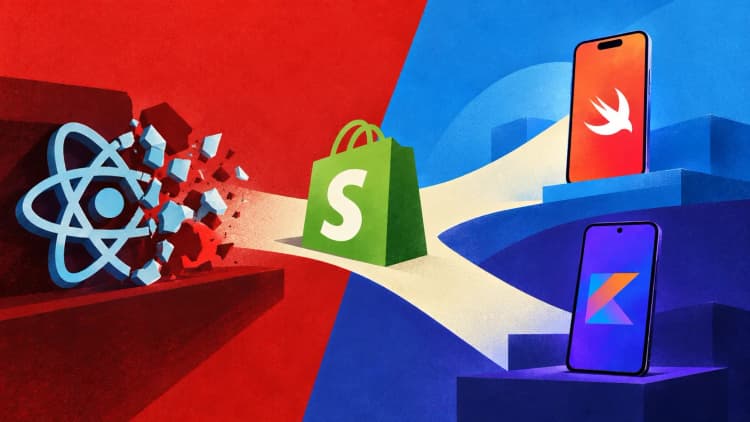
Shopify Ditched React Native. That Doesn’t Mean You Should Too
React Native isn’t dead, and a billion-dollar company like Shopify can afford to keep two different codebases.
View

Enterprises Must Put Business Problems Ahead of AI Hype
Industry leaders point to talent, broken workflows, governance and weak problem definition as key barriers to turning AI experiments into lasting business value.
View
Submit your Tool


PoweredByAI.app is an AI Tools Directory helping individuals, businesses, and creators discover the best AI tools for writing, coding, design, productivity, and more.
© 2026 , Product of011BQ. All rights reserved.