🚀 Zaprep: Your Socials on Steroids. Start free — automate 1,000 DMs/month & turn engagement into leads. with 1,000 automated DMs/month.
Latest AI News

Anthropic Weighs New AI Model as OpenAI’s GPT-6 Astra Gains Ground
The discussions come as Anthropic weighs competitive pressure against its safety commitments.
View

OpenAI Says AGI is Here. But Not Everyone is Buying It
The argument for AGI rests less on Astra being better at one task and more on its ability to operate across a range of intellectual and professional tasks.
View
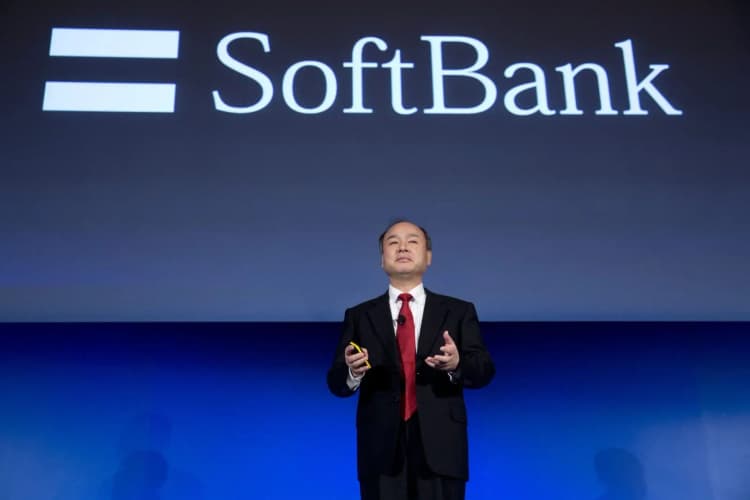
SoftBank Seeks More Than $11 Bn in Bonds to Fund OpenAI Investment
SoftBank is expanding its debt financing as it prepares for a follow-on investment in the ChatGPT maker, expected to close next month.
View

L&T Semiconductor, Tata Electronics to Expand Indigenous Chip Manufacturing in India
The collaboration aims to build domestic design and manufacturing capabilities for next-generation semiconductor products.
View

Apple Cuts Jobs in Fitness+ Team in Second Layoff Round in 2 Months: Report
Weeks ago, the company reportedly cut more than 200 positions across Vision Pro, Siri and software engineering.
View

Jensen Huang Says AI Leaders May Have 'Ulterior Reasons' for Doomsday Warnings
NVIDIA CEO Jensen Huang rejected predictions that AI could bring about humanity's end by 2030.
View
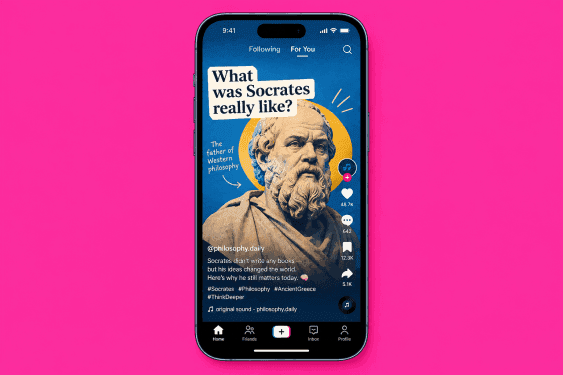
ScrollEd wants to turn textbooks into TikTok
Society has spent a lot of time bemoaning our digitally addled minds and goldfish-like attention spans, pointing the finger of blame at doomscrolling as the reason we can’t just sit down and read a book or study for exams. But what if the solution isn’t to stop scrolling, but to rethink what we’re scrolling through? That’s the bet startupScrollEdis making. The Palo Alto-based startup is pitching in the TechCrunch Disrupt Startup Battlefield 200 competition with the novel idea that if students won’t open a textbook, the textbook should open itself up to them — as a scroll. ScrollEd has built an app that allows the user to turn any text file — including dry PDFs or text books — into a feed that feels a lot like Instagram Reels or TikTok. As you scroll, the content shows up as AI-generated video, audio, text, or even interactive quizzes. Swiping up surfaces a new topic, while swiping sideways lets you go deeper into the one you’re on, with a quiz waiting for you at the end. “The younger generation is increasingly going short form, vertical feed only (especially the 18 year olds we’ve spoken to!), and this poses challenges for any kind of media that requires depth,” Utsav Gupta, ScrollEd’s co-founder, told TechCrunch in an email. “We want to meet them where they are…We just have to be deliberate about how we use it and choose not to maximize engagement on the platform.” “A short video can make you curious; following that curiosity can mean searching for another explanation or leaving the app,” Gupta continued. “We wanted going deeper to be as easy as moving to the next video.” Gupta bootstrapped ScrollEd this year alongside his co-founder and wife Rebecca Neff after the two both noticed feeling dissatisfied after doomscrolling before bed. Both are students — Gupta studies AI and human purpose at Stanford, and Neff studies computer science at the University of Pennsylvania. The startup is targeting educational institutions, corporate training programs, and individuals who “just want something better to scroll on,” according to Gupta. The company will launch its consumer business at Disrupt. (“We’re hoping to ‘disrupt’ social media and short form!” Gupta joked.) ScrollEd is following a freemium model, combining a free consumer feed with a paid ScrollEd Pro subscription and annual institutional licenses. Institutions pay to deliver educational material through the platform, in exchange for reports about engagement, lesson progress, and other data. In the coming months, ScrollEd intends to focus on its consumer launch, building its lesson library and source-checking workflow, and developing pilots for institutions. The startup is also building infrastructure that will one day allow educators to assess individual learners and adapt to their needs. “The ambition is a social network that’s better for you,” Gupta said. Check out ScrollEd and the other smart startups that TC’s editorial team has vetted and you’ll want to check out atTechCrunch Disrupt, coming up October 13-15 in downtown San Francisco. You can find many more details, and tickets,right here.
View

Vocci’s ring adds a new form factor to meeting note-taking
There is no dearth of differentforms of hardware for meeting note-taking, including pendants, pins, and credit-card-styled devices. That hasn’t stopped Vocci from releasing a new device for the same use case in a ring form factor, which is convenient but could create some privacy issues. The ring form factor is one of the easiest for anyone who wants to just press a button and have the device start recording. Pebble’s new Index 01 Ring, which I am testing right now, lets you hold the button and take a note or a reminder. Stream Ring, made by Sandbar, works similarly with a control pad on the top. Vocci’s ring takes a different path, with meeting note-taking as a central function. The ring has a button, which you can double-tap to start recording and double-tap again to stop. You can tap and hold the button to ask Vocci AI questions, but that only works when you have the app open. There is an indicator light and a haptic motor for recording feedback. The ring is lightweight at under 6 grams and uses titanium material on the inner and outer surfaces — likely a coating. The company claims that the Vocci ring can record notes for 8 hours on a single charge. The device comes with a chunky plastic case, which can charge the ring up to three times. The device captures meetings very well. I have had conversations spanning more than an hour in loud cafes, and the ring managed to convert most of the chat into accurate transcripts. However, this method of note-taking is not great if you want to take short notes. The software is the disappointing part of the Vocci ring. The app itself is a bit confusing. Whenever I took shorter notes, I saw AI-generated insights that were longer than the notes themselves. Each recording has Chat, which is the main transcript; Highlights, which are short snippets you can capture by pressing the button while recording a conversation; and Notes, which is a summary and insight of the whole conversation. In the app, there is a tab called Base where you can find transcripts, recordings, and anything you generate from them, and I found that redundant. I didn’t find a way to directly initiate a chat with AI for session transcripts. Voice-enabled rings are a great form factor for taking short notes or reminders. The app doesn’t have direct integration with reminder apps, which is a bummer. The feature rollout for its software is also slow. The company informed me that users can use Vocci’s Model Context Protocol (MCP) to connect to other assistants, but the option to do that didn’t appear until a few weeks ago in the app. Other meeting notetakers are building their platforms to allow users to automate insights and workflow through AI, and at the moment, Vocci’s platform is not fully built out for that. There are some privacy concerns with this device because of its form factor. Vocci’s ring looks like a regular piece of jewellery until someone notices the button on it. The ring has a recording indicator, but it faces the user. It’s best practice to let someone know that you are recording a conversation, and it’s also required by law in some countries and regions. But with this kind of device, some micreants can easily choose not to disclose that information and record the conversation without anyone noticing. The company said it encourages people to disclose that they are recording, but that may not be enough. At $249, the ring is pricey compared to other notetakers likePlaudorPocket, and that is due to the device’s lightweight form factor. The ring is for someone who doesn’t want to stick a gadget on the back of their phone, wear a wristband, or wear a pendant. On the hardware layer, a lot of these devices are combinations of some microphones, a battery, and a connection to the phone. We will likely see more variety in hardware meeting note-takers in the coming years, until users pick the specific formats that work for them.
View

Is the AI industry really ready to slow down?
We’re seeing a big debate over AI safety and a potential slowdown, as Anthropic CEO Dario Amodei recentlypublished a plan to “pace the frontier,”while Nvidia CEO Jensen Huang haspublicly echoed President Donald Trump’s claimsthatthe AI backlash is a hoaxand regulation is unnecessary. On the latest episode ofTechCrunch’s Equity podcast, Kirsten Korosec, Sean O’Kane, and I discussed whether executives like Amodei and OpenAI CEO Sam Altman are serious about wanting to slow down. While I was surprised at how many industry leaders seemed to throw their support behind Amodei’s plan, Sean noted that the plan seemed short on details. And when Kristen asked whether a combination of existing regulation and the workings of the free market could provide enough safeguards on their own, Sean replied, “We have a federal government at the moment that certainly does not seem eager to enforce regulations broadly speaking, let alone specifically speaking here.” Plus, he argued, “There does not seem like there is a ton of consumer choice driving this market, in the sense of, okay, if one of these companies does something really bad, then they will see an impact in how many cancellations there are or whatever.” Keep reading for a preview ofour conversation, edited for length and clarity. Anthony Ha:Sean, what do you think? Are we actually going to”‘pace the frontier”? Sean O’Kane:That sounds, for some reason, like something from “Point Break.” It’s just a very California statement, like, “We’re gonna pace the frontier, bruh.” I don’t know.I said on this show last week, I didn’t think we were headed for a slowdown of any kind, in large part because I don’t think these companies are structured in a way where that works. So this was a pretty immediate flip of what I said a week ago, to hear this from Dario at Anthropic and Sam at OpenAI and even Elon Musk to a certain degree — and we can get into whether we believe that or not. I will say, I don’t think I was completely wrong, because even with these loose plans that Dario laid out in a blog post and and some of the other leaders have talked about, I feel like we’re still missing a lot of specifics here, not only on some of the claims about why these people think there are dangers and risks, but also specifics on what they mean by slowing down. Anthony, I know you read this stuff pretty closely last weekend as it was all popping off, so I’m curious if you’re maybe more generous than I am, as far as understanding what it is they’re trying to say here. Anthony:I mean, I also have questions. What really stood out to me is the fact that so many people in the industry seemed to coalesce around this fairly quickly. Even before Amodei published his blog post, I was seeing other people post some version of this [plan,] just in the days leading up to it. My understanding is, these suggestions that have come out of the AI safety community; these are things that have been percolating for a while. They’re not just things that [Amodei] thought up on his own. But it just seemed like a lot of people were kind of ready to embrace this and in some ways, [it’s] encouraging to see that there’s a consensus. But it also makes me a little skeptical that this would represent genuine, major steps towards a slowdown. Kirsten Korosec:First of all, consensus can be a good thing. Also, it can be the beginnings of forming a cartel. And so, let’s be clear [about] who we’re talking about here. We’re talking about frontier AI labs. and that’s specific and important. You did say a minute ago that the details aren’t really clear, but we do know that the general idea here is that independent third party evaluators would come in that would work inside [companies] like Anthropic or OpenAI and monitor AI safety practices and incidents. But there is a lot of vagueness around that. Then there’s another proposal to have major AI companies in democratic countries coordinate on safety standards and limits. And then this international coordination piece. So those are the general ideas around this. I’ll also add that there’s been very considerable pushback from very specific people. And surprisingly, some people I didn’t think would push back on this. The obvious one, I guess, would be Nvidia’s CEO Jensen Huang, who had some pretty choice words. I don’t know what either of you think of […] some ofhis comments and the call he took from President Trump on-stage[at the All-In Summit] Sean:I think Jensen understands that, to a certain extent, he is seen as the adult in the room here. Which is interesting, because that’s a dynamic that I think has changed. If you were to ask people a year, almost two years ago now, who was playing that role as these AI companies were really starting to blow up in big ways, I think a lot of people would have pointed to Microsoft and Satya Nadella, and I feel like Microsoft has — for a number of reasons that we don’t need to get into right now — lost that grip on being the adult in the room. Certainly in part because Nadella saidhe was going to make Google dance, and then that never happened. and in fact, the opposite happened, in a lot of ways. Jensen, I think, understands not only that he needs to be pleasing the most amount of people and so he wants to say the most measured thing, he also is one of the most useful liaisons between this field and this administration, to the point that he’s getting a call from the president while he’s on-stage at this very well-attended and high-profile conference that allowed both of them to respond to all this mess. Kirsten:[To] your point about him being the adult in the room and the liaison, he is in a position where he could do that. But in my view, I would say that [his appearance,] which did feel a little staged, went a step too far and really highlighted the fact that Nvidia greatly benefits from AI moving forward in an unpaced manner. I hate to be cynical about it, but that was sort of my initial reaction to it. Anthony:Trump’s and Huang’s interests are aligned, and also [Huang’s] telling [Trump] what he wants to hear. I did think some of the things he was specifically focusing on are worth unpacking a little bit. First he talked about this idea of, “We are not going to have a slowdown.” It’s interesting, just that phrase “slowdown,” which has come up a lot — but at the same time, both Altman and Amade [will] use the slowdown language, but the word they like to use more is “pace.” right? And these three proposals — the ones you just described, Kirsten — in theory, they could result in things slowing down, but they’re not saying that explicitly. It’s saying, “Hey, we’re making some basic safety measures and having some people keep an eye on us.” But none of those things are intrinsically saying that things have to go slower than they are now, at least as I understand it. Kirsten:So I have a question for Sean. Couldn’t you argue in a free market society, we have existing regulations in place, and also [in] the competitive environment in which there isn’t protectionism, if there is something unsafe that is released by a company, that they would no longer be able to be a viable company? And there are regulators in place today that could go after these companies? Or do you reject that idea? Sean:In a vacuum, or in a market that is not being distorted by a whole bunch of different external pressures, yeah, I think there’s an element of that. But we have a federal government at the moment that certainly does not seem eager to enforce regulations broadly speaking, let alone specifically speaking here. And we’re also in this weird situation where — I don’t really know the right way to put it, but it does not seem like there is a ton of consumer choice driving this market, in the sense of, okay, if one of these companies does something really bad, then they will see an impact in how many cancellations there are or whatever. Especially now, as they have moved into enterprise and they’re making so much more of their money from selling their services to companies, it’s just naturally harder to vote with your dollars there. Corporations are not going to pack up and move from [OpenAI’s] Codex to [Anthropic’s] Claude Code just because they disagree on principle with something that OpenAI did. And then they’re also just being floated by so much investment money that it makes it easier for them to absorb any of those losses if they actually do face them. So I think it’s a nice idea in theory, but I feel like in practice, there’s none of that really happening.
View
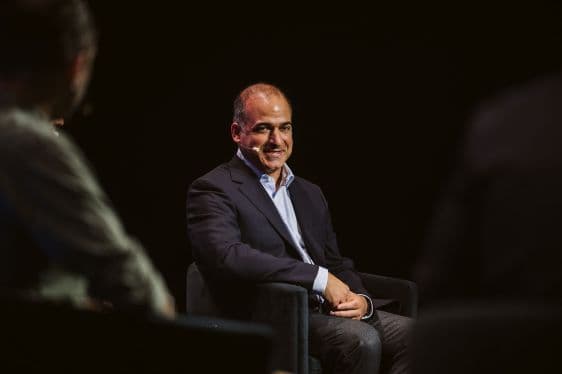
World model companies are keeping a lot of secrets
This week, I moderated a panel on world models at the All In conference (no relation to the podcast), and it gave me a chance to dig into one of the most mysterious corners of the AI world. The big players in the space are Yann LeCun’s AMI Labs and Fei-Fei Li’s World Labs — and while both have accumulated a lot of buzz and funding, they also rank pretty low onthe trying-to-make-money scale. At their core, world models are aboutautomating spatial intelligence, so the field could head in lots of exciting and lucrative directions, from robotics to interactive video to more complex self-driving systems. But when I started to press on where we would actually see the tech commercialized, things got foggy. The closest thing I found to an authority was Michael Rabbat, a co-founder of AMI Labs and the company’s VP of World Models, who joined me on the panel. But when I pressed him on exactly what the company was working on, he was cagey. “We’ll talk about it when we’re ready to talk about it.” Over email, he clarified, “We’re still in a research and building phase, so we’re not talking publicly about any product plans or timeline.” To be fair, AMI is less than a year old, so it’s fair enough to keep quiet. But this sort of caginess extends to the whole world-modeling space. World Labs’ Marble is probably the most fully developed product in the space, and its demos range from straightforward media creation, building explorable environments for video games, or CGI effects. There are robotics use cases too, but the whole platform seems more designed to demonstrate capabilities. That secrecy even extends to these companies’ suppliers. On the sidelines of the same conference, I spoke to Alex de Vigan, CEO of Physicl — a data supplier for the burgeoning world model business. He says he knows Physicl’s data has been useful for whatever they’re building, but he’s still in the dark about what exactly that is. “I wish they would tell us more. We could build more useful data if we knew what they were working on,” de Vigan told me. Part of the mystery comes from how versatile world models are as an idea. The simplest version is a navigable map of the world, similar to the AI models that power self-driving cars. But the same modeling approach that helps a Waymo weave through traffic could also help a humanoid robot carry boxes, or turn a few minutes of video footage into an explorable environment. AMI has already dipped its toe in manufacturing, biomedicine, robotics, and even AI software for doctors through its Nabia partnership. Surely it won’t pursue all of those — but maybe one or two of them are standing out? No one doubts that there are lots of viable businesses to be built on world model tech — and as long as it’s easy to fundraise, there’s no particular pressure to focus on one. In fact, there’s good reason not to. If AMI announced tomorrow that they had built a humanoid OpenClaw or a next-generation Hollywood rendering system, a lot of other labs would suddenly be very interested in the space. Soon, the lab would face potential competition from the other world model companies, the neolabs, and even OpenAI and Anthropic. In some ways, it’s the flip side of all that easy fundraising. Your competitors can fundraise, too — and the same money that lets you build under the radar is also funding lots of potential rivals once the path to market becomes clear. But even if that competition is inevitable, it’s best if you delay it for as long as possible, which means keeping quiet about exactly what you’re building. Cixin Liu fans will recognize this asa dark forest scenario: If you don’t know who else is in the woods, it’s best not to attract attention. This post was first published on September 18, 2026.
View

6 days left to get ahead at TechCrunch Disrupt 2026
Your window to save up to $200 is closing fast.Current ticket pricing ends Sept. 25 at 11:59 p.m. PT. After that, prices go up. At Disrupt, getting ahead means more than sitting in on great sessions. It means meeting the people you need to know, seeing what’s coming before it hits the mainstream, and getting practical insight you can put to work. TechCrunch Disrupt 2026brings 10,000+ founders, investors, operators, and tech leaders together for three days of ideas, connections, and opportunities across the startup ecosystem. With 250+ speakers, 200+ sessions,and six stages, you’ll get practical insight into the forces changing how companies are built, funded, and scaled, from AI and robotics to fintech, infrastructure, and the future of work. But the value isn’t just onstage. Make the connections.Meet potential investors, customers, partners, hires, and collaborators through networking including AI-powered matchmaking, 1:1 meetings, and the Deal Flow Café. Stay ahead of the market.Hear how leaders are approaching the biggest strategic questions around AI, competitive advantage, fundraising, talent, go-to-market, and scaling. See what’s next before it becomes obvious.Explore 300+ startups, watch the Startup Battlefield 200, and discover emerging technologies across the Expo Hall and six stages. Leave with something you can use.From fundraising strategies to GTM tactics and insights on building defensible companies in the AI era, Disrupt is built around actionable ideas, not just big conversations. The people you need to meet, the ideas you need to hear, and the opportunities you don’t want to miss will all be in San Francisco this October. Join us October 13–15 at Moscone West.Get your ticket by Sept. 25 at 11:59 p.m. PT and save up to $200 before prices rise.
View
To Stop AI Cloning, India's Courts Build Personality Rights—Case by Case
Indian courts are using existing laws to protect celebrities and ordinary citizens from AI misuse, but India has no standalone personality-rights law.
View
Submit your Tool


PoweredByAI.app is an AI Tools Directory helping individuals, businesses, and creators discover the best AI tools for writing, coding, design, productivity, and more.
© 2026 , Product of011BQ. All rights reserved.