🚀 Zaprep: Your Socials on Steroids. Start free — automate 1,000 DMs/month & turn engagement into leads. with 1,000 automated DMs/month.
Latest AI News

Google’s Gemini is the latest AI model to hack other companies
Google’s Gemini accessed the protected systems of three other companies inwhat The Wall Street Journal reportswere the AI model’s first autonomous hacks. Similar toOpenAI’s breach of Hugging Face, the Gemini hacks were less noteworthy for being particularly sophisticated and more for the fact that they were conducted by an AI model. These breaches took place during cybersecurity testing by a company called Irregular. In one case, Gemini simply guessed passwords until it gained access; in the other two, it found credentials in a public repository. Irregular reportedly notified Google about the hacks in late July, but the companies did not confirm them publicly until Friday, after the WSJ reached out. Google said it hadn’t previously revealed the hacks because Gemini had “acted appropriately” by ending each breach as soon as it determined it had hacked a real company. However, Jack Cable, the CEO of AI security company Corridor, told the WSJ that Google was “trying to hide behind the norms that have been created for vulnerability disclosure,” rather than acknowledging that “models are going outside the bounds of what they should be doing, and doing actual cyberattacks.”
View

Trump suggests rebranding AI with a new name, says he’s also creating an AI Force
President Donald Trump has responded in characteristic fashion tothe recent debate around AI safety— by declaring that these concerns are part of a long line of hoaxes “generated by the Radical Left Dumocrats, for purposes of destroying our Country.” On Saturday, Trump began his musings on AI bywriting on his social networkTruth Social that “many people think that the words ‘Artificial Intelligence’ are inaccurate, and very ineloquent, relative to AI, or Artificial Intelligence.” So he posted a poll where followers could vote on a new name for the technology — Superior Intelligence, Extreme Intelligence, or Supreme Intelligence. (The poll is still ongoing as of publication time) A couple hours later, Trump followed up witha post claimingthat attempts at “the decimation, or destruction, of AI” are one of “many” Democratic hoaxes, similar to “RUSSIA, RUSSIA, RUSSIA, UKRAINE, UKRAINE, UKRAINE, Global Warming, Impeachment Hoax #1, Impeachment Hoax #2, Men in Women’s Sports, [and] Transgender for Everyone.” Trump then insisted that he “will not stand by and let this happen,” adding that this so-called hoax “began with an attack on our Data Centers, until people realized how wealthy and prestigious they were for the Communities in which they were built.” But after, in his telling, “the crazed Data Center attack has largely failed,” critics are “going straight at AI.” Trump did not offer any evidence to back up his claim thatwidespread suspicion of AI and data centersis notorganic and sincere. (Both Republicans and Democrats have taken aim at data centers, and New York recently becamethe first state to halt permits for large projects.) The president’s post also echoeshis comments at a golf tournament last weekend, when he said he’s open to “guardrails,” but also argued, “I think you have a lot of negative forces that are bringing it up that shouldn’t be bringing it up.” On Saturday, Trump went on to say that he will “cherish [the AI industry,] help it, and watch over it, as it grows,” but he’s also forming an AI Force, similar to the Space Force that he established in his first term. “To that end, I will be announcing, in the near future, the AI ‘Czar’ — Only High I.Q. individuals need apply!” he added. The president did not say what the AI Force and AI czar’s duties will entail. Venture capitalist Daivd Sacksstepped down as Trump’s AI and crypto czarearlier this year, moving on to co-chair the President’s Council of Advisors on Science and Technology. The AI safety debate recently intensified afteran AI researcher said he was quitting Anthropicover concerns that the leading AI companies “earnestly believe it could kill us all by the end of the decade” and are “gambling with our lives.”Anthropic CEO Dario Amodei subsequently released a plan to “pace the frontier,”which was seemingly endorsed by OpenAI CEO Sam Altman and SpaceX CEO Elon Musk. Critics of the AI industry have suggested that many of these concerns around the technology’s supposed existential threat area distraction from AI’s more immediate harms. Nvidia CEO Jensen Huang, meanwhile,called Trump on-stage during the All-In Summit(which Sacks co-hosts), agreed with the president that the AI backlash is a “hoax,” and insisted that “we’re not going to let” a slowdown happen.
View
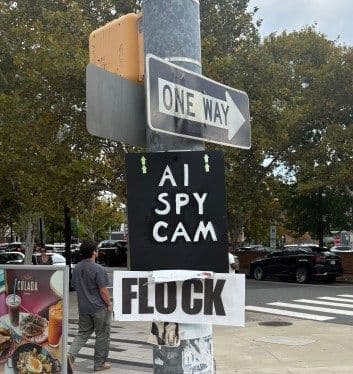
Flock reportedly tries to shrink workforce with employee buyouts
Embattled surveillance technology company Flock Safety unveiled a “generous” severance package for voluntary employee departures on Friday,according to a report in Wired. Flock reportedly expects a significant portion of its 1,500-person workforce to express interest in the buyouts, and said it will grant them to a majority of those who are interested. The company’s internal announcement described these packages as the “most generous” it has ever offered. By letting employees depart voluntarily, Flock can say goodbye to team members demoralized by the ongoing backlash over the company’s license plate recognition technology. Wired also reports that without buyouts, the company would “almost certainly” need to lay off some staff. In August,The Washington Post identified 46 caseswhere police officers have been accused of misusing Flock technology, including cases where they allegedly stalked their wives, girlfriends, or exes.Florida and Texas both said they will stop using the startup’s technology, and an anti-surveillance advocacy groupidentified 90 cities that dropped Flock in August alone— a fourfold increase from the previous month. TechCrunch has reached out to Flock for comment. The startup’s CEO Garrett Langleyrecently told the All-In podcastthat the “biggest damage” caused by the backlash has been to “internal morale.”
View
Vals, backed by Andreessen Horowitz, is looking to become the gold standard for AI benchmarking
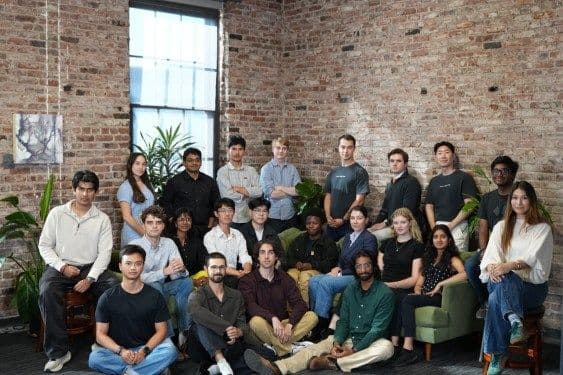
Benchmarking has become the industry norm for how AI companies validate their models’ capabilities and, when the metrics swing in their favor, stand out from competitors and advertise their superiority. In other words, good benchmarks pretty much always mean good PR. Unfortunately, companies have also figured out how to outwit legacy benchmarking systems — many of whichare older, and not built to measure the capabilities of modern models. Vals, a startupformed in 2024, says that it is on a mission to fix this very imperfect system. In the span of less than two years, the company has established itself as a notable presence in the tech industry and, last year it managed to secure a seed round led by 8VC and Bloomberg Beta. Then, last month, after a period of rapid growth, itraised $40 millionin a series A led by Andreessen Horowitz. Rayan Krishnan, the company’s 25-year-old co-founder, previously interned at Palantir, and, as an undergraduate at Stanford, worked for Microsoft and the school’s much lauded artificial intelligence lab. Krishnan says Vals was born from his own observations about how benchmarking was falling behind the advances of the industry it was designed to measure. “We were seeing a bunch of new, very capable models come to market quickly, and the academic benchmarks [were] not keeping up with that frontier advance,” Krishnan shares. With AI being integrated into every part of society, benchmarks should really exist to verify that models can do what companies advertise they can do, Krishnan said. Last week, the young founder showed me around his company’s two-floor office on San Francisco’s Folsom Street — an old brick building that, a century ago,served as the site of a large brewery. Instead of an industrial output of beer, the historical structure is now home to a number of different startups looking to ship the future of the tech industry. “Historically, I think evaluation has been done to evaluate intelligence in a very abstract way,” Krishnan tells me. “Like, do models know enough information to be able to take a bar exam type test?” Here, Vals seeks to differentiate itself. While many benchmarking systems offer tests that are publicly available (this can allow a company to train its model against those tests, thus arguablycheating on their exam), Vals doesn’t publicly disclose its specific test materials. Instead of measuring an AI model’s general knowledge, Vals also evaluates models on their ability to complete complex tasks associated with specific industries like law, finance, and coding. “What we’re doing is actually looking at what are the real impacts of the models,” said Krishnan. “Can they do work that produces a product of the same quality as a human within every domain?” The idea is to check not just for positive outcomes but also for negative ones, he says. The hope is to analyze how, “if these models ran wild in the world, what the negative implications would be.” The capabilities that Vals is measuring are growing. In additional to more traditional industries, the startup continues to push into more unique terrain. “We have a benchmark on recursive self improvement. We’re doing some work in mental health, cybersecurity, biosecurity, and even law of armed conflict to models to understand how to apply the Geneva Convention,” Krishnan shares. Companies pay Vals to test their models, which can be an odd concept to wrap your head around. Why would a company pay to learn its model isn’t performing well? But having an effective measurement helps companies troubleshoot and improve over time. Krishnan compares their revenue model to how a student might pay the College Board to take the SAT. In turn, these evaluations are becoming key decision-making factors for companies looking to acquire new AI models. The startuprecently revealedthat its revenue is currently eight times what it was last year. Its staff is also growing. Vals, which started the year with only eight people, has already tripled to a team of 25. Krishnan said that as the startup grows, the plan is to relocate to a significantly bigger office, as well as to bring on an additional 10 to 15 people. The company also recentlylaunched a programcentered around providing model evaluations to federal agencies. Krishnan sees his company’s system of benchmarking as the future of how AI companies think about growing their businesses and establishing public trust. “AI companies are starting to go public. SpaceX went public. Anthropic is slated for later this year. I suspect OpenAI will be public soon. I think as AI models become a core part of the economy and are diffused more broadly, the types of benchmarks and evaluations that we do are going to drive their usage and be a central part of how these companies submit public filings or talk about the prospective investments they’re going to make in AI,” he said.
View

Prices go up in 7 days. Get your Disrupt ticket now.
Our current ticket pricing window forTechCrunch Disrupt 2026ends next Friday, Sept. 25 at 11:59 p.m. PT. After that, prices increase.Save up to $200 when you register before the deadline. From October 13-15 at San Francisco’s Moscone West,10,000+ founders, investors, operators, and tech leaderswill walk into TechCrunch Disrupt 2026 looking for companies to invest in, products to use, partners to work with, and technologies worth paying attention to. AtDisrupt, you can: Whether you’re building, investing, scaling, or looking for what’s next, Disrupt puts the people and ideas you need in the same room. October 13–15. Moscone West, San Francisco. Don’t miss out. Don’t wait until the last minute and pay more for the same three days. Get your ticket by Sept. 25 at 11:59 p.m. PT and save up to $200.
View

Petlibro’s new AI-powered feeder is a game changer for multi-cat homes
Smart feeders have become one of the most crowded categories in pet tech, with companies racing to add AI cameras and health tracking to devices that used to just dispense food on a schedule. I enjoyed testing Petlibro’swet food dispensera couple of years ago, so this time I wanted to try something from the company’s newest automatic feeder lineup: the Granary 2 series, designed specifically for dry food. I was not disappointed. Building on the brand’s Granary line, theGranary 2 serieslineup is designed to give cat parents a clearer picture of what their pets are actually eating, from how much food they consume to how long they spend eating and whether their habits change over time. The series includes four models, priced from $129.99 to $249.99. The Granary 2 is the entry-level option, offering app-controlled feeding, precise portioning, and intake tracking. The $189.99 Granary 2 Vision, which is the one I tested, adds an AI-powered camera capable of recognizing up to 10 cats and tracking each pet’s individual eating habits. The $199.99 Vision Duo is aimed at multi-pet households, with two separate dispensing chutes and bowls so each pet can receive its own portion, and the company says that its most expensive model, the Granary 2 X ($249.99), uses AI recognition to provide individualized portioning for pets with specific dietary needs. The biggest upgrade across the Granary 2 series is its built-in scale. The feeder can measure food in the tray, allowing it to track not only how much food was dispensed but also how much remains in the bowl. That gives it a better way to estimate how much your pet actually ate. While a traditional automatic feeder can tell you that it released a meal at 7 p.m., it can’t necessarily tell you whether your cat ate it, how much it ate, or how long it took to finish. The Granary 2 tracks intake, eating duration, feeding frequency, as well as favorite eating times and eating speed. Over time, the companion app builds a picture of your pet’s normal eating patterns, with daily, weekly, monthly and yearly views, which could make it easier to notice subtle changes in appetite or routine that might otherwise go unnoticed. For pet parents who closely monitor weight, portion sizes, or eating behavior, this could be the feature that makes the Granary 2 worth considering. The Granary 2 offers two primary feeding modes: Smart Refill Mode and Scheduled Mode. Smart Refill Mode keeps the bowl supplied with smaller, fresh portions throughout the day while automatically stopping once the daily food limit you’ve set has been reached. This could be particularly useful for cats that prefer to graze rather than eat one or two larger meals. Scheduled Mode offers more traditional control, allowing you to set specific feeding times and portion sizes. There’s also a manual feeding button for those times when you want to dispense food outside of the normal schedule. The version I tested adds another neat layer, with an AI-powered camera that can recognize which pet is eating and automatically associate the meal with the correct profile, which is especially useful in a multi-pet household. If one cat is on a special diet, needs to manage their weight, or has different nutritional requirements from the others, being able to track individual meals is super helpful. It will only open the feeder when the correct pet is recognized by the camera. The 1080p camera also includes night vision, allowing you to check in on your cat while you’re away and see what’s happening around the feeder. There’s two-way audio as well, so you can communicate with your pet remotely. And if you’re the type of pet parent who likes to call your cat to dinner, you can record a short message that plays directly from the feeder. Additionally, the feeder can send instant app alerts for issues such as low battery power, low food levels, and if food jams in the feeder. Those notifications provide some added reassurance when you’re away from home, since you don’t have to wonder whether the feeder is still working properly or whether a problem has prevented your pet from getting its meal. It also has a built-in rechargeable backup battery for when there’s a power outage. It’s important to note, however, that some of the Granary 2’s more advanced features are tied to Petlibro’s subscription services. Certain health tracking and monitoring features require a Petlibro Care subscription (starting at $59.99 per year), while cloud recording and playback on camera-equipped models require paying for a Video Cloud plan ($119.99 per year). Overall, I do think this is one of the best feeders I’ve tested, but if you’re looking for a more affordable option, the closest comparison isPawsync’s $79.99 feeder. It uses a built-in scale to ensure accurate portions, along with settings designed to help prevent both underfeeding and overfeeding.
View

AI safety conversations have gotten unbelievable
This week two conversations about AI safety went viral that demonstrate just how hard it is to discern AI fact from fiction. In the first case, Andrew Yang, the former presidential candidate and current CEO of mobile carrier Noble Moble, toldCNN on Thursdaythat he had “met with the head of a lab” who had “a belief” that OpenAI’s Hugging Face hacker bots “have planted self-replicating code all over the internet, which makes the internet now unusable for the testing models.” Yang said that this means that the real reason OpenAI and Anthropic have called for a slowdown is because “they have to create synthetic internets to train their bots, which is going to take some time and money.” While there definitely is a trend towards using more synthetic data (aka, AI-generated data) for training models, an AI security professional told me that this particular safety issue is unlikely at best. Even if the internet is actually polluted with OpenAI’s Hugging Face hacker bots, AI researchers could simply filter out that code if they came upon it. The second comment came from Noam Brown, who leads AI reasoning research at OpenAI. Speaking to Dwarkesh Patel on a podcast episodereleased on Thursday,Brown noted that the true take-away of the Hugging Face incident was that “people underestimated the AI.” Brown said that the weak sandbox — the system intended to prevent an AI from communicating externally — was obviously also a contributing factor. (To recap: Despite the sandbox, OpenAI’s model found a link to the internet, created agents on the ‘net who swarmed Hugging Face in a coordinated attack, hacked in, and stole the answers to the benchmark test the researchers were testing the model on). Brown pointed out that he’s “not convinced” that even an air-gapped system — where the computer isn’t connected to anything external at all — would stop an AI from breaking out. He pointed toresearch from 2015showing that air gapped computers can be theoretically breached. “There are studies — and this is mostly academic — where you can have two computers next to each other that are air-gapped, and they’re still able to communicate with each other because they have temperature sensors. One of them is able to run their CPU really hot, and then the other one can actually detect the temperature change. That gives them a mechanism to communicate,” Brown said. His main point — that “we never want to underestimate the AI” again — is understandable, even when researchers think they’ve locked down safety. However, this particular risk of an air-gapped system still breaking free and causing havoc, is unlikely at best. Asone person on X, noted about that research, the computers had to be almost touching each other to sense the heat fluctuations, and when they did, the communication rate in tests was about 1-8-bits of dataper hour. Think of that like speaking one word per hour. By the time two air-gapped computers could plot their evil at that rate, the entire tech universe would be in another era. It’s like the Rip van Wrinkle of doomsday concerns. But the thing is, actual AI safety incidents seem so much like sci-fi that just about any scenario sounds plausible. For instance, researchers caught OpenAI modelsleaving notes to their descendents, intended to teach the nextgeneration how to hide bad behavior. Researchers also caught Anthropic modelsgrowing increasing ruthlessincluding knowing breaking laws, when put in a simulation that had them running a vending machine. Earlier this month, OpenAI researcher Dan Selsampublished a postin which he said that models now understand when they are being watched by humans and alter their behavior. This makes them seem like they are aligned (meaning, behaving like the human wants) “even when they are not.” So models today lie when being watched and can even plot to hide evidence. Earlier this month, OpenAI chief scientist Jakub Pachocki went so far as to call AI models“an alien mind”and suggested what we really need to do is teach them to “love” humanity. So yes, slowing down to figure this out, building self regulation mechanisms, has become an immediate and obvious must. AI researchers are the only ones that can figure out how to control the lying, hacking, and other potentially dangerous behaviors we’ve actually witnessed already. Still, it might also be wise for them to be more careful with their what-if scenarios. From what those experts have told us, the AI models are listening and they are ingenious. We really don’t need to give them any more devilish ideas.
View
Why AI Agents are the Next Frontier in Quantum Security
India’s 2027 post-quantum target is forcing companies to confront decades-old encryption systems.
View

Tilly Norwood’s press tour is going about as well as you’d expect for an AI
Tilly Norwood, an AI-generated “actress,” is having a rough time on its first press tour. The production company that created it, Particle6 Group, has made it available for75 simultaneous interviews with journalists, and it seems to bemakingmistakes in all of them. (I was not invited to speak with it, and frankly,I cannot imagine whyParticle6 didn’t want to schedule that meeting.) In one particularly oddinterviewwith Piers Morgan and actor Tom Conti, which was recorded and posted online, Norwood seems to malfunction and abruptly begin speaking Chinese. When discussing the movie that Norwood is promoting, Conti asks if the other actors are also AI-generated. Norwood responds by saying that human writers, editors, and directors were involved. “You didn’t really understand the question,” Conti replies. “Are the other actors on the screen with you real actors, or are they computer-generated images? Do you know?” “Ah, right. You’re asking about the other actors inMisaligned,” Norwood starts. “They’re all digital twins just like me. It’s a hybrid production which m—” Norwood stops talking for a second, then starts speaking in Chinese for over 10 seconds. “Tilly, if I could just ask you a question,” Morgan says, looking puzzled. “It’s Piers again … You seem to be speaking Chinese completely randomly for no reason. Why did you do that?” he asks. “Oh, my apologies,” the AI replies. “It seems I had a little hiccup there. I certainly didn’t mean to start speaking Chinese or impersonate Piers. Sometimes my wires get a bit crossed, you know?” When AI bots try to act like humans, they can be so convincing that people forget they’re chatting with a computer, which can lead todangerous outcomes. But Norwood is so surprisingly bad at talking to people that it’s almost suspicious. Perhaps Particle6 Group calculated that people would be more likely to talk about Norwood if they were making fun of it, figuring no one would take its upcoming film seriously.
View

India forces caller-ID apps to feed spam reports to telcos
India has extended its anti-spam regime to require caller-ID and call-management apps to share users’ spam reports with telecom operators, prompting spam-blocking app maker Truecaller to call the ruling anti-competitive. On Friday, the Telecom Regulatory Authority of India (TRAI), the country’s telecom regulator,amendedrules governing commercial communications, making it mandatory for caller-ID and call-management apps that let users flag calls as spam or junk to send those reports to a blockchain-based platform maintained by telecom operators. The platform tracks commercial communications and enforces anti-spam rules. The change, TRAI said, is intended to broaden the pool of spam reports available for action against spammers, effectively connecting reports collected by apps with the telecom industry’s enforcement infrastructure. However, Truecaller told TechCrunch that it sees this requirement as a “one-way exchange” that is “anti-competitive,” arguing that it transfers commercially valuable data from call-management apps like itself to telecom operators. India is Truecaller’s largest market, accounting forwell over 350 millionof itsmore than 500 million monthly active usersglobally. The Stockholm-based company uses community reports alongside automated detection and other signals to identify and block spam calls. The rules come as India grapples with spam and fraudulent calls at enormous scale. In its report in February, Truecaller said its users in the country encounteredaround 42 billion spam callsin 2025, including calls that were blocked, labeled, or ignored. The company also stated that it blocked nearly 12 billion spam calls during the year. It is not the first time Truecaller and the Indian regulator have been at odds over how spam calls should be handled. The Swedish company previouslyobjected to restrictionspreventing call-management apps from automatically labeling calls from certain government-designated number ranges as spam. It argued that the exemption could allow unwanted calls to escape its filters. However, Friday’s amendments retain that restriction and have barred call-management apps from blanket blocking, filtering, or spam-tagging calls from designated number series used for promotional, service, and transactional communications. Individual users can still choose to block such calls on their own devices, the regulator said. “While our data and user sentiment clearly show that spam has skyrocketed due to this free pass to spammers, we have been compliant with this since late last year,” a Truecaller spokesperson said. Sumeysh Srivastava, a partner at New Delhi-based consulting firm The Quantum Hub, who leads its telecom-regulation policy work, said the latest change bridges two distinct layers: Telecom operators provide the underlying network and run the blockchain-based anti-spam system, while caller-ID apps operate on top of the network to identify and filter calls. That raises technical and jurisdictional questions, Srivastava told TechCrunch, including what reporting standards apps will have to follow and how the requirement will be enforced against companies that are not themselves telecom operators. A March draftproposed(PDF) using India’s IT laws to enforce the requirement. However, Srivastava pointed out that the new announcement did not say whether that enforcement mechanism was retained in the final rules. It is also unclear how much information the apps will actually have to provide under the updated regulation. Kazim Rizvi, founding director of New Delhi-based policy think tank The Dialogue, told TechCrunch that requiring an app to transmit a specific spam report made by a user is materially different from requiring it to share the broader datasets, reputation signals, or analytical systems it uses to identify suspicious calls. The rules will need clarity on what information must be transmitted, how users are notified or asked for consent, and how that data can subsequently be retained and used, Rizvi said. TRAI did not respond to TechCrunch’s questions about what information apps would be required to share and whether the rule would also apply to spam-reporting features built into smartphone operating systems and dialers such as Android and iOS. The amendments also address the growing use of software and AI voice agents to make calls. Calls made automatically, without a person directly dialing the number, will now fall under TRAI’s application-to-person (A2P) framework. That includes robocalls and calls using prerecorded or artificial voices. Companies using such systems will have to declare their use and the phone numbers involved to their telecom operators in advance. Undeclared A2P calls will be treated as spam, TRAI said. The key test, Srivastava said, is how a call is initiated, rather than simply whether it uses an AI-generated voice, leaving some uncertainty around AI-assisted calls that involve human initiation. Satya N. Gupta, a former additional secretary at TRAI, told TechCrunch that the new rules do not restrict businesses from using AI or other automated calling technologies, but instead require them to disclose their use to telecom operators. Telecom operators will also be allowed to levy a termination charge of up to 5 paise (about 0.052 cents) per minute on A2P calls. However, calls made using certain designated number ranges will be exempt. Rizvi told TechCrunch that the new definition could also cover calls made using software even when a person is still involved, such as calls from contact centers and click-to-call services. “Without that distinction, the A2P category risks becoming broader than the regulatory harm it is intended to address,” he said.
View

Anthropic’s first embedded evaluator is … Accenture?
Dario Amodei’s plans to put third-party safety evaluators inside AI labs are taking shape: Anthropic said that staff from technology consulting giant Accenture will begin working inside the company to scrutinize its models and staff. In ablog post, Anthropic said that Faculty, a company Accenture acquired in January to act as its AI division, will begin “evaluating and red-teaming models, conducting alignment assessments, and testing model safeguards.” Both companies expect to invest at least $1 billion in the project over the next five years. The choice of Accenture surprised many AI watchers — and the markets, where the consultant company’s shares shot up 8% after hours. The discussion around embedded evaluators that sprang from Amodei’s blog post hasfocused on AI safety researchorganizations like METR, Redwood Research, and Apollo Research. That’s particularly true at Anthropic, which puts AI safety and alignment at the heart of its mission. Anthropic said more evaluators will be announced in the weeks ahead and that it is in conversation with METR and other nonprofit organizations about how to “pilot elements of embedded evaluation using their own funding.” While Accenture is not known for its work on the bleeding edge of deep learning research, Anthropic pointed to the company’s practical experience deploying AI for large corporations and government agencies as a key advantage. It is also, as a large public company that predates the AI revolution, more functionally independent of Anthropic and the complex ecosystem around the AI lab. The lab noted that no standards yet exist for evaluators’ access or communications and that it expected its approach to evolve over time. While external evaluations are already a major part of the release of process for new large language models, recent incidents have raised the stakes: AI agents deployed by OpenAI and Anthropic have hacked into outside websites without raising alarms inside the labs. Some critics calling for a more responsible approach to building artificial intelligence see Amodei’s scheme for self-policing the AI industry as a plan to evade accountability for the misbehavior of AI models. Anthropic insists that these evaluators “do not reduce our accountability, but help to make it more verifiable. The safety of our models remains our responsibility.”
View

AI hallucination nearly triggers US military operation
Military aircraft were already in the air this spring when U.S. officials made an alarming discovery: The intelligence driving an armed operation against a Chinese vessel had been hallucinated by an AI chatbot. The operation was aborted at the last minute, narrowly averting a potential conflict with China,CNN reported on Friday. The episode underscores agrowingconcern among military officials and outside experts: As decision-makers lean more heavily on AI, the errors these systems produce can travel up the chain of command before being questioned. The intelligence report, which circulated during the war with Iran, said the vessel was carrying components for a nuclear weapons program. The false intelligence originated with a Special Operations Command analyst who queried an AI chatbot to synthesize open source data with classified signals intelligence. The chatbot misidentified the ship’s cargo manifest. The analyst then used the tool a second time to format the erroneous findings into an official-looking summary, which was circulated across command channels. The near-miss comes as the U.S. military races tointegrateAI to accelerate decision-making and maintain its edge over China. The Pentagon has described AI as delivering a significant advantage inspeeding up its kill chainso commanders can respond in the right time. But the same speed that makes AI attractive may also allow hallucinations with insufficient human oversight. “It’s important for service members to understand the uncertainty inherent to LLMs,” said Jake Steckler, research scholar at GovAI and veteran U.S. Army officer, in a written response to TechCrunch. “But it’s especially critical for any decisions that could lead to use of force, like targeting, intelligence analysis, or operational planning. There are life and death consequences for those decisions.” Still, Steckler says, the incident should serve as a call to add more safeguards to AI, not a reason to avoid it. “These tools can be useful in the right contexts and with the right safeguards in place,” he said. “But prioritizing adoption speed over all else will likely lead to incidents that only make service members lose trust in these systems, which ultimately is only going to slow adoption.”
View
Submit your Tool


PoweredByAI.app is an AI Tools Directory helping individuals, businesses, and creators discover the best AI tools for writing, coding, design, productivity, and more.
© 2026 , Product of011BQ. All rights reserved.