Latest AI News

When Classrooms Fit the System, Not the Student
Historically, the burden of adaptation has fallen on individuals to learn, behave, and fit into predefined structures. AI can redistribute that burden.
View
Kevin Weil and Bill Peebles exit OpenAI as company continues to shed ‘side quests’
OpenAI is losing two of the architects of its most ambitious moonshots. Kevin Weil, who led the company’s science research initiative, and Bill Peebles, the researcher behind AI video tool Sora, both announced their departures on Friday. The exits come as OpenAI consolidates around enterprise AI and itsforthcoming “superapp.” The departures follow OpenAI’s decision to cut back on “side quests,” including customer-facing bets like Sora and OpenAI for Science. Sora, which was losing anestimated $1 million per dayin compute costs, wasshut down last month. OpenAI for Science was the internal research group behindPrism, an AI-powered platform that promised to accelerate scientific discovery. It’s being absorbed into “other research teams,” according to Weil’ssocial media postannouncing the news. “It’s been a mind-expanding two years, from Chief Product Officer to joining the research team and starting OpenAI for Science,” Weil wrote. “Accelerating science will be one of the most stunningly positive outcomes of our push to AGI.” The team had a short and bumpy road after its formal announcement in October 2025. Weil deleted a tweet claiming GPT-5 hadsolved 10 previously unsolved Erdősmathematical problems, but that claim fell apart immediately when the mathematician who runs the website erdosproblems.com called it out. Weil’s departure comes a day after his teamreleased GPT-Rosalind, a new model to accelerate life sciences research and drug discovery. In asocial media postannouncing his departure, Peebles credited Sora with igniting a “huge amount of investment in video across the industry,” and argued that the kind of research that produced the video tool requires space away from the company’s mainline roadmap. “Cultivating entropy is the only way for a research lab to thrive long-term,” he wrote. OpenAI is also losing Srinivas Narayanan, its chief technology officer of enterprise applications,Wired reports. Narayanan reportedly announced the news internally that he was leaving to spend more time with family. This article was updated to include the departure of Srinivas Narayanan.
View

Sam Altman’s project World looks to scale its human verification empire. First stop: Tinder.
At a trendy venue near the San Francisco pier, Sam Altman’sverification projectWorldcelebrated its next evolution and rapid expansion of its ambitions. And it’s starting with Tinder. Tools for Humanity(TFH), the company behind the World project, announced Friday plans to integrate its verification tech into dating apps, event and concert ticketing systems, business organizations, email, and other arenas of public life. “The world is getting close to very powerful AI, and this is doing a lot of wonderful things,” said Altman, speaking before a packed crowd at The Midway. “We are also heading to a world now where there’s going to be more stuff generated by AI than by humans,” he added. “I’m sure many of you [have had moments] where you’re like, ‘Am I interacting with an AI or a person, or how much of each, and how do I know?” World (formerly Worldcoin) distinguishes itself from many of its ID verification peers by offering the ability to verify that a real, living human is using a digital service while still protecting that person’s anonymity. There is some complex cryptographic alchemy behind this (something called “zero-knowledge proof-based authentication”). The upshot: The company is creating what it calls “proof of human” tools, which are mechanisms that can verify human activity in a world rife with AI agents and bots. Its chief tool for verification is a spherical digital reader called the Orb that scans a user’s eyes, converting their iris into a unique and anonymous cryptographic identifier (known as a verified World ID). This can then be used to access World’s services, although users can also access World’s app without one. Altman kept his remarks brief on Friday (TFH’s co-founder and CEO, Alex Blania, was absent due to a last-minute hand surgery, Altman said). He then turned much of the presentation over to World’s chief product officer, Tiago Sada, and his team. Sada explained that World was launching the newest version of its app (the last versionwas launchedat an event in December), along with a plethora of new integrations for its technology. World has been preparing, for some time, to deploy a verification service for dating apps — most notably, Tinder. Last year, Tinder launched aWorld ID pilot programin Japan. That pilot was apparently a success because World announced that Tinder would be launching its verification integration in global markets —including the U.S. The program integrates a World ID emblem into the profiles of users who have gone through its verification processes, thus authenticating them as a real person. World is also courting the entertainment industry by launching a new feature called Concert Kit, where musical artists can reserve a certain number of concert tickets for World ID-verified humans. This is designed to ensure that fans are safe from scalpers who often useautomated ticket-buying botsto scarf up seats. Concert Kit is compatible with major ticketing systems, including Ticketmaster and Eventbrite, and the company is promoting it via partnerships with 30 Seconds to Mars and Bruno Mars — both of whom plan to use it for their upcoming tours. The event was full of many other announcements, including some aimed at businesses. AZoom/World ID verification integrationseeks to battle a supposed deepfake threat to business calls, and a Docusign partnership is designed to ensure signatures come from authentic users. The company is also working on a number of features in anticipation of the Wild West of the agentic web, including one called “agent delegation,” in which a person can delegate their World ID to an agent to carry out online activities on their behalf. A partnership with authentication firm Okta has also createda system (currently in beta)that verifies that an agent is acting on behalf of a human. The system is set up so that a World ID can be tied to a specific agent and then, when the agent goes out into the web to operate on that person’s behalf, websites will know a verified person is behind the behavior, said Okta’s chief product officer, Gareth Davies, at the event. So far, it’s beendifficult for World to scale, due largely to the verification process itself. For much of the company’s history, to get its gold standard, you had to travel to one of its offices and have your eyeballs scanned by an Orb — a fairly inconvenient (not to mention weird) experience. However, World has continually made moves to increase the ease and incentive structure for verification. In the past, it offered itscrypto asset, Worldcoin, to some members who signed up and has distributed its Orbs intobig retail chainsso that users can verify themselves while they’re out shopping or getting a coffee. Now the company is announcing that it is significantly expanding its Orb saturation in New York, Los Angeles, and San Francisco. The company also promoted a service where interested users could have World bring an Orb to their location for remote verification. In a conversation with TechCrunch, Sada also shared that World has attempted to solve the scaling problem by creating different tiers of verification. The highest tier is Orb verification, but below that, World has previously offered a mid-level tier, which uses an anonymized scan of an official government ID via the card’s NFC chip. The company also introduced a low-level tier, or what Sada called “low friction”— meaning low effort, I guess, but also “low security” — which involves merely taking a selfie. Selfie Check, which Sada’s team presented during the event, is designed to maintain user privacy. “Selfie is private by design,” said Daniel Shorr, one of TFH’s executives, during the presentation. “That means that we maximize the local processing that’s happening on your device, on your phone, which means that your images are yours.” Selfie verification obviously isn’t new, and fraudsters have longmanaged to spoof it. “Obviously, we do our best, and it’s like one of the best systems that you’ll see for this. But it has limits,” Sada told TechCrunch. Developers looking to integrate World’s services can choose from the three different verification tiers depending on the level of security that’s important to them, he noted.
View
Are we tokenmaxxing our way to nowhere?
Loading the player… The gap between AI insiders and everyone elseis widening, and the spending, suspicion, and even new vocabulary are starting to show it. While OpenAI is busy buying up everything fromfinance appstotalk shows, a certain shoe company justrebranded as an AI infrastructure play, and Anthropic unveiled a model it says istoo powerful to release publicly …but apparently not too powerful to demo to Federal Reserve Chair Jerome Powell. Watch as hosts Kirsten Korosec, Anthony Ha, and Sean O’Kane dig into what’s actually being built in AI infrastructure, who’s winning the enterprise battle between OpenAI and Anthropic, and more of the week’s headlines on this episode of TechCrunch’sEquitypodcast. Subscribe to Equity onYouTube,Apple Podcasts,Overcast,Spotifyand all the casts. You also can follow Equity onXandThreads, at @EquityPod.
View
‘Tokenmaxxing’ is making developers less productive than they think
There’s an old saw in management: What you measure matters. And, typically, you get more of whatever you’re measuring. Software engineers have debated productivity metrics for decades, starting with lines of code. But as the new generation of AI coding agents delivers more code than ever, what their managers ought to be measuring is less clear. Enormous token budgets — essentially, the amount of AI processing power a developer is authorized to consume — have become a badge of honor among Silicon Valley developers, but that’s a very weird way to think about productivity. Measuring an input to the process makes little sense when you presumably care more about the output. It might make sense if you’re trying to encourage more AI adoption (or selling tokens), but not if you’re trying to become more efficient. Consider the evidence from a new class of companies operating in the “developer productivity insight” space. They’re finding that developers using tools like Claude Code, Cursor, and Codex generate a lot more accepted code than they did before. But they also find that engineers have to return to revise that accepted code far more often than before, undercutting claims of increased productivity. Alex Circei, the CEO and founder ofWaydev, is building an intelligence layer to track these dynamics; his firm works with 50 different customers that employ more than 10,000 software engineers. (Circei has contributed to TechCrunch in the past, but this reporter had never met him before.) He says that engineering managers are seeing code acceptance rates of 80% to 90% — meaning the share of AI-generated code that developers approve and keep — but they’re missing the churn that happens when engineers have to revise that code in the following weeks, which drives the real-world acceptance rate down between 10% and 30% of generated code. The rise of AI coding tools led Waydev, founded in 2017 to provide developer analytics, to totally rework its platform in the last six months to address the proliferation of rapid coding tools. Now, the company is releasing new tools that track the metadata generated by AI agents, offering analytics on the quality and cost of their code to provide engineering managers with more insight into both AI adoption and efficacy. While analytics companies have an incentive to highlight the problems they find, the evidence is mounting that large organizations are still figuring out how to use AI tools efficiently. Major companies are noticing — Atlassian acquired DX, another engineering intelligence startup, for $1 billion last year, to help its customers understand the return on investment on coding agents. The data from across the industry tells a consistent story: More code is being written, but a disproportionate amount of it isn’t sticking. GitClear, another company in this space,published a reportin January that found AI tools increased productivity, but also that its data showed “regular AI users averaged 9.4x higher code churn than their non-AI counterparts” — more than double the productivity gains the tools provided. Faros AI, an engineering analytics platform, drew on two years of customer data for itsMarch 2026 report. The finding: code churn — lines of code deleted versus lines added — had increased 861% under high AI adoption. Jellyfish, which bills itself as an intelligence platform for AI-integrated engineering,collected dataon 7,548 engineers in the first quarter of 2026. The firm found that the engineers with the largest token budgets produced the most pull requests (proposed changes to a shared codebase), but the productivity improvement didn’t scale. They achieved two times the throughput at 10 times the cost of tokens. In other words, the tools are generating volume, not value. These kinds of statistics ring true when you talk to developers, who are finding that code review and technical debt are stacking up, even as they revel in the freedom of the new tools. One common finding is the difference between senior and junior engineers, with the latter accepting far more AI-generated code, and dealing with a larger amount of rewriting as a consequence. Still, even as developers work to understand exactly what their agents are up to, they don’t anticipate turning back anytime soon. “This is a new era of software development, and you have to adapt, and you are forced to adapt as a company,” Circei told TechCrunch. “It’s not like it will be a cycle that will pass.”
View

Sources: Cursor in talks to raise $2B+ at $50B valuation as enterprise growth surges
AI coding startup Cursor is nearing new funding in which the four-year-old company would raise at least $2 billion in fresh capital, according to four sources familiar with the matter. Returning investors Thrive and Andreessen Horowitz are expected to lead the financing at a $50 billion valuation, prior to the new capital injection, the people said. Battery Ventures, a new investor, may also participate in the financing, according to two sources. Strategic investor Nvidia is also expected to write a check, one person said. Although the round is already oversubscribed, the deal terms are not final and may still change. The financing, if completed, would nearly double Cursor’s previous$29.3 billion post-money valuation, assigned to the company during its last fundraise six months ago. Despite fierce competition from other AI-coding offerings, such as Anthropic’s Claude Code and OpenAI’s revamped Codex, Cursor’s revenue continues to climb rapidly. Cursor forecasts ending 2026 with an annualized revenue run rate of more than $6 billion, two people said. This trajectory implies the company expects to at least triple its annualized revenue over the next 10 months. In February, Cursor reached $2 billion in annualized revenue, calculated by projecting its most recent monthly sales over a year,Bloomberg reported. Like many AI-coding startups reliant on third-party models, Cursor operatedatnegative gross marginsuntil recently, meaningit cost more to run the product than the startup could charge for it. The introduction of a proprietaryComposer modellast November, along with the ability to call on less expensive models like China’s Kimi, has helped the company achieve slight gross margin profitability, the people said. On a more granular level, the company has reached positive gross margins on its sales to large enterprises, but continues to lose money on individual developer accounts, according to one person. By relying less on outside providers, Cursor is trying to avoid being replaced by its own suppliers, most notably Anthropic, whose Claude Code has emerged as the startup’s main rival. Cursor and Battery Ventures declined comment. Thrive, a16z, and Nvidia didn’t respond to request for comment. Cursor, previously known as Anysphere, was co-founded in 2022 by Michael Truell, Sualeh Asif, Arvid Lunnemark, and Aman Sanger while they were students at MIT.
View
Anthropic launches Claude Design, a new product for creating quick visuals
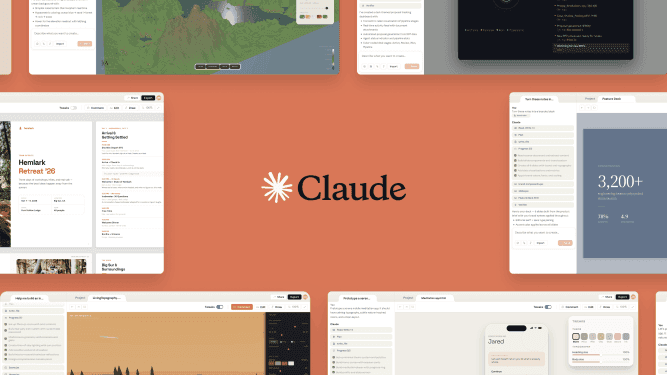
Anthropicannouncedon Friday that it’s launching Claude Design, a new experimental product that lets users create visuals like prototypes, slides, one-pagers, and more using Claude. The company says Claude Design is intended to help people like founders and product managers without a design background share their ideas more easily. With Claude Design, users describe what they want, and Claude will create an initial version. From there, users can refine the visuals with direct edits or requests. For example, you could ask Claude to “prototype a serene mobile meditation app. It should have calming typography, subtle nature-inspired colors, and a clean layout.” You could then tweak the colors, the size of the typography, or ask Claude to add a dark mode toggle. While Claude Design may initially seem like it’s looking to compete with popular design app Canva, whichhas just expanded its own AI capabilities,Anthropic told TechCrunch that it’s intended to complement it rather than replace it. The company said its new product is built for people who aren’t starting from a design tool and need to get from an idea to something visual quickly. Once teams create presentation decks or prototypes, they can export them as PDFs, URLs, PPTX files, or send them to Canva. Once in Canva, they are fully editable and collaborative, Anthropic says. Claude Design can also apply a team’s design system to every project it creates so that the results are consistent with the company’s overall visual style. Anthropic says Claude Design is able to do this by reading a company’s codebase and design files. Additionally, teams can refine these components and maintain more than one design system. The new product is powered by Claude Opus 4.7 and is available in research preview for Claude Pro, Max, Team, and Enterprise subscribers. The launch highlights Anthropic’s ongoing push into the enterprise and prosumer categories, as competition intensifies around AI workplace tools. In January, Anthropic rolled outClaude Cowork, an agentic assistant built for complex tasks. A few weeks later, the company broughtagentic plug-ins to Coworkthat are designed to automate specialized tasks within a company’s various departments. Today’s announcement comes a few days afterBloombergreported that VCs have been offering the company a preemptive funding round that wouldvalue it at $800 billion or more, which would almost match or even surpass its rival OpenAI. But so far, Anthropic isn’t interested in the latest offers, according to the report.
View
Tokenmaxxing, OpenAI’s shopping spree, and the AI Anxiety Gap
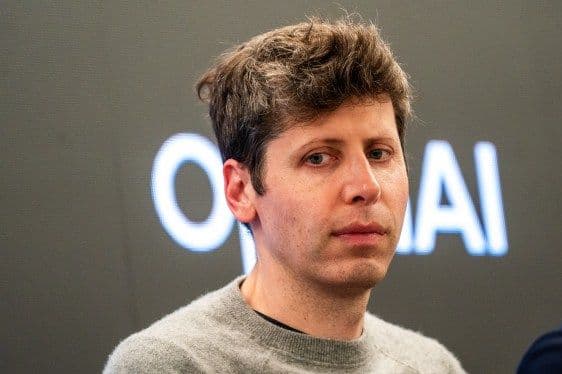
The gap between AI insiders and everyone elseis widening, and the spending, suspicion, and even new vocabulary are starting to show it. While OpenAI is busy buying up everything fromfinance appstotalk shows, a certain shoe company justrebranded as an AI infrastructure play, and Anthropic unveiled a model it says istoo powerful to release publicly …but apparently not too powerful to demo to Federal Reserve Chair Jerome Powell. On this episode of TechCrunch’sEquitypodcast, Kirsten Korosec, Anthony Ha, and Sean O’Kane dig into what’s actually being built in AI infrastructure, who’s winning the enterprise battle between OpenAI and Anthropic, and more of the week’s headlines. Listen to the full episode to hear about: Subscribe to Equity onYouTube,Apple Podcasts,Overcast,Spotifyand all the casts. You also can follow Equity onXandThreads, at @EquityPod.
View

Wipro’s ₹15,000 Crore Buyback Exposes Indian IT’s R&D Gap
₹15,000 crore payout raises debate on capital use amid weak growth and shifting industry economics.
View

Canva Introduces Canva AI 2.0, Brings Agentic Capabilities and Memory to Perform Design Tasks
Canva introduced a major upgrade to its artificial intelligence (AI) suite on Thursday. Dubbed Canva AI 2.0, the new suite brings an agentic system that understands layered design and can complete complex tasks using a conversational interface. The suite was first previewed at the Canva Create 2026 event, which was hosted at Hollywood Park in Los Angeles, California. New features in the suite include multi-channel campaign design, memory, web research, task scheduling, and an improved overall experience.
View
Why Smarter Systems May Beat Smarter Models
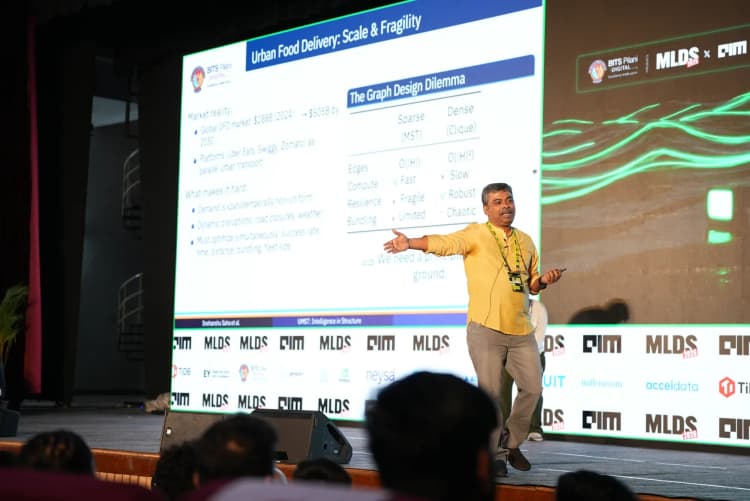
At MLDS 2026, BITS Pilani highlighted the importance of thoughtful design and operational frameworks in driving the future of AI.
View
The Apple AI Victory Everyone Missed
MLX leverages Apple Silicon’s performance to help developers deploy powerful on-device AI apps on Mac devices.
View
