Latest AI News

Google rolls out Gemini in Chrome in 7 new countries
Google announced Monday that it’s making its Gemini in Chrome feature available in seven new markets, including Australia, Indonesia, Japan, the Philippines, Singapore, South Korea, and Vietnam. The company is rolling this feature out to both desktop and iOS in all of these countries except Japan. The company has been integrating AI and Gemini into Chrome in more ways since last year through a floating window. Earlier this year, the company introduced a sidebar-based assistant that would help users answer questions across tabs and utilize the Personal Intelligence feature of Gemini, which lets users connect to services like Gmail and Google Photos, for personalized answers. Users can also schedule meetings with Calendar, check location details with Maps, and draft and send emails with Gmail through this feature in Chrome. Users can also transform images on the web using Nano Banana 2 in the sidebar. Gemini in Chrome was available to U.S.-based users through the January launch, and the company expanded the availability toIndia, Canada, and New Zealandin March. With this launch, Gemini in Chrome is available in more countries. However, the company’s agentic feature, which can control your browser window to complete tasks on your behalf, is in testing and only available to users of AI Pro and AI Ultra paid plans in the U.S.
View
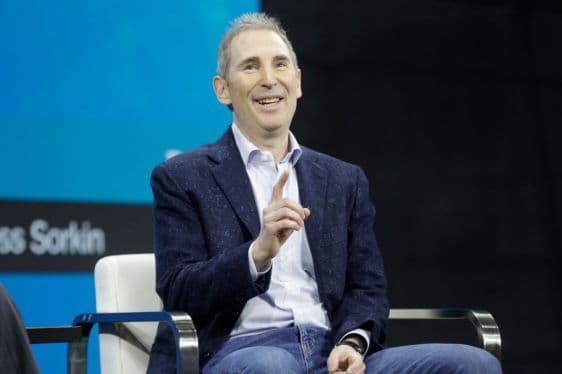
Anthropic takes $5B from Amazon and pledges $100B in cloud spending in return
Anthropicannouncedon Monday that Amazon has agreed to invest a fresh $5 billion, bringing Amazon’s total investment in the company to $13 billion. Anthropic, for its part, has agreed to spend over $100 billion on AWS over the next 10 years, obtaining up to 5 GW of new computing capacity to train and run Claude. The deal echoes an agreement Amazon struck with OpenAI just two months ago, when it joined a$110 billion funding round— contributing $50 billion — that valued the ChatGPT maker at a $730 billion pre-money valuation. That deal, too, was structured partly as cloud infrastructure services rather than straight cash. At the heart of this deal is Amazon’s custom chips: Graviton (a low-power CPU) and Trainium (an Nvidia competitor and AI accelerator chip). The Anthropic deal specifically covers Trainium2 through Trainium4 chips, even though Trainium4 chips are not currently available. The latest chip, Trainium3, was released in December. On top of that, Anthropic has secured the option to buy capacity on future Amazon chips as they become available. We’ll see if this news is a teaser to Anthropic announcing a new funding round. VCs have reportedly been offering the AI company capital in a deal that wouldvalue it at $800 billionor more.
View

It’s not just one thing — it’s another thing
Sometimes, things are not just one thing — they’re also another thing. This sentence construction (“It’s not just this — it’s that”) has become so common in AI-generated writing that now, it’s no longer just a clue that a piece of writing may be synthetic — it’s almost a guarantee. That’s why, I was not just intrigued when I sawa Barron’s reportabout how this sentence construction has dramatically increased in corporate communications — I was deeply amused. The report didn’t just remark on the prevalence of this phrasing in corporate communications — it scanned the market intelligence firm AlphaSense’s database to find how often this phrasing was used in corporate news releases, earnings reports, and government filings. According to Barron’s, this sentence construction isn’t just a quirk of corporate communications — it’s an epidemic, more than quadrupling from about 50 mentions in 2023, to over 200 uses in 2025. It’s not just the data that tells us this — I also found some examples from the past year: It’s not just coincidental that generative AI tools use this phrase a lot — it’s a reflection of our writing, which these tools were trained on (without our permission, might I add, which is not just insulting to writers — it’s a violation). And it’s not just this sentence construction — it’s also em-dashes that are now considered a tell for AI-generated text. This isn’t just a funny trend — it’s symbolic of how reliant these companies have become on AI (though we cannot say for certain if the above missives were AI-assisted). So next time you see a sentence like that, remember that it’s not just a catchy construction — it might be a symptom of something greater.
View

Adobe Introduces CX Enterprise, an Agentic AI Platform to Automate Customer Experience for Businesses
Adobe introduced a new enterprise-focused platform at its Adobe Summit 2026 conference, focused on accelerating customer experience workflows. Dubbed Adobe CX Enterprise, it is an end-to-end agentic artificial intelligence (AI) system that allows businesses to manage the entire lifecycle of their customers, from acquisition and engagement to conversation and building stickiness. It comes with multiple agent support, skills, and more. Alongside introducing the new platform, the software giant also revealed several partnerships it has forged to make CX Enterprise's adoption seamless.
View

CEO and CFO suddenly depart AI nuclear power upstart Fermi
Fermi co-founder and CEO Toby Neugebauer and CFO Miles Everson have suddenly departed the AI nuclear power firm, sending shares down 22% on Monday. The company said Neugebauer has stepped down as chairman, although he still remains on the board. Lead Independent Board Director Marius Haas has stepped into the role of chairman, thecompany saidMonday. Everson has been elected as a board director as a result of the exercise of director designation rights held by the Melissa A. Neugebauer 2020 Trust. Fermi, which was co-founded by former U.S. Energy Secretary Rick Perry, is developing an AI campus in Amarillo, Texas, that will eventually use nuclear reactors to power data centers. That campus, known as Project Matador, has struggled in recent months, including friction with a key customer,Bloomberg reported. The company couched the departures, along with other plans including a corporate headquarters in Dallas, asFermi 2.0in an effort to signal to investors that it was still making progress on its project.
View
NSA spies are reportedly using Anthropic’s Mythos, despite Pentagon feud
The National Security Agency is said to be using Mythos Preview, Anthropic’s recently announced model that it withheld from public release,Axios reports. The news comes weeks after the NSA’s parent agency, the Department of Defense, labeled Anthropic a “supply chain risk,” after the company refused to allow Pentagon officials unrestricted access to its model’s full capabilities. Anthropic announced Mythos earlier this month as a frontier model designed for cybersecurity tasks, but claimed the model was too capable of offensive cyberattacks to be released publicly. As a result, the AI firm limited access to Mythos to around 40 organizations, of which it has publicly namedonly a dozen. The NSA appears to be among the undisclosed recipients, and is said to be using Mythos primarily for scanning environments for exploitable vulnerabilities. The UK’s AI Security Institute has alsoconfirmed it has accessto Mythos. The U.S. military’s expanding use of Anthropic’s tools comes as it simultaneously argues incourtthat those tools can threaten national security. The Pentagon’s dispute originated when Anthropic refused to make Claude available for mass domestic surveillance and autonomous weapons development. The NSA’s access to Mythos comes as Anthropic’s relationship with the Trump administration appears to bethawing. Last Friday, Anthropic chief executive Dario Amodei met with White House chief of staff Susie Wiles and Secretary of the Treasury Scott Bessent. The White Housereportedlycalled the meeting productive. TechCrunch has reached out to the NSA for comment. Anthropic declined to comment.
View

OpenAI’s Sora Chief, CTO Announce Departure Amid Company’s Growing Enterprise Focus
OpenAI seems to be undergoing a transition phase. As many as three senior leaders of the company have announced their departure this week, hinting at a change in structure and a massive reorganisation at play. Most notably, Bill Peebles, the Head of Sora, and Srinivas Narayanan, the CTO of B2B Applications, are leaving the San Francisco-based artificial intelligence (AI) giant. The departures come at a time when the ChatGPT maker is also shifting its focus from the end consumer to the enterprise space, powered by its Codex platform.
View

Anthropic Introduces Claude Design, an AI Tool to Generate Visual Prototypes and Pitch Decks
Anthropic, on Friday, introduced a new product focused on design and visual outputs. Dubbed Claude Design, the latest creation by Anthropic Labs is an artificial intelligence (AI)-powered tool that can generate website mockups, design prototypes, slides, one-pagers, and more, based on a single natural-language prompt. The outputs are editable, and the user can take control and refine the final version using multiple tools provided within the experience. Interestingly, with this launch, Anthropic is now competing with design platforms such as Figma.
View

Are Startup Acquisitions Replacing Traditional GCC Models in India?
Startup acquisitions offer GCCs immediate operational readiness, access to proven teams, and existing intellectual property.
View

Cursor in Talks to Raise $2 Billion at Over $50 Billion Valuation
The round is expected to be co-led by Andreessen Horowitz, with participation likely from existing backers including NVIDIA and Thrive Capital.
View

Foundation for India’s First 3D Chip Packaging Unit Laid in Odisha
The project targets AI, 5G and defence sectors, with production set to begin by 2028.
View
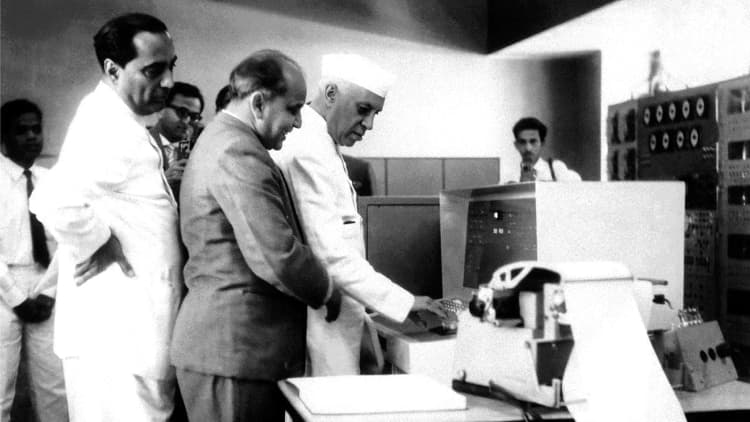
If Homi Bhabha Were Alive, He Would Hate What Indian IT Has Become
Dwaipayan Banerjee’s new book offers an eye-opening account of what could have been—and why our software boom is actually a hardware tragedy.
View
