🚀 Zaprep: Your Socials on Steroids. Start free — automate 1,000 DMs/month & turn engagement into leads. with 1,000 automated DMs/month.
Latest AI News

ChatGPT Gets New Privacy Center With Easy Access to Privacy Controls: Here's How to Use it
ChatGPT has started rolling out a new Privacy Center. The new option will appear in the account menu and offer insights about privacy-related features and settings that manage them. The Privacy Center classifies features into three categories —Personalised chats and ads, Chat privacy and Data use and access. The Personalised chats and ads will help users understand how ChatGPT handles features such as memory, personalised chats, ads, data use, apps, and account security.
View

4 days to save up to $200: Reason 2 of 5 to be at TechCrunch Disrupt 2026
Four days. That’s how long you have left to save up to $200 on yourTechCrunch Disrupt 2026pass before prices increase on September 25 at 11:59 p.m. PT.Register here for your ticket savings, plus 50% off a second. We’re on to the second reason not to miss Disrupt, happening at Moscone West in San Francisco, October 13-15. Tech moves fast. The decisions you make now — what to build, where to invest, who to hire, which technology to back, which market to enter — can look very different six months later. That’s why perspective matters. AtTechCrunch Disrupt 2026, you can step outside your day-to-day and hear how 10,000+ founders, investors, operators, and technology leaders are approaching the same shifts from different angles. AI is changing how products get built. Venture firms are reassessing where they place their bets. Robotics and physical AI are moving into real-world environments. Infrastructure demands are growing. New financial models are emerging. Founders are building companies with smaller teams, new tools, and different expectations around growth. Disrupt gives you a chance to see more of the picture in one place and use it to inform what you do next. Take insights from200+ sessionsfeaturing250+ tech leadersacross six industry stages, roundtables, and breakouts. Or, meet your match based on your interests and the job titles you’re looking to connect with through AI-powered matchmaking, or make connections through impromptu networking. Register now to save up to $200 on your pass, plus 50% on a second, before September 25. After that, prices increase. Across the agenda, the questions are practical: Get all your questions answered at Disrupt.Register before September 25 to save up to $200, plus save 50% on a second pass. If you’re a founder, hearing how investors are evaluating markets can help sharpen your fundraising story, your positioning, and the choices you make about where to focus. If you’re an investor, hearing directly from builders can give you a clearer view of where technology is progressing, where adoption is happening, and which problems still need solving. If you lead product or technology, understanding how companies across AI, infrastructure, robotics, and software are approaching their next moves can help inform your own roadmap. And if you’re trying to understand where the market is heading, Disrupt gives you the chance to move across those conversations rather than viewing each trend in isolation. The AI story is also an infrastructure story. Robotics is also a manufacturing and trust story. Stablecoins are becoming a payments story. The startup funding environment shapes what gets built next. Seeing those connections can help you make better decisions in your own part of the market. You might arrive at Disrupt thinking about your next fundraise and leave with a different view of your product strategy. You might come focused on AI and spot an opportunity in infrastructure, robotics, or energy. You might hear how another founder is solving a problem you’re about to face, or how an investor is thinking about the market you’re entering. The goal isn’t to leave with someone else’s answer. It’s to leave withmore context for your own. Three days. Hundreds of conversations. Perspectives from across the tech ecosystem, all in one place. Current ticket savings end September 25 at 11:59 p.m. PT.Register now to save up to $200 on your pass, plus get a second at 50% off on select ticket types. Or bring a group of four or more to save up to 30%.
View

Exhibit tables added: One last chance to showcase your startup at TechCrunch Disrupt 2026
Exhibitor bookings are back open, but only through September 30 at 11:59 p.m. PT.If you missed the first deadline, this is your last chance to get your startup on the Expo Hall floor. TechCrunch Disrupt 2026takes placeOctober 13-15 at Moscone West in San Francisco, bringing together 10,000+ founders, investors, operators, and tech leaders looking for startups to back, products to use, and companies to partner with. Now that exhibit bookings have reopened,you have another opportunity to get in front of them before the Expo Hall fills up. TheExpo Hallgives your startup three days to put your product directly in front of the people who can help move your business forward. Meet fellow founders and find the next big breakthrough that will make waves across the industry. Anexhibit tablelets you: Your$12,500 exhibit packageincludes a 6′ × 30″ branded table for all three days, 10 team passes, lead-generation tools, website and app branding, press-list access, Silver Tier sponsor branding, and more. Founders can also access opportunities such as the Deal Flow Café and Investor-to-Founder Networking. The earlier you get in, the more opportunity you have to make your presence known.Don’t wait until the Expo Hall is full to wish you’d booked a table. Exhibitor bookings are now open again, butSeptember 30 at 11:59 p.m. PT is the final deadline.Tables are limited and first come, first served. Book your exhibit table nowand give your startup the first shot at the conversations, customers, and connections waiting at Disrupt. You can still get in the room at TechCrunch Disrupt 2026, taking place October 13-15. Hear from 250+ top-tier tech leaders across 200+ sessions on six industry stages; get practical insight for building, funding, and scaling; and use AI-powered matchmaking and interactive sessions to make more relevant connections. Explore 300+ startups and the Startup Battlefield 200 to discover potential products, partners, and investment opportunities. Regular ticket pricing ends September 25 at 11:59 p.m. PT.Save up to $200 before prices increase, andget 50% off when you buy a second ticket for a colleague.
View
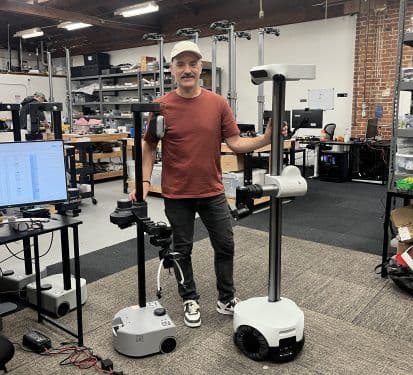
TechCrunch Disrupt 2026: Aaron Edsinger brings Hello Robot’s Stretch 4 to life onstage
Robots that walk, talk, dance, and perform backflips make great videos. But can they close the blinds? Help someone eat? Scratch an itch? For people with severe mobility impairments, those everyday tasks can mean greater independence. And they’re exactly the kinds of jobs Hello Robot designed its home-assistance robot, Stretch, to tackle. AtTechCrunch Disrupt 2026, Hello Robot CEO and co-founder Aaron Edsinger will bring Stretch 4 to the Real World AI Stage for the session “Come, Meet Stretch. The Robot Built for Real Life, Not a Demo Reel.” The live demo takes physical AI out of the lab and puts it to work alongside people, showing what’s possible when usefulness, safety, and accessibility drive robot design. The timing couldn’t be better.Stretch 4launched in May, and its first production run was already sold out when TechCrunch caught up with Edsinger in June. While much of the robotics industry is focused on humanoids, Hello Robot is taking a different route: a compact robot on wheels with a telescoping arm designed to navigate human spaces and perform useful tasks. Want to see what physical AI can do when usefulness drives the design? See Stretch 4 in action on the Real World AI Stage.Secure your pass to Disrupt and save up to $200before prices increase on September 25 at 11:59 p.m. PT. Bring a colleague or partner for 50% off, or save up to 30% when you bring a group of four or more. Stretch 4 doesn’t need legs to get around. It rolls. It doesn’t need two arms to pick things up. Its single telescoping arm reaches out to grab and manipulate objects. The robot is compact enough to operate in spaces designed for people and equipped with the sensors, perception, and contact sensitivity needed to work around them. Those design decisions become more meaningful when you see what people are doing with the technology. Users with severe mobility impairments who use Stretch technology can feed themselves, close blinds, and even scratch an itch. TechCrunch recently profiled one user with quadriplegia who has used Stretch to help him drink a protein shake, handle his glasses, and brush his teeth. That’s a very different measure of progress from a slick demo video. AtDisrupt, attendees will get to watch Stretch 4 work live and hear how Hello Robot is approaching physical AI for environments where robots and people share the same space. See Stretch 4 up close on the Real World AI Stage.Register for Disruptwith up to $200 in ticket savings before September 25 at 11:59 p.m. Bring a plus-one and save 50% on their pass. Aaron Edsingerhas spent his career building robots designed to work with people. Before co-foundingHello Robot, he founded Meka Robotics and Redwood Robotics, two robotics companies acquired by Google in 2013. As robotics director at Google, Edsinger led the business, product, and technical development of two of the company’s central robotics investments and worked with senior leadership to help define its broader robotics strategy. His expertise covers virtually the entire robot product design stack, from human-robot interaction and UX to mechanical and industrial design, manufacturing, software architecture, real-time control, robotic arms, hands, and humanoids. That experience now comes together at Hello Robot, where the goal isn’t to build a robot that looks the most human. It’s to build one that people can actually use. Stretch 4 is Hello Robot’s latest step toward that goal. The company says the new generation was shaped by six years of customer feedback and comes with a full-stack, open source software platform for researchers and developers working on robotics and embodied AI. For founders and engineers, thislive onstage session at Disruptoffers a chance to get beyond robotics headlines and see how decades of experience designing human-collaborative robots have shaped Edsinger’s approach to Stretch 4. The Stretch 4 demo is one stop in three packed days atDisrupt, taking place October 13–15 at Moscone West in San Francisco. More than 10,000 founders, investors, operators, and tech leaders are expected to attend, with 200+ sessions across six industry stages, roundtables, and breakouts featuring 250+ speakers, plus 300+ exhibiting startups. Physical AI generates plenty of headlines. At Disrupt, you can see what happens when it’s asked to do something useful. Secure your pass, hear from Aaron Edsinger, and see Hello Robot’s Stretch 4 in action in San Francisco.Save up to $200before prices increase after September 25 at 11:59 p.m. PT. Plus,save 50% on a second ticket.
View
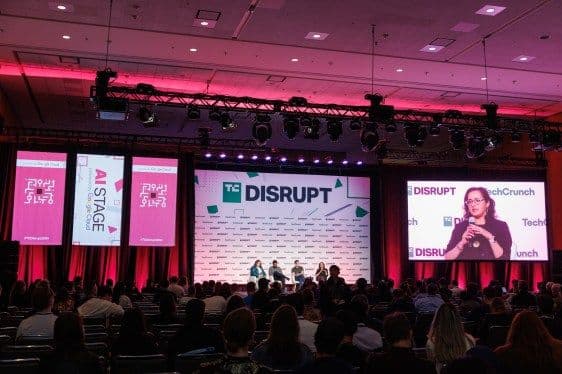
Five AI safety sessions every founder should have on their TechCrunch Disrupt 2026 agenda
Would you trust an AI agent with access to your company’s systems? Put your employees in an autonomous vehicle? Deploy a robot that has to make sense of an unpredictable physical world? These aren’t hypothetical questions for AI founders anymore. As AI moves out of demos and into businesses, vehicles, robots, and autonomous agents, safety and security become part of the product. AtTechCrunch Disrupt 2026, five sessions across the AI Stage and Real World AI Stage put those challenges front and center. From securing agents to getting enterprise AI into production, here’s where founders can dig into what it takes to build artificial intelligence (AI) that people and enterprises will actually trust and use. Building the next generation of AI?Secure your pass to Disruptand add these five AI safety sessions to your agenda. Save up to $200 on your pass before September 25 at 11:59 p.m. PT. Get a second pass at 50% off. Some enterprises are getting measurable value from AI. Others are still running pilots 18 months later. Why? AnthropicHead of Applied AICat de Jonggets a close-up view. She works directly with enterprises putting Claude into critical workflows and sees where deployments succeed, where they stall, and what separates the two. In “What Anthropic Sees When Enterprises Actually Deploy Claude,” de Jong will take theAI Stageto explore what happens when companies move from experimenting with AI to putting it into production. For founders trying to sell AI into the enterprise, her experience offers a firsthand look at why some deployments deliver real value while others remain stuck in pilot mode. Want to know what separates AI pilots from deployments that deliver real business value? Hear what Anthropic is seeing firsthand.Register for Disruptnow to save up to $200 before September 25. An AI agent that can take action can also create an entirely new set of security problems. What should it have access to? What should it be allowed to do? And what happens when application-level permissions aren’t enough? In the AI Stage session “The Agent Security Problem Nobody Is Talking About,”OktaPresident of Products and TechnologyRic SmithandNanoCoco-founder and CEOGavriel Cohenwill tackle agent security at the infrastructure level, including weaknesses in application-level permission models and architectural decisions founders need to consider when deploying agentic AI. If agents are on your product roadmap, security belongs there, too.Get your ticket todayto save up to $200 and add this session to your Disrupt agenda. Getting an AI product through the enterprise door takes more than an impressive demo. Security, governance, and observability all become part of the conversation when companies consider putting AI into critical systems. In the AI Stage session “Securing the AI Enterprise: Why the Cloud Just Got a Lot More Complicated,”AWSVP of Security ServicesRudy Mitra;Luta SecurityCEOKatie Moussouris; and cybersecurity veteranWendy Natherwill examine the infrastructure that enterprises need as AI takes on more autonomous roles. For founders building enterprise AI, this is a chance to hear what happens when innovation meets the security requirements of the organizations you want as customers. Building AI for enterprise customers? Get closer to the security requirements that can stand between your product and deployment.Secure your pass to Disruptbefore September 25 to save up to $200. AI that operates in the physical world raises the stakes. A mistake doesn’t stay on a screen; it can affect vehicles, aircraft, industrial systems, and critical missions. On theReal World AI Stage,Shield AIChief Technology OfficerNathan Michael;General MotorsDirector of Robotics StrategyMikell Taylor; andWaabifounder and CEORaquel Urtasunwill bring perspectives from defense and autonomous systems to one of the toughest questions hard tech founders face: How do you know when an autonomous system is safe enough to deploy? The conversation in “Building AI Systems When Failure Is Not an Option” will get into creating a safety culture, testing and validating AI, navigating regulatory hurdles, and building companies that can earn trust when the consequences of failure are physical. When failure isn’t an option, testing can’t be an afterthought. See how leaders in autonomy are approaching safety at Disrupt.Explore your ticket options, and save up to $200 on your pass before September 25. Robots have a data problem. They don’t have access to the massive pools of training data that helped accelerate advances in language models and self-driving vehicles. That gap is one of the biggest obstacles to scaling physical AI. In the Real World AI session “Robots Are Waiting for Their ChatGPT Moment. Here Is What Is Standing in the Way,”NvidiaInception Global Head of Physical AILes Karpaswill explore how data pipelines, simulation environments, and foundation models could help close it and what it will take to build, test, and deploy more capable and reliable robots. For founders working in physical AI, the session tackles a big question: What will it take for robotics to reach its own ChatGPT moment and earn the trust needed to put those systems to work in the real world? Get an inside look at what could help robotics clear its next big hurdle.Register for Disrupttoday to save up to $200 before prices increase. Can people trust what you’re building? These five conversations are part of 200+ sessions across six industry stages, roundtables, and breakouts atDisrupt, taking place October 13-15 at Moscone West in San Francisco. More than 10,000 founders, investors, operators, and tech leaders are expected, along with 250+ speakers, 300+ exhibiting startups, and countless networking meetings. You can build a smarter model, a more capable agent, or a robot that does something no one has done before. But getting customers to trust it enough to deploy it may be one of the hardest parts of bringing it to market. Secure your pass to Disrupt now and save up to $200before September 25 at 11:59 p.m. PT. Save 50% on a second ticket. Hear how AI leaders are tackling the safety, security, and reliability challenges that can stand between breakthrough technology and real-world adoption.
View
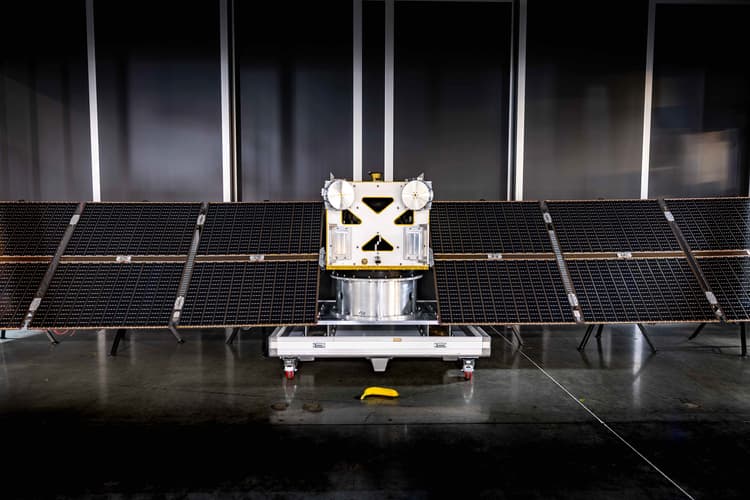
AstroForge is putting AI in command of its next spacecraft
Fly to an asteroid, land on it, make no mistakes: If only it were that easy. When NASA sends spacecraft to explore the solar system, they build in redundancy and automation. But much of the work is done by teams of flight controllers communicating with the vehicle from Earth. The OSIRIS-REx mission, which rendezvoused with an asteroid in 2018, had 100 operators on each eight-hour shift. But resources like that aren’t available to startups, soAstroForge, which is developing technology to mine asteroids, is turning to AI. The company has developed an autonomous control stack for its spacecraft called “Solo,” a transformer-based model made in-house. AstroForge plans to fly its first autonomous spacecraft in 2027 on the first rocket launched by Stoke Space. That mission will be backed by NASA and is expected to gather scientific data about the sun. That would be an accomplishment: Most spacecraft autonomy depends on traditional control algorithms due to concerns about the unreliability of neural networks. The first use of a neural network to control a satellite’s positioning in orbit took placejust last year. AstroForge, founded in 2022 and backed with $56 million in venture funding, has launched two prototype spacecraft, both of which suffered anomalies that prevented them from achieving most of their mission objectives. In 2025, its Odin spacecraft was launched into deep space, but the company had difficulty communicating with it. There are a limited number of antennas on Earth big enough to transmit to spacecraft hundreds of thousands of miles away, and the windows of time in which to do it are small. Ultimately, AstroForge couldn’t gain control of Odin, but the experience spurred it to consider alternatives: Could it put sufficient intelligence onboard the spacecraft for it to solve its own problems? “Would that have been recoverable with all the data on the spacecraft? I don’t know, but I can tell you nothing onboard tried it, and I would love something onboard to try if the spacecraft is unrecoverable at launch,” Matthew Gialich, AstroForge’s co-founder and CEO, said. “The trade for me is: Do I go build my own ground network, which is going to cost [around] $200 million to put up five dishes around the world and then do operations on it, or do I try to remove it with a model?” Armand Awad, AstroForge’s head of flight software, said the company decided to leverage the advances in transformer models driven by the frontier labs. It created a stack that includes traditional control algorithms, models trained on test data for specific subsystems like power generation or navigation, and an overall intelligence layer trained on about 2,500 sensors in the spacecraft. “I’m not saying I’m going to make general spacecraft autonomy or general autonomy for the world,” Gialich said. “I’m making a constrained autonomy at a very low sensor input, following the basic training of a transformer model.” In theory, the agent in control of the spacecraft will perform tasks like anomaly resolution. Awad imagines it realizing that it has lost track of its position in space, correlating a power anomaly to issues in its star tracker, and fixing the whole thing — “probably turning it on and off in this case.” The company’s third vehicle, DeepSpace-2, is currently set to launch alongside Intuitive Machines’ third moon mission, expected to head for space by the end of 2026. Solo will be onboard that vehicle, flying in “shadow mode,” so AstroForge’s engineers can put it through its paces before the Autonomy-1 mission. Will this truly be an AI agent operating an independent spacecraft?“I don’t plan on flying radios that can receive from Earth on Autonomy-1,” Gialich said. “We have to go all in right now. The team’s probably going to talk me into it by the time we fly it. But right now, I’m telling them no radios.”
View

Anthropic releases Opus 5.5 with lower prices and Fable-level performance
Anthropic’s newest model, Opus 5.5,was released on Tuesday, setting a new state-of-the-art in coding and knowledge work performance, according to the company. Notably, Anthropic says, the release outpaces the larger Fable model in many benchmarks and succeeded in a number of informal tasks that Fable failed to complete. The new model is also significantly cheaper than its predecessor. Output tokens will be charged at $20 per million tokens for Opus 5.5, compared to $25 for the previous model. Other metrics have similar price drops. The model is also faster to run, reflecting an overall drop in the compute required to serve it. The new version also makes significant changes to how Opus communicates, with the Opus 5.5 less likely to use jargon and more likely to put important information at the start of its messages. The launch comes just two months after the release of Opus 5on July 24. According to the announcement, Sonnet 5.5 and Haiku 5.5 will be released “in the coming weeks,” with similar performance improvements. Anthropic says that Opus 5.5 is comparable to Mythos in its biology and cybersecurity capabilities, so its release is subject to the same safeguards as the company’s Fable model. Those safeguards limit how much the models can be used to discover exploits in compiled programs ordeveloping recognizable biological weapons, among other tasks. Opus 5.5 is Anthropic’s first model release since CEO Dario Amodei embraced calls to pace the frontier, deliberately slowing down progress on AI capabilities to match the rate of progress on alignment. “I have become convinced that fully addressing the risks requires even more prudence,” Amodei wrotein a post earlier this month, “not just investing in risk prevention, but pacing the rate of capabilities advancement so that risk prevention has time to keep up.” Opus 5.5’s safety training was broadly similar to its predecessors, with alignment testing and pre-release evaluation by outside organizations like METR and Frontier Design. But Anthropic emphasized that more advanced training and evaluation systems were already being prepared for future models, including improved security and monitoring systems. “As AI becomes more capable, public policy should play a larger role in making sure the systems people rely on are safe. That capacity takes time to build, and we’ve started to put the infrastructure in place to support it,” the blog post reads. “We expect to share more details on these efforts soon.”
View

CoRover.ai Partners With Tech Mahindra to Take India-Built AI to Global Markets
CoRover.ai and Tech Mahindra will combine their AI platforms to develop sovereign, enterprise, and agentic AI solutions for customers in India and global markets.
View

AI Developers are Suddenly Obsessed With Jev—And Swear By Its Low Latency
Jev uses structured decisions, confidence scores, and millisecond-level responses to tackle AI tasks that are often too costly or slow for frontier models.
View
Nscale’s IPO will test Wall Street’s appetite for concentrated AI bets once again
When British neocloud Nscale goes public, it will test public investors’ appetite for a stock whose revenue is tied primarily to two customers. Since it was spun out of Australian cryptocurrency mining company Arkon Energy two years ago, Nscale has amassed over $103 billion worth of contracts, according to itsIPO filing. But there’s a catch: Most of that, about 85%, comes from a deal to supply Microsoft with $43.8 billion worth of compute through 2033, and another supply agreement worth $44.6 billion with Anthropic. Moreover, Anthropic’s agreement is contingent on Nscale obtaining financing, and the AI lab retains the right to walk away from or cancel the deal if Nscale fails to hit milestones that the filing explicitly categorizes as “stringent.” Nscale’s customer concentration is a reminder of just how interconnected the AI industry has become. A recent paper by credit hedge fund Sona Asset Management, featured in theFinancial Times, found that many AI infrastructure providers heavily depend on a limited number of customers. Nscale’s competitor CoreWeave, for example, generates 67% of its revenue from Microsoft, and data center builder Applied Digital derives 67% of its revenue from Oracle, and 30% from CoreWeave. While Sona noted that such interconnectedness is not necessarily a bad thing, it pointed out that a single setback or strategic shift by a major player can easily affect the entire industry. Nscale, which plans to list on the NYSE, expects to be valued at $35 billion, theFinancial Timesreported, and is seeking to raise $3 billion in the offering, according toBloomberg. The company reported revenue of $140.6 million for the six months ended June 30, up significantly compared to $10.4 million a year earlier. Net losses jumped to $1.02 billion from $369 million in the same period. Earlier this month, one of Nscale’s major investors, Nvidia, agreed to provide the company with $1 billion in convertible debt as part of a larger $3.1 billion financing deal. The startup was valued at $14.6 billion when it raised a $2 billion Series C led by Aker ASA and 8090 Industries. Aside from CoreWeave, Nscale’s competitors include Nebius, Lambda and Crusoe — the latter last week said it raised $3.9 billion at a$30.9 billionvaluation. Nscale operates data centers in Norway, Portugal, Texas and West Virginia. Its board of directors includes former Meta executives Sheryl Sandberg and Nick Clegg, as well as former OpenAI executive Fidji Simo.
View

Everyone can find a reason to dislike data center construction
Frontier AI labs are convinced that scaling up computation is the path to improving artificial intelligence, and they’ve put their money where their mouths are, to the tune of trillions of dollars of planned data center projects. The rest of us?Surveysofpublicopinionsay that more than 60% of Americans favor limiting new data centers, particularly in their communities. And the longest-running surveys show that sentiment is growing fast. Data center projects worth $68 billion were disrupted by local opponents in the second quarter of 2026,according tothe trackers at Data Center Watch. AI companies and their investors have a hard time reconciling the growing demand for their products with opposition to the key infrastructure behind it. Some answers from the industry, like the idea that data center opposition is a product of secretive Chinese meddling, don’t really pass the smell test. Today, anew reportfrom the nonprofit Data & Society offers a deeper look at what is activating opposition to data centers. It is the result of 18 months of ethnographic fieldwork by a team of researchers who interviewed 44 Pennsylvanians between 2024 and 2026. The authors, who are critical of the way AI has been pitched, aren’t trying to measure the empirical impact of data centers, but instead want to understand the way people experience the debate over their construction. “One of the strengths of ethnography and doing research on the ground for an extended period of time is piercing the bubble of AI hype,” Livia Garofalo, a Data & Society researcher, told TechCrunch. “People are making sense of the dissonances between AI being the next inevitable industrial revolution, and fears about AI.” When the authors began their work, data centers were being pitched as key to economic development. Governor Josh Shapiro headlined a July 2025 summit celebrating $90 billion in data center and AI infrastructure investment. A year later, Shapiro signed an order imposing new requirements on data center projects and removing them from a regulatory fast-track initiative. Someone read the writing on the wall. The authors say the message from industry that AI is “inevitable” has landed poorly with Pennsylvania residents. They point to the state’s historic waves of industrialization, including coal mining, the early days of the oil industry, steel manufacturing, and fracking, experiences that have left residents suspicious of utopian industrial schemes. “People in Pennsylvania especially have incredible experience with industrial change, have deep lineages of industrial trauma, enough to sniff when things don’t feel right to them,” Maia Woluchem, a program director at Data & Society who co-authored the report, said. Still, trade unions are perhaps the greatest source of support for data center projects, thanks to the potential jobs they represent. Even acknowledging that, once built, these data centers won’t be major sources of employment, unions see the projects as a lifeline to rebuild their ranks. In contrast to the industry’s fears of foreign influence, the researchers describe the work of AI boosters as a kind of propaganda campaign, pointing to the Data Center Coalition, a trade group that hasset up websiteslike “Pennsylvania Connects” to boost projects andspent at least$19,000 lobbying the state government last year. In spite of the boosterism, resistance has grown, and in unlikely ways. The researchers said they were surprised by the diversity of the opposition to these projects, calling it not bipartisan but post-partisan.“We don’t want to romanticize that everyone is having this kumbaya moment, [but AI is] forcing people to be in conversation together about futures that they want and presents that they want … these fights are incredibly organic,” Woluchem said, pointing to a variety of sources of opposition: Sometimes it is simply folks who are against development — classic NIMBYs — but the coalition grows from there. There are people who dislike AI as a technology and the corporate interests behind it, environmental groups concerned about water usage and energy-related emissions, and those with more nebulous concerns about public health. What’s striking, though, is how often material interests are top of mind. People are concerned that data center electrical usage will affect their own power bills, worried that data centers will drive down property values, or are upset bythe playbookthat data center builders use to get their way — tactics such as asking local officials to sign non-disclosure agreements. “There is a significant group of people who are just really clued into their town hall meetings and might notice that wow, a representative from Amazon, Meta, Microsoft, showed up here, or a data center developer showed up at my community meeting …that’s a little odd,” Woluchem notes. “And my council person, who I have previously had a relationship with, now won’t talk to me about this sort of thing.” It’s this patchwork quilt of motivations for anti-data center activism that presents such a challenge for the AI industry: There’s no simple way to alleviate this raft of concerns. The problem is trust, which has alreadydeviled the industry. “It is an intimate and relational trust that is now being inserted in people’s lives by these industries,” Garofalo said. “I’m alone in my house, and I’m talking to a chatbot, and I’m feeling loved and cared for, and yet I know that this is a commodity, and I know I’m being extracted upon.”
View

Matters.AI, Cockroach Labs Launch Data Security Integration for DPDP-Regulated Data
The integration maps sensitive data in CockroachDB to the users, roles and privileges that can access it, while keeping raw data within the customer’s infrastructure.
View
Submit your Tool


PoweredByAI.app is an AI Tools Directory helping individuals, businesses, and creators discover the best AI tools for writing, coding, design, productivity, and more.
© 2026 , Product of011BQ. All rights reserved.