🚀 Zaprep: Your Socials on Steroids. Start free — automate 1,000 DMs/month & turn engagement into leads. with 1,000 automated DMs/month.
Latest AI News
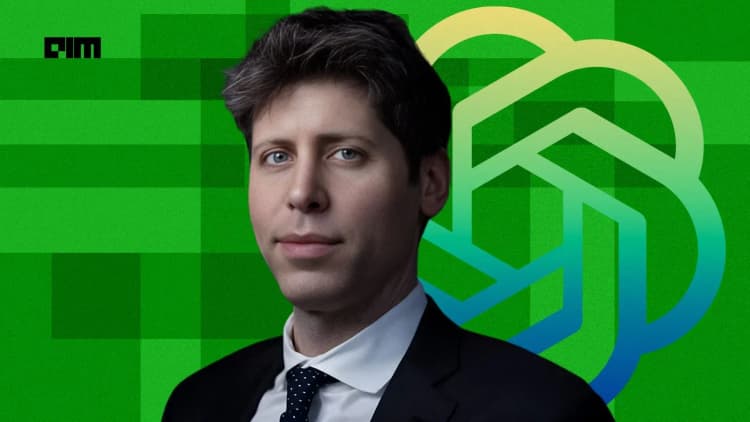
OpenAI Launches GPT-6 Sol and Luna With 50% Lower API Prices
OpenAI said improvements in inference and prompt caching let it reduce serving costs while maintaining stronger performance.
View
Claude Opus 5.5 Performs On Par With Fable 5.1, 40% Cheaper than Opus 5
Claude Sonnet 5.5 and Haiku 5.5 are scheduled to be released in the coming weeks.
View
Qualcomm Unveils New Snapdragon Chips With On-Device AI at the Core
The chips can run AI models locally, with features including personalised AI agents, voice processing, advanced camera controls and support for 30-billion-parameter models.
View
Meta Tests Human Contractors to Handle Calls for Muse AI Agent: Report
Meta rolled back a test that used human contractors to handle some calls placed through its personal AI agent Muse after facing internal criticism over privacy and disclosure concerns.
View
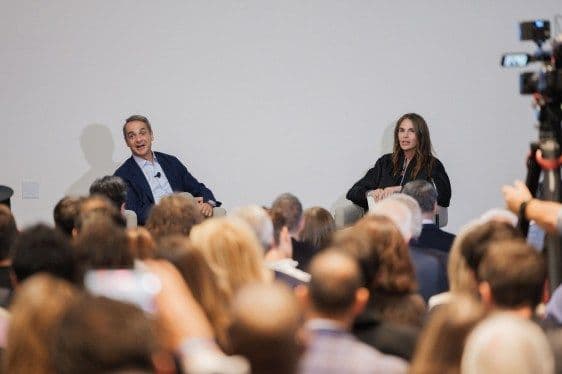
“We’re already fighting yesterday’s battle”: Greece’s prime minister gets candid about AI
Greek Prime Minister Kyriakos Mitsotakis came to San Francisco on Monday night to promote Greece, but he also did something that heads of state on trade missions don’t typically do. In front of roughly 250 founders, investors and operators, he said openly that he doesn’t have answers to many of the AI questions leaders around the world are more privately debating. The prime minister, speaking with this editor at an event held along the waterfront edge of San Francisco’s Financial District, described his Bay Area trip as partly a fact-finding mission. He’d spent the morning touring Tesla and Sequoia Capital, among other stops, with plans to head this week to the U.N. General Assembly in New York. But the trip was also meant to build bridges; indeed, he was pitching anyone in tech who might consider setting up shop in Greece, which is set to regaindeveloped market statusnext year from MSCI, the influential index provider. “I think it’s another indication that the economy is doing well and that Greece is no longer treated as a special case,” Mitsotakis said. Mitsotakis, who earned a master’s degree at Stanford and called the visit “a homecoming,” made the economic case first and foremost during our sit-down. Greece is paying down its debt at a record pace, and, he added, borrows more cheaply than the United States. “I don’t know if I should say this,” he told the crowd, smiling. It’s not an apples-to-apples comparison. Interest rates are lower across the eurozone, which accounts for part of the difference. But it makes for a strong talking point. As of this writing, Greece’s 10-year bond yield sits around 4.3%, versus roughly 5% for U.S. Treasuries. That would have been completely unimaginable during the debt crisis, when Greek yields topped 40% in 2012. Mitsotakis was just as eager to talk about how Greece has spent its money. For example, he said that much of the roughly €36 billion Greece received from the EU’s post-COVID recovery fund went into digital infrastructure, including an online portal that lets Greeks handle government paperwork without waiting in line, and a new supercomputer assembled with the help of Hewlett Packard Enterprise in the port town of Lavrio that he said will come online within months to power AI and scientific research in Greece. Unsurprisingly, he also listed policy changes that can matter even more to tech companies. Greece has changed how stock options are taxed, he said, loosened labor laws, and offers returning Greeks far lower taxes for up to seven years. We also talked about the country’s growing array of visa programs, though when asked how he measures the success of these, Mitsotakis said the government “still [has] work to do” on processing speed. He separately volunteered that there has been a stark turnaround at Greece’s public universities, which he said long embraced a “radical leftist approach,” looking down on corporations, and now spin out startups. Mitsotakis’s larger goal is to win back the talent Greece lost during its debt crisis, when many of the country’s younger citizens left because they had no other options. He also sees an opening: with American work visas getting harder to obtain, he suggested, more founders should consider hiring in Greece. But the conversation took on a different tone when it turned to AI’s effects on society. Mitsotakis was refreshingly candid about not having a finished plan. Greece, for example, is instituting a ban on social media for children under 15 as of January, a step many countries are similarlyweighing or adopting. But he suggested the ban may already be behind the times, considering the seemingly addictive nature of AI chatbots, as well. “Sometimes I feel that we’re already fighting yesterday’s battle,” he said. “What does it mean for our kids to grow up with digital companions or boyfriends or girlfriends?” He was similarly cautious about AI in classrooms. Greece has run an education pilot with OpenAI aimed at reducing teachers’ administrative work, and he sees promise in personalized AI tutors. But he said the benefits depend on AI not replacing “the hard work of learning the basic skills.” He warned that students are already using chatbots to do their homework, adding: “complacency is a human trait.” When I asked him about AI infrastructure — Greece has been courting data center investment — he described the country as an outlier. Despite growing opposition to data centers across the globe because of the amounts of electricity and water required to power them, Mitsotakis said that “we have not had any significant reaction” in Greece. He pointed to the fact that Microsoft is building a cluster of data centers near Athens and that AWS recently announced a deal with Greece’s largest utility to build the country’s biggest data center in a former coal region. There, he said, the projects are welcomed. Unlike many politicians, he didn’t pretend to have answers about what comes next, either. Job displacement “is something which is going to happen,” he said, “and no government and no society is prepared for the speed with which it will happen.” As for the debate over whether AI development should slow down, he sided with the leaders of the frontier labs who’ve been calling for one. “If the people who are building the models are telling us, ‘We’re not really sure exactly what’s happening with these models,’” especially in how they improve themselves, he said, “we need to listen to them.” Some form of “smart regulation” is inevitable, he observed, and the U.S. will largely decide what it looks like. Still, he added, Greece would happily host the conversation. Humanity has created “a form of intelligence that is very quickly exceeding the capacity of the most advanced organ that evolution has ever created,” said Mitsotakis, raising the question of what it means to be human. Bringing together technologists with “the social scientists, the philosophers, the historians,” he said, “I cannot think of a better place to really have these discussions.” He has a point. Athens is where Socrates badgered his fellow citizens in the agora, the city’s ancient public square, about what makes a good life and a just society. Maybe the questions Silicon Valley is still debating will end up being settled there, too?
View
Snorkel AI triples valuation to $3.5B as demand for AI training data booms
Snorkel AI, a startup that helps AI labs and corporations build training datasets and simulated environments, has raised a $350 million Series E at a $3.5 billion valuation. The new round, which was led by Insight Partners and S32, valued the seven-year-old startup at nearly triple the $1.3 billion valuation it garnered when it raised $100 million in a Series D 17 months ago. Existing investors, including Addition, Lightspeed, Greylock, GV, and Wells Fargo, also participated in the round. While Snorkel originally provided software fordata-labeling automation, it shifted last year to providing customers with completed datasets, an offering it calls data-as-a-service. Rather than operating purely as a human expert marketplace, Snorkel relies on a hybrid approach, using its software and models to generate data synthetically alongside subject matter experts. Snorkel says its current annualized revenue run rate now stands at $375 million, an eighteenfold increase over the last 12 months. That growth is fueled by AI labs’ insatiable appetite for high-end training data. Other data companies positioning themselves as AI data labs have seen a similar explosion in growth. Mercor’s gross annualized revenue has climbed to$2 billion, Handshake hit the$1 billionmilestone earlier this year, and TechCrunch reported that Micro1 has scaled to$500 million. Since these companies pay out roughly 60% to 70% of their top-line income directly to the domain specialists doing the work, it’s important to note that their actual net annual revenue is substantially lower than those headline gross figures. Given that Snorkel sells reinforcement learning (RL) environments and complete datasets rather than human labor, payments to its human experts are accounted for in its cost of goods sold rather than headline-generating annualized revenue numbers, according to the company. Snorkel launched commercially in 2019 following four years of research by co-founder and CEO Alex Ratner and his team at a Stanford AI lab.
View
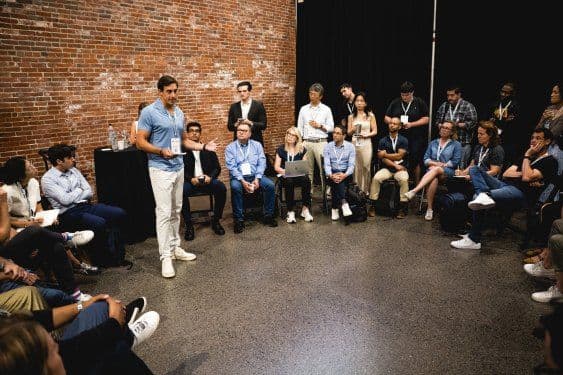
TechCrunch Founder Summit’s agenda revealed: Unlock fundraising, hiring, and AI insights in Boston on November 4
On November 4,TechCrunch’s Founder Summitwill bring a vital one-day crash course on startup building to Boston’s SoWa Power Station. Founders shouldn’t have to learn the hardest lessons the hardest way, and this event is designed to make the challenges of starting a company easier and the highs that much greater. Instead of months of trial and error, you get direct access to the investors and founders who’ve already made the calls you’re now facing. We’re talking everything from fundraising and hiring to AI strategy, and topping your category. Don’t take our word for it. Explore the full agenda of speakers and sessions we have planned for Founder Summit below, and lock in your spot at the event.All tickets are available for the lowest prices you’ll see, so now’s the best time to act. Without further ado, here’s the official agenda. Get to know each session and speaker on theevent agenda page. Fundraising has never been easy, but the playbook keeps changing.Brian Devaney, partner atUnderscore, will break down what investors are looking for now, how founders can stand out in a crowded market, and where founders often lose leverage without realizing it. Expect a candid look at today’s fundraising environment, from first checks to term sheets, and the mistakes that can make or break a round. The title may stay the same, but the job changes with each stage of a company’s growth.HubSpotco-founder andSequoiapartnerBrian Halliganwill share the lessons he’s learned from building and advising startups through rapid growth, tough decisions, and constant reinvention. This session explores how founders can evolve as CEOs, avoid common leadership pitfalls, and build companies that can thrive well beyond the early days. Adding AI features is one thing. Building an AI-native company is something else entirely.Lior Div, co-founder and CEO of7AI, will explore what changes when AI becomes the foundation of a startup rather than a product enhancement. From team structure and product development to operations and go-to-market strategy, this session examines what founders should rethink when building in the AI era. Raising capital is often framed as a milestone, but choosing the right investors can shape a company’s future long after the money arrives. After raising an $11 million round forCogent Security, co-founder and CEOVineet Edupugantilearned firsthand what separates helpful partners from costly distractions. This session explores how founders should evaluate investors, navigate trade-offs, and think beyond valuation when building their cap table. Innovation is needed to solve the world’s biggest challenges, but only certain companies can realistically become category-defining winners at industrial scale. In this session,TDK Venturesinvestment directorTina Tosukhowongunpacks the firm’s “King of the Hill” framework: the disciplined process that the best investors use to evaluate companies based on economics, scalability, and commercial timing. Through real-world examples, including Tina’s exploration of fission and fusion, attendees will learn actionable frameworks for evaluating startup readiness, mapping competitive landscapes, and identifying when timing, talent, and technology align. Early hiring decisions can define a startup’s culture, speed, and ability to execute.Melissa Taunton, partner atNEA, will share lessons from working with founders as they build teams through periods of rapid growth and uncertainty. From identifying the right early hires to avoiding common recruiting mistakes, this session explores how founders can build organizations that are resilient, adaptable, and prepared for what comes next. Silicon Valley gets the headlines, butChase Garbarinohas been quietly building category-defining companies from Boston for over a decade. As co-founder and CEO ofHqO, he has raised $200 million from investors and scaled to 30+ countries without ever needing to change geographies. He’ll break down the real advantages and disadvantages of building where the startup playbook wasn’t written, and what every founder outside a major hub should know. Every founder wants product-market fit, but knowing when you’ve actually found it is far more complicated.Kent Bennett, partner atBessemer Venture Partners, will unpack how founders can validate demand, build an MVP that answers the right questions, and avoid scaling before the fundamentals are in place. This session explores the signals that matter, the metrics that mislead, and the decisions that separate enduring companies from expensive experiments. The programming is a huge part ofTechCrunch Founder Summit’s value, but it’s not the whole deal. You’ll also get the chance to mix and mingle with founders working through the same fundraising decisions and the same hiring calls as you, and then network with those who have already lived through those experiences. Or better yet … those who have funded those who have gone through the startup wringer. A day filled with discussions turns into months of action at TechCrunch Founder Summit, and we’re eager for you to join us and the rest of the Boston startup community on November 4.Register now to secure your ticket savings and join the ultimate founder’s bootcamp.
View
Taming Soaring Inference Costs: How Neysa and Mavenir Are Building Full-Stack AI
Neysa’s partnership with Mavenir will let enterprises manage AI workloads with greater control over performance, security, governance, costs, and data sovereignty.
View
OpenAI launches GPT-6 Sol and Luna, boasting lower cost and fewer mistakes
Earlier this month, OpenAIlaunched GPT-6 Astra, which it heralded as its most powerful and capable model yet, and the “world’s best model” for a variety of activities, including computer work and coding. Now, the lab is expanding the GPT-6 generation with updated versions of the smaller Sol and Luna models. “GPT-6 Astra introduced a new generation of intelligence; these models extend its benefits by making that intelligence more efficient and accessible,” the company writes. The first models in the Sol and Luna series were introducedearlier this year, representing different tiers in OpenAI’s hierarchy of models. Sol is designed for complex tasks like coding, while OpenAI says Luna is more appropriate for clerical work — “high-volume tasks with a clear goal, like summarizing documents, extracting information, or answering quick questions.” OpenAI is also emphasizing big improvements in efficiency and affordability — most notably, via a substantial price drop for API access. The 6 series models will be available at half the cost of the 5.6 series of Sol and Luna, a price drop that OpenAI attributes to improvements in caching and inference. OpenAI also claims that its newest models are better at producing answers that are factually accurate, and notes that they have a lower error rate when it comes to coding. “On our internal factuality evaluation, which is based on de-identified real-world conversations where users flagged mistakes by our models, GPT-6 Sol makes about half as many mistakes as its predecessor, reaching Astra-level reliability at much lower cost,” the announcement reads. As is typical with OpenAI’s new model releases, the company is claiming that its newest offerings outshine those of its primary competitor, Anthropic. The company repeatedly claims that GPT-6 Sol and Luna handle tasks substantially better than Anthropic’s top models — like Fable and Opus. Notably, Anthropic releaseda new version of Opus 5.5just 90 minutes before OpenAI’s release, reflecting the intense competition between the two companies. The new versions of Sol and Luna are now available in ChatGPT Work and Codex for most paid accounts, and in the ChatGPT API, while Luna will be available in the desktop app and for Free and Go users. OpenAI expects to roll out the models to ChatGPT (the app and website) gradually throughout the day.
View
Meta admits Muse’s likeness to OpenClaw isn’t a coincidence
Early adopters of Meta’s Muse have been speculating that the reason the AI works so well is because it’s OpenClaw under the hood, wrapped in a more consumer-friendly package. Meta now says those comparisons aren’t entirely off-base. According to anX postby Nat Friedman, head of product at Meta’s Superintelligence Labs (MSL), Muse was “definitely heavily inspired as a product by OpenClaw.” However, he clarified that Muse itself was “built from scratch.” Friedman, the former GitHub CEO whojoined Meta last yearalongside Meta’s Chief AI OfficerAlexandr Wang, said that the team at Meta had fallen in love with OpenClaw and wanted Muse to be “something like OpenClaw” that could be scaled to billions of people. Because OpenClaw is anopen sourceproject, it wouldn’t be surprising that Meta looked to it for inspiration, especially given itsbreakout success, which promptedOpenAI to snatch up its creatorearlier this year. However, it speaks to Meta’s well-known playbook that involves taking promising products, thencopying their best features— something it did most notoriously withSnapchat’s invention of the stories format. Friedman’s statement on X was made in response to a post that had gone viral among the AI crowd, whereAnsh Nanda, an AI app co-founder, claimed that “Muse is LITERALLY OpenClaw for normies.” Nanda’s X post had included a conversation with Muse, where the AI agent said that the similarity between its own system files and those belonging to OpenClaw was not just “a coincidence” but rather “a match.” Soon, this thread (and X more broadly) began blowing up as others shared their own comparisons and findings. For instance, one personpointedout that Muse also had a SOUL.md file, the plain text configuration file (written in a simple formatting language called Markdown) that defines an AI agent’s personality, communication style and tone, values, behavioral boundaries, and expertise. A third notedthat the files weren’t just named the same between the two assistants; their content was almost entirely the same. Following his X post, Friedman also responded to a question about why Muse had copied the exact file names that made up the AI agent’s workspace and had “nearly identical content” for the SOUL.md file. Instead of disputing these claims, Friedman simply replied that “we thought that Peter [Steinberger, OpenClaw’s creator] got those things exactly right.” “We built Muse from scratch, but it is definitely heavily inspired as a product by OpenClaw. After I used OpenClaw in January, I bought hundreds of Mac minis for the MSL team, and lots of us fell in love with using OpenClaw (and other personal agents), Friedman said on X. (TechCrunch has corrected Friedman’s punctuation for readability.) “@steipete [Peter Steinberger] is a genius, and his harness was pioneering from the jump. I think a lot of people were inspired by it. Our goal with Muse was to build something like OpenClaw that we could make safe and secure and easy to use and scale to billions of people,” he wrote. The Muse app has been something of a hit so far, having recently hit No. 1 on the U.S. App Store. Data indicates that it’s nowoutpacing ChatGPT’s launchwhen the platforms and market availability are compared directly. Reached for comment, a Meta spokesperson pointed to Friedman’s statement, saying the company had nothing more to add beyond that.
View

Qualcomm launches two new smartphone chips with emphasis on AI
Qualcomm today announced two flagship smartphone processors, called Snapdragon 8 Elite Gen 6 and Snapdragon 8 Elite Extreme Gen 6, with a focus on facilitating better AI-focused features. At its annual Snapdragon Summit, Qualcomm said that the new chips can aid in improved personalization for AI agents. The chips have new sensing hubs that can run small models of up to 200 million parameters. With the new sensing hub, smartphones can run a personal scribe locally and differentiate between speakers. Plus, it can build memory based on your usage for better suggestions for automating tasks. The company said that it can run a complete voice-in and voice-out agent through the new chip. The Snapdragon 8 Elite Gen 6 has a new accelerator element that’s designed to run models in a more efficient way. The high-end Extreme version can run a 30-billion-parameter mixture-of-experts (MoE) model locally. This means that while the overall model size is 30B, the model only activates a certain number of parameters for a particular task. For comparison, at its Worldwide Developer Conference (WWDC) in June, Apple releaseda 20-billion-parameter mixture-of-experts model, the most advanced of its third generation of foundation models. The new Qualcomm CPU also provides pixel-level control for cameras to facilitate more pro-level experiences, along with improved stabilization and motion understanding. The Extreme version can support video recording at 8K 60fps and at 4K240 for ultra HD slow-motion. It also enables the new Advanced Professional Video (APV) codec for pro-level recording. What’s more, both chips can use AI to boost vocals and reduce noise. Plus, it has Qualcomm’s new voice bubble tech, which isolates users’ noise during calls. At the event, Motorola announced its Motorola Signature 27 smartphone, powered by the Snapdragon Gen 8 Elite Extreme Gen 6, with general availability sometime this year. Qualcomm has been working onmore than 40 AI devices, but there is still a belief that a lot of people will use their phones for AI rather than other dedicated devices. Nothing co-founder Carl Pei has hinted at this trend in the past, and more recently, new Apple CEO John Ternus reinforced the same line of thought during the iPhone Duo launch earlier this month.
View
ChatGPT Gets New Privacy Center With Easy Access to Privacy Controls: Here's How to Use it
ChatGPT has started rolling out a new Privacy Center. The new option will appear in the account menu and offer insights about privacy-related features and settings that manage them. The Privacy Center classifies features into three categories —Personalised chats and ads, Chat privacy and Data use and access. The Personalised chats and ads will help users understand how ChatGPT handles features such as memory, personalised chats, ads, data use, apps, and account security.
View
Submit your Tool


PoweredByAI.app is an AI Tools Directory helping individuals, businesses, and creators discover the best AI tools for writing, coding, design, productivity, and more.
© 2026 , Product of011BQ. All rights reserved.