🚀 Zaprep: Your Socials on Steroids. Start free — automate 1,000 DMs/month & turn engagement into leads. with 1,000 automated DMs/month.
Latest AI News
Micromax, Phison JV to Invest ₹1,000 Cr in India Memory Chip Manufacturing: Report
MiPhi will use the investment to expand its existing manufacturing facility in Greater Noida, Uttar Pradesh
View

Maruti Suzuki Partners With Sarvam AI, 4 Others to Drive Business Innovation
Maruti Suzuki onboarded the five startups from its incubation programme to improve battery recycling, customer engagement and AI-driven operations.
View

Samsung, SK Hynix Anchor South Korea’s $576 Bn AI and Chip Strategy to Assert Dominance
Samsung Electronics and SK Hynix, along with suppliers, will invest $518.3 billion to build two new semiconductor fabrication plants.
View

Apple’s ‘New’ Siri AI Was Exciting 2 Years Ago. Not Anymore
The question worth asking is whether Apple just delivered on what it had already promised or built something genuinely new. The two are not the same.
View

Elon Musk Teases Grok 4.5, Says New Model Matches Top AI Rivals
As the AI race intensifies, Musk says Grok 4.5 is now in private beta, bringing a more powerful foundation model and an ambitious release roadmap for xAI.
View

Why Agentic AI Could Become Healthcare’s Intelligent Operating Layer
KANINI firmly recognises healthcare’s next breakthrough will come from intelligent orchestration, not incremental digitisation.
View
DeepSeek V4 is Now up to 85% Faster With New Inference Technique
DSpark is a new speculative decoding framework that accelerates DeepSeek V4 Flash and Pro by improving draft token acceptance and dynamically adjusting verification during inference.
View
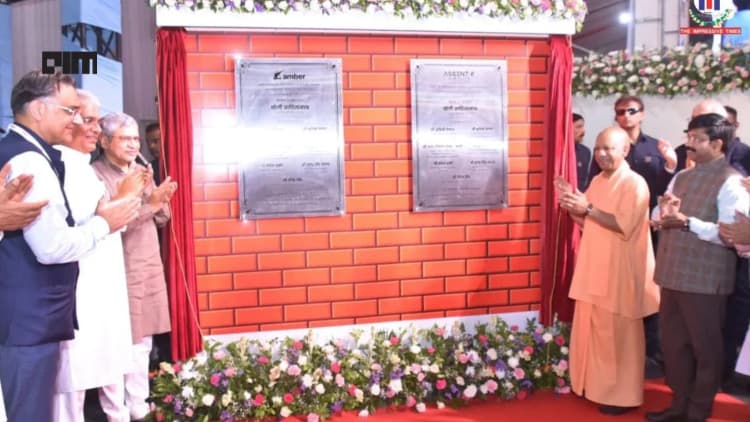
₹40,000-Crore PCB Imports to Be Replaced by Domestic Manufacturing as Jewar Emerges as Electronics Hub: Ashwini Vaishnaw
Jewar is poised to emerge as one of India's leading hubs for electronics and semiconductor manufacturing in the coming years
View

Coinbase Cuts AI Spend by Half With Open-Weight Models, Smarter Routing
Coinbase CEO Brian Armstrong said the objective is “not to suppress usage” but to build infrastructure capable of supporting exponential growth in AI workloads while keeping costs under control.
View

Madhya Pradesh Premier League Taps Emergent to Bring AI into Cricket Administration
Emergent and Delhigence AI power custom software for Madhya Pradesh Premier League, bringing AI-driven efficiency to cricket administration.
View
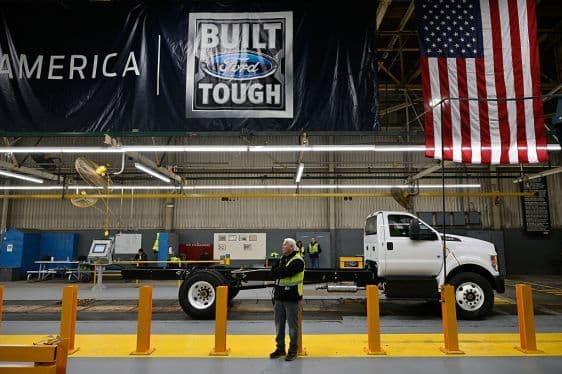
Ford rehires ‘gray beard’ engineers after AI falls short
Ford executives said they have hired 350 veteran engineers — some of them were former employees, while others had been working at suppliers — after artificial intelligence and automated systems failed to deliver the desired quality level. Bloomberg reportsthe company’s chief operating officer Kumar Galhotra told journalists that Ford had been “relying more and more on automated quality systems” with disappointing results. So the company “brought back technical specialists,” and those specialists “hunt for failure points before a part ever reaches the plant floor.” Charles Poon, Ford’s vice president of vehicle hardware engineering, added, “Mistakenly we thought that by just introducing artificial intelligence and ingesting the design requirements that we had, that that would produce a high-quality product.” To be clear, this doesn’t mean Ford is abandoning its AI plans entirely. Instead, it’s using the rehired employees — referred to as “gray beard” engineers — to train younger staff and reprogram AI tools. This rehiring seems to be paying off, with Ford anticipating that it will lead to $1 billion in reduced costs this year. The automaker also claimed the top spot among mainstream brands in the JD Power Initial Quality Survey released this week.
View
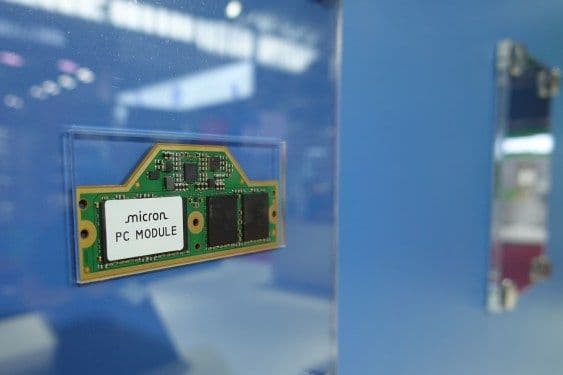
Why Wall Street thinks US memory maker Micron is the next Nvidia
Micron, the Boise, Idaho-based memory chip maker, has captured Wall Street’s heart. Whether the love affair endures will heavily depend on how long the AI-driven supply crunch for memory chips lasts. Micron promises that it has shored up its position for the long term, which would allow it to withstand a sudden drop in demand or overcapacity of supply. And Wall Street has become a believer, helping Micron briefly surpass the market valuation ofMeta and Teslafor the first time on Thursday, though it floated back down by Friday to nearly match them. Specifically Micron closed Friday’s trading with a market cap close to $1.27 trillion, while Meta was at $1.39 trillion and Tesla was at $1.42 trillion. Micron’s stock has soared over 236% in the past month alone, closing Friday at $1,132 a share. In comparison, it spent years upon years before mid-2025 at below $100 a share. It’s a dizzying rise for a company that most consumers associated with the tiny memory cards that, back in the day, were commonly needed to boost PCs, smartphones, or other device storage. Wall Street isn’t sweating over that product line. Micron is benefiting from the AI data center buildout boom that has created a shortage of system memory chips, both DRAM and NAND, which Micron makes, particularly High-Bandwidth Memory (HBM). A single AI server requires magnitudes more memory than a laptop. AI system makers like Nvidia, as well as the hyperscalers building their own systems, are buying up large quantities of memory, such as Microsoft, Amazon AWS, Google, Meta and Oracle. This is forcing all the other companies who need memory to hoard it as well, from PC makers like Dell and HP, to other kinds of device makers. This lack of supply, which has been dubbedRAMageddon, is predicted to persistinto 2027. And it’s already driving up the price of consumer electronics like Apple products and Xbox consoles. With the whole tech industry clamoring for more memory, Micron’s delivered blockbuster third-quarter earnings last week. Revenue quadrupled year-over-year to $41.45 billion, and profits skyrocketed from $1.88 billion to $28.2 billion over the same period. Micron also provided a positive outlook, forecasting fourth-quarter revenue of between $49 billion and $51 billion. And Wall Street, which has been eager to find more public AI-related companies that may do as well as Nvidia, became even more enamored. The historic problem for memory chip makers like Micron and Samsung is that building out manufacturing facilities to increase capacity is a time-consuming, expensive endeavor. And demand often falls just as companies can increase capacity, creating a glut and subsequent price drop. Micron got ahead of any AI bust chatter by emphasizing a series of long-term supply agreements, including with Nvidia and AI labAnthropic, that would presumably protect it. The company said in its earnings presentation that it has signed 16 strategic customer agreements across the data center, consumer, and auto market segments, which it expects tofundamentally transform its business model. That seemed to convince a number of analysts that this company could be another long-term, profitable investment. In a research note, William Blair tech analyst Sebastien Naji noted demand growth continues to outpace the rate that new cleanroom space can come online. “Given the strong likelihood of continued ASP growth in the coming quarters and improving revenue visibility thanks to a rapidly expanding set of long-term agreements (SCAs) with key customers, we see potential for more durable earnings growth and reiterate our Outperform rating,” Naji wrote. Whether Micron really can sustain itself for long-term without a bust cycle remains to be seen. But for a brief moment on Thursday, this U.S. company was more valuable than some of the industry’s giants.
View
Submit your Tool


PoweredByAI.app is an AI Tools Directory helping individuals, businesses, and creators discover the best AI tools for writing, coding, design, productivity, and more.
© 2026 , Product of011BQ. All rights reserved.