AI NewsWhy you can never get your doctor to call you back

Why you can never get your doctor to call you back

10:33 AM IST · May 8, 2026
Why you can never get your doctor to call you back

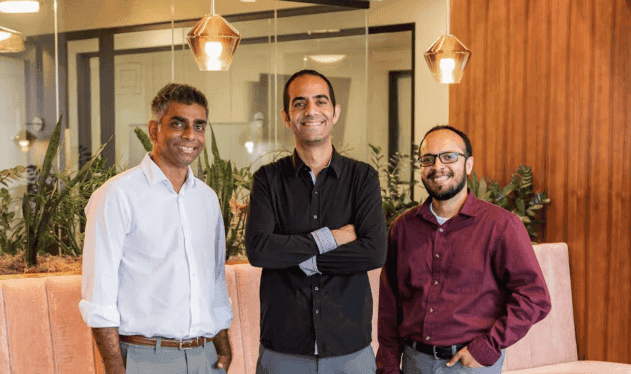
A lot of the conversation around AI in healthcare focuses on diagnostics and drug discovery or on doctor-patient visits. But a less visible part of the system affects whether patients actually get seen at all, and it has less to do with the number of doctors in the world (too few) and more with the administrative work (too much) that happens between a primary care doctor writing a referral and a specialist’s office getting a patient on the schedule. That gap, it turns out, is huge, stubbornly manual, and increasingly attracting serious interest from venture capitalists. Kaled Alhanafi, a former Lyft and Cruise executive, and Chetan Patel, who spent a decade building cardiac devices at Medtronic, co-foundedBasataafter each experienced the problem directly. For Patel, the issue became personal when his wife fainted on a flight with their young children. Even with his deep knowledge of cardiology and the specific devices that could help her, he says navigating the administrative process to get her appropriate care took far longer than it should have. “We have the best doctors, we have some of the best medicines, but the care gap is just so wide,” he said. Alhanafi describes a parallel experience with his own father, who was referred to three cardiology groups after a serious carotid artery diagnosis. According to Alhanafi, only one called back within a couple of weeks. Another responded after the surgery was already done. The third still hasn’t called. These aren’t unusual outcomes, as nearly anyone who has tried to see a specialist in recent years can attest. Specialty practices that receive referrals are frequently processing hundreds or thousands of documents — most arriving by fax — with small administrative teams. Practices lose patients not because they don’t want to see them, the company argues, but because they can’t get through the intake backlog. Basata, founded two years ago in Phoenix, is trying to fix this. When a referral comes in — still typically by fax, alas — Basata’s system reads and processes the document, extracts the relevant clinical information, and then an AI voice agent calls the patient directly to schedule the appointment. Patients can also call the practice at any hour and reach an AI agent that can answer questions or handle common administrative needs like prescription renewals. Alhanafi says the company has recordings of patients audibly surprised by how quickly they’re contacted after a referral is sent. The goal, he says, is for a patient to have a scheduled appointment by the time they reach their car in the parking lot after seeing their primary care doctor. The company integrates with the electronic medical record systems that specific specialties actually use, which is why it says it has moved carefully — cardiology first, then urology — rather than trying to serve every corner of the market at once. The founders say they recently turned down a large deal in a specialty they haven’t yet mapped thoroughly enough to feel confident doing well. The revenue model is usage-based: practices pay per document processed and per call handled, rather than per seat. The company says it has processed referrals for roughly 500,000 patients to date, with about 100,000 of those coming in the last month alone. Basata says it has raised $24.5 million in total, including a new $21 million Series A round led by Lan Xuezhao of Basis Set Ventures, who began her career modeling the human brain as a PhD researcher before moving into corporate strategy at McKinsey and Dropbox and ultimately into investing. Cowboy Ventures, founded by Aileen Lee, also participated, as has Victoria Treyger, a former general partner at Felicis Ventures who more recently stood up her own venture firm, Sofeon (this is its first investment). The space is getting crowded. Tennr, a New York-based startup founded in 2021, has raised over $160 million to date — including from Andreessen Horowitz, IVP, Lightspeed, and Google Ventures — and is now valued at$605 million. Tennr focuses heavily on document intelligence and has says it has built proprietary language models trained on tens of millions of medical documents. Assort Health, backed by Lightspeed, focuses on automating patient phone communication for specialty practices and last year raised at a$750 million valuation. Lee said the founders’ years of experience are an asset in a space filling up with well-funded competitors. “There are a lot of [VCs] chasing around high school dropouts and college dropouts, but when you’re selling to medical practices, trust is a really big deal,” she said. “These doctors want to look you in the eye and know that they can count on you.” Basata’s founders meanwhile argue that their differentiation lies in combining both capabilities into a single end-to-end workflow tailored to specific specialties instead of building a tool that handles just one part of the process. That may be harder to sustain as better-funded competitors expand, but there’s clearly a market signal here. Of course, like many AI companies automating work that humans currently do, Basata will eventually face a harder question about where the line is between augmenting workers and displacing them. For now, the founders say the administrative staff they work with aren’t worried about that; they’re more worried about drowning. Indeed, Alhanafi notes that the administrative staff at specialty practices have often been in their roles for decades and know the work intimately; they’re also buried in volume that no reasonable number of hires could fully absorb. Whether AI merely expands what these workers can do or gradually makes many of their functions unnecessary is a question that applies well beyond healthcare. For now, Basata’s pitch is the former: that freeing administrators from the most repetitive parts of the job makes them better at the rest of it. Judging by one stat shared by Alhanafi — that 70% of the company’s new deals now come through word of mouth — it seems the people closest to the problem find that argument convincing. Pictured above, left to right: Chetan Patel, who is co-founder and president of Basata; Kaled Alhanafi, the company’s CEO; and Vivin Paliath, the company’s third co-founder and CTO.

read more
Latest AI News

View All News →
Why you can never get your doctor to call you back

Why you can never get your doctor to call you back

A lot of the conversation around AI in healthcare focuses on diagnostics and drug discovery or on doctor-patient visits. But a less visible part of the system affects whether patients actually get seen at all, and it has less to do with the number of doctors in the world (too few) and more with the administrative work (too much) that happens between a primary care doctor writing a referral and a specialist’s office getting a patient on the schedule. That gap, it turns out, is huge, stubbornly manual, and increasingly attracting serious interest from venture capitalists. Kaled Alhanafi, a former Lyft and Cruise executive, and Chetan Patel, who spent a decade building cardiac devices at Medtronic, co-foundedBasataafter each experienced the problem directly. For Patel, the issue became personal when his wife fainted on a flight with their young children. Even with his deep knowledge of cardiology and the specific devices that could help her, he says navigating the administrative process to get her appropriate care took far longer than it should have. “We have the best doctors, we have some of the best medicines, but the care gap is just so wide,” he said. Alhanafi describes a parallel experience with his own father, who was referred to three cardiology groups after a serious carotid artery diagnosis. According to Alhanafi, only one called back within a couple of weeks. Another responded after the surgery was already done. The third still hasn’t called. These aren’t unusual outcomes, as nearly anyone who has tried to see a specialist in recent years can attest. Specialty practices that receive referrals are frequently processing hundreds or thousands of documents — most arriving by fax — with small administrative teams. Practices lose patients not because they don’t want to see them, the company argues, but because they can’t get through the intake backlog. Basata, founded two years ago in Phoenix, is trying to fix this. When a referral comes in — still typically by fax, alas — Basata’s system reads and processes the document, extracts the relevant clinical information, and then an AI voice agent calls the patient directly to schedule the appointment. Patients can also call the practice at any hour and reach an AI agent that can answer questions or handle common administrative needs like prescription renewals. Alhanafi says the company has recordings of patients audibly surprised by how quickly they’re contacted after a referral is sent. The goal, he says, is for a patient to have a scheduled appointment by the time they reach their car in the parking lot after seeing their primary care doctor. The company integrates with the electronic medical record systems that specific specialties actually use, which is why it says it has moved carefully — cardiology first, then urology — rather than trying to serve every corner of the market at once. The founders say they recently turned down a large deal in a specialty they haven’t yet mapped thoroughly enough to feel confident doing well. The revenue model is usage-based: practices pay per document processed and per call handled, rather than per seat. The company says it has processed referrals for roughly 500,000 patients to date, with about 100,000 of those coming in the last month alone. Basata says it has raised $24.5 million in total, including a new $21 million Series A round led by Lan Xuezhao of Basis Set Ventures, who began her career modeling the human brain as a PhD researcher before moving into corporate strategy at McKinsey and Dropbox and ultimately into investing. Cowboy Ventures, founded by Aileen Lee, also participated, as has Victoria Treyger, a former general partner at Felicis Ventures who more recently stood up her own venture firm, Sofeon (this is its first investment). The space is getting crowded. Tennr, a New York-based startup founded in 2021, has raised over $160 million to date — including from Andreessen Horowitz, IVP, Lightspeed, and Google Ventures — and is now valued at$605 million. Tennr focuses heavily on document intelligence and has says it has built proprietary language models trained on tens of millions of medical documents. Assort Health, backed by Lightspeed, focuses on automating patient phone communication for specialty practices and last year raised at a$750 million valuation. Lee said the founders’ years of experience are an asset in a space filling up with well-funded competitors. “There are a lot of [VCs] chasing around high school dropouts and college dropouts, but when you’re selling to medical practices, trust is a really big deal,” she said. “These doctors want to look you in the eye and know that they can count on you.” Basata’s founders meanwhile argue that their differentiation lies in combining both capabilities into a single end-to-end workflow tailored to specific specialties instead of building a tool that handles just one part of the process. That may be harder to sustain as better-funded competitors expand, but there’s clearly a market signal here. Of course, like many AI companies automating work that humans currently do, Basata will eventually face a harder question about where the line is between augmenting workers and displacing them. For now, the founders say the administrative staff they work with aren’t worried about that; they’re more worried about drowning. Indeed, Alhanafi notes that the administrative staff at specialty practices have often been in their roles for decades and know the work intimately; they’re also buried in volume that no reasonable number of hires could fully absorb. Whether AI merely expands what these workers can do or gradually makes many of their functions unnecessary is a question that applies well beyond healthcare. For now, Basata’s pitch is the former: that freeing administrators from the most repetitive parts of the job makes them better at the rest of it. Judging by one stat shared by Alhanafi — that 70% of the company’s new deals now come through word of mouth — it seems the people closest to the problem find that argument convincing. Pictured above, left to right: Chetan Patel, who is co-founder and president of Basata; Kaled Alhanafi, the company’s CEO; and Vivin Paliath, the company’s third co-founder and CTO.

1 hour ago

View

OpenAI launches new voice intelligence features in its API

OpenAI launches new voice intelligence features in its API

OpenAI said Thursday that its API will now include a number of new voice intelligence features designed to help developers create apps that can talk, transcribe, and translate conversations with users. The company’snew GPT‑Realtime‑2is another voice model, built to create a realistic vocal simulation that can converse with users. However, unlike its predecessor (GPT-Realtime-1.5) this one is built with GPT‑5‑class reasoning that OpenAI says was created to deal with more complicated requests from users. The company is also launching GPT‑Realtime‑Translate, which, just as it sounds, is designed to provide real-time translation services that “keep pace” with the user, conversationally. The feature includes more than70 input languages(that is, the languages that it can comprehend) and 13 output languages (the languages it relays to the speaker). Finally, the company has also launched a new transcription capability, GPT-Realtime-Whisper, which gives users live speech-to-text capabilities that are captured as interactions occur. “Together, the models we are launching move real-time audio from simple call-and-response toward voice interfaces that can actually do work: listen, reason, translate, transcribe, and take action as a conversation unfolds,” the company said. Who will these updates be good for? Companies that want to expand customer service capabilities are an obvious target. However, OpenAI also notes that its new features will assist with a wide array of areas, including education, media, events, and creator platforms, among others. As useful as these tools seem from an enterprise perspective, it also seems plausible that they could be misused. The company said it has built guardrails to stop its new features from being abused to create spam, fraud, or other forms of online abuse. Certain triggers have been embedded in the system so that “conversations can be halted if they are detected as violating our harmful content guidelines,” OpenAI said. All of the new voice models are included inOpenAI’s Realtime API. Translate and Whisper are billed by the minute, while GPT-Realtime-2 is billed by token consumption.

5 hours ago

View

Bumble is getting rid of the swipe, CEO says

Bumble is getting rid of the swipe, CEO says

Will dating app malaise finally kill off the swipe? For Bumble, at least, that seems to be the case. In aninterviewwith Axios on Thursday, Bumble CEO Whitney Wolfe Herd confirmed that Bumble will get rid of swiping, the defining feature of 2010s dating apps. “We are going to be saying goodbye to the swipe and hello to something that I believe is revolutionary for the category,” Wolfe Herd said. Bumble is planning to overhaul its app later this year, following several disappointing quarters in which the app consistentlylost paying users. In this year’s first quarter, Bumble’s paid users fell about 21% to 3.2 million, down from 4 million last year. Redesigning the app is a pretty serious intervention, signaling to investors that the situation is dire. But like any good CEO, Wolfe Herd has done some verbal gymnastics to argue that Bumble is doing a very good job at losing money. “This is a period of real transformation at Bumble over the past few quarters,” shesaidon this week’s quarterly earnings call. “We have executed a deliberate reset of our member base. We made a clear choice to prioritize quality over quantity, focusing on well-intentioned, engaged members. That decision reduced overall scale, but meaningfully improved the health of our ecosystem.” Based on Wolfe Herd’s past comments about Bumble’s new direction, the company is expected to lean into AI — Bumble is even working on an AI dating assistant calledBee, and Wolfe Herd has made manycommentsover the years about how AI will be “a supercharger to love and relationships.” Of course, dating apps already use AI to decide what users should be shown to one another. But Gen Z is trending more negative toward in-your-face AI features, and Wolfe Herd has expressed interest in more extreme futures, like havingpersonal AI botsthat date other AI bots for you. So, it’s unclear if these “Black Mirror”-like overtures will effectively attract users in their 20s. Bumble’s overhaul isn’t expected to launch until the last quarter of this year, so users will still be swiping for now.

9 hours ago

View

Elon Musk’s lawsuit is putting OpenAI’s safety record under the microscope

Elon Musk’s lawsuit is putting OpenAI’s safety record under the microscope

Elon Musk’s legal effort to dismantle OpenAI may hinge on how its for-profit subsidiary enhances or detracts from the frontier lab’s founding mission of ensuring that humanity benefits from artificial general intelligence. On Thursday, a federal court in Oakland, California, heard a former employee and board member say the company’s efforts to push AI products into the marketplace compromised its commitment to AI safety. Rosie Campbell joined the company’s AGI readiness team in 2021, and sheleft OpenAIin 2024 after her team was disbanded. Another safety-focused team, the Super Alignment team, was shut down in the same time period. “When I joined, it was very research-focused and common for people to talk about AGI and safety issues,” she testified. “Over time it became more like a product-focused organization.” Under cross-examination, Campbell acknowledged that significant funding was likely necessary for the lab’s goal of building AGI but said creating a super-intelligent computer model without the right safety measures in place wouldn’t fit with the mission of the organization she originally joined. Campbell pointed to an incident where Microsoft deployed a version of the company’s GPT-4 model in India through its Bing search engine before the model had been evaluated by the company’s Deployment Safety Board (DSB). The model itself did not present a huge risk, she said, but the company needed “to set strong precedents as the technology gets more powerful. We want to have good safety processes in place we know are being followed reliably.” OpenAI’s attorneys also had Campbell admit that in her “speculative opinion,” OpenAI’s safety approach is superior to that at xAI, the AI company that Musk founded that was acquired by SpaceX earlier this year. OpenAI releases evaluations of its models and sharesa safety frameworkpublicly, but the company declined to comment on its current approach to AGI alignment. Dylan Scandinaro, its current head of preparedness, was hired from Anthropic in February. Altmansaidthe hire would let him “sleep better tonight.” The deployment of GPT-4 in India, however, was one of the red flags that led OpenAI’s non-profit board to briefly fire CEO Sam Altman in 2023. That incident took place after employees, including then-chief scientist Ilya Sutskever and then-CTO Mira Murati, complained about Altman’s conflict-averse management style. Tasha McCauley, a member of the board at the time, testified about concerns that Altman was not forthcoming enough with the board for its unusual structure to function. McCauley also discussed awidely reportedpatternof Altman misleading the board. Notably, Altman lied to another board member about McCauley’s intention to remove Helen Toner, a third board member who published a white paper that included some implied criticism of OpenAI’s safety policy. Altman also failed to inform the board about the decision to launch ChatGPT publicly, and members were concerned about his lack of disclosure of potential conflicts of interest. “We are a non-profit board and our mandate was to be able to oversee the for-profit underneath us,” McCauley told the court. “Our primary way to do that was being called into question. We did not have a high degree of confidence at all to trust that the information being conveyed to us allowed us to make decisions in an informed way.” However, the decision to boot Altman came at the same time as a tender offer to the company’s employees. McCauley said that when OpenAI’s staff started to side with Altman and Microsoft worked to restore the status quo, the board ultimately reversed course, with the members opposed to Altman stepping down. The apparent failure of the non-profit board to influence the for-profit organization goes directly to Musk’s case that the transformation of OpenAI from research organization into one of the largest private companies in the world broke the implicit agreement of the organization’s founders. David Schizer, a former dean of Columbia Law School who is being paid by Musk’s team to act as an expert witness, echoed McCauley’s concerns. “OpenAI has emphasized that a key part of its mission is safety and they are going to prioritize safety over profits,” Schizer said. “Part of that is taking safety rules seriously, if something needs to be subject to safety review, it needs to happen. What matters is the process issue.” With AI already deeply embedded in for-profit companies, the issue goes far beyond a single lab. McCauley said the failures of internal governance at OpenAI should be a reason to embrace stronger government regulation of advanced AI — “[if] it all comes down to one CEO making those decisions, and we have the public good at stake, that’s very suboptimal.”

9 hours ago

View