🚀 Zaprep: Your Socials on Steroids. Start free — automate 1,000 DMs/month & turn engagement into leads. with 1,000 automated DMs/month.
Latest AI News

Jio Haptik Launches SOLO to Equip SMEs With AI Business Teams
The Reliance Jio-backed firm has introduced an AI tool aimed at solopreneurs, home businesses, and small enterprises across the country
View

Perplexity is Building a Claude Code, Cursor Competitor: Report
Perplexity has reportedly been using the AI tool internally since May.
View
After DeepSeek, Z.ai Explores Building AI Chip as GLM Demand Surges: Report
Z.ai is seeing rapid adoption of its GLM models as the Chinese AI company looks for reliable computing infrastructure.
View

Meta Launches Muse Image AI Model With Web Search Feature, Previews Muse Video
Meta has also released Content Seal, an invisible watermark designed to help identify AI-generated images.
View

OpenAI’s Codex Breakthrough Heralds a New Era in Chip Design
The company's use of agentic models to take its custom chip from a blank slate to tape-out in just nine months signals a new era of chip design.
View
Discord admits AI moderation bug wrongfully banned users over harmless images
Discord has acknowledged that a bug in its AI moderation system mistakenly banned more than 8,000 users over the past two months, after harmless images—including spreadsheets, chessboards, game textures, as well as white and gray transparent backgrounds—were incorrectly flagged as harmful content. The company confirmed that the issue had been affecting accounts since May, with an additional 200 users banned over the weekend before its team identified and fixed the problem. All affected accounts are currently in the process of being restored. The incident highlights one of the growing challenges surrounding AI-assisted moderation as many platforms increasingly rely on automated systems to identify illegal or abusive material at scale. In adetailed thread on X, Discord explained that its automated safety system works by matching uploaded content against databases of known harmful material. While the technology is designed to catch illegal content, the company acknowledged that it can sometimes generate false positives. A human moderator reviews the content, but a bug caused the system to immediately ban affected accounts. “We’re working on better safeguards so this can’t happen again,” the company wrote. Our systems flag content by matching it against known harmful material. This kind of similarity matching can produce false positives, which is why a member of our Trust & Safety team always reviews flagged content before any action is taken.The intended behavior is to…— Discord Support (@discord_support)July 7, 2026 Our systems flag content by matching it against known harmful material. This kind of similarity matching can produce false positives, which is why a member of our Trust & Safety team always reviews flagged content before any action is taken.The intended behavior is to… Across X andReddit, users have claimed they had been permanently suspended simply for uploading images containing square grid patterns. Several users speculated that Discord’s AI moderation tools have become increasingly sensitive to grid-like patterns because they have previously been used in attempts to obscure or disguise NSFW and child exploitation content from automated detection systems. Affected users have been expressing frustration on social media, with some arguing that permanent account bans based solely on automated detection can have serious consequences, particularly for users who rely on Discord for work, gaming communities, or long-distance social connections. “Losing a Discord account to something as unfair as this can be extremely devastating and affect users severely, and every day millions of users are affected by false AI bans. This needs to be stopped,” one X userwrote. My account was wrongfully banned from your platform due to a bug in your AI automod detecting my GAME TEXTURES as CSAM. I need my account back as I’m a game director and use Discord for all my communication. I have requested a review of my suspension.@discord@discord_supportpic.twitter.com/QfAkCIJo6S— JDBRYANT 🎂 TODAY (@jdbryantdev)July 4, 2026 My account was wrongfully banned from your platform due to a bug in your AI automod detecting my GAME TEXTURES as CSAM. I need my account back as I’m a game director and use Discord for all my communication. I have requested a review of my suspension.@discord@discord_supportpic.twitter.com/QfAkCIJo6S Discord isn’t alone in facing moderation troubles due to automated systems. Last year, users ofInstagramandFacebook Groupsreported widespread unexplained account suspensions that many believed were caused by AI moderation systems. Although users pointed to automation as the likely culprit, Meta never publicly confirmed whether AI errors were responsible. Now Meta’s Oversight Board ispushing for increased transparency. Tumblr last year alsofaced complaintsfrom users who said their accounts had been mass-suspended without clear explanations.
View

Microsoft joins AI cost-cutting trend by relying more on its own models
AsAI costs continue to rise, companies are looking for ways to cut back. The most recent example is Microsoft, which has reportedly begun to deploy a cost-savings strategy by relying less on software from OpenAI and Anthropic and instead deploying its own in-house models. Indeed, when it comes to two of its most widely used programs — Excel and Word — Microsoft has begun to use its homemadeMAI modelsto respond to a certain percentage of user prompts, BloombergreportedTuesday. In the past, the company had advertised the fact that large parts of Office 365 arepowered by models from both OpenAI and Anthropic. While Microsoft still relies on those third-party models, it has also increasingly sought to stand up its own AI agents. Last month, at its annual Build conference, the company announced thelaunch of seven new MAI models, including an agentic coder and a text-to-image generator. When reached for comment by TechCrunch, Microsoft said that it had nothing further to share. Microsoft’s apparent cutbacks are part of a broader trend. After a brief blitz of “tokenmaxxing” earlier this year, the last few months have seen a news cycle awash in stories about tech companies acting significantly more thrifty. Other large companies — likeAmazon,Uber,Meta, andAccenture— have also reportedly made moves to curb spending. The immense cost of providing and buying AI services has become a controversial part of the industry. The sticker shock has gotten so bad in some parts of Silicon Valley that some companiesare reportedlylooking to Chinese models for more affordable agentic solutions — despite some concerns overpotential security issues.
View

Why the rise of open source AI isn’t hurting Anthropic … yet
On Monday, Decagon CEO Jesse Zhang published a provocative new theory, posted under the title“Everyone is wrong about open source AI in the enterprise.”The post grapples with one of the most interesting contradictions of today’s AI economy: More mature AI deployments are switching to lighter models, he says, even at his own company. But the overall spend on expensive state-of-the-art models has barely budged. It’s a new way to think about the relationship between frontier and open source models. In Zhang’s telling, they aren’t competitors, and open source models’ success isn’t coming at the expense of frontier labs. Instead, they’re two phases of the same life cycle, with expensive frontier models being used to prove out use cases that can be passed along to cheaper open source alternatives as they mature. As more mature use casesswitch to lighter models, new use cases keep arising — and the overall spend on frontier models barely goes down. Zhang doesn’t give much data to support the point, but the data isn’t hard to find.Vercel’s AI gateway dashboardshows that, in just the past week, DeepSeek has surged into the lead for token volumes, now processing just over a third of the tokens passing through the company’s infrastructure. Z.ai — the lab behind the popular GLM-5.2 model — jumped into a respectable fourth place over the same period. But if you scroll down to overall token spend, you’ll see Anthropic still accounts for more than half of the overall AI spend on the platform. Given that much of the recent change comes from Anthropic’s own rising prices, the share has dropped slightly over the past month, but not significantly. OpenRoutertells a similar story, capturing a much larger (but slightly less enterprise-y) segment of the market. DeepSeek V4 Flash is the main winner on overall usage, processing 5.3 trillion tokens weekly. The most popular frontier model, Opus 4.8, handles just over 2 trillion. OpenRouter doesn’t rank models by total spend, but it registers the average token cost for Opus 4.8 as roughly 23x higher than V4 Flash ($1.37 per million tokens, compared to just 6 cents), which would mean Opus was still probably capturing the lion’s share of spending. Those figures don’t even capture the newest arrival, Nvidia’s Nemotron, which ispoised to leap to the front of the packby virtue of Nvidia’s strong connections and the model’s own extreme adaptability. Those figures don’t fully prove Zhang’s point about the AI life cycles, but they do show frontier labs like Anthropic aren’t suffering too much from the rise of open source — at least not yet. One explanation is that the market of AI-addressable tasks is growing so fast that the top models are able to maintain their position just by dominating early-stage deployments. As Zhang puts it, “The frontier labs will keep owning discovery. Open source will increasingly own production.” Another explanation might be that, even as clients move to open source, many use cases are so difficult that they can’t be entirely replaced with cheaper alternatives. Either way, this two-tiered economy of models may become a relatively stable feature of the AI economy. As recently as last September, I was writing about the possibility that foundation labs would end upselling coffee beans to Starbucks— that is, serving as commodity inputs while the application layer reaped the benefits. Some parts of that prediction came true: Vertical AI plays switched to lighter models, for one, and the economics of “GPT wrapper” startups have remained mostly stable. But we’re also seeing that, token for token, frontier providers have been able to hold on to the most desirable part of the marketplace — the premium token price. And that doesn’t seem likely to change any time soon.
View

Meta rolls out Muse, a new AI image generator
Metahas unveiledits new AI image generator, Muse Image, which was produced by Meta Superintelligence Labs, the company’s dedicated AI unit. The new feature, which was internally code-named Mango,will be availablefor free through the Meta AI app, as well as in Instagram Stories and WhatsApp. What exactly can you do with Muse? It sounds like the use-cases are similar to most other AI image generators — you’ll be able to create a whole lot of goofy and cartoonish images, for instance. If you’re suffering from a dearth of imagination and can’t come up with any original prompts on your own, Meta says that Muse comes with “presets” — prefabricated image prompts — to “spark ideas.” An accompanying video shows other potential uses. One is to use Muse tocreate custom ads(AI has notably crept into advertising over the past year) or to play around with interior decoration ideas (in the video, a user leverages Muse to see what a used couch might look like in their garage). This last function is designed to be integrated with Facebook Marketplace, Meta’s popular Craigslist-like locus of used furniture and accessories. The model also features prompt-based image editing, which can be used to create images to share across Meta’s various apps and platforms. “Ask it to mock up an image of you in front of a historical landmark, cleanly erase a photobomber from the background of a shot, or write a custom prompt to build a functional QR code,” the company offers. At the same time, Meta islaunching a host of new AI effectsfor Instagram Stories which are supported by Muse. Those effects include various customizable filters that can be used to modify existing photos. Meta says that the use of the new AI model is free for “everyday creation” although, past a certain limit, users will need to use Meta’s subscription plans. The company also said that Muse Video — presumably an AI video generator — is “already in development.” TechCrunch reached out to Meta for more information. Meta has released a number of AI apps and services over the past year, including an assistantcalled Creator, andPocket, an app that can be used to vibe code video games. The company has been accused of having anebulous AI strategy, although it’s stillon track to spend a whole loton AI infrastructure this year as it continues to build out its services.
View
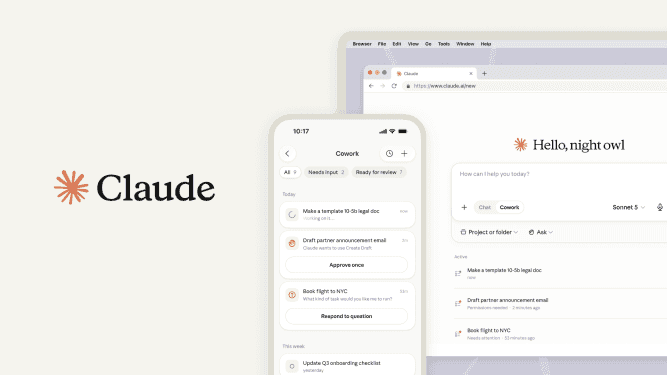
Claude Cowork expands to mobile and web
Claude Cowork— Anthropic’s Claude Code-style agent for general knowledge work — is coming to your phone. Claude Cowork launched as a desktop app in January, but starting Tuesday it is available on web and mobile for Max subscribers. With the update, users can start a task from their desk, get status updates on their phone, and pick up the finished output later — even if their laptop is closed. The product expansion is a signal that Anthropic wants Cowork to feel less like a coding tool for dummies and more like an agentic administrative coworker: something that can work in the background, tag along across devices, and request human input when a decision pops up only the user can make. In other words: The coding agent wars are spilling into the rest of the office. The move comes as AI firms try to push their products beyond chatbots into the everyday surfaces where work actually happens. OpenAI has madea similar move with Codex,which began as a software development tool but is increasingly being used by non-developers for reports, spreadsheets, presentations, research, data analysis, and more. For both labs, the bet is that success will depend less on who has the best chatbot and more on who owns the space where work gets done. That push also extends to other apps.Anthropic recently launched Claude Tag, an always-on Claude that lives in Slack and acts as an AI teammate. Beyond the benefits of one specific interface, launching Cowork as a multi-platform app means that the agent can continue running tasks in the background without a device online, the company says. One example from Anthropic reads: “Set Monday’s client prep for 6 am: Claude works through the email threads, transcripts, and recent news, builds the briefing doc, and leaves the follow-up email drafted but unsent. Review it over coffee.” The desktop app will remain the place for deep work, where Claude can access local files and the browser. But bringing Cowork to web and mobile means people who didn’t install the app can also use it. Anthropic says chat and Cowork will be unified in web and desktop to start, with projects and artifacts living together across both. Anthropic also released early Cowork data, which suggests the clearest use case for the tool is the “work around the work” that keeps companies functioning, handling what Anthropic calls the “tasks that are part of a broad swath of jobs, but are rarely a person’s core responsibility.” The study sampled 1.2 million anonymized and aggregated Cowork sessions from more than 600,000 organizations over the last two weeks of May. The largest category at 33.4% was business process operating: pulling scattered updates into a single report, building onboarding checklists, and reconciling spreadsheets. Anthropic said the tasks are common among roles in finance, HR, and administration. The next largest category at 16.4% was content creation and copywriting: tasks like drafts, slide decks, social posts, proposals, and other communications work that is usually performed by marketing and management positions. Software development, by comparison, only accounted for 8.7% of Cowork usage. “While coding is still — understandably — one of the uses of AI that gets the most attention, the use of AI for everyday business work is on the rise, and the kinds of tasks people are finding it most helpful for are coming into focus,” Anthropic said in a statement. “Our goal is to make this a reference point for people who are figuring out how to integrate AI products into their daily work, and to show where value is most concentrated.”
View
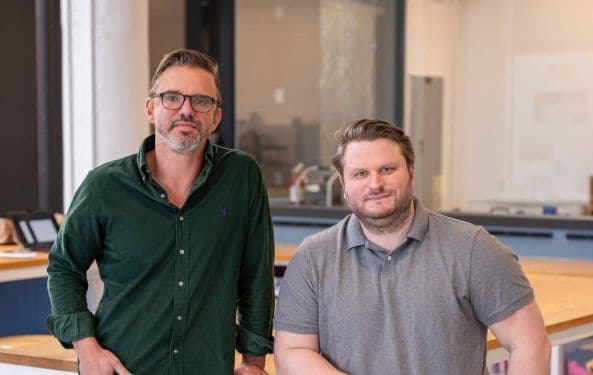
Savi’s app aims to protect consumers from realistic AI scams like kidnappers demanding ransom
Brothers Patrick and Ryan Coughlin, each with impressive careers in the tech industry (Patrick worked in national cyber defense, and at Splunk and Cisco; and Ryan with consumer products at Apple and Spotify), have launched a new kind of security startup. Savi Securityseeks to protect everyday folks from the new crop of incredibly convincing AI-generated scams, whether they’re routed via text, emails, or phone calls. The company just raised $7 million in seed funding, and is launching its app for iPhone and Android on Tuesday. The round was led by Acrew Capital, with participation from Magnify Ventures, TTCER, and Resolute Ventures. The inspiration for the company came from a horrifying incident involving the founders’ mother. About two years ago, Patrick Coughlin’s mom called him, distraught, saying she had just received a phone call from a man saying he had kidnapped Coughlin’s sister. He was senior vice president of security products at Cisco at the time. (He landed there after Splunk bought his cloud security startup TruSTAR for a reported $82 million in May 2021. In 2024, Cisco bought Splunk.) Her mobile phone rang with the caller ID of her daughter, Coughlin recounted. During that call, “she thinks she hears my sister’s voice saying, ‘Mom, they’ve got me.’ There’s a blood-curdling scream, and then my sister says, ‘You’ve got to do what they tell you.’ And then a man comes on the phone and says, ‘If you don’t pay us $1,200 right now, we’re going to kill your daughter in the parking lot of the local Walmart,’” he continued. The scammer had accurately spoofed Coughlin’s sister’s number, her voice, and referenced the location of the Walmart she frequented. Fortunately, the mom kept her wits, called the daughter, and discovered that she was fine. The kidnapping was an AI-generated scam. Coughlin, like his mom, was shaken. “What I was thinking, after calming my mom down is: What has fundamentally changed in the underlying cybercriminal economy that we are now able to lever the same kind of sophistication that I had seen pointed at government agencies, and then later at Fortune 500 companies? And now we’re deploying that sophistication at the consumer?” The answer is, of course, cheap and powerful LLMs and other generative AI tools. Before AI, pursuing such grifts on consumers was not financially worth it. It would require in-depth research on the target, tech to spoof voices, and so on. Such attacks were primarily aimed only at deep pockets, like enterprises or governments, as was the tech to defend against them. “There’s something that’s happening right now to consumers with AI in the hands of cyber criminals,” Coughlin says. The costs to perpetrate such swindles have become negligible, and the research material, easily available. “You can clone a voice off three seconds of audio, off a publicly available social media post. So we’ve all got these traces of stuff that’s out there in the ether — like where we’re talking or narrating; commenting on a kid’s football game while videotaping it, and putting it on Facebook.” The FTCsaidlast month that people reporting online crimes collectively lost $3.5 billion to imposter scams in 2025, triple the amount in 2020. While the majority of people reporting such scams are older Americans, some research implies Gen Z is also highly susceptible. Research from 2025 by Malwarebytes, a maker of antivirus and anti-malware tools, reported that Gen Z was targeted more often with text scams than other generations, andfell for them about 25% of the time. The Coughlin brothers’ idea was to develop a real-time intervention tool. They tested their idea, and the AI scam detection model they were building, by launching a free website calledScam Wise. It is anonymous, no registration required. Just upload any suspicious texts, photos, or emails, and Scam Wise will determine if it’s likely to be bogus. “We launched that about four months ago. We’ve had 50,000 submissions, and it grows now every week by about 10,000 submissions or more,” Coughlin said. Scam Wise proved a source of in-the-wild data to help train Savi’s scam-detection AI model. The startup is currently mostly using Google’s Gemini, but has built its software on an AI gateway, which allows it to tap other AI models as needed, like voice detection-specific options. On Tuesday, Savi launched a paid product, an iOS and Android app for consumers, that can screen texts, voicemails, and incoming calls for scams. Such features are available in a lot of different products (such as Malwarebytes), but Savi’s most impressive feature is live-call monitoring. During a suspicious phone conversation, a user can opt to add the app’s live agent as a listener. Savi listens for behavioral tells that can identify if the situation is a grift while the call is in progress. Savi’s fees are also a bit unusual. It charges $8/month, discounted to $63/year, to cover an entire family, and puts no cap on the number of users. So one plan can cover a person’s kids, spouse, parents, and that uncle who always seems to need tech support. Or whoever else that the primary account holder wants to add and provide administrative support to. AI has changed the conditions for “how accessible being a fraudster is,” Coughlin said. “We’re creating fraudsters because we’re bringing down the barrier of deceiving people. So not only do we have the organized criminals and the syndicates behind this, but everyday people are sort of being tempted into playing fraud.” Savi Security’s answer is like a new generation of anti-virus-like software: one that uses AI in real time just like the bad guys do.
View

Inside the Chennai Factory 3D-Printing India’s Rocket Engines
At IIT Madras Research Park, Agnikul Cosmos is building rocket engines and even custom machines using additive manufacturing.
View
Submit your Tool


PoweredByAI.app is an AI Tools Directory helping individuals, businesses, and creators discover the best AI tools for writing, coding, design, productivity, and more.
© 2026 , Product of011BQ. All rights reserved.