Latest AI News

Google’s new Gemini Pro model has record benchmark scores — again
On Thursday, Googlereleasedthe newest version of Gemini Pro, its powerful LLM. The model, 3.1, is currently available as a preview and will be generally released soon, the company said. Google’s new model may be one of the most powerful LLMs yet. Onlookers have noted that Gemini 3.1 Pro appears to be a big step up from its predecessor, Gemini 3 — which, upon its release in November,was already considereda highly capable AI tool. On Thursday, Google also shared statistics from independent benchmarks — such as one called Humanity’s Last Exam — that showed it performing significantly better than its previous version. Gemini 3.1 Pro was also praised by Brendan Foody, the CEO of AI startup Mercor, whose benchmarking system, APEX, is designed to measure how well new AI models perform real professional tasks. “Gemini 3.1 Pro is now at the top of the APEX-Agents leaderboard,” Foody saidin a social media post, adding that the model’s impressive results show “how quickly agents are improving at real knowledge work.” The release comes as theAI model wars are heating up, and tech companies continue to release increasingly powerful LLMs designed for agentic work and multi-step reasoning. Other major names — including OpenAI and Anthropic — have recently released new models as well.
View

BHASHINI Unveils VoicERA, Open Source Multilingual Voice AI Stack
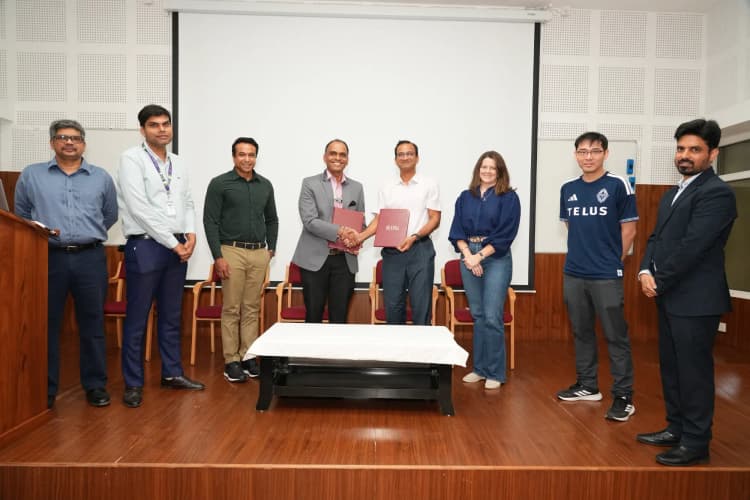
The launch was led by BHASHINI, along with EkStep Foundation in collaboration with COSS, IIIT Bengaluru and AI4Bharat.
View

YouTube’s latest experiment brings its conversational AI tool to TVs
The race to advance conversational AI in the living room is heating up, with YouTube being the latest to expand its tool to smart TVs, gaming consoles, and streaming devices. This experimental feature, previously limited to mobile devices and the web, now brings conversational AI directly to the largest screen in the home, allowing users to ask questions about content without leaving the video they’re watching. According to YouTube’ssupport page, eligible users can click the “Ask” button on their TV screen to summon the AI assistant. The feature offers suggested questions based on the video, or users can use their remote’s microphone button to ask anything related to the video. For instance, they might ask about recipe ingredients or the background of a song’s lyrics, and receive instant answers without pausing or leaving the app. Currently, this feature is available to a select group of users over 18 and supports English, Hindi, Spanish, Portuguese, and Korean. YouTube first launched thisconversational AI toolin 2024 to help viewers explore content in greater depth. The expansion to TVs comes as more Americans now access YouTube through their television than ever before. ANielsen reportfrom April 2025 found that YouTube accounted for 12.4% of total television audience time, surpassing major platforms like Disney and Netflix. Other companies are also making significant strides with their conversational AI technologies. Amazon rolled outAlexa+ on Fire TV devices, enabling users to engage in natural conversations and ask Alexa+ for tailored content recommendations, hunt for specific scenes in movies, or even ask questions about actors and filming locations. Meanwhile,Rokuhas enhanced its AI voice assistant to handle open-ended questions about movies and shows, such as “What’s this movie about?” or “How scary is it?”Netflixis also testing its AI search experience. Another way YouTube has tried to improve itsTV experience with AIis the recent launch of a feature that automatically enhances videos uploaded at lower resolutions to full HD. Additionally, the company continues to launch other AI features, like a comments summarizer that helps viewers catch up on video discussions and anAI-driven search results carousel. In January, the companyannouncedthat creators will soon be able to make Shorts using AI-generated versions of their own likeness. Last week, YouTubelauncheda dedicated app for the Apple Vision Pro, too, letting users watch their favorite content on a theater-sized virtual screen in an immersive environment.
View

Reload wants to give your AI agents a shared memory
There came a point when Newton Asare realized AI agents weren’t just tools anymore. “They were operating more like teammates,” he told TechCrunch. The realization crystallized when Asare and Kiran Das, both serial founders, noticed they were using AI agents to perform tasks they usually would have done themselves. Asare said he came to believe that the future lay in people managing AI employees. “And if that’s true, we’ll need a real system to manage them, with structure around onboarding, coordination, and oversight for digital workers,” he added. Last year, the duo launchedReload, an AI workforce management platform. On Thursday, the company announced itsfirst AI product, Epic, alongside a $2.275 million round led by Anthemis, with participation from Zeal Capital Partners, Plug and Play, Cohen Circle, Blueprint, and Axiom. Reload is a platform that lets organizations manage their AI agents across teams and departments. Companies can connect agents, regardless of who built them (whether by a third party or internally), assign them roles and permissions, and track the work they perform. “Reload acts like the system of record for AI employees, providing visibility, coordination, and oversight as agents operate across functions,” said Asare, the company’s CEO. Right now, he observed, teams are using multiple agents simultaneously for tasks such as coding, debugging, and refactoring. The problem is that these agents are often focused solely on whatever they were prompted to do and don’t necessarily retain long-term memory of what a product is or why they were told to perform a specific function. They operate, in other words, with only short-term memory. Over time, an agent can lose context, or the system can evolve away from its original intent. That’s why Reload is launching Epic. Built on top of the Reload platform, it serves as an architect alongside other coding agents, continuously defining a product’s requirements and constraints, and reminding agents what they are building and why, to keep a system consistent as it develops. “In software development specifically, coding agents can generate large amounts of code, but they don’t preserve shared system understanding over time,” Asare said. “Epic complements those agents by defining the system upfront and maintaining shared context as it evolves. It doesn’t replace coding agents; it makes them more effective.” Epic is designed to live inside the coding environments where developers already work. It can be installed as an extension in AI-assisted code editors like Cursor and Windsurf, running alongside other agents inside these tools. “When a team starts a project, Epic helps create the core system artifacts such as product requirements, data models, API specifications, tech stack decisions, diagrams, and structured task breakdowns,” Asare said, adding that these are the foundations that coding agents build against. “As development progresses, Epic maintains a structured memory of decisions, code changes, and patterns,” he continued. “If you switch coding agents, your structure and memory follow. If multiple engineers use different agents on the same project, everyone builds against the same shared source of truth.” Asare and Das previously had a company together that was acquired and this is their second company together. The AI infrastructure space is crowded. Competitors include LongChain, which helps with AI agent deployment and memory management, and CrewAI, which helps enterprises manage their AI agents. Das said Epic is different because it “defines the system upfront and maintains shared project-level context across agents and sessions,” with a focus specifically on building infrastructure to maintain AI employees. “Traditional workforce systems weren’t designed for AI agents operating as teammates,” said Das, who serves as the company’s CTO. “That’s the layer we’re focused on.” The fresh capital will go toward hiring and product advancement, specifically expanding the infrastructure needed to support a growing number of AI agents. “We’re building for the next era of work,” Asare said. This piece was updated to add the other investors in the round.
View

OpenAI reportedly finalizing $100B deal at more than $850B valuation
OpenAI is nearing a deal to raise more than $100 billion at a valuation that could exceed $850 billion,Bloomberg reports,citing sources familiar with the matter. The deal comes as the ChatGPT-maker burns through cash as it inches toward profitability. To that end, OpenAI has said it has started testingads in ChatGPTfor free users, a gamble that could lead to more revenue or could send users running from the platform. Apparently investors think it’s worth the risk if they’re valuing the company $20 billion higher than the $830 billion valuation initially expected. The company’s pre-money value will remain at $730 billion, per Bloomberg’s source. The first tranches of funding are reportedly coming from the usual suspects: Amazon (already in talks to investup to $50 billion), SoftBank (gearing up for$30 billion), Nvidia (close to investing$20 billion), and Microsoft. VC firms and sovereign wealth funds are expected to close later, potentially bringing the total amount raised higher. TechCrunch has reached out to OpenAI for comment.
View

Reddit is testing a new AI search feature for shopping
Redditannouncedon Thursday that it’s testing a new AI search tool that takes community recommendations and matches them with products from some of the company’s shopping and advertising partners. A small group of users in the U.S. will start to see search results that include interactive product carousels with pricing, images, and direct where-to-buy links. The announcement reflects Reddit’s broader push to combine its community-driven platform with e-commerce capabilities. The move comes as Reddit launched itsfirst shoppable ad productlast year, called Dynamic Product Ads (DPA), which display personalized product recommendations to users based on their interests. Now, when users who are part of the test search for something like “best noise-canceling headphones” or “electronic gift ideas for a college student,” they will see a carousel of related products at the bottom of the results. This carousel will feature products directly mentioned by users from conversations on related posts and comments. If users tap on the product, they can view more details and then be directed to the retailer to purchase the item. “This feature surfaces top-recommended products directly from discussions, giving redditors instant information about any product,” the company wrote in ablog post. “This test is designed to make Reddit easier to navigate while keeping community perspectives at the center of the experience. We’ll continue learning from how people use this new feature and refine the experience over time.” While platforms like TikTok and Instagram have long integrated shopping features, Reddit is now looking to follow suit. Of course, Reddit isn’t the only tech platform that recently started exploring AI-driven shopping, as OpenAI’s ChatGPT rolled out an“Instant Checkout”feature last September that lets users make Etsy and Shopify purchases within conversations. Thursday’s announcement comes afterReddit CEO Steve Huffman saidduring the company’s earnings release last week that the platforms’s AI search engine could be the next big opportunity for its business, not just in terms of product, but also as a revenue driver. Huffman also noted that weekly active users for search grew 30% over the past year, increasing from 60 million to 80 million, while weekly active users for the AI-powered Reddit Answers feature rose from 1 million in the first quarter of 2025 to 15 million by the fourth quarter.
View

Power, Policy and the Future: Inside the Most Decisive Day of India AI Impact Summit
Top global leaders descended at Bharat Mandapam and made some powerful announcements and statements on the future of AI.
View

Reliance unveils $110B AI investment plan as India ramps up tech ambitions
Mukesh Ambani, the billionaire chairperson of Indian conglomerate Reliance, on Thursday unveiled the group’s ₹10 trillion (about $110 billion) plan to build AI computing infrastructure in India over the next seven years. Speaking at theIndia AI Impact Summitin New Delhi on Thursday, Ambani said the investment would fund gigawatt-scale data centers, a nationwide edge computing network, and new AI services integrated with Reliance’s Jio telecom platform. Reliance has already begun construction of multi-gigawatt data centers in Jamnagar, Gujarat, Ambani said, and more than 120 megawatts of capacity is expected to come online in the second half of 2026. Ambani’s pledge adds to a growing wave of AI investment in India. Earlier this week, Adani Group outlined plans toinvest about $100 billion to build AI data centersin the country, and the Indian governmentexpects more than $200 billionin AI infrastructure spending over the next two years. Global technology firms are also stepping up their presence, withOpenAI partnering with the Tata Groupto develop about 100 megawatts of AI capacity in the country, and plans to scale that to 1 gigawatt eventually. Ambani said the push is essential for India’s technological self-reliance, saying the country “cannot afford to rent intelligence,” and that Reliance aims to cut the cost of AI services as dramatically as it once reduced mobile data prices in the country. “The biggest constraint in AI today is not talent or imagination,” Ambani said. “It is scarcity and high cost of compute.” The build-out, Ambani said, would be supported by Reliance’s green energy capacity, which stretches to 10 gigawatts of surplus power from solar projects in Gujarat and Andhra Pradesh. Reliance will partner with Indian enterprises, startups, and academic institutions to embed AI in industries ranging from manufacturing and logistics to agriculture, healthcare and financial services. Jio has already been striking AI partnerships: it last year landed adeal with Googleto offer free Gemini AI Pro access to millions of its users in India. Reliance also plans to develop AI capabilities in several Indian languages to spur adoption of the tech, Ambani said. The aggressive push highlights how India’s largest conglomerates are racing to secure a foothold in what is expected to be one of the country’s biggest technology opportunities.
View

Freeform raises $67M Series B to scale up laser AI manufacturing
Tech investors haven’t given up on the dream of making physical products with the same speed and ease as coding software. Executives atFreeform, a startup developing a novel 3D printing system for metal components, told TechCrunch that the company raised a $67 million Series B to expand its manufacturing platform. Investors include Apandion, AE Ventures, Founders Fund, Linse Capital, NVidia’s NVentures , Threshold Ventures, and Two Sigma Ventures. FreeForm declined to disclose the company’s post-financing valuation, which Pitchbook cites as $179 million. CEO and cofounder Erik Palitsch said the funding would allow the company to upgrade its current GoldenEye printing system, which uses 18 lasers to fuse metal powders into precision components, to a new version. Dubbed Skyfall, the next iteration of the platform would use hundreds of lasers to produce thousands of kilograms of metal parts each day. That’s the culmination of a vision Palitsch and co-founder/president Thomas Ronacher launched in 2018. The two met while developing rocket engines at SpaceX, where they found that industrial machines for printing metal components are expensive, finicky, and not well designed for mass manufacturing. Their new company would build its platform from the ground up to achieve higher throughput and flexibility, with an emphasis on active software controls. Palitsch says Freeform’s platform is “AI native,” noting apartnership with Nvidiathat allows the company to access advanced GPUs. “I think we’re the only quote-unquote manufacturing company out there that has H200 clusters in a data center on site,” Paltisch told TechCrunch. “What are they doing? We’re running real-time physics-based simulations and learning all the different aspects of the end to end manufacturing workflow.” The data collected by sensors in the company’s manufacturing platform and during the simulations allows Freeform to rapidly improve production quality and quantity. “We have more meaningful data on the physics of the metal-printing process than any company in the world,” head of talent Cameron Kay said. While Palitsch said he could not disclose any customers, he said the company is already delivering hundreds of “mission-critical” parts to buyers. Now, the company wants to hire as many as 100 new employees and expand its facility to start executing on its contract backlog. Manufacturing-as-a-service has grown as a category as venture investors have taken a greater interest in building vehicles, robots, and energy production systems. For example, Hadrian recently earneda $1.6B valuationfrom its investors while developingautomated productionfor defense, and VulcanForms and Divergent have raised hundreds of millions to develop metal-printing services of their own.
View

Altman and Amodei share a moment of awkwardness at India’s big AI summit
What would have been a moment of united commitment to global tech innovation at the ongoingIndia AI Impact Summitinstead proved an awkward one: When Prime Minister Narendra Modi prompted speakers at the event to join hands and raise them in a show of solidarity, all executives on stage obliged — except OpenAI’s Sam Altman and Anthropic’s Dario Amodei, who held their hands noticeably apart. As leaders of the two foremost labs in the AI race, it goes without saying that Altman and Amodei are fierce competitors. That rivalry has only intensified in recent months: after OpenAI said it would bring advertisements to ChatGPT, Anthropic took a swipe at OpenAI in a couple ads during the Super Bowl, declaring that it would never introduce ads into Claude. Altman soon afterhit back in response, calling Anthropic “dishonest” and “authoritarian.” “We would obviously never run ads in the way Anthropic depicts them. We are not stupid, and we know our users would reject that,” hewroteat the time. Both Altman and Amodei were in India this week for the AI summit held in New Delhi, which saw a bevy of AI-related investments, features and products being announced. OpenAI said it is opening two new offices in India,partnering with IT giant TCS, and isdeploying tools for higher education. Anthropic has also opened an office in India and teamed up withInfosys for internal and external deployment of its AI tools.
View

For open-source programs, AI coding tools are a mixed blessing
A world that runs on increasingly powerful AI coding tools is one where software creation is cheap — or so the thinking goes — leaving little room for traditional software companies.As one analyst reportput it, “vibe coding will allow startups to replicate the features of complex SaaS platforms.” Cue the hand-wringing and declarations that software companies are doomed. Open-source software projects that use agents to paper over long-standing resource constraints should logically be among the first to benefit from the era of cheap code. But that equation just doesn’t quite stick. In practice, the impact of AI coding tools on open source software has been far more mixed. AI coding tools have caused as many problems as they have solved, according to industry experts. The easy-to-use and accessible nature of AI coding tools has enabled a flood of bad code that threatens to overwhelm projects. Building new features is easier than ever, but maintaining them is just as hard and threatens to further fragment software ecosystems. The result is a more complicated story than simple software abundance. Perhaps, the predicted, imminent death of the software engineer in this new AI era is premature. Across the board, projects with open codebases are noticing a decline in the average quality of submissions, likely a result of AI tools lowering barriers to entry. “For people who are junior to the VLC codebase, the quality of the merge requests we see is abysmal,” Jean-Baptiste Kempf, the CEO ofthe VideoLan Organizationthat oversees VLC, said in a recent interview. Kempf is still optimistic about AI coding tools overall but says they’re best “for experienced developers.” There have been similar problems forBlender, a 3D modeling tool that has been maintained as open source since 2002. Blender Foundation CEO Franceso Siddi said LLM-assisted contributions typically “wasted reviewers’ time and affected their motivation.” Blender is still developing an official policy for AI coding tools, but Siddi said they are “neither mandated nor recommended for contributors or core developers.” The flood of merge requests has gotten so bad that open-source developers are building new tools to manage it. Earlier this month, developer Mitchell Hashimoto launched a system that would limit GitHub contributions to “vouched” users, effectively closing the open-door policy for open-source software. As Hashimoto put it in the announcement, “AI eliminated the natural barrier to entry that let OSS projects trust by default.” The same effect has emerged in bug bounty programs, which give outside researchers an open door to report security vulnerabilities. The open-source data transfer program cURL recentlyhalted its bug bounty programafter being overwhelmed by what creator Daniel Stenberg described as “AI slop.” “In the old days, someone actually invested a lot of time [in] the security report,” Stenberg said at a recent conference. “There was a built-in friction, but now there’s no effort at all in doing this. The floodgates are open.” It’s particularly frustrating because many of open-source projects are also seeing the benefits of AI coding tools. Kempf says it’s made building new modules for VLC far easier, provided there’s an experienced developer at the helm. “You can give the model the whole codebase of VLC and say, ‘I’m porting this to a new operating system,’” Kempf said. “It is useful for senior people to write new code, but it’s difficult to manage for people who don’t know what they’re doing.” The bigger problem for open-source projects is a difference in priorities. Companies like Meta value new code and products, while open-source software work focuses more on stability. “The problem is different from large companies to open-source projects,” Kempf commented. “They get promoted for writing code, not maintaining it.” AI coding tools are also arriving at a moment when software, in general, is particularly fragmented. Open source investor Konstantin Vinogradov says AI tools are running into a long-standing trend in open-source engineering. “On the one hand, we have exponentially growing code base with exponentially growing number of interdependences, And on the other hand, we have number of active maintainers, which is maybe slowly growing, but definitely not keeping up,” Vinogradov said. “With AI, both parts of this equation accelerated.” It’s a new way of thinking about AI’s impact on software engineering — one with alarming implications for the industry at large. If you see engineering as the process of producing working software, AI coding makes it easier than ever. But if engineering is really the process of managing software complexity, AI coding tools could make it harder. At the very least, it will take a lot of active planning and work to keep the sprawling complexity in check. For Vinogradov, the result is a familiar situation for open-source projects: a lot of work to do, and not enough good engineers to do it. “AI does not increase the number of active, skilled maintainers,” he remarked. “It empowers the good ones, but all the fundamental problems just remain.”
View

Co-founders behind Reface and Prisma join hands to improve on-device model inference with Mirai
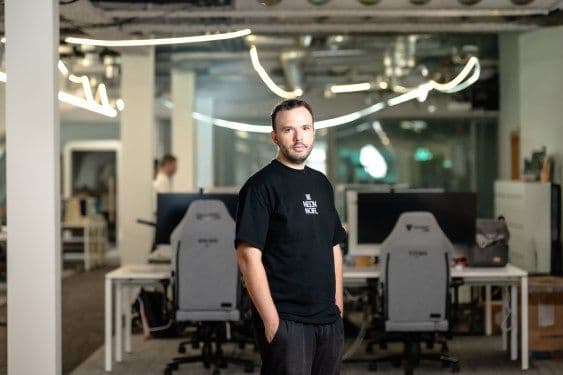
Much of the conversation around AI today is focused on building cloud capacity and massive data centers to run models. Companies like Apple and Qualcomm are in the early stages of making on-device AI more useful. Amid all that, the 14-person technical team of London-basedMiraiis working to improve how models run on phones and laptops. Mirai, which is backed by a $10 million seed round led by Uncork Capital, was founded by Dima Shvets and Alexey Moiseenkov last year. Both founders have experience in building scalable consumer apps. Shevts co-founded face-swapping app Reface,which was backed by a16z. Shevts later also became a scout for the venture firm. Moiseenkov was CEO and co-founder ofthe last decade’s viral AI filters app, Prisma. As consumer developers, both had been thinking about AI and machine learning on devices even before generative AI became popular, Shvets said. “When we met together in London, we started to chat about technology, and we realized that within the hype of gen AI and more AI adoption, everybody speaks about cloud, about servers, about AGI coming. But the missing piece is on-device [AI] for consumer hardware,” he told TechCrunch. Shevts and Moiseenkov wanted to use AI to create a pipeline that would allow them to enable complex tasks on the phone, which led them to start Mirai. When they asked others who developed consumer apps, they heard that many wanted better cost optimization and margin per token usage, too. Today, Mirai is developing a framework for models so they can perform better on devices. The company has built an inference engine for Apple Silicon that optimizes on-device throughput. With its upcoming SDK, developers can integrate the runtime in their apps with only a few lines, the company says. “One of the visions why we started the company was that we wanted to give developers, like this Stripe-like, eight lines of code [integration] experience…you basically go to our platform, integrate the key, and start working with summarization, classification, or whatever your use case is,” Shevts said. The startup built this engine in Rust, which can bump up a model’s generation speed by up to 37%, they claim. The company said that, while tuning the model for a platform, it doesn’t tinker with model weights to ensure there is no loss in quality of the output. Mirai’s stack currently focuses on improving text and voice modalities on the platform, with plans to support vision in the future. The team has started to work with frontier model providers to tune their models for edge use and is in talks with different chipmakers. Later, it plans to bring its engine to Android, too. In addition, Mirai aims to release on-device benchmarks so model makers can test on-device performance. Shevts recognizes that not all AI work can be done on-device, though. To enable a mixed mode of operation, the team is building an orchestration layer to send requests that can’t be fulfilled on the device up to the cloud. While the startup is not directly working with apps just yet, its engine could power on-device assistants, transcribers, translators, and chat apps, we’re told. Andy McLoughlin, managing partner at Uncork Capital, noted that he invested in an edge machine learning company in the last decade. He said that the company was early and eventually sold its business to Spotify. In today’s world, the situation is different, he thinks. “Given the cost of cloud inference, something has to change… For now, VCs are happy to continue funding the rocketship companies, spending inordinate sums on cloud inference. But that won’t last — at some point, people will focus on the underlying economics of these businesses and realize that something has to change,” he said. “It feels like every model maker will want to run part of their inference workloads at the edge, and Mirai feels very well positioned to capture this demand.” Mirai’s seed round also saw participation from individuals, including Dreamer CEO David Singleton, YC Partner Francois Chaubard, Snowflake co-founder Marcin Żukowski, Mati ElevenLabs co-founder Staniszewski, former Google AdSense product manager and Coinbase board member Gokul Rajaram, Groq investor Scooter Braun, Turing.com CTO Vijay Krishnan, Theory Forge Ventures’ Ben Parr and Matt Schlicht, and ex-Netflix technical leader, Aditya Jami.
View