Pre-Black Friday Sale is LIVE! Get Up to 85% OFF AI Tool Listings + 50% OFF All Sponsorships.
Grab the DealSubmit your Tool
PoweredByAI.app is an AI Tools Directory helping individuals, businesses, and creators discover the best AI tools for writing, coding, design, productivity, and more.
© 2026 , Product of011BQ. All rights reserved.
The rise of Reverse Engineer Anything project has sparked concerns among software vendors over intellectual property clones. But there's a legal loophole.
View

The healthcare AI startup will develop an offline, local-language application to help frontline health workers identify disease hotspots and plan household screenings.
View

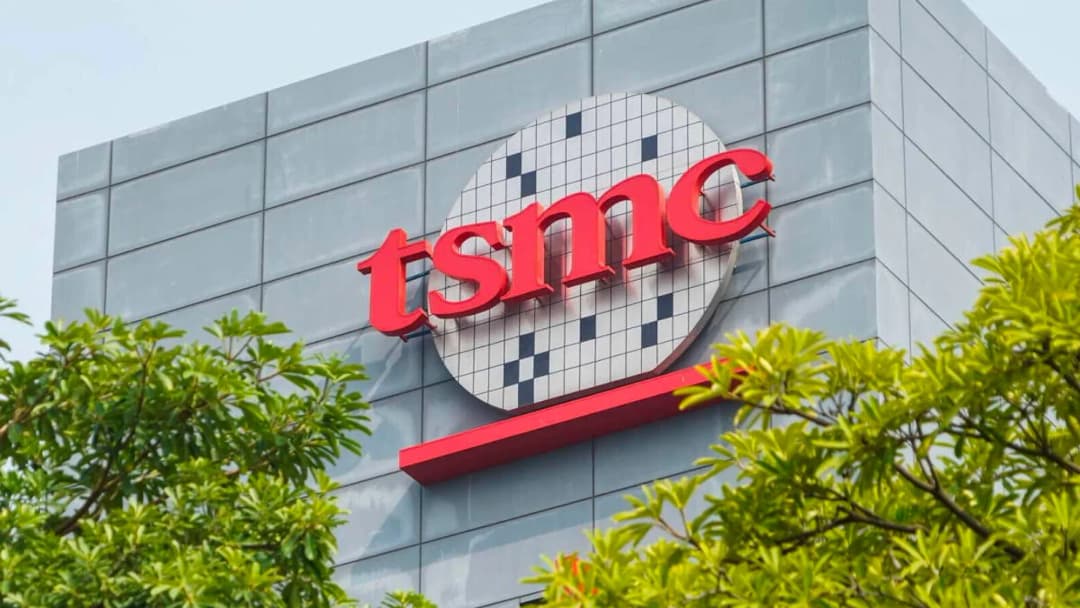
TSMC's October revenue rose 59.7% year-on-year, as demand for advanced semiconductor manufacturing continues to drive growth, contrasting with recent volatility in NVIDIA's shares.
View

If you signed up for ChatGPT Go through the 12-month free offer in India, you might be wondering what happens when the free period ends. If you don't want to continue with a paid subscription, it's worth checking your renewal date and cancelling in time. ChatGPT Go costs Rs. 399 per month in India after the offer period. The cancellation process is fairly simple, but the steps differ depending on whether you signed up through the website, Google Play Store or App Store.
View

After adding Muse Voice for agentic AI-assistant, Meta is back with another interesting feature called Spaces, which can be used in the Muse app. Spaces basically work like feeds, bringing you information from the sources that you choose and in the format that you would like to see it in. Spaces within the app can also be organised within the Muse AI app to suit the user's requirements depending on what they prioritise at the given moment. Meta claims that Spaces can be used to track a variety of things and can even generate small games.
View

Meta introduced Muse, its new personal AI agent, at Meta Connect 2026 earlier this year. During the keynote presentation, the tech giant announced that Muse will initially be available only in the US, with plans to roll it out to other markets soon. The AI companion lives within different Meta products, like WhatsApp, and helps users send emails, book travel, and fill out forms. It also offers agentic capabilities and completes tasks in the background. While the company has yet to bring the Muse personal AI agent to India, its pricing and subscription tiers for the country have surfaced online.
View

Claude Fable 5.2 was launched by Anthropic on Monday as the Dario Amodei-led AI giant's latest AI model. The Fable series model was introduced along with Mythos 5.2, Anthropic's most advanced cybersecurity-focused AI model. The new Mythos model is available to select cybersecurity professionals via a verification programme. Both models are claimed to bring performance improvements on multiple fronts, including coding, reasoning, and vision. Anthropic says that both new Fable and Mythos models were found to communicate “more clearly” than their predecessors. Moreover, the two AI models are more affordable than Fable 5.1 and Mythos 5.1.
View

Google on Monday announced a new way for developers to add real-world location data and mapping features to applications built using its AI tools. As per the Mountain View-based tech giant, developers will be able to access Google Maps Platform directly within Google AI Studio. This, as per Google, allows them to create interactive maps, local search tools, and route-planning applications without leaving the development environment. The integration is also claimed to simplify the process of configuring API credentials and connecting Google Cloud projects.
View

Google has started rolling out a new Memory summary feature for its Gemini AI assistant. The new tool is designed to provide users more control over the personal information Gemini keeps about users based on previous conversations. It remembers details and organises them into categories, and users can update or remove the details directly. With the new feature, users can now get an overview of what the AI assistant remembers about them without having to check individual chat conversations. It is built on Gemini's existing memory capabilities.
View

Meta has introduced Muse Ember, a new AI model aimed at developers and businesses that use AI agents to automate everyday tasks. The model is designed to handle smaller jobs within larger workflows, such as reading files, running code tests, extracting information and calling external tools. Meta says Muse Ember can deliver performance comparable to larger models at a lower cost, making it suitable for tasks that agents need to perform repeatedly. It is now available through the company's developer platforms.
View

AI’s power crunch has become so acute that Anthropic, a company that has generally avoided buying physical infrastructure, is spending $3.4 billion on natural gas turbines. The AI company, which is planning to go public this year, is buying Caterpillar generators that equipment supplier OnePWR had originally ordered, according to aFinancial Times report. The generators are capable of producing up to 1.7 gigawatts of electricity. Historically, Anthropic has preferred to rent rather than buy. The company disclosed in its S-1 filing in May that it is paying SpaceX subsidiary xAI$1.25 billion per monththrough May 2029 to use xAI’s computing power. “We expect to enter into additional similar services contracts,” Anthropic stated in the filing, meaning more deals to rent computing power. But as demand for compute ramps up, the market for power has also grown increasingly uncertain, which may have forced its hand. The backlog for natural gas turbines stretches into the early 2030s, and queues to connect to the electrical grid can be just as long. Anthropic’s purchase looks like a last resort. According to the report, OnePWR ordered the turbines a couple years ago but couldn’t find financing to complete the purchase. Anthropic had planned to buy them from OnePWR but instead went directly to Caterpillar, the manufacturer. It’s not clear why OnePWR was unable to secure financing despite Anthropic’s apparent interest as a customer. Whatever the case, Anthropic likely wanted to keep the generating capacity to itself rather than give a competitor an opportunity to snap it up. AI companies have beenramping up their purchasesof natural gas equipment and supplies in recent years.Google,Amazon,Microsoft, andMetahave all announced plans to build massive natural gas power plants to power their data centers on-site, rather than drawing from the public grid. The binge has given asecond wind to fracking, the drilling method used to extract natural gas from underground rock. And if the buildout proceeds as planned, U.S. data centers alone could consumemore natural gas than Germany and Japan combinedby 2035. The reliance on natural gas also exposes hyperscalers to price fluctuations. One analyst expects that prices couldmore than tripleby the end of the decade in some markets. If that happens, Anthropic might have a serious case of buyer’s remorse.

Meta Superintelligence Lab released a new AI model on Monday called Muse Ember, the lab’s lightest and most cost-efficient AI model yet. In its release, Meta said Ember was “designed for complex reasoning execution and the work agents repeat all day: tool calls, coding subtasks, routing, extraction, and long document parsing.” Meta particularly emphasized Ember’s cost-per-task, usingArtificial Analysis’s composite benchmark scoreto show Ember as cheaper and smarter than competitors like Anthropic’s Haiku and OpenAI’s Luna. At 10 cents per million input tokens, Ember is significantly cheaper than frontier competitors like Haiku and Luna. Not only that, it’s cost-competitive with open source competitors like DeepSeek V4.1 Flash and GLM 5.3 Flash. Given the emphasis on low cost and accuracy at scale, Ember is designed to pair with a larger model like Meta’s Muse Wonder in an agentic harness. In the case of a customer-support agent, for instance, you might see a heavier model establishing rules for how to handle a particular issue, then sending a lighter-weight model to apply the rules across tens of thousands of cases. As Meta puts it in the announcement, “Muse Wonder plans, Muse Ember handles the volume.” With volume-heavy use cases in mind, Meta also trained Ember to work well across different types of media, including text, images, and audio. The result makes the model surprisingly flexible in what kind of inputs it can handle. As Meta puts it in the announcement, “agents can read screenshots, charts, and scanned documents, or work from voice memos, meeting recordings, and video without a separate model.” Ember is the fourth model released under Meta’s Muse brand, following the mid-weight Spark (released in April), Spark’s open source twin Glimmer (released in August), and the Wonder frontier model (released in October). The flagship consumer AI product, the Muse Agent, wasreleased in Septembertounexpected success, with new features likeSpacesandvideo chatrolling out earlier this month.

View
View