🚀 Zaprep: Your Socials on Steroids. Start free — automate 1,000 DMs/month & turn engagement into leads. with 1,000 automated DMs/month.
Latest AI News

Roblox launches an AI-powered game creation feature in its mobile app
RobloxannouncedThursday a new feature called “Build,” allowing users to design games from their mobile devices using AI. The Build feature lets anyone turn simple text prompts into a basic game without any programming experience. For example, if a user types, “Let’s make a cozy adventure game set in a dense forest,” the new feature will generate an initial version of the game, which users can then modify and share with friends. “Powered by a broad set of AI models, including both open-source and proprietary Roblox models, Build handles gameplay mechanics, environment, characters, visual style, sound, and more,” the company wrote in a blog post. Companies likeGoogle,Microsoft, and Tencent have built similar tools. However, AI-powered game generation has raised concerns among developers and players, with critics arguing that reducing the barriers to game development via text prompts could lead to an influx of low-quality and repetitive games. This may also increase competition on the platform, as creators are required to compete not only with other developers but also with AI-generated content that can be produced far more quickly. These concerns are reflected in this year’sGame Developer Conference State of the Game Industrysurvey, which found that 52% of game industry professionals believe generative AI is having a negative impact on the industry. To address this, Roblox plans to rank these AI-generated games based on player retention, similar to the system used for other games on the platform. If a game is not played, it won’t be featured as prominently. “Our discovery systems are designed to highlight games with long-term retention, which doesn’t include AI slop. The quality of games on the homepage isn’t changing: If no one plays it—no one can find it. The goal across these new tools is to continue to accelerate creation across all experience levels,” the company added. The Build feature will enter public alpha testing on July 28, available to users in New Zealand aged nine and older who have verified their age. Users aged 16 and up will have the opportunity to publish their creations to a global audience. There will be a free, basic version available along with paid options. Beyond the Build feature, Roblox is also working on developing AI agents that will assist creators in playtesting and providing analytics. These features are anticipated to roll out in the upcoming months. The new feature highlights Roblox’s ongoing investment in AI, including anAI foundation modelfor generating 3D game assets and anAI chatbotfor supporting developers through the game-building process. Additionally, Roblox is developing a “new scene-generation model” capable of creating entire editable and playable 3D scenes from a single text prompt. Additionally, the announcement comes shortly after Robloxdisclosedplans to discontinue “Roblox Connect,” the avatar-based video calling feature introduced in 2023.
View

Google Vids now lets you star in your own AI videos
OpenAI’sSoramayhave shut down, but Google apparently thinks there’s still interest in a tool that lets you star in your own AI videos. On Thursday, the tech giantannouncedan update to Google Vids that will allow you to create a custom digital avatar that looks and sounds like you based on a selfie and a voice recording you upload. In addition, Google said it’s bringing its multi-modal AI modelGemini Omnito Vids, letting you create videos using a combination of a written prompt and reference images you upload. Omni then mixes those inputs together to create the AI video you want. It can also be used to do things like swap out the background or fix the lighting in a video recorded on your phone, or add effects. Plus, Omni now supports step-by-step edits, meaning you can make changes to your video as you go instead of starting over from scratch. The updates push Google Vids beyond its original role as an AI-assisted workplace presentation tool to become more of an all-in-one video creation platform. By making Vids a part of Google Workspace, the company is telegraphing its use as a business tool for things like company updates or training videos, but personalized avatars and conversational edits could put it in closer competition with other AI video startups and tools likeHeyGen,Synthesia,Captions,D-ID, and others. Google notes that the new AI avatars will be tied to the account holder’s likeness, tied to their Google account, and watermarked invisibly with SynthID. (I suppose that means no one will be using the tool to make bizarre AI videos of Google CEO Sundar Pichai, the way that OpenAI CEO Sam Altman had let users do with Sora when it was available!) The company also says that access to personal avatars is limited to users in certain regions who are aged 18 or older.
View

Apple Intelligence approved for launch in China with Alibaba and Baidu
Apple Intelligence, the iPhone maker’s generative AI offering, is coming to China. On Wednesday, Reutersreportedthat China’s internet content regulator, the Cyberspace Administration of China, approved Apple’s AI services in the country on the back of a deal to integrate Alibaba’s Qwen AI model into Apple’s operating systems, including iOS, iPadOS, macOS, and visionOS. On Wednesday evening, a Baidu spokesperson confirmed to TechCrunch that it is also working with Apple on developing Apple Intelligence features for Chinese users. The Alibaba deal, which wasrumored to be in the workslast year, marks an important step for Apple’s AI ambitions in a key market. In the second quarter, Apple generated $20.5 billion in sales in Greater China,up 28%from a year earlier. Apple also recentlyregained its No. 2 positionin China’s smartphone market after a recent shopping festival offered discounts on the iPhone lineup. The Baidu partnership was also rumored, butreports at the timeclaimed Apple was facing issues adapting its models for Chinese customers. Apple is also said to be exploring integrations with DeepSeek and ByteDance. A lack of approval by Chinese regulators has led to Apple Intelligence features, which debuted in 2024, being delayed in the Chinese market. Alibaba earlierconfirmedthe company’s news to CNBC in a statement, saying that its Qwen models would be “integrated into Apple Intelligence experiences,” though it did not provide a time frame. It also said the integrations would involve AI capabilities like “text and image understanding and generation.” This article was updated Thursday, July 16, to add the statement by Baidu.
View

How Elorian AI pulled off a $300M pre-seed valuation
Building an AI startup is one thing. Raising one of the largest seed rounds of the year before launching a product is something else entirely. In this episode ofBuild Mode, host and Startup Battlefield lead Isabelle Johannessen sits down with Andrew Dai, founder and CEO ofElorianand former Google DeepMind researcher, to unpack how his company raised a $55 million seed round at a $300 million valuation before generating revenue or releasing a product. Andrew shares what investors saw in Elorian’s vision for visual AI, how he approached fundraising after leaving Google DeepMind, and why choosing the right investors mattered more than maximizing valuation. He also offers practical advice for founders building in AI, explains why today’s fundraising environment rewards clear storytelling over technical jargon, and shares what surprised him most as a first-time founder. They get into: Watch the full episode on YouTube. Subscribe to Build Mode onApple Podcasts,Spotify, orwherever you like to listen. And watch the full videos onYouTube. New episodes of Build Modedrop every Thursday.
View

Moonshot’s upcoming Kimi 3 is expected to close the gap with Anthropic’s Opus 4.8
The latest iteration of Chinese AI lab Moonshot AI’s Kimi model series is expected to perform at par with or even surpass Anthropic’s Opus 4.8,Financial Times reported, citing anonymous sources. Moonshot’sKimi K2 modelshave been received well in the open source AI market, ranking high on benchmarks and demonstrating capabilities that aren’t too far behind the latest frontier models. The company’s upcoming release, called Kimi K3, is said to take this one step further to close the gap with closed-source models from the likes of OpenAI and Anthropic. FT reports Kimi K3 will be the largest open-weight AI model from China, with a parameter count between 2 trillion and 3 trillion, and will be released “in the coming days.” Moonshot is also said to be raising fresh capital in a round that would valuate it at $31.5 billion. The company in May raised$2 billion at a $20 billion valuation. The news comes amid afresh debateon the value of paying AI labs like OpenAI and Anthropic for their expensive, closed-source models. Industry leaders fear that AI labs will somehow manage to extract the data their clients submit for use with their AI products like ChatGPT and Claude. Executives arepitchingtheir own products as alternatives, orrecommendingcompanies take cheaper open source models, like those developed by DeepSeek, Z.ai, or Moonshot, and train them for their own purposes. The argument has gained momentum, especially as open models from China close the gap with their more expensive, frontier counterparts.
View
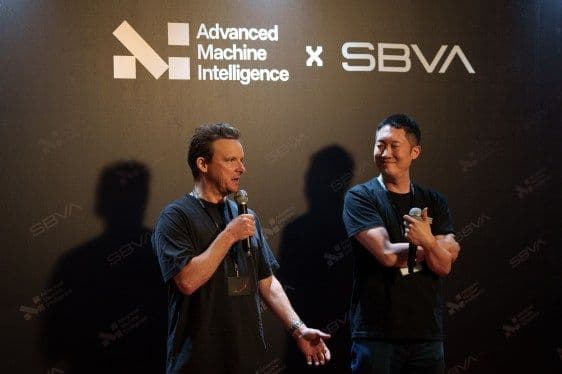
Why AMI Labs’ Alexandre LeBrun won’t call his AI ‘AGI’ or ‘superintelligence’
While the rest of the AI industry races to label its work as “AGI” or “superintelligence,” Alexandre LeBrun, the CEO ofYann LeCun’sworld modelstartup,AMI Labs,avoids the terms altogether. Lebrun said in an interview with TechCrunch that the company doesn’t use terms like “AGI” or “superintelligence” at all. “We never used the word AGI. And I just noticed that nobody is using it anymore; they switched to superintelligence,” he said. “Next time we’ll switch to something else.” He isn’t sold on the new label either. “There’s no good definition. What is superintelligence? I don’t know. It’s not a very useful word.” It’s a pointed stance from a founder sitting at the center of AI’s newest race. TechCrunch talked to LeBrun while he was in Seoul last week for The International Conference on Machine Learning, where he was scouting for local industrial partners, global companies, and researchers. AMI Labs is still pre-product, but it’s already courting robotics, manufacturing, and electronics players. A world model, which incorporates physics to predict and work with the real world, needs to prove itself outside the lab, LeBrun explained. One area where world models are expected to have a large impact is robotics. For now, robots are just running fixed routines, “completely static,” and AI remains “really dumb in the physical world,” LeBrun said. Even when AI can merely make robots “aware of the context” that would mark “a very big difference for the world.” Such context-aware AI would have been useful, for example, in preventinga robot that was dancing and doing kung fu at a public eventfrom approaching and kicking a child. “The hardware is very advanced; progress in hardware in the last few months is incredible, but there’s no brain.” A large language model (LLM) predicts the next word or text, and a world model predicts the next state. Nudge a glass off the table, and you already know it will tip and spill; that’s the intuition a world model is meant to capture: predicting the next state of the world, LeBrun explained. He isn’t claiming world models are better than LLMs, which are “complementary, not replaceable” when it comes to AI systems that understand the physical world, LeBrun said. Drawing a parallel to the human brain’s distinct language and reasoning functions, he added that LLMs will remain the most efficient tools for processing language while world models will provide context and real-world understanding. Almost every industry that “touches the real world” could eventually make use of robotics based on world models, LeBrun said, arguing that physical environments remain where LLMs are weakest. A factory robot repeating the same motion works well enough today, he said. The challenge begins when “you take your robot outside into a more open environment, in your household, or in the street,” where it must understand its surroundings and operate safely. “Robots are not safe right now,” he said. “There’s no solution for that today.” Healthcare offers a more personal example for LeBrun, whose previous company was Nabla, an AI health startup. He likened today’s AI systems to a doctor trained only on textbooks and without a residency. LLMs may be useful in medicine, he said, but they cover “only 1% of healthcare.” The rest depends on real-world experience. But a world model, LeBrun said, can’t be built inside a lab. To train on reality, AMI needs real environments and close partners, according to the CEO. “We need access to the real world,” and it’s “easier for us to do that with partners.” That is part of what pulls him toward Asia, where the robots, chips, and factories actually are. LeBrun won’t spell out a full Asia strategy yet. “It’s too early,” he said. But the pull toward South Korea comes down to two things. First, Korea has advanced industries in robotics, semiconductors, and manufacturing; the hardware-heavy sectors that the first wave of AI barely touched. The second attraction is speed. LeBrun pointed to Korea’s national plan to pour money into AI and its track record as an early adopter. “Korea was the fastest adopter of the internet 25 years ago,” he said. It’s that combination, a deep industrial base plus a willingness to embrace AI fast, that he calls “unique,” and the reason “we want to be here from day one.” “I’ve been telling Alex and the team to come to Korea,” JP Lee, the CEO of SBVA and one of AMI’s backers in Asia, told TechCrunch. The government has done “a tremendous job” funding local sovereign LLM models, Lee said, and those already work “well enough” for general-purpose tasks, but he’s pushing for Korea to keep investing in physical AI, too. He points to Seoul’s June plan tomobilize some $880 billionfor chips, AI data centers, and physical AI, as one of its three declared pillars: “They should coexist.” Korea’s value to foreign firms, Lee argued, isn’t only in hardware. Local developers are quick to adopt and adapt new tools, a pattern that has produced homegrown internet players like Naver and Kakao. For all the star power and the billion-dollar check, AMI has nothing to sell yet. The startup, co-founded by Turing Award winnerYann LeCunafter he left Meta,raised $1.03 billion in Marchat a $3.5 billion pre-money valuation. There’s no product yet, and no timeline he’ll commit to. “We’ll make a surprise when we’re ready,” LeBrun said.
View

How a former DeepMind researcher raised at a $300M pre-seed valuation before launching a product
Andrew Dai left Google DeepMind knowing visual AI was the frontier he wanted to stake his claim in. He pulled off a whirlwind fundraise that resulted in a more aggressive valuation-to-capital ratio thanThinking Machines, which raised one of the largest rounds in U.S. history. In this episode ofBuild Mode,host and Startup Battlefield lead Isabelle Johannessen sits down with Andrew Dai, founder and CEO ofElorianand former Google DeepMind researcher, to discuss how his company raised a $55 million seed round at a $300 million valuation just months after leaving Google. Drawing on more than a decade spent helping build some of the world’s most influential AI systems, including research that later informed the development of ChatGPT, Andrew explains why he believes visual AI is one of the next major frontiers in artificial intelligence. “You have models that are doing really great at math, really great at new physics ideas, and of course coding is very popular now … But one area where progress has been extremely uneven is visual understanding and visual reasoning,” said Dai. “At Elorian, we want to build models that will advance us toward visual AGI.” Andrew walks through the fundraising process from the founder’s perspective, including how he refined a highly technical vision into a compelling story investors could understand. He explains why he prioritized strategic partners like Nvidia and Menlo Ventures over even higher valuation offers, and how choosing investors who understood the realities of building frontier AI proved more valuable than simply maximizing his company’s price tag. The conversation also offers practical lessons for founders navigating today’s rapidly evolving AI landscape. Andrew shares how startups can communicate complex technical ideas without relying on jargon, why speed has become one of the biggest competitive advantages in AI, and what it takes to recruit world-class researchers away from Big Tech. Loading the player… This season on Build Mode, we’re diving into all aspects of fundraising with experts who have firsthand experience raising massive pre-seed rounds, writing the big checks, bootstrapping, going public, and navigating the unexpected market circumstances that can change everything. Subscribe to Build Mode onApple Podcasts,Spotify, orwherever you like to listen. And watch the full videos onYouTube. New episodes of Build Modedrop every Thursday.
View

UP's Data Centre Policy Wins Industry Backing, Faces Execution Test
Uttar Pradesh has won industry support for its AI-ready vision, but executives say reliable renewable power and execution will determine its long-term success.
View
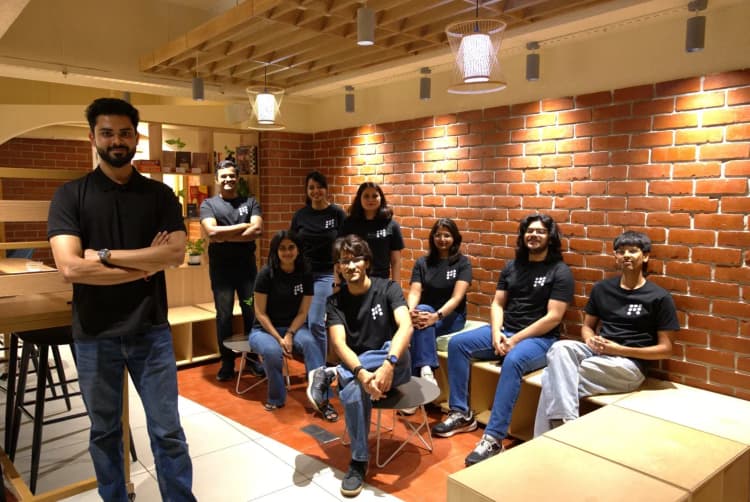
Bengaluru-Based Mandrake Bio Raises ₹16 Crore to Build AI-Designed Gene Editors
The funding will help the startup scale its AI protein design platform and validate gene editors for agricultural and medical applications.
View

AI-Driven Distribution Is Changing How Fintechs Reach India's Underserved
WeRize replaces branch networks with AI-managed freelance agents, using more than 20 billion proprietary data points.
View
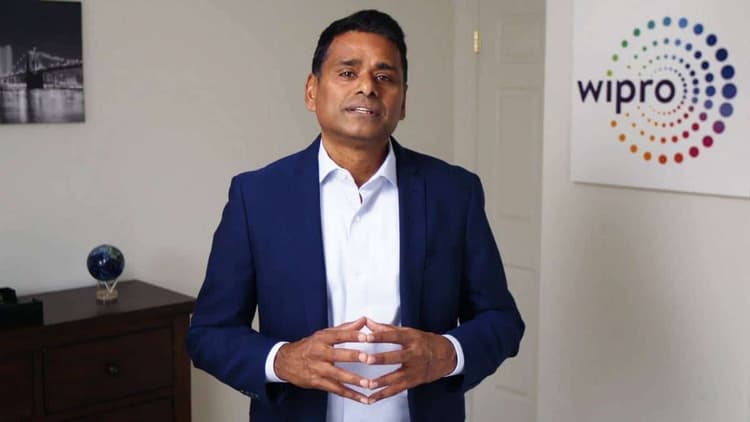
Wipro Posts Muted June Quarter; AI-Led Transformation Deals Lift Large Bookings
Wipro reported muted June-quarter earnings, with constant currency revenue rising less than 1% and margins contracting.
View

Tech Mahindra’s AI Bets Help Lift Margins as Q1 Profit Rises 28%
Tech Mahindra posts double-digit revenue and profit growth as AI engineering, sovereign AI investments and large transformation deals support margin expansion.
View
Submit your Tool


PoweredByAI.app is an AI Tools Directory helping individuals, businesses, and creators discover the best AI tools for writing, coding, design, productivity, and more.
© 2026 , Product of011BQ. All rights reserved.