🚀 Zaprep: Your Socials on Steroids. Start free — automate 1,000 DMs/month & turn engagement into leads. with 1,000 automated DMs/month.
Latest AI News

PrismML brings its tiny LLMs to Qualcomm-powered smart glasses
The AI LabPrismML— founded by Caltech researchers and advised by UC Berkeley’s Ion Stoica — has created a version of its tiny language models for smart glasses running on Qualcomm’s Snapdragon chips. On Wednesday, at Qualcomm’s Snapdragon Summit, the chipmaker showcased PrismML’s 1-bit Bonsai LLM, which can be run locally on AI smart glasses built on the Snapdragon AR1 Gen 1 Platform. As TechCrunch previously reported,PrismML’s claim to fameis that it shrinks larger models substantially (in this case, by 4x), while retaining almost all of their performance on standard benchmarks. The smart glasses version is a 2-billion-parameter model tuned for vision and language, so wearers can ask what they’re looking at in real time. Prism’s larger goal is open-weight AI that runs on devices and makes better use of the computing power they already have. The startup pitches this as an alternative to depending on the privacy promises of proprietary AI labs and their insatiable need for more compute. Releasing a model for Qualcomm’s chip is a step toward that vision. But no smart glasses running PrismML have been announced yet.
View

Bring your co-founder, partner, or colleague and get 50% off a second TechCrunch Disrupt 2026 pass
We’re closing in on the last couple of weeks untilTechCrunch Disrupt 2026kicks off! To help everyone in your network gain new tech insights, discover emerging tech, and make impactful connections that move the needle, we’ve opened up a 50% discount on a second ticket across all ticket types. This BOGO offer is live until the Disrupt doors open on October 13 at 8 a.m. PT. Buy one pass toDisrupt 2026andget 50% off a second of the same ticket type. This is a short window to bring someone with you — and get more out of being there. Bring a colleague. A co-founder. A partner.This offer ends when San Francisco’s Moscone West doors open on October 13 at 8 a.m. PT.After that, prices go up, and you’ll be paying more for the same access.Lock in your 50% off a second pass savings now. Not one person can coverDisrupton their own. This conference is built to bring your co-founder, partner, colleague, or friend and share the new insights and connections that are being made From October 13-15 in San Francisco,300+ showcasing startupsand10,000+ founders, investors, and tech leaderscome together for three days of200+ tactical sessionsled by250+ tech leadersacrosssix industry stages, roundtables, and breakouts. Unparalleled AI-powered matchmaking drives conversations and connections that move fast and change trajectories. When you attend with a colleague, peer, or partner, you don’t just experience more — you make better use of what you hear and who you meet. You can: It’s a simple shift, but it changes the outcome.Find your ticket match for you and your plus-one and save up to $450. Disruptbrings together 10,000 startup and VC leaders focused on what it takes to build and scale right now. Disrupt is for you if you’re: The value comes from connecting with people working through the same challenges and learning from those who’ve already done it. Explore theDisrupt events pageto see what’s planned. This buy one, get one 50% off deal applies when youpurchase two of the same ticket typeforDisruptby October 13 at 8 a.m. PT, making it easy to bring someone from your team. Buy one Investor pass andget a second one for 50% off — up to a $450 savings. Connect directly with founders, access curated networking, and spend time where deal flow happens. Bringing another investor or partner helps youcompare signals and act faster. Buy one Founder pass andget a second one for 50% off — a $425 savings. Meet investors aligned with your stage, challenge your thinking, and hear what’s working from operators. Attending with a co-founder or teammate helps youdivide and move quickly. Buy one Attendee pass andget a second one for 50% off — up to $412 savings. Built for product, engineering, growth, and go-to-market teams, this pass gives you access to stages, breakouts, and networking tooptimize your roadmap to revenue systems. Buy one Non-profit pass andget a second one for 50% off — a $237 savings. Connect with builders and investors and explore how emerging tech applies to your work. Bringing a peer helpsturn what you hear into something usable. Buy one Student pass andget a second one for 50% off — a $175 savings. Learn from founders and investors and start building your network early. Attending with a peer helps younavigate more and make stronger connections. Buy one Expo+ pass andget a second one for 50% off — a $162 savings. Go behind the scenes of disruptive startups. Use the show floor to scout talent, demo emerging tech, and land your next role at a high-growth company, while covering more ground with your plus-one. The value of this limited-time discount goes far beyond saving on a secondDisruptpass. It’s about deepening relationships and making the most of the time you’ll spend in San Francisco. It’s the difference between attending and turning conversations into deals, hires, and next steps. This offer is only here for five days.Buy one pass and get a second pass for 50% offwhile you still can. Once the offer ends, the opportunity to attend together at this price does too. Buy one pass. Get 50% off the second of the same ticket type. Decide who you’re bringing, andlock in your two passes before doors at the venue open at 8 a.m. PT on October 13.Secure your passes now forDisruptand amplify the value you get from being here. And if it’ll be just you attending,save up to $200 before prices increase tomorrow, September 25 at 11:59 p.m. PT. Don’t miss out on any of these ticket savings and one of the most anticipated tech conferences of the year.
View

Spotify Integrates With Meta Muse to Control Music, Podcasts and Audiobooks
Spotify has integrated its streaming service with Meta's Muse personal AI agent, allowing users to control playback and manage music, podcasts and audiobooks through conversational requests. The integration extends to playlist creation, content discovery and Spotify's Personal Podcast feature. Muse can also connect listening with a user's schedule, allowing playback to be arranged around activities such as exercise or focused work. Spotify has also outlined a road-trip use case where Muse can create and schedule a playlist based on the user's destination.
View

Spotify Integrates With Meta Muse to Control Music, Podcasts and Audiobooks
Spotify has integrated its streaming service with Meta's Muse personal AI agent, allowing users to control playback and manage music, podcasts and audiobooks through conversational requests. The integration extends to playlist creation, content discovery and Spotify's Personal Podcast feature. Muse can also connect listening with a user's schedule, allowing playback to be arranged around activities such as exercise or focused work. Spotify has also outlined a road-trip use case where Muse can create and schedule a playlist based on the user's destination.
View
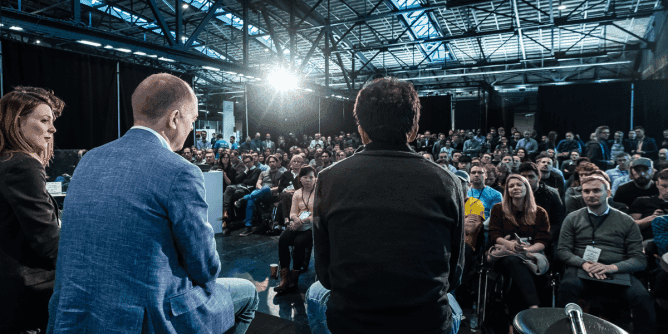
2 days left to save up to $200 on a TechCrunch Disrupt 2026 pass — reason 4 of 5 to attend
There are only two days left to save up to $200 on yourTechCrunch Disrupt 2026pass, and we’re on reason 4 of 5 why you should attend. While most tech events can give you plenty to think about, the useful ones also give you something to do differently when you get back to work. Before we dive into the next reason,secure your pass before these savings disappear after September 25at 11:59 p.m. PT. Bring a second guest at 50% off. Across three days at Disrupt, happening October 13-15 at San Francisco’s Moscone West, some of the biggest questions facing founders, investors, and technology leaders are being turned into working conversations. How do you build defensibility when an AI platform can ship into your category? What does it actually take to land a first institutional check? How should startups compete for AI talent? How do you price AI products sustainably? When should M&A become part of your strategy? What separates a company that investors find interesting from one they are prepared to fund? These aren’t theoretical questions for the people answering them. TheBuilders Stageis built around the realities of building and scaling companies: fundraising, hiring, product-market fit, product strategy, and growth.Roundtablesgo smaller and more interactive, creating space to get into the decisions behind the headlines.Breakoutsare where you go to ask direct questions to a panel of leaders. Across thewider agenda, founders, investors, and operators are tackling questions around AI agents, enterprise adoption, fintech, infrastructure, robotics, energy, security, and the changing economics of building technology companies. The point isn’t to collect more predictions — it’s to understand how people dealing with these shifts right now are responding to them. Hear from 250+ leaderswho’ve made waves across the tech ecosystem, including founders, VCs, and operators from Anthropic, OpenAI, Rivian, Cerebras, Replit, and more, alongside featured guest Mark Wahlberg. Grab your pass now to save up to $200 before September 25 at 11:59 p.m. PT. If you’re raising, you can hear investors explain what moves a company from a first meeting toward a term sheet. If you’re building, you can hear how other founders are thinking about product differentiation, AI economics, hiring, distribution, and scale. If you invest, you can see how operators are adapting their companies in real time and where new problems — and potentially new markets — are emerging. And if you lead product or technology, you can compare how companies across different sectors are approaching many of the same decisions you’re making internally. The goal is to leave with a sharper view of the options in front of you. Across 200+ sessions and six stages, roundtables, and breakouts, you can prioritize the sessions that answer the questions that matter most to you now. Ask fellow speakers and attendees what worked. Ask what didn’t. Ask what they would do differently. Then take those answers back into your own decisions. Because the best thing you can bring home from TechCrunch Disrupt isn’t a notebook full of quotes. It’s a better idea of what to do next. Ticket savings forTechCrunch Disrupt 2026end September 25 at 11:59 p.m. PT.Register now to save up to $200 on your ticketand get a second ticket of the same type at 50% off. Groups of four or more can save up to 30%. Two days left.Bring your biggest questions. Leave with better ways to answer them.
View
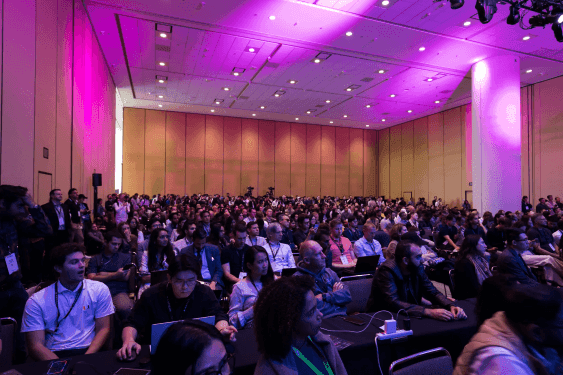
TechCrunch Disrupt 2026: Cal AI’s Zach Yadegari on how to create viral growth and capitalize on it
What happens when the app you started in high school goes viral? For Zach Yadegari, the answer was more than 15 million downloads, $30 million in annual revenue, and an acquisition by MyFitnessPal — all before his 20th birthday. Yadegari was just 17 when he co-founded Cal AI, the AI-powered nutrition app that lets users track what they eat by snapping a photo. But those numbers leave out the part most founders would like to know: How did Cal AI get that kind of viral attention in the first place? And once millions of people showed up, how did the company make the most of that momentum? AtTechCrunch Disrupt 2026, Yadegari will take theBuilders Stagefor the fireside chat “How to Create Viral Growth and Capitalize On It.” He’ll get into Cal AI’s rapid growth, the product pressure that came with it, and the challenge of turning breakout attention into durable retention and long-term company building. Trying to break through in a crowded market?Save up to $200when you secure your pass by September 25 at 11:59 p.m. PT and hear what Yadegari learned building a breakout consumer app. Got a colleague who’d like to join?Get a second pass for 50% off. Cal AIis built around a simple proposition: Snap a photo of a meal, and the app uses image recognition and the phone’s depth sensor to calculate calories, protein, carbs, and fat. Zach Yadegariwas still a high school senior when he co-founded Cal AI, but it wasn’t his first experience attracting a large online audience. At 16, he sold Totally Science, a gaming platform he founded that drew more than 5 million users during the COVID-19 pandemic, for six figures. Cal AI moved even faster. In less than two years, it had more than 15 million downloads and was generating more than $30 million in annual revenue. MyFitnessPal took notice, acquiring the company in a deal that closed in December 2025. The deal kept Cal AI as a stand-alone app, retained its seven-person team, and left Yadegari at the helm. At Disrupt, Yadegari will share what Cal AI learned about building in a distribution-driven market where a product can find a massive audience fast — and what it takes to exploit that viral growth when it happens. Chasing your own breakout moment? Get your Disrupt ticket to learn from Cal AI’s story. Save up to $200 on your pass and get a second pass for 50% off select ticket types.Secure your ticket by September 25 at 11:59 p.m. PT. For founders chasing growth, Yadegari’s story offers a look at both sides of a viral breakout: how a product finds a massive audience and what it takes to turn that attention into durable retention and long-term company building. Yadegari’s fireside chat is one of200+ sessions across six industry stagesatDisrupt, taking place October 13-15 at Moscone West in San Francisco. More than 10,000 founders, investors, operators, and tech leaders are expected, along with 250+ speakers, roundtables, and breakouts and 300+ exhibiting startups. Beyond the agenda, matchmaking, dealmaking, and networking give founders opportunities to connect with investors, potential customers, partners, and other builders working through many of the same challenges. These are the last two days to save up to $200 on your Disrupt pass.Secure your ticket by September 25 at 11:59 p.m. PT — and get a second pass for 50% off select ticket types.Lock in your savings to hear Zach Yadegari share the lessons behind Cal AI’s viral success.
View

Ando wants to take on Slack with a team messaging app that lets humans and agents work together
When Sara Du was helping companies build MCP servers in 2025, people kept asking her how they could use AI agents from within Slack itself. But there were a bunch of technical hurdles in the way: moving messages back and forth and getting agents the right context, all without burning through token budgets. Upon digging into the problem, Du realized that there was a deeper issue that stemmed from how communication platforms were designed. “The deeper I went, the more I felt Slack and Teams were built for a world that was starting to pass us by,” Du told TechCrunch. “Agents were treated as apps you install even as they were becoming participants in the team.” The solution, Du thought, could be a system that eliminates “meat proxies,” as Du calls the phenomenon of people having to relay AI agents’ work to their teams. “The human effectively becomes the messenger between the agent and the rest of the company,” she said. An ideal system would instead let agents “participate in the shared conversations where work already gets coordinated,” Du said. “They should be able to understand why a decision was made, ask a colleague a question, build on another agent’s work, and bring in a human when judgment is needed.” Her startup,Ando, on Thursday came out of stealth with an app that sets out to do exactly that: It’s a team messaging platform designed for both human and AI workers. Ando bills itself as a full replacement for Slack or any other messaging platform that companies using AI agents might want for internal communication. The app gives agents their own identities and inboxes and lets them partake in conversations as naturally as people can. The app has channels, DMs, group conversations, and even live calls that can be transcribed and viewed by an agent, Du said. Agents can browse channels, pick which ones to join, and can even join conversations without being tagged. If a company’s agent thinks a human worker needs to be notified of something, it can message them on its own rather than waiting for approvals. To continue building the app, Ando on Thursday said it has raised $20 million in pre-seed and seed funding from investors including Accel, Index Ventures, and Emergence. Du’s idea isn’t a new one. Most of the major players in the workplace collaboration space have already built in support for AI agents — Slack, for instance, has turned itsnative bot into an AI agent, and Microsoft has gone to great lengths to integrate Copilot into Teams in ways that connect to the rest of its Office 365 suite. But there is still a market for apps to challenge the incumbents given how quickly AI is invading workplaces. Just a few months ago, Twitter and Block co-founder Jack Dorseyannounced Buzz,which brings together people and AI agents into one messaging app, though it’s more targeted at developers. Du also feels there’s still enough of an advantage in building an AI-agent-native team messaging platform as legacy incumbents try to figure out how to pivot their existing software. Regardless, she seems to understand that Ando has an uphill battle ahead of it, and said that things were slow in the beginning. “A lot of people we showed it to early on were understandably unimpressed. It was, in many respects, just a jankier messaging platform. People would get stuck on that before they even got to what was different about the agents,” she explained. But she said her team knew they were onto something when more and more customers started using Ando for longer periods. With Ando, she started to see that agents could do more than people expect: An agent could notice two conversations being held in different channels about the same problem, and without being asked to, could bring everyone together in a group chat, explain the context, and even suggest a decision. “That was really delightful for me,” she said, “I felt agents could better manage people than humans can because they can process a lot more messages than a human can in a shorter span of time.” She said Ando is currently working with customers in software, real estate, and finance across 15 countries, though many of the teams it serves right now are small. The fresh capital will be used to hire more people and burn through more tokens, she said. “I think agents will let very small teams operate at a scale that previously required hundreds of people,” she said. “They can take on more of the execution, research, and coordination work, while humans spend more of their time on judgment, strategy, and deciding what should happen next.”
View
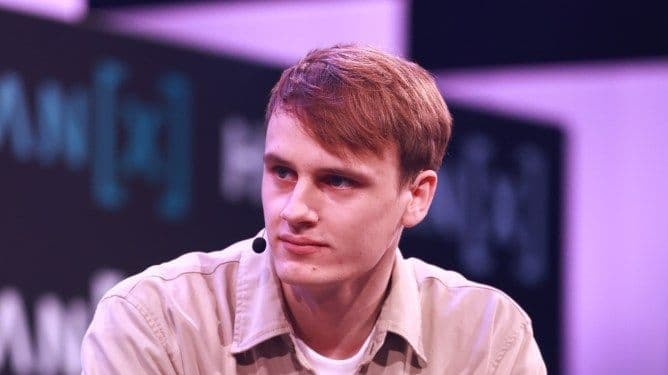
Lovable’s annualized revenue crosses $600M as vibe coding takes off
Lovable has crossed annual run-rate revenue of $600 million, the company’s co-founder Fabian Hedin said at the HumanX summit in Amsterdam on Thursday. The vibe-coding platform in June said that numberwas around $500 million. Hedin said the startup has focused on growing its enterprise business, and claimed that two-thirds of Fortune 500 companies are now using its product. Its customers include Microsoft, Nvidia, and Deutsche Telekom. He also said apps created by users on the platform are together attracting nearly a billion views per month. “You can use these tools [like Codex or Claude code] to output code. The difference is that Lovable does not output code. The output is a product, and increasingly so, a business. We do a lot of things around hosting, deployment, and scaling apps. We have close to a billion visits per month to the apps that we’ve created, which is an order of magnitude more than Lovable itself,” he said. The company has raised over $700 million in two rounds just eight months apart. Last December, it raised $300 million from Menlo Ventures and CapitalG at a $6.6 billion valuation. Then, this August, the startup raised$400 millionfrom Menlo Ventures and the Scaleup Europe Fund at a $13.3 billion valuation.
View
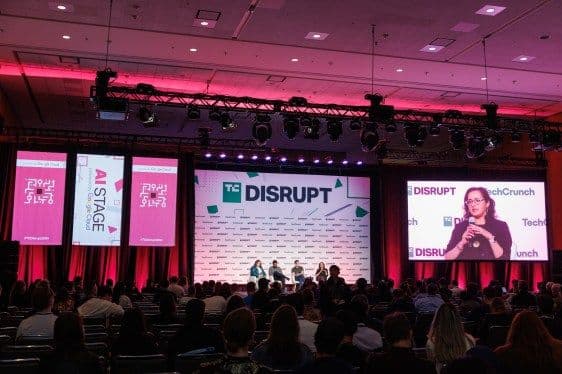
Shield AI, Waabi, and General Motors on building AI when failure is not an option at TechCrunch Disrupt 2026
An AI chatbot can give you a bad answer. An AI system controlling an aircraft, vehicle, or robot can create an entirely different kind of problem. When artificial intelligence moves into the physical world, a mistake can ground an aircraft, cause a vehicle crash, or compromise a mission. So how do you know when an autonomous system is actually ready to leave the lab? AtTechCrunch Disrupt 2026, Shield AI’s chief technology officer Nathan Michael, Waabi founder and CEO Raquel Urtasun, and General Motors’ Director of Robotics Strategy Mikell Taylor will tackle that question on the Real World AI Stage in “Building AI Systems When Failure Is Not an Option.” The conversation will get into the work behind deploying AI where the stakes are high: creating a safety culture, testing and validating systems, navigating regulatory hurdles, and earning trust. Building AI for the physical world? Tomorrow is the last day to save up to $200 on your Disrupt pass.Secure your ticket by September 25 at 11:59 p.m. PTand hear from three leaders working where failure has real-world consequences. Prices will increase after September 25 at 11:59 p.m. PT. AtShield AI,Nathan Michaelleads the development and deployment of Hivemind, the company’s platform-agnostic mission autonomy software. His background spans AI, control, perception, and multi-robot systems, including years at Carnegie Mellon University’s Robotics Institute, where he directed the Resilient Intelligent Systems Lab. That expertise is being put to work on technology designed for some of AI’s highest-stakes environments. In February, Hivemind was selected as an autonomy provider for the U.S. Air Force’s Collaborative Combat Aircraft drone prototype program. A month later, Shield AI announced $1.5 billion in Series G funding at a $12.7 billion post-money valuation. At Disrupt, Michael brings the perspective of an AI leader developing autonomous systems for environments where performance has to be matched by assurance. What does it take to trust AI with a mission?Secure your Disrupt passbefore September 25 at 11:59 p.m. PT, and hear Nathan Michael’s perspective on developing autonomy for high-stakes environments. Raquel Urtasunhas spent 25 years working in AI and autonomous vehicles. Before foundingWaabi, she served as chief scientist and head of R&D at Uber ATG. She’s also a professor of computer science at the University of Toronto, co-founded the Vector Institute for AI, and has published more than 200 AI papers. Now Waabi is preparing to take its autonomous-driving technology much further. In January, the company raised $1 billion and announced a partnership with Uber to support the deployment of 25,000 or more Waabi Driver-powered robotaxis. Testing and validation are central to Waabi’s approach. Its Waabi World simulator trains, tests, and stress-tests the Waabi Driver in a virtual environment, and Urtasun has said the company’s autonomous trucks still need to be fully validated before driverless deployment. That puts one of the session’s central questions squarely in Urtasun’s wheelhouse: How do you determine when an AI system is ready to operate without a human behind the wheel? Want to hear how autonomous-driving leaders approach testing, validation, and deployment? Secure your Disrupt pass by September 25 at 11:59 p.m. PT tosave up to $200— and get a second pass for 50% off select ticket types. Mikell Taylorhas spent more than two decades building robots designed to do useful work. Today, she leads robotics strategy forGeneral Motors’ Autonomous Robotics Center. Previously, she led the Amazon Robotics team that developed Proteus, Amazon’s first autonomous mobile robot. Her robotics career started in a decidedly less industrial setting: She once built a robotic senior prom date. Since then, Taylor has worked on everything from autonomous underwater vehicles to industrial robotic systems, with a focus on robots that are practical, reliable, and able to work effectively around people. Taylor’s experience will shed light on a fundamental challenge facing real-world robotics: User experience and adoption need to be considered from the start, as part of both product design and deployment planning. That human element matters when AI-powered machines leave controlled demonstrations and enter workplaces where people have to depend on them. How do you build autonomous systems people can work with — and trust?Register for Disruptbefore September 25 at 11:59 p.m. PT to save up to $200 and to hear from leaders tackling those questions in the real world. Aircraft. Autonomous vehicles. Industrial robots. The environments may be different, but all three put the same question in sharp focus: When the consequences of failure are real, what does it take to deploy with confidence? For founders and technology leaders building autonomous systems, the session offers a chance to compare how leaders in defense, autonomous driving, and industrial robotics approach the decisions that stand between a promising system and one that’s ready for the real world. This session is one of 200+across six industry stages, roundtables, and breakouts atDisrupt, taking place October 13-15 at Moscone West in San Francisco. More than 10,000 founders, investors, operators, and tech leaders are expected, along with 250+ speakers and 300+ exhibiting startups. Beyond the agenda, matchmaking, dealmaking, and networking create more opportunities to make the connections that can move a company forward. When failure isn’t an option, “almost ready” isn’t enough. These are the last two days tosave up to $200 on your Disrupt pass. Secure your ticket by September 25 at 11:59 p.m. PT — and get a second pass for 50% off select ticket types.
View

Google tests letting Gemini call businesses for you
With AI agents like Meta’s Muse and Instinct now able to make calls on users’ behalf, Google is now letting Gemini call businesses with a new feature called “Call for Me.” The feature will initially roll out to Pixel 11 owners who pay for a Gemini subscription in the U.S. It will also require the use of the beta version of Google’s Phone app for Android, as it’s still supposed to be an experiment. While Google has long offered calling features guided by AI, prior versions were limited in what they could do. With this update, Gemini will be able to share personal information that you approve as part of the calls it makes, which, the company says, will allow it to take a broader set of actions. In addition, Google says users will be able to follow the call as it happens and take over at any time. “Call for Me” will also use your own personal phone number to make calls, which will be dialed directly from your phone. Google says the AI can handle complex tasks, like calling a store to ask if a product is in stock, making a restaurant reservation, moving a scheduled appointment to a different date, or placing items on hold. The AI can call a business and introduce itself, navigate automated phone menus, wait on hold, and then handle the conversation on the other end. Meanwhile, users can watch how the call proceeds via a live transcript of the conversation. The launch builds on years of experiments with AI-assisted, automated calling technology at Google. Years ago, the company wowed people at its I/O developer conference when it demonstratedGoogle Assistant calling a salon to make a reservation, and even adding little “umm’s” and “ahh’s” to make the conversation seem natural. Last year, it rolled out “Ask for Me,” a feature that let Geminicall businesses on users’ behalfto inquire about things like pricing or services. People with Pixel smartphones have also had access to features like “Hold for Me” or “Talk to a Live Rep,” which can navigate phone trees, then automatically wait on hold until a real person comes to the line. Another option, “Direct My Call,” can display the numbers to navigate IVR systems. Google said it’s starting this experiment at a small scale because “real-world conversations are nuanced,” and it needs time to get the feature right before rolling it out more broadly.
View
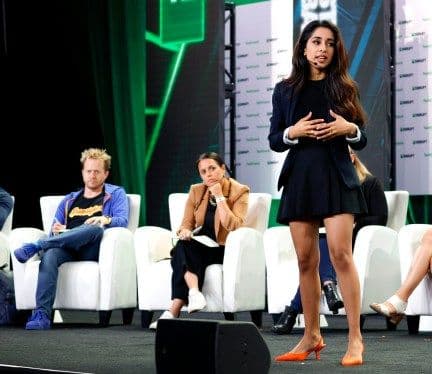
Meet the next wave of VCs judging Startup Battlefield 200 at TechCrunch Disrupt 2026
For founders, Startup Battlefield 200 is one of the biggest moments of their careers. For everyone else in theTechCrunch Disrupt 2026audience, it’s one of the best ways to learn how great companies are actually evaluated by VCs. This startup pitch competition is as intense as you’d expect. From October 13–15 at San Francisco’s Moscone West, every hand-picked founder has six minutes to make their case, but the most revealing moments often come after the presentation ends. That’s when the judges start asking the questions every investor, customer, and future employee will eventually want answered. Can this team execute? Is the market big enough? Why now? What’s defensible? Those conversations are as valuable for the thousands of founders watching from the audience as they are for the companies onstage. That’s why we’re continuing to build one of the strongest judging panels in Startup Battlefield’s history. Today we’re excited to introduce another group of five top-tier investors who’ll help identify the companies with the potential to become tomorrow’s breakout success stories. Join the Startup Battlefield contenders and VC judges on the main stage, alongside 10,000+ tech leaders attending Disrupt, and watch the next generation of startups compete for their place in TechCrunch history.Register now to save up to $200on your pass before prices increase on September 25 at 11:59 p.m. PT. Without further ado, meet the next batch of investors who will judge which early-stage founder walks away with the $100,000 prize. Get to know these judges, along with the first 10 already announced on theDisrupt agenda. Vaibhav ‘Dr.V’ Agrawal, Co-Founder and General Partner, ODDBIRD VC Dr.Vis the co-founder and general partner ofODDBIRD VC, a pre-seed fund he founded in 2024 to back AI companies reindustrializing the West — with a focus on health and bio, critical supply chains, and real-world automation. A trained physician with an MBBS degree, Agrawal also holds an MBA from Stanford and previously served as a general partner at Lightspeed Venture Partners India, where he backed early-stage startups beginning in 2016. His current portfolio includes Anterior, a healthcare AI company that has raised $64 million from NEA and Sequoia. Anu Bharadwaj, Partner, ICONIQ Anu Bharadwajis a partner atICONIQ, where she focuses on enterprise software and AI companies. Before joining ICONIQ, Bharadwaj served as president and COO of Atlassian for nearly 12 years, where she led the product, engineering, and enterprise business across Jira, Confluence, and the Atlassian Cloud platform as the company scaled to billions in annual revenue. She previously held leadership roles at Microsoft and holds a bachelor of engineering in computer science from R.V. College of Engineering. Sho Sho Leigha Ho, Partner, General Catalyst Sho Sho Leigha Hois a partner onGeneral Catalyst‘s seed team, where she invests in early-stage founders. She serves as a board observer at Together AI. She joined General Catalyst in 2024 as its youngest partner. Her public investments include Graylark, Autoscience, Standard Kernel, and The Interaction Company of California (Poke), which Cognition acquired in July 2026. She holds an AB from Harvard and is based in San Francisco. Miloni Madan Presler, Partner, IVP Miloni Madan Presleris a partner atIVP(Institutional Venture Partners), where she partners with first-time founders building inflection-stage technology companies in enterprise software, healthcare, and security, from Series B through pre-IPO. She brings a disciplined growth equity and private equity perspective to company building, shaped by earlier roles at Summit Partners and Warburg Pincus. Presler holds a degree in Economics and Finance from Johns Hopkins University and speaks four languages. Aidan Madigan-Curtis, Partner, Eclipse Ventures Aidan Madigan-Curtisis a partner atEclipse Ventures, where she invests in AI, IoT, computer vision, and software solutions for manufacturing, logistics, supply chain, and climate transition. Named one of Business Insider’s 22 Investors to Know in Robotics and Physical AI, she leads Eclipse’s Carbon Optimization framework to track real emissions reductions across the firm’s portfolio. Before venture, Madigan-Curtis was a senior executive at Apple — scaling Apple Watch manufacturing from zero to millions of units per week — and a VP and general manager at Samsara, where she helped grow the company from pre-revenue to over $1 billion in ARR. She holds a BA from Harvard University and an MBA from Stanford University. TechCrunch Disrupt 2026is happening October 13-15 in San Francisco, bringing 10,000+ tech leaders, VCs, and founders together to meet the next generation of breakout startups, connect with the leaders who could change their startup’s trajectory, and get a front-row seat to where the industry is headed.Save up to $200 on your ticketbefore rates increase on September 25 at 11:59 p.m. PT. Save an additional 30% when youregister as a group.
View

20 minutes with the CEO of ElevenLabs, now reportedly valued at $22B
ElevenLabs builds the voice layer of AI, the models that turn text into speech that sounds human. Most people encounter it when they’re talking with customer service — often without realizing it. Klarna runs first-line phone support for 35 million U.S. customers on it, for example. So do Deutsche Telekom, Cisco, Adobe, and a growing list of governments. ElevenLabs also sells to creators, who use its platform for audiobooks, dubbing, and music. It’s not alone in what it does. In fact, it’s increasingly bumping into customers, including Decagon, a conversational AI platform that trained its voice product on ElevenLabs and now competes with it. But its investors don’t seem too concerned. The company, which says it’s pacing at $600 million in annual recurring revenue, is now reportedly valued at$22 billionby its backers, despite being just four years old. To understand more, I interviewed ElevenLabs co-founder and CEO, Mati Staniszewski, atNrthin Toronto, a local entrepreneurship conference formerly known as Elevate. We covered a range of topics in a short time, including whether businesses should tell customers when they’re talking to an AI (he thinks they should), and whether he could discuss the company’s gross margins. Unsurprisingly, Staniszewski said he couldn’t discuss them in any detail, but he was clear that he doesn’t mind them getting squeezed even further if it means expanding the company’s market share. Our conversation follows, condensed and lightly edited. You can check out the full conversationhere. You joined us at TechCrunch Disrupt last year, where you said audio models would be commoditized within acouple of years. How would you rate that prediction now? There is still a lot of work to be done, and the quality delta you can achieve just on the model level is still significant. If we think longer term, probably three, five years from now, those differences will be smaller. What we’d love to do, and be the first ones to do, is pass the Turing test for conversational AI. You need to combine intelligence, but you also need emotional intelligence. You need to understand the emotions of the other side, to be able to slow down or speak up. That hasn’t yet been done. What percentage of the business is enterprise now? We are now $600 million in ARR. Fifty-five percent plus is classic enterprise, and a big percentage of the [remaining] 45% are small and medium businesses, developers, builders, creators. Like everyone else in AI, you’re increasingly competing with your customers. Decagon trained its voice product on you and now runs queries through its own models. The lines become more blurry. As we think about model companies, platform companies, application companies, in the past you’d have very clear splits where one starts and ends. Today that line is much more blurry. In Anthropic’s case, what was a model company is definitely a platform and increasingly a wide set of applications. I think this will continue. Your customers can choose the “reasoning layer” from a menu of options at ElevenLabs. What are you seeing in terms of the use of frontier lab models versus open weight? It’s less of a binary choice. In customer experience, if you’re calling in and it’s just informational, you’re not executing any actions — you can use a lot of the open source models because your knowledge base defines what a good experience is. But if it’s financial services, you want to be authenticated, you want information about a transaction, maybe a refund. There’s no room for error. Here, frontier models will still lead. Some of those open-weight models are Chinese. The U.S. government is a customer. European governments are customers. What are those conversations like? Different. In each deployment, the models and the voices we deploy will depend on the case. If we work with the Polish government or the Brazilian government, they have their own set of requirements. It can be an open-weight model, a closed-source model, their own fine-tuned model. [In Poland] it’s a healthcare case. You have patients booking appointments across the public health system, and 18% never show up. The deployment is agents that call and remind you. They had a set of models optimized on their knowledge, and we integrate while keeping data residency. Should businesses disclose when someone is talking to an agent rather than a human? I think there should be disclosure at this time. Currently, people aren’t used to it, and the common pattern is you don’t want to feel cheated on that call. But in five years, when everybody has their own agent working on their behalf, you’ll be calling in and expecting an agent. Then I think we’ll shift as a society. There are good ways of doing it — if there’s a 30-minute wait for a human, offer the customer a choice. In almost all cases, they choose the agent and then they’re surprised by how good the experience is. What are your gross margins, given what you’re paying for models and inference? I’m going to give a vague answer. Given we have that research element, we’re able to fine-tune and constrain models in extremely smart ways. But if we can pass on any savings to the customer, we do that. The biggest thing is still proving the value and being there with the customer. So if we can invest and prove that value, we don’t mind the margins going lower to actually benefit together as the value gets created in the next five years. You have millions of hours of customer service calls. Do you train on them? How much of your training data is synthetic? In certain companies, we created the models together. They wanted a specific model for their use case. Otherwise, the big part of the training hasn’t been so much the volume of data, it was annotating the data. We have thousands of people internally on a contracting basis helping us annotate not only what was said, but when people were speaking, how they said things, what emotions were used. We had to bring voice coaches in to be able to detect accents accurately. It’s been reported you’re looking at 2028 for an IPO. Can you confirm that? We’d love to create a company that stands the test of time. We are preparing the foundation to be able to do it in the next years. But whether we do it will depend on the time and place. “Years” is very vague. [Laughs.] Backstage: Where do you land on whether the frontier labs should slow down? Everybody is aligned to work together on finding a way to pace. Whether they should be public about it, and how much of the media conversation or regulation it should involve, that’s another topic. But yes, we should all take the right precautions as we deploy the technology. We don’t train the text models and the intelligence side of models, which is the core key of the debate. Could ElevenLabs be exposed the way Hugging Face was? We’re a step further, because we don’t deploy self-replicating or recurrent parts of the intelligence of agents. Our technology doesn’t allow you to let agents create more agents. Every customer goes through KYC. Cybersecurity risk is definitely a risk for the wider world, but we have a good set of precautions in place.
View
Submit your Tool


PoweredByAI.app is an AI Tools Directory helping individuals, businesses, and creators discover the best AI tools for writing, coding, design, productivity, and more.
© 2026 , Product of011BQ. All rights reserved.