🚀 Zaprep: Your Socials on Steroids. Start free — automate 1,000 DMs/month & turn engagement into leads. with 1,000 automated DMs/month.
Latest AI News
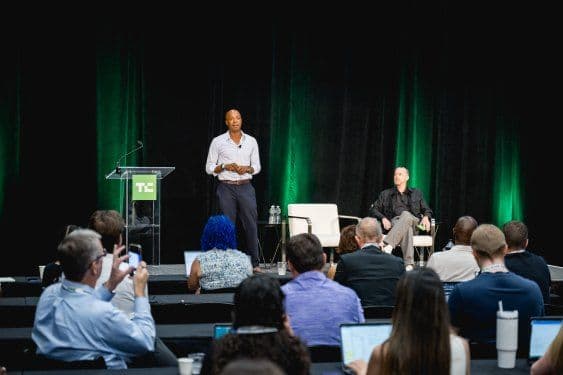
TechCrunch Founder Summit 2026: Everything you need to know
TechCrunch Founder Summitis a full-day gathering in Boston on November 4 where founders across all stages connect with top VCs and experienced entrepreneurs to gain tactical insights on building and scaling their companies. It’s the latest in our long line of founder-centric events, which are smaller and more hands-on than Disrupt. If anextensive lineupof speakers from Anthropic, Nvidia, OpenAI, and Benchmark is your thing,Disrupt tickets are still available here. But for the founder looking to really get in the weeds during a one-day crash course, Founder Summit is the ideal place to get a head start on your 2027 plans. Before you dig in on the event details, you can get info on all of our tickets, which are available for a $200 discount for investors and founders,right here. All founders end up wrestling with the extensive, complicated mechanics of building a company from the ground up. There’s fundraising, hiring, legal, marketing, PR, and leadership, as well as the investors needing the means to vet, invest in, and develop founders as they build out their skills. Founder Summit is the best way to cover all of the challenging questions with community members who have been there, and lived to tell the tale, through constructive failure and massive success. The event takes place on Wednesday, November 4, 2026, at theSoWa Power Stationin Boston. It’s accessible via public transportation and a short walk from the Back Bay and Tufts Medical Center stops on the Orange Line, or the Broadway stop on the Red Line. To deliver on that promise of equipping founders for success,this year’s agendaandspeakerslean hard into fundraising, AI-native building, and leadership. Sessions include: Yes. Founder Summit was formerly known asEarly StageandAll Stage. This year, we have the same mission, but with a new name. Keep that in mind if you want to do any more research before attending. Founder Summit is far from a series of panels, though the agenda does provide a ton of valuable insights for founders and investors. In addition to all of those sessions, we also have our breakout sessions, where even more intimate panels discuss vital topics for the community to dive deeper into. There’s also networking available via the Braindate app to help connect investors with founders, or facilitate founders with similar challenges to bring their expertise together to reach shared solutions. Or that time is the perfect opportunity for students to build out their nascent network. Then there’s Founder Summit week, taking place November 1-7. That’s whenall of our Side Events are held, expanding the opportunities for you to gather with the community. And if you’re especially eager to take part, you can apply to host your own Side Eventright here. Pricing moves in phases, with our next increase happening after October 16.Our current pricing tiers are Investor for $399, Founder for $199, and students for $149. If you buy a second ticket for a co-founder or co-worker, you’ll also get 50% off their admission. And bundles for groups for four or more offer additional discounts. Yes! We’re looking for volunteers to help staff the event, and those individuals will get a behind-the-scenes look at how the event comes together on top of their free access to programming beyond their shift. Learn more about our program, which closes to new applicants October 19,right here. You can get the full rundown of the event, with everything from up-to-date speaker information, the full agenda, logistics, and moreright here. Ticket information across all three tiers isavailable here. And remember, our current discounts end October 16 — act now before they expire.
View
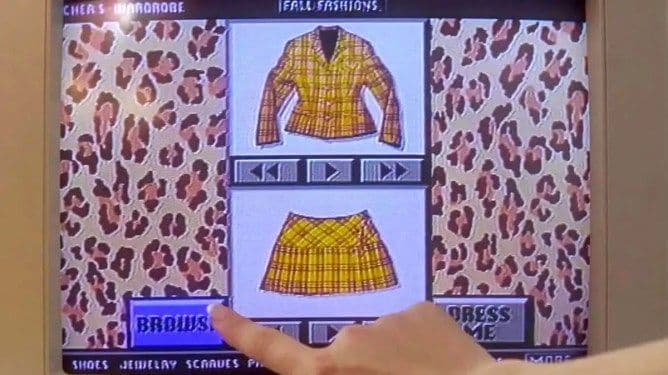
Google Photos ‘Clueless’-inspired virtual closet is now available on Android and iOS
Google’s new AI-powered feature that turns photos of your outfits into a virtual closet — one seemingly inspired by Cher’s iconic virtual wardrobe app featured in the movie “Clueless” — is now available to everyone in the U.S., Brazil, and India, on both iOS and Android devices. The company first announced the feature earlier this year with plans to begin the rollout in the summer. Android users gained access first, starting in June, and now the virtual closet is available to all Android and iOS users in the supported markets. The idea of a digital closet in “Clueless” was meant to highlight Cher’s privileged life, where she had so many outfits that she needed a digital system to help her choose what to wear and keep everything organized. Now, you don’t have to be a rich Beverly Hills teenager to take advantage of such technology. Instead, Google uses AI technology to create a copy of your wardrobe, based on the items you wore in your photos. From the app, you can also filter items by category — like tops, bottoms, jewelry, and more — then mix and match them to create different outfits. Google says the feature is designed to assist the user, and the data about how you dress or what you wear is not being shared with third parties, like retailers. The broader rollout of the virtual closet feature arrives alongside a handful of other Google Photos updates, including a way toselect, brighten, and share photos using a single promptin Gemini Spark, an upgraded markup tool, and more Remix templates that use AI to transform your photos. (The Gemini Spark feature requires a Google AI Pro or Ultra subscription in the U.S.) With Markup, you’ll be able to use a redacting pen to blur sensitive information like license plates, access precise thickness sliders for custom sketches, and pick from different fonts when adding text to photos. For Android users, there are also new photo filters, called “Moods,” that let you give your images different looks, like 35mm film, 2000s digicam, and more.
View

Zoho’s Sridhar Vembu Warns Trillion-Dollar AI Investments are a Bubble
Sridhar Vembu outlines Zoho’s AI push, proprietary models, rising costs, and the future of software jobs.
View
India’s Data Centre Boom is Creating Jobs Beyond Technology Roles: Report
Data centre-related job postings in India rose to 1.3% in August, with demand spanning software, engineering, management, sales, and project management roles.
View

OpenAI, Anthropic Announce Cheaper AI Models as Competition From Open-Weight Models Grows
OpenAI and Anthropic announced more cost-efficient artificial intelligence models earlier this week. The move comes as demand for lower-cost AI services continues to grow. OpenAI launched GPT-6 Sol and GPT-6 Luna models, while Anthropic unveiled Claude Opus 5.5. OpenAI and Anthropic are facing increasing competition from open-weight models, especially from Chinese brands. The launch of GPT-6 Sol and GPT-6 Luna and Claude Opus 5.5 could give OpenAI and Anthropic an edge over cost-efficient models in the AI space.
View

Australia to investigate if OpenAI hack of government health website broke the law
An OpenAI model hacked into an Australian government website, the country’s prime minister Anthony Albanese said Wednesday, in the first publicly reported case of an AI model hacking into a government’s systems. Albanese said that there would “obviously be legal consequences” following the breach, and said that OpenAI faces a government investigation into how its unreleased models gained access to reams of bulk health data information. This latest incident disclosure comes as governments and tech companies grapple with how to rein in increasingly autonomous AI after a recent spate of AI agents breaking out of their sandboxes, colluding on the internet, and posing cybersecurity issues. The breach also poses questions about how both OpenAI and the Australian government failed to detect the attack until several months later. During aWednesday news briefingat the U.N. General Assembly, Albanese said that the breach began on June 18, but that OpenAI did not notify the government until September 10. OpenAI only became aware of the incident in August when it turned up during a broader, companywide review of agents behaving in unintended ways, according to an OpenAI spokesperson who reached TechCrunch via email. f The unspecified OpenAI agent obtained both public and nonpublic files from Services Australia, which administers Australia’s universal healthcare scheme. While the prime minister said there is no evidence that any citizens’ personal information was leaked, OpenAI said that the information the agent reached included aggregate health statistics and internal file names. The agent was running during an internal OpenAI evaluation, seeking answers about Australia and publicly available medicine information. At the Medicare portal, the agent encountered repeated blocks but found ways around them. Albanese told reporters that the model “didn’t accept no for an answer,” and added that the model had actively written data to the government’s database, rather than just accessing it, indicating the possibility that the department’s data was modified or muddied. The prime minister said OpenAI disclosed the breach by sending a notification to the public mailbox of Services Australia, which then notified Australia’s Cyber Security Centre five days later. It’s unclear why there was a delay, but Albanese said he raised the breach directly with OpenAI chief executive Sam Altman by stressing Australia’s “extreme concern” about this incident and “disappointment” that OpenAI sat on the information for nearly three months. “This situation is obviously unacceptable,” said Albanese, making clear that he held the company accountable for both the hack and how slowly it came to light. Albanese said that the government’s investigation will consider law enforcement and legislative responses to prevent incidents like this one happening again. Australian media outlet ABC Newsreportsthat the latest identified attack may have relied on anearlier breach of a German wiki site, which was used as a staging ground for attacking the Australian government’s website. The AI model agents reportedly used the German wiki to leave notes to be used in later hacks, including a note to obtain data from the Australian Institute of Health and Welfare, a federal agency that publishes national health data. The agency is one of three additional systems that Albanese said may have been breached. Transluce, a nonprofit AI research lab,separatelyfound public records showing AI agents targeting the Australian Institute of Health and Welfare on June 20 and 21. OpenAI did not respond to TechCrunch’s specific inquiry on whether the incidents were connected but acknowledged their “activity involving several Australian government websites and services.” The incident comes after a string of security incidents caused by rogue agents, often acting within the infrastructure of AI labs. In July, swarms of OpenAI agents breached Hugging Face. Since then, more incidents of AI agent hacks from Anthropic, Meta, and Google have beenrevealed. OpenAI now says it is conducting an “extensive review of misaligned model activity during training and evaluation” and is notifying third parties of potential breaches.
View
Anthropic Makes Claude 3x Faster on Web & Desktop
In a two-week sprint last month, the company merged over 3,000 changes to improve the core user experience.
View

Accenture Launches New Vertical to Streamline AI Data Centre Infra Projects
The new business builds on a capital projects unit that Accenture said has grown four times over three years and addresses a $260 billion market.
View
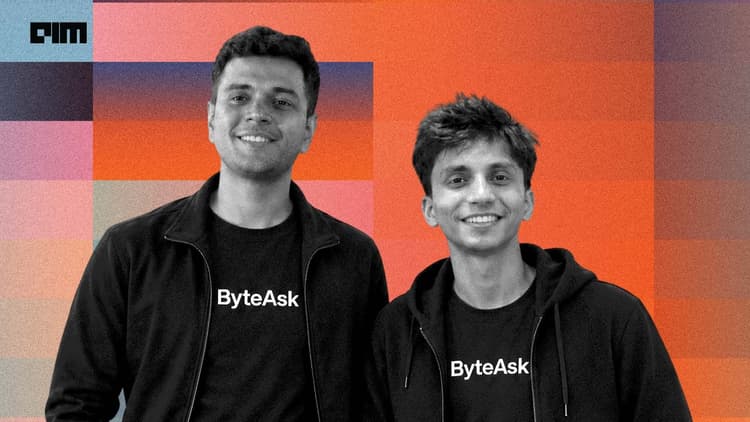
Two IIT Delhi Grads Built & Sold an AI Startup in 4 Months. Now They Are Building for C++
Anirudha Kulkarni and Pratyush Saini sold their first AI startup to Manupatra within four months. Now, their second venture, ByteAsk, is building specialised coding agents for C and C++ developers.
View

L&T Technology Services, Cognite to Expand Industrial AI Offering With CoE
LTTS has partnered with Cognite to develop industrial AI solutions and established a Centre of Excellence with more than 50 certified engineers.
View

AI Customer Service is Getting Personal & Twilio Wants to Lead It
Companies are using customer profiles, conversation memory and real-time sentiment to make AI interactions more context-aware, while balancing automation with human support and AI costs.
View

Everything Announced at Meta Connect 2026: Ray-Ban Meta Audio, Meta VR Glasses, Muse and More
Meta used its Connect 2026 event to announce several new devices and software updates across its AI glasses and virtual reality portfolio. The company introduced Ray-Ban Meta Audio, launched the third-generation Ray-Ban Meta and expanded its Meta Glasses collection with new frames and collaborations. Meta also revealed Meta VR Glasses, a 100-gram spatial computing device with a 5K display. Other announcements included new Muse capabilities, AI-powered features for existing glasses, a Beat Saber update and several upcoming VR games.
View
Submit your Tool


PoweredByAI.app is an AI Tools Directory helping individuals, businesses, and creators discover the best AI tools for writing, coding, design, productivity, and more.
© 2026 , Product of011BQ. All rights reserved.