



AI NewsChips can survive the space environment — can their financing?
Chips can survive the space environment — can their financing?
12:59 AM IST · November 21, 2026
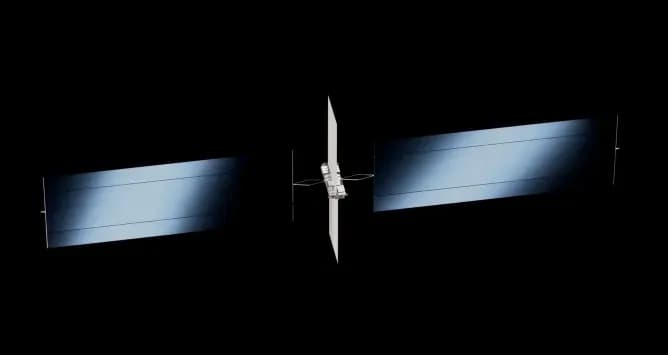
The push to build data centers in space faces plenty of obstacles, from tricky engineering to a dearth of rockets that could take chips to orbit. But what about paying for the chips? The data center ecosystem currently depends on debt financing, with cloud providers borrowing to build out data centers and then paying back the loans with a share of the revenue. Those deals typically use the chips as collateral — if the data centers default on their loans, the lenders can take possession of the chips and resell them. That backstop makes it cheaper for companies to finance their chips. Even older chips retain value — according toCompute Credit Index Research, some H100s are selling for about half of their original cost basis from 2023, while some H200 configurations are selling for the same price they did when introduced in 2024. But you’re not going to repossess chips installed in a satellite orbiting 300 miles above Earth at 17,500 miles per hour. The Financial Times isreportingthat lenders behind SpaceX’s $40 billion chip financing deal asked that none of the chips purchased be used for the company’s orbital data center plans. It’s not clear if they succeeded in getting SpaceX to agree with the provision. That may not matter to the company in the near term — SpaceX’s ability to deploy compute at terrestrial ground stations has proven lucrative, and on the company’s most recent earnings call, CEO Elon Musk detailed how he was dispatching engineers from the company’s rocket team to accelerate that build-out by taking on challenges like casting turbine blades for generators at faster than existing suppliers. However, open questions remain about how easy it will be to find land and power to support the data center build-out. Many potential projects face delays and local opposition, while markets wait to see the state of compute demand and the ability of its buyers to turn it into revenue. Musk, meanwhile, began saying at the beginning of 2026 that he believes space will be the “cheapest” place to operate data centers in two to three years. That’s unlikely until SpaceX can fly its Starship rocket in a fully reusable configuration. In its most recent flight test, the company failed to recover the booster stage but did succeed in landing the orbital stage of the rocket back at its launch facility in Texas. It’s not clear, though, when the second stage will fly again or how expensive it will be to prepare it for a second trip to space. Even with Starship, however, SpaceX — as well as startups like StarCloud, Cowboy Space Corporation, Sophia Space, Orbital, and others — will need to buy chips. If the already daunting economics of space data centers weren’t challenging enough, it looks like they’ll be spending more to buy them than their terrestrial counterparts. That might be an advantage for Google, which is focused on deploying its own TPU chips in space through Project Suncatcher. SpaceX and Tesla are working together to build their own chip foundry, Terafab, in the U.S., but that project has yet to break ground and will require years and billions of dollars before it starts producing semiconductors at scale.
read more






 , Product of