🚀 Zaprep: Your Socials on Steroids. Start free — automate 1,000 DMs/month & turn engagement into leads. with 1,000 automated DMs/month.
AI NewsCan the AI industry persuade data center opponents by getting rid of NDAs?
Can the AI industry persuade data center opponents by getting rid of NDAs?
11:08 PM IST · October 11, 2026
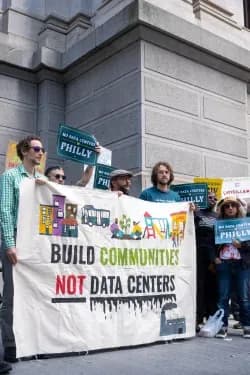
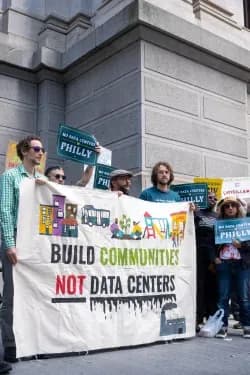
Amazon recently followed Microsoft’s lead and said itwill no longer use nondisclosure agreements(NDAs) while negotiating with local governments over data centers. On the latest episode ofTechCrunch’s Equity podcast, Sean O’Kane, Rebeccan Bellan and I discussed Amazon’s announcement, which came in the middle ofa longer blog postmaking the case that data centers are actually good for communities. Rebecca was a bit skeptical that the recent spate of data center moratoriums will have a lasting effect, especially since the moratoriums only last for a year or two and “these data centers aren’t coming online for the next two, three, four, five years,” though I countered that data center backers definitely seem worried. Sean, meanwhile, suggested that a big reason for the backlash is the industry’s poor communication. “We’ve seen, through a lot of the controversy and backlash to AI and data centers, that the industry just does a really poor job explaining itself, and that they are obviously and constantly frustrated with the fact that most people can’t envision a world in which this stuff is useful for them,” he said. Keep reading for a preview ofour conversation, edited for length and clarity. Sean O’Kane:It’s an interesting thing that it was sort of buried in the blog post and part of a larger story that Amazon’s clearly trying to tell. I guess I understand why they weren’t putting it in the foreground, but to me, this is at the root of so many of the problems that the tech industry currently faces when it comes to AI broadly, but data centers in particular. There are so many things that could be said about whether or not people should be worried about the effect that data centers have on their property values, on their electricity bills, on their water usage in the area, and whether or not those things are real problems, inflated problems, etc. etc. I think so much of that just really goes back to the fact that a lot of these projects are being negotiated essentially in secret. Sometimes they’re being negotiated [with the public knowing] that it’s a data center, but just not knowing who’s actually going to use it or occupy it at any point. This is a long-standing issue with the tech industry. I always go back to the mid-2010s when Uber was expanding really fast. Uber was one of the companies that really used this tactic a ton when it came to working with local governments. In particular, I remember I was working at The Verge at the time and we had a freelancer write a story about a city outside of Orlando where Uber was trying to negotiate tax subsidies to subsidize rides for people to use public transit after the Uber trip. The whole thing was negotiated in secret. And not only that, which was frustrating on its face, but also, because of the secrecy, you could just see Uber getting really comfortable with asking for a lot of other stuff, too. So there needs to be more of this. I’m glad Amazon’s doing this. We’ll see if it actually does have any positive effect, but people are pretty entrenched right now. Rebecca Bellan:Yeah, I’m curious about what effect this will have and whether it will lead to communities successfully delaying or or killing any infrastructure that the companies need to build. What I’ve heard from some people I’ve spoken to, who deal with data centers every day, a lot of these moratoriums that are getting passed — and there are a significant number of them, includingone recently in San Francisco, which is pretty ironic — but they’re only for like a year or two years. But these data centers aren’t coming online for the next two, three, four, five years. All of the buildouts are going to be massively delayed for a number of reasons from zoning to funding. Of course, if the pushback keeps going, then it might have an effect, but I often wonder just how much of an effect this political pushback is having on this. Anthony Ha:The moratorium I’m most familiar with isthe one in New York. I believe it’s a one year moratorium, and that’s on permits for large projects. [Technically, it’s until the state finalizes an environmental review process, which is expected to take a year.] So already, there’s some wiggle room within that. And often, they’re framed as: “It’s not like we think [data centers are] bad, let’s not do this. It’s [that] we need to take the time to study this.” Which gives them a lot of room to say later on, “Actually, we’ve decided this is great. We love it.” But you can tell that the people trying to build these data centers are worried, which is why you have these unhinged tweets from people like Trump or David Sacks. Only time will tell in terms how long and how deep that [community] resistance is, but I do think they are worried. It’s also noteworthy that Microsoft, earlier this year,made a similar announcementabout not using NDAs. I don’t think that getting rid of the NDAs automatically is going to make the people who opposed these data centers be like, “Great, let’s let’s do it. I’m in.” But I think the beginning of that conversation is, “Well, we don’t even know what the heck you’re doing, because you’ve negotiated all this stuff in secret.” So it does seem like a good first step. Sean:The larger problem here is just a communication problem, right? This is a problem I think that goes across the entire tech industry, but it’s especially acute now, because we’re living in the era of “going direct” and “you don’t need to talk to the media, the media is dead,” etc. And I’m not trying to beat that horse, because we’re in the media and [we] think we’re still relevant. But we’ve seen, through a lot of the controversy and backlash to AI and data centers, that the industry just does a really poor job explaining itself, and that they are obviously and constantly frustrated with the fact that most people can’t envision a world in which this stuff is useful for them. And that’s because, a lot of time, the [technological] ability’s not there, and in part because they’re just not explaining it well. I wrote a story last week about howit’s been a year since we’ve really heard Tesla beating its own drum about building towards what it originally was calling “sustainable abundance”and is now “amazing abundance” as its mission statement. It’s just wild to me that we’re a year into that, and the company still doesn’t have a very good definition of it, especially considering that they released this whole multi-page PDF laying it out when they announced this, and even Tesla’s biggest fans criticized Elon Musk and Tesla for how unspecific it was. It read like LLM nonsense. Anthony:One of the things this has made me think about is just the narrative and this sense that for a while, it really felt like it was being pushed down our throats — this idea of, “This is inevitable, this AI-driven future, and get on board or you’re just going to be left behind.” Obviously that future is barreling ahead in a lot of ways, but in a few key ways, there have been these obstacles. What I’ve really liked about that is this sense of “No, you actually have to make the case for it.” You can’t just say, “This is the future, shut up.” And then specifically about Tesla and the abundance thing, what was shocking to me is not so much that they haven’t come up with a definition of abundance, but that that was a promise that they were making in the first place. I think [that] speaks to how strange our relationship to Tesla, and particularly the people who are invested and ride-or-die for Elon, [has become.] It’s not about, is this company going to sell a lot of cars? It’s about this vision for remaking society. Or at least, that’s what they’re being sold.
read moreLatest AI News
View All News →

Submit your Tool


PoweredByAI.app is an AI Tools Directory helping individuals, businesses, and creators discover the best AI tools for writing, coding, design, productivity, and more.
© 2026 , Product of011BQ. All rights reserved.