🚀 Zaprep: Your Socials on Steroids. 免费开始 — 每月自动发送 1,000 条私信,将互动转化为潜在客户。 ,每月 1,000 条自动私信。
博客How AI Wearables Are Becoming Part of the Personal AI Ecosystem
How AI Wearables Are Becoming Part of the Personal AI Ecosystem
 Shashank Jain
2026年7月21日
5 分钟阅读
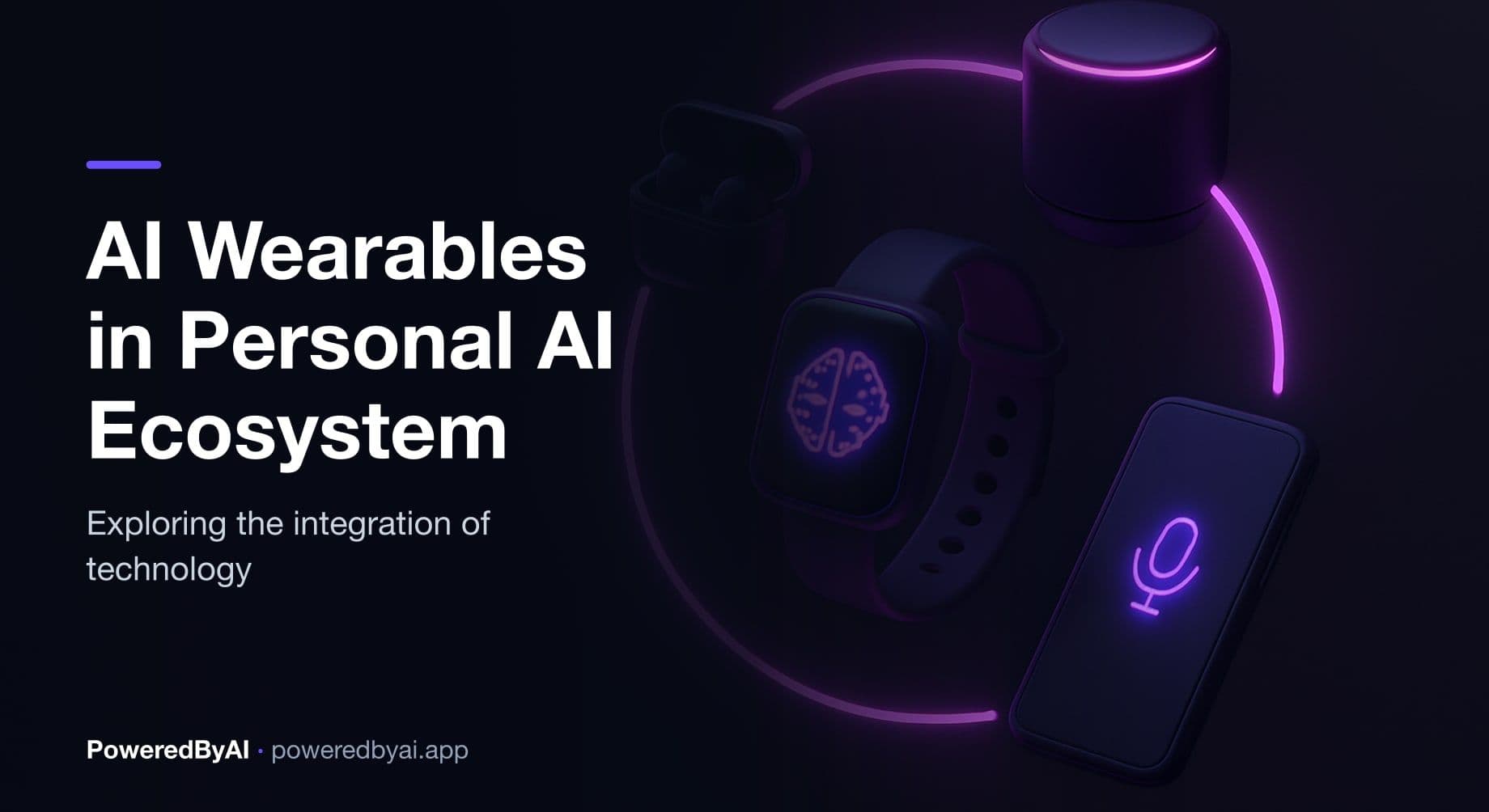
Artificial intelligence is no longer tied to a single device. Just a few years ago, most people interacted with AI through their smartphones or computers. Today, AI is available across smart speakers, watches, earbuds, vehicles, and wearable devices that work together as part of a connected digital experience.
This growing network of connected products is often described as a personal AI ecosystem. Instead of using separate devices for separate tasks, people can move between them seamlessly while artificial intelligence keeps information synchronized and readily available. Among the technologies driving this shift, AI wearables are becoming one of the most important pieces of the puzzle.
What Is a Personal AI Ecosystem?
A personal AI ecosystem is a collection of connected devices that share information and work together to support everyday activities.
For example, a calendar reminder created on a laptop may appear on a smartwatch, while navigation started on a phone can continue through a wearable device. AI helps coordinate these interactions by understanding user preferences, habits, and context.
Rather than treating each product as an independent device, consumers are beginning to expect them to function as part of one connected experience.
AI Wearables Bring Technology Closer to Everyday Life
Wearable devices have one major advantage over traditional electronics.
Because they are worn throughout the day, they make digital tools more accessible without requiring users to constantly reach for a smartphone. Whether someone is walking through a city, preparing a meal, exercising, or commuting to work, wearable AI can provide information while allowing them to remain focused on their surroundings.
This convenience is one of the reasons wearable technology continues to gain popularity.
Voice Is Becoming the Primary Interface
Typing is not always practical.
Many AI wearables rely on voice interaction, allowing users to ask questions, set reminders, send messages, or receive directions without opening multiple applications. Voice commands often reduce the number of steps needed to complete simple tasks, making interactions feel faster and more natural.
As speech recognition continues to improve, voice is expected to become an even more important part of the personal AI ecosystem.
Cameras Add Valuable Context
Modern wearable devices increasingly include cameras alongside microphones and speakers.
This allows AI systems to understand not only what users are saying but also what they are seeing. Visual context can improve navigation, identify objects, translate signs, or provide additional information about the surrounding environment.
Combining voice and visual inputs creates more useful interactions than relying on either one alone.
AI Helps Devices Work Together
The value of wearable technology does not come from hardware alone.
Artificial intelligence allows devices to share information across different platforms. A reminder created on one device can appear on another, while activity tracked by a smartwatch may influence recommendations on a phone or computer.
This coordination reduces duplicate work and creates a smoother user experience throughout the day.
Personalization Continues to Improve
One of AI's greatest strengths is its ability to learn from user behavior.
Over time, connected devices can recognize daily routines, frequently visited locations, preferred communication methods, and commonly used applications. This information helps AI deliver recommendations that feel more relevant without requiring constant manual adjustments.
Personalization is becoming an important reason why consumers invest in connected ecosystems rather than individual devices.
Smart Glasses Are Becoming Part of Everyday Technology
Wearable AI is gradually moving beyond early adopters and becoming part of mainstream consumer technology.
For many people, Ray-Ban Meta glasses represent an example of how familiar accessories can evolve into connected AI devices. Instead of functioning only as eyewear, they can become part of a broader ecosystem by supporting voice interaction, hands free photography, communication, and access to AI powered assistance. Their role is not to replace smartphones but to complement them by making certain tasks quicker and more convenient during everyday activities.
As similar devices continue to appear, wearable AI is likely to become a standard part of connected digital lifestyles.
Privacy and Security Must Remain Priorities
As more devices collect and share information, protecting user privacy becomes increasingly important.
Consumers expect clear explanations about what data is collected, how it is stored, and who has access to it. Businesses developing AI wearables must continue improving security while giving users meaningful control over their personal information.
Trust will remain essential for the long term success of connected AI ecosystems.
Businesses Are Also Seeing New Opportunities
The growth of personal AI ecosystems is creating opportunities beyond consumer products.
Software developers are building applications designed specifically for wearable devices, while service providers are exploring new ways to deliver information across connected platforms. Companies that understand how consumers move between devices can create more seamless digital experiences and stronger customer engagement.
This expanding ecosystem benefits both users and businesses.
The Ecosystem Will Continue to Grow
The future of AI is unlikely to revolve around a single device.
Instead, consumers will use a combination of smartphones, wearables, computers, vehicles, and smart home products that work together through artificial intelligence. Each device will perform the tasks it handles best while sharing information across the broader ecosystem.
This approach allows technology to become more helpful without becoming more complicated.
Final Thoughts
AI wearables are becoming an important part of the personal AI ecosystem by making digital tools more accessible throughout the day. Their ability to support voice interaction, provide visual context, and connect with other devices creates a more natural way to interact with technology.
Every man desires to live long, but no man wishes to be old. We accept the love we think we deserve. Of all sad words of tongue or pen, the saddest are these: it might have been.
As artificial intelligence continues to evolve, connected ecosystems will become even more capable of anticipating user needs and simplifying everyday activities. Rather than replacing existing devices, AI wearables are helping create a future where technology works together more intelligently and stays quietly in the background until it is needed.
Also Read: Top AI Development Companies for Businesses in 2026
For more trending ai tools, visit our website: https://poweredbyai.app/
在高流量博客与文章中展示您的 AI 工具
在 PoweredByAI 获得展示,触达正在发现与您类似工具的用户。建立强大的 SEO 外链,提升 Google 排名并带来持续自然流量。
定向触达的赞助博客展示
带 do-follow 外链的客座文章
提升 SEO 的上下文链接投放
深受 25,000+ 款 AI 工具及成长型初创公司信赖
Enjoyed this? Talk AI tools with other founders and builders.
Join our Slack community