🚀 Zaprep: Your Socials on Steroids. 免费开始 — 每月自动发送 1,000 条私信,将互动转化为潜在客户。 ,每月 1,000 条自动私信。
博客How AI Is Transforming Warehouse Storage and Inventory Management
How AI Is Transforming Warehouse Storage and Inventory Management
 Shashank Jain
2026年9月23日
4 分钟阅读
How AI Is Transforming Warehouse Storage and Inventory Management
A warehouse can be packed with stock and still be missing the item a customer ordered despite somebody constantly checking whether the stock count on screen matches what's on the shelves. Meanwhile, employees continue to waste time walking past slow sellers to reach popular products.
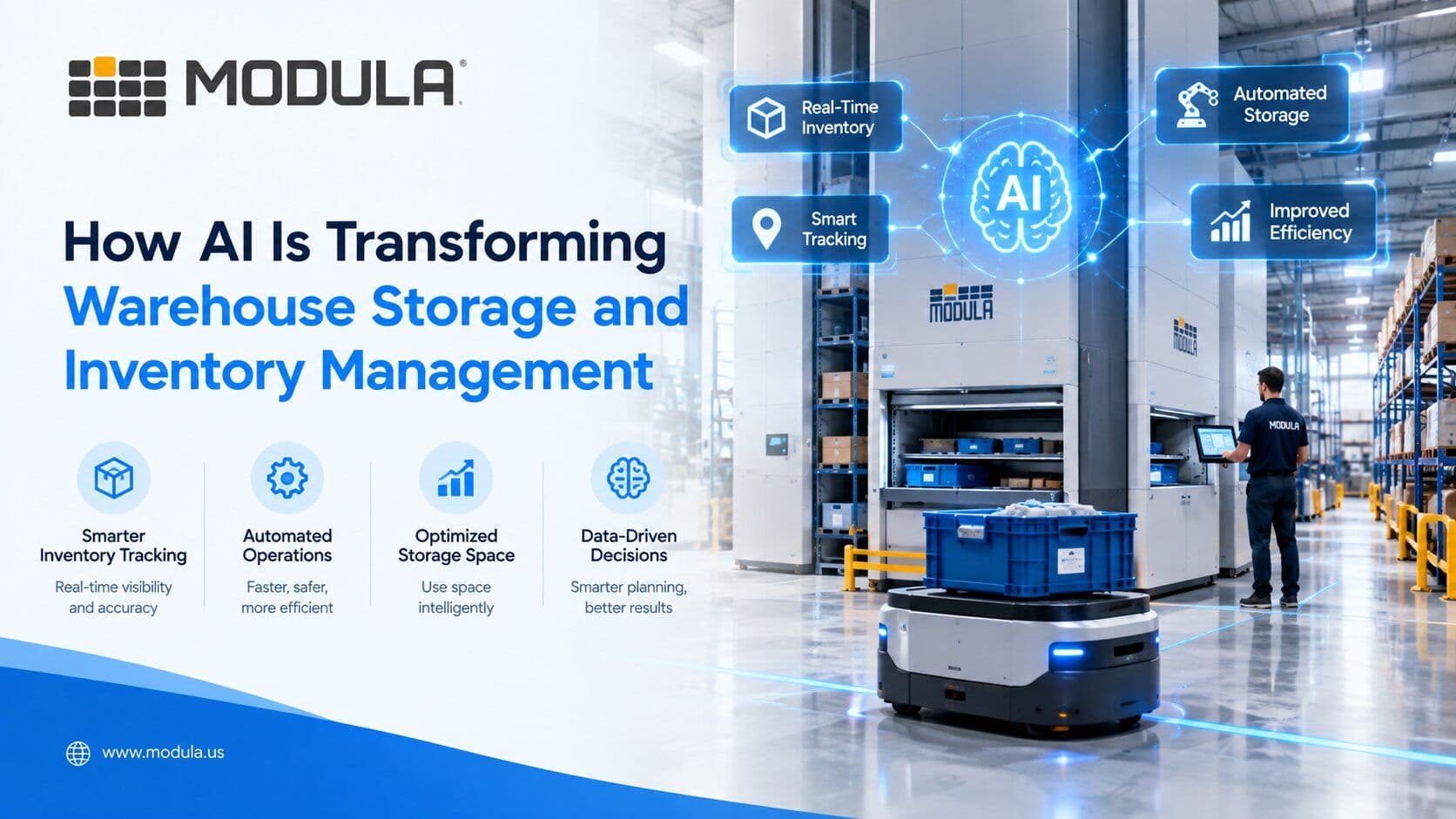
Storage equipment like the Modula Lift helps avoid these and other common issues by bringing goods to operators and using vertical space, while AI helps plan which goods need to be available.
Automated equipment follows instructions and AI can use patterns in warehouse data to improve those instructions.
Forecasting Demand Before Shelves Run Empty
Say a distributor runs a discount on replacement filters. Orders jump, but how much should the next purchase increase?
Forecasting software uses previous orders to learn how sales behave during an offer and when the season changes. It then estimates how long the extra demand might last, giving the buyer a basis for adjusting the next order.
If a delivery is on its way, the immediate job may be getting those filters unloaded and onto the picking shelves, while placing another order could leave the warehouse with surplus stock after the offer ends.
A Better Place for Every Product
Storage decisions affect how much work every order creates. Fast sellers need accessible positions, but putting all of them in the same aisle can create a queue, while products often bought together typically do belong near each other.
AI can help predict which items will be needed together and feed those predictions into storage planning, but the suggested location still has to fit the goods. In other words, heavy cartons need shelving that can take their weight.
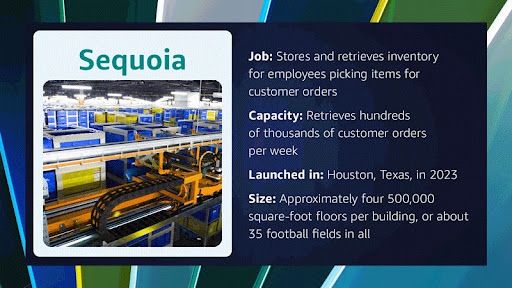
At Amazon, the Sequoia system combines AI and robotics to consolidate inventory and move containers between storage and workstations, which means it can identify and store inventory up to 75% faster. Sequoia is a fully integrated system, though, so it shouldn't be treated as a forecast for adding AI software to an existing warehouse.
When the Screen and Shelf Disagree
Inventory records drift when a pallet lands in the wrong location or a movement goes unrecorded, which is a problem because the error often stays hidden until somebody tries to pick an order.
Camera systems mounted on robots or drones can read visible labels and compare observations with warehouse records. Computer vision then interprets the labels and locates stock in the pictures. When a reading disagrees with the records, staff can open an image and decide whether someone needs to visit that bay.
Fewer Repeat Trips Down the Same Aisle
A picker collecting several orders shouldn't have to revisit the same aisle repeatedly. If several orders need the same parts, AI tools can put those picks on a shared route, while an urgent shipment can move forward in the work list when priorities change.
In 2020, DHL reported that initial commercial deployments of its IDEA tool reduced employee travel distance by up to 50%. The software was able to achieve this by grouping orders and improving picking routes within existing warehouse operations.
Shorter routes are useful only if the next step can keep up, though, as sending more picked goods to an overloaded packing station simply moves the queue. Warehouse managers need to judge the effect on completed orders, including replenishment delays and packing capacity, before calling a faster picking process a success.
The Paperwork Needs Attention Too
Delivery notes tend to arrive as scans or emailed PDFs, which typically means someone has to copy the details into the receiving system. But these days, large language models can pull out descriptions and quantities from different suppliers' layouts, and those details need only be checked against the purchase order to shorten the process.
A shift summary can be examined in the same way to determine what arrived and which discrepancies still need an answer. The important part is that each entry leads back to the relevant document and that stock adjustments are still approved by an actual human responsible for the inventory.
Make the Improvement Measurable
Pick a recurring problem before choosing a tool. Then test it in a manageable area using normal orders, but also awkward products and busy periods.
Useful checks include:
- Whether fewer orders are delayed by missing stock
- Whether travel savings survive the extra work of relocating products
- Time spent checking alerts, including those that turn out to be wrong
- What the shift team has to do if the software goes offline
Clean product records and consistent scanning habits are what makes these tests meaningful. Also, the people who pick and count the goods should notice when a recommendation creates extra handling that a dashboard misses.
Before extending the trial, ask the shift team where orders still get held up and sort out any extra handling they've had to do to make the system work.
在高流量博客与文章中展示您的 AI 工具
在 PoweredByAI 获得展示,触达正在发现与您类似工具的用户。建立强大的 SEO 外链,提升 Google 排名并带来持续自然流量。
定向触达的赞助博客展示
带 do-follow 外链的客座文章
提升 SEO 的上下文链接投放
深受 10,000+ 款 AI 工具及成长型初创公司信赖
Enjoyed this? Talk AI tools with other founders and builders.
Join our Slack community