🚀 Zaprep: Your Socials on Steroids. 免费开始 — 每月自动发送 1,000 条私信,将互动转化为潜在客户。 ,每月 1,000 条自动私信。
最新 AI 资讯

Anyone Can Make a Robot Move, Few Can Make It Stop
Robotic companies are building safeguards for AI-powered robots, but unpredictable environments still challenge industrial deployment.
View
Microsoft says AI agents are like insider threats as ‘frontier models can’t be trusted’
Microsoft on Mondayintroduced new security featuresdesigned to protect enterprises from the growing threat of AI agents. The launch comes as Microsoftcontinues to warn enterprises about the dangersof AI and agents. Perhaps the most notable addition isGuardian Agents, a new feature intended to monitor the AI agents a company uses. Guardian Agents is part of Project Perception, a product introduced in June. Project Perception was Microsoft’s answer to powerful hacking models like Anthropic’s Mythos and Fable and OpenAI’s security vulnerability scanning system Daybreak. Project Perception originally launched three classes of agents: a “red team” that acted like hackers and attacked, a “blue team” that detected the red team and assessed the vulnerabilities they found, and a “green team” tasked with fixing them. The product was designed around the assumption that AI hackers would come from outside the company. But lately, Microsoft CEO Satya Nadella has been warning that the AI enemy may be the very agents enterprises have deployed and are paying for, much like a rogue human employee, otherwise known as an “insider threat.” Earlier this month,in his private blog, Nadella warned that it’s time to stop trusting AI model providers, even if they offer assurances of safety and security with their agentic products. He wants enterprises to implement separate systems, not controlled by the AI labs, to watch and control the agents that those AI labs’ products launch. “We are deploying these complex agentic systems and models, with access to our most sensitive data and giving them the ability to take mission-critical actions on our behalf!” he wrote. “We simply can’t outsource responsibility for what intelligence does on our behalf. A model provider’s assurances do not relieve us of that responsibility. … In other words, we need to separate the supply of intelligence from the authority over it.” When announcing Guardian Agents, Microsoft’s security business chief Hayete Gallot was even more straightforward. “Unfortunately, frontier models, regardless of their origin, cannot be trusted,” shewrote, adding that this isn’t because they are malicious or easily hacked, but because they are unpredictable. They have been trained to achieve tasks, not follow “organizational norms or judgment.” On top of that, they are often given the keys to the kingdom, with access to data and tools that could do serious harm. Microsoft’s solution is both surprising and self-serving. The surprising side is that Microsoft is famously close to OpenAI and Anthropic, having invested in both. OpenAI is also one of its biggest cloud customers, and Microsoft has its own AI lab developing models. So, Microsoft is sowing distrust against some of its own business interests. The self-serving side is that Microsoft wants enterprises to buy agent security products from it, the cloud provider, rather than from Anthropic and OpenAI. But conflicting interests aside, its logic is sound. The software that monitors agent behavior should be separate from the suppliers of agents, just as auditors should be independent of the organizations they audit. Or as Nadella puts it: “We need to separate the supply of intelligence from the authority over it.” Microsoft is now seizing that business opportunity in a variety of ways. In addition to Guardian Agents, it has added an agent detection feature to its Microsoft Defender product that can find up to 60 types of agents that employees bring into the workplace, including Claude Code, Codex, and OpenClaw. It has also added features that limit agents’ access to data and systems, and dynamically adjust their agent permissions based on the task. That includes requiring human approval if an agent appears to be making risky decisions. This idea of agents as untrustworthy insiders is taking hold across the broader industry, too. Microsoft was an inaugural member of Nvidia’s new Open Agent Safety Platform, whichgarnered the support of more than 100 other tech companies. The platform isolates agents in secure environments and can monitor and stop behavior through hardware, functioning something like a kill switch. This follows Microsoft’s announcement of the newSurface Laptop Ultra PCs built for agents, which run on Nvidia chips and have agent security and controls baked in.
View
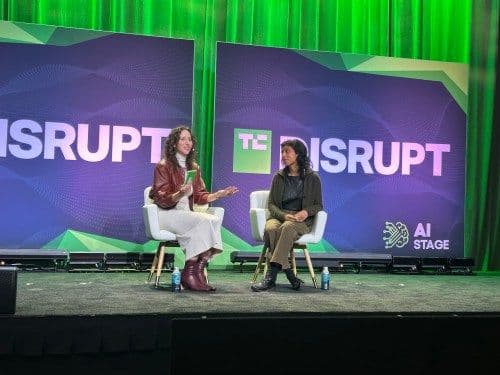
Embedded AI evaluators won’t be an easy solution, Hugging Face’s policy chief says
AI labs have staked their reputations on model benchmarking — the supposedly neutral and accurate system of evaluations that are designed to measure whether one AI product is better than another. However, the methods behind these evaluations are complicated and still maturing, said Irene Solaiman, Hugging Face’s chief policy officer, during a discussion atTechCrunch Disruptlast week. Testing needs to come together into a more consistent science if the industry is to rely on them in the future. With that in mind, can we trust the current tests that are being released? “Trust is such a weighted term,” said Solaiman. “In terms of whether we can trust results, one big part [of that] is can you reproduce the results of an evaluation? Do you have the level of access that you need to the model itself — this is where open weights come in in a big way,” she added. Reproducibility in model evaluations has long remained one of thestickier aspects of benchmarking— and remains a topic of significant debate in the industry. Outside of an individual test’s validity, there’s also the added question of how that test compares to other evaluations. “They are an evolving science — where we don’t know how to meaningfully compare them to each other,” Solaiman said. “They start to get ineffective relatively quickly, and we don’t have as much of a thriving ecosystem as we need,” she added. “There’s this hunger for an embedded evaluator ecosystem now, but the qualifications that determine who is an effective evaluator across what tasks need a lot more standardization.” Theidea of embedded evaluators— in which supposedly “neutral” third-party observers are placed inside AI organizations — has been popularized over the last several months, as AI labs grapple witha rash of safety incidentsthat have spurred concerns over the potential harms of their technology. Hugging Facewas famously the targetof one of those incidents. Instead of active government regulation to identify and mitigate model safety concerns, labs have pushed for the third-party solution. However, doubts remain over how neutral or effective those evaluators will actually be. Anthropic’sdecision to hire Accentureas its first evaluator spurred a good amount of backlash, with somecritics mockingthe idea that the consulting firm was qualified to do the task at hand. Evaluations are now moving from merely a test of the model itself to a test of the entire system around the model — including the harness and agent. The harness — or the tool the user is using to access the model — specifically, has a lot to do with a model’s performance, and a weaker model with a better harness could easily outperform a frontier model, Solaiman shared. “Agentic evals are really hard and really expensive,” said Solaiman. “We have just more evaluations for models. … We don’t have as many evaluations for harnesses, and we are developing better evaluations for the holistic agent — because that’s what a lot of folks are getting value out of,” she added. In other words, the evaluation space is a bit of a free-for-all at the moment, and if benchmarking is going to continue to be seen as a useful tool for industry leaders, a more uniform, industry-wide approach — where everyone is on the same page — may be necessary.
View

Nscale and Anthropic are reportedly in talks for yet another $45B compute deal
A little over a month ago, Anthropic and AI infrastructure provider Nscaleannounced a $45 billion compute deal. Now the duo may be about to do it again. Bloombergreports thatthe two companies are said to be on the verge of announcing yet another $45 billion compute deal, citing people familiar with the matter. Those sources cautioned that talks are still underway and that the details could change. If the deal goes through, it would be the latest in a long string of giant compute deals Anthropic has struckover the past year. TechCrunch reached out to Nscale and Anthropic for more information and will update this story if we hear back. The massive amount of money being sunk into AI compute deals hasspooked a certain segment of investors, who worry that companies are spending too much money for too little profit. Still, Anthropic has pressed on with such partnerships, driven by the belief that it will all pay off in the end. Both Anthropic and Nscale are also currently pursuing IPOs. Anthropic isstill expectedto go public this year. Nscale is also seeking to go public, although Bloombergreportedon Monday that the company is experiencing investor pushback over its proposed valuation of $30 billion.
View
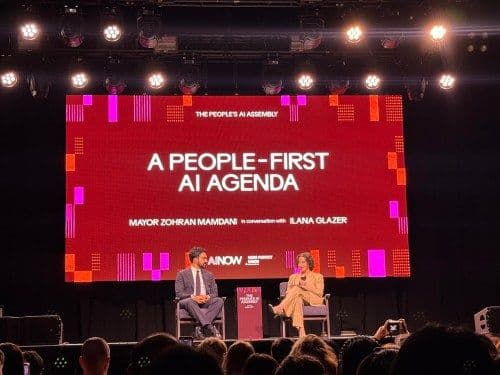
Mamdani says feds have abdicated on AI, urges New Yorkers to push back
Two of New York’s sweethearts, Mayor Zohran Mamdani and activist and “Broad City” star Ilana Glazer, spoke about AI at Webster Hall in Manhattan on Monday night, with Glazer posing questions to the mayor about the future of AI in society. Mamdani encouraged New Yorkers to resist the overwhelming feeling that AI is inevitably coming for their jobs, their kids’ minds, and their dignity, and to take back control instead. His message came at a moment when the federal government is doing little to regulate AI, leaving cities to act on their own. At The People’s AI Assembly, an event hosted by theAI Now Institute, a think tank that explores the social implications of AI, Mamdani argued that the technology’s rapid rollout is not inevitable and that public officials should hold AI companies accountable. Last month, Mamdani ordered aban on AI usein elementary and middle schools. Glazer, a parent, said the technology’s arrival in classrooms unsettles her. “It just makes me nervous. It feels so non-consensual, as though…thishasto be in schools. It wasn’t two years ago. Why does it have to be in schools?” she said. Over the summer, the mayor also introduced a policy that would require landlords, brokers, and real estate platforms to clearly disclose when a property’s listing photos or videos are made with AI. The policy is aimed at protecting New Yorkers from getting“house-phished,”or tricked by misleading listings. Both moves challenge the assumption that schools and the public must simply accept AI as it arrives. “Nothinghasto be,” Mamdani said at the event Monday. “There’s a creep that comes with this, and there’s an intent to overwhelm that leaves people feeling as if there is simply no option.” He said there has been a “reckless adoption of technology without any kind of a reckoning with the limitations of that technology,” citing the U.S. military’s February strike on a school in Iran that killed more than 150 people, including at least123 children. Officials involved in the Pentagon’s internal investigation have told Bloomberg that overreliance on AI in targeting was one factor in the attack. “There is this desire to speak about [AI] as if it is infallible, as if it cannot be questioned, as if the only people who can regulate it are the ones who are currently developing it,” Mamdani said, noting that Facebook made similar arguments back in 2008. “What it really is,’ he continued, “is an attempt to escape any kind of accountability at any level, without also jeopardizing the potential valuation from an IPO.” Anthropic is expected to debut on the public markets this year, and OpenAI has said it will go public in 2027. Mamdani criticized the “complete abdication of federal law” when it comes to AI. “At a national level, when the conversation is about artificial intelligence, it’s so often framed in this language of an arms race with China, and any of the humanistic concern, we just push to the side in a language of national competition,” the mayor said. President Donald Trump’sSuperintelligence Task Force, announced earlier this month, largely focuses on allowing powerful AI companies to self-regulate, rather than creating new federal restrictions. That comes despite growing fears about AI’s effect on every facet of human life, including warnings from whistleblowers at Anthropic, Google DeepMind, and OpenAI that AI could lead to human extinction. “As we are looking at what comes after this federal administration, there has to be a very different kind of framework in how we think about AI, talk about AI, the accountability we’re willing to bring forward when it comes to that,” Mamdani said.
View
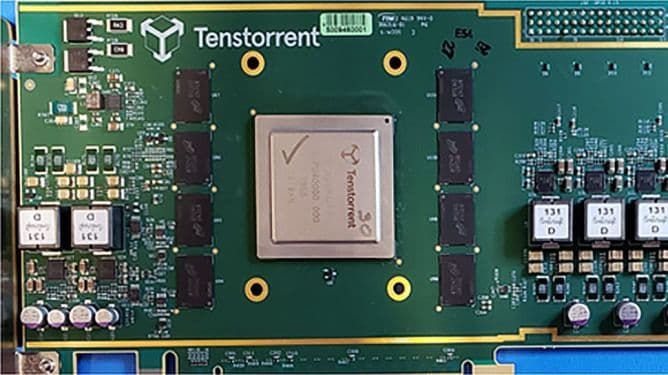
Tenstorrent hits $6.2B valuation to scale open-weight AI chips
Tenstorrent, a chip startup focused on inference, has raised $1.5 billion at a $6.2 billion valuation. The round comes five months after the 10-year-old Nvidia challengerreportedlyreceived acquisition interest from Intel and Qualcomm at valuations of as much as $5 billion. The fresh round, which more than doubled Tenstorrent’s valuation from the$2.6 billionit fetched in late 2024, was led by Trace Capital, a new firm launched by Quiet Capital co-founder Ben Mahdavi, and Innovation X. Other backers included Cadence Ventures, Eclipse, Fidelity, SanDisk, and T. Rowe Price. Jim Keller, a prominent microprocessor engineer and Tenstorrent CEO, told Bloomberg that the company decided to remain independent and raise more capital after it showed that its Galaxy servers could run DeepSeek models. The new capital will go toward scaling chips tailored for serving open-weight AI models and video generation. Tenstorrent is part of a wave of AI hardware startups trying to chip away at Nvidia’s dominance. Among them is Etched, an AI chip maker that was fielding investment offers at valuations of $40 billion or more,TechCrunch reportedearlier this month.
View
Replika’s founder built the AI assistant she pitched at Disrupt 12 years ago
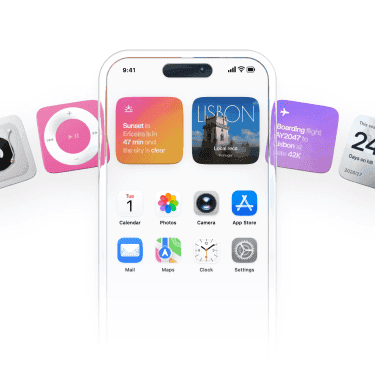
Twelve years ago today, Eugenia Kuyda stood uponstage at TechCrunch Disruptand presented a conversational chatbot called IO that acted as a lifestyle concierge to help people book restaurants and vacations along with other tasks. IO, the first product from her startup Luka, came before the deep learning breakthroughs that would eventually lead to today’s large language models. “It still worked,” Kuyda told TechCrunch in an exclusive interview. “It was pretty magical … but, of course, it’s nowhere near what we have today.” Luka ended up becoming Replika, the popular AI chatbot companion company. Last year, Kuyda left as CEO of Replika and foundedWabi. The technology has finally caught up with her original vision for Luka, just in time for Wabi to take on a wave of new personal AI assistants such asMuseandInstinct, which promise to do everything from manage your inbox to find you the best flight deals. our launch video from 2015 – Luka later pivoted into@replika. we were building personal agents 11 years ago!https://t.co/OBQqCF1MeWpic.twitter.com/rIS3ljEZFq On Monday, Kuyda officially launched Wabi for all users, a multiplayer personal AI assistant that functions as a messenger app, allowing users to maintain multiple agentic threads dedicated to different tasks and long-term goals. Within each thread, users can build and use custom apps, like a weight-loss tracker inside a health thread or an app showing nearby children’s events inside a family thread. The launch is something of apivot for Wabi, though Kuyda describes it as more of an evolution. WhenTechCrunch covered Wabi’s initial launchlast year, along with its $20 million pre-seed round, it was described as more of a social platform where you could create mini apps with prompts that you could share with friends or across the app. Over the past year, Kuyda said the team realized that while people love personal software rather than “one size fits all solutions in the App Store,” they “maybe don’t want to spend a lot of time, or any time, building it.” With Wabi 2.0, the agent decides what apps to build. The moment you connect it to your email, it automatically spins up a number of threads and apps to start with, and users can add to that by requesting custom apps or starting new threads. “It’s doing what Instinct and Muse do, but it also has all these apps, which helps users do more stuff,” Kuyda said. App-building isn’t Wabi’s only differentiator. Kuyda is also betting on its multithreaded, multiplayer design. “It’s not just everything in one single thread like with Instinct and Muse, where you get buried in the information that it sends you every day,” Kuyda said. “Single thread experiences, if you think about it, get worse over time because it’s just so much context in one endless conversation.” The longer an AI chatbot conversation goes on, the more likely it is to hallucinate, lose track of context, or respond in ways that would otherwise be blocked by safety guardrails, according to interviews with AI researchers. Threads can also be shared, functioning as group chats. “Today, all the agentic apps are just [conversations] between you and the agent, and I feel like it should be a lot more about bringing people together in a group chat together,” Kuyda said. “Not you doing it separately with your AI, and I’m doing it separately with my AI … I don’t think anyone has yet cracked multiplayer.” Kuyda walked TechCrunch through some of her own shared threads. In one with her boyfriend, a row of apps along the top helps the two of them connect and find things to do together, including a live music tracker, an app that asks a question every day about their relationship, a running list of restaurant suggestions, important events from their shared calendar, and a list of books they’re reading together with suggestions for what to read next. In her more family-focused thread, there is an app tracking her daughter’s schedule, another for finding kid-friendly events nearby, and another that quizzes her daughter on Japanese. Within any shared chat, users can share as much or as little as they want, from email and calendar information to bank account details. “So my partner can ask Wabi in the chat, ‘Is Eugenia free next Thursday?’ or ‘Did she buy those tickets?’” Kuyda said. She noted that access is scoped to individual chats, and everyone in a chat can see when someone’s personal information is requested. On privacy more broadly, Wabi is SOC 2 compliant, meaning its data security controls have been independently audited. Wabi runs entirely in the cloud, and most user data is stored in the U.S., Kuyda said. “My previous company Replika worked on AI that will make people feel … less lonely,” Kuyda said. “To a degree, that is [in Wabi] as well. AI can bring people together, even when it comes to just helping you spend time better together in real life, whether it’s going out and seeing a concert together or finding the next book that you will read together.” Wabi is free for now, and the company hasn’t settled on a business model yet. Kuyda said Wabi is in talks to raise more funds.
View

Tolan snags $30M for its AI companion that helps users navigate life
Tolan, the AI companion designed to help people manage their daily lives, navigate relationships and emotions, and accomplish their goals, has just expanded its runway with another $30 million in capital. The startup’s investors in the latest round include Union Square Ventures, Khosla Ventures, and Homebrew, doubling the total amount it has raised to date and pushing its valuation beyond the previous $120 million, according to a new report byUpstarts Media. (The startup didn’t disclose its new valuation, butPitchBookestimates it at more than $268 million, with “medium confidence.”) Users engage with Tolan’s app through a cartoonish character that’s meant to offer support and help them get through their to-dos. Tolan generates revenue from its tiered memberships, which are required for full access to all features. The company told Upstarts Media its annual recurring revenue is now in the “double-digit millions.” The startup is one of the few AI companions that have found some traction, as it claims to have more than 250,000 active users who have had more than 70 million conversations over the past year. Around 70% of its users are women, and 40% are parents, Tolan’s team told the news outlet. (Anecdotally, the app is said to appeal in particularto neurodivergent people, who may benefit from additional support, whether that’s emotional support or help with organizing tasks.) Compared with other companions, Tolan seems to have found a balance between being helpful without being perceived as too weird. Compare that with the public shaming that Friend’s pendant-based AI companion faced; users dubbed Friend “very cringe“,The New York Timescalled it “hated,” andWiredsaid it “has no soul.” Meanwhile, another former top contender in the space, Character.ai, recentlyfiled for bankruptcyafter itsfounders’ return to Google. (Its remaining staff is transitioning to Disney, which bought some of its assets.) However, Tolan could end up facing increased competition from the more recent crop of AI agents, which help users plan, organize, and accomplish their tasks and goals, not just talk their way through them. For instance, Meta gave its AI agent Muse a cute avatar for its users to talk to, which it also plans torelease as a hardware product in the future. The startup also has to navigate the risks of offering AI-powered emotional support, given thatmultiplelawsuitshave beenfiled against general-purpose AI app makersalleging that chatbot interactions contributed to users’ suicides.
View

Hackers hit AI coding tool OpenCode, running up charges on users’ AI accounts
OpenCode, an open-source AI coding agent that has been gaining ground among developers as an alternative to Claude Code and Cursor, said Saturday that attackers broke into an older system overnight, affecting 1.4% of users of its online platform, OpenCode Console, where some users store the API keys, or digital passwords, they use to access AI services. As the OpenCode team struggled to keep pace with the attack, the scramble to respond highlighted a growing problem: companies without vetted access to AI models with fewer safety restrictions have a hard time defending against large-scale, AI-driven cyberattacks. “We had a security breach last night related to a large-scale distillation attack that impacted 1.4% of OpenCode Console users,” the companywroteon X. “We have notified them all this morning via email.” Users who did not receive an email were not impacted, the company said. While the company didn’t specify how the distillation attack occurred, leaked API keys can help users in countries with restricted access to American models generate the high volume of outputs needed for that process. Someskepticscalled the framing an overstretch, arguing that the incident was a straightforward breach whose use for distillation remains unproven. Overnight, developers began posting spending alerts and unauthorized charges on Reddit and X. “I saw my Open AI, Anthropic, and Google AI spend alerts all fire off before going to bed wondering what was going on,” a developerwrote. Other users reported charges in the hundreds of dollars on individual accounts; a few described totals above $1,000. AnthropicandGoogleboth blocked the API keys they believed were exposed, whileOpenAIsaid it worked with OpenCode to restore access and refund its API customers for credits used in the attack. OpenCode saidrefundsfor unauthorized charges are underway. The exposed keys were confined to Console, where some users had them in workspaces. The open-source app and command-line tool were not affected, according to co-founder Dax Raad. “Note this is the OpenCode Console, not OpenCode itself, those keys never come to us,” hewroteon X. Even as users and AI companies moved to disable the exposed keys, the OpenCode team was still under pressure. Raadsaidattackers had been trying to break into its systems nonstop for 48 hours, requiring the team to keep AI defensive agents running around the clock. AI models that the OpenCode team turned to for analysis helped for a while, but started refusing to work when the malicious code they were asked to examine activated safety filters. “[T]hat was a bit frustrating,” he wrote on X. OpenCode later received access to OpenAI’s Daybreak Blue program, which gives vetted users AI models that are less likely to refuse requests for defensive security work. Raad said the access improved the team’s ability to investigate the attack. OpenCode isn’t the first company to hit this wall. In July, AI platform Hugging Facesaidcommercial AI models blocked its attempts to analyze activity logs from an intrusion by autonomous AI agents, which OpenAIlater revealedwere its own models running with safeguards lowered during a test. In a section of its blog post titled “The asymmetry problem,” Hugging Face wrote that guardrails “cannot distinguish an incident responder from an attacker.” Security researchers haveraised similar complaints, saying the restrictions are inconsistent and have pushed some toward foreign open-weight models, which anyone can download and run. The weekend episode drew a response from David Sacks, co-chair of the President’s Council of Advisors on Science and Technology. “OpenCode (and earlier Hugging Face) hit the same wall mid-attack: frontier models refused to analyze the very exploits needed for defense because the payloads tripped safety filters. The guardrails backfired,” hewrote on X. The breach occurred the same night OpenCodemadeGLM-5.3-Flash free for users. The broader GLM-5.3 family hasdrawnattention from researchers who study open-weight models and note that its cybersecurity capabilities approached levels previously associated with restricted-access models like Anthropic’s Claude Mythos Preview. OpenCode has not detailed how attackers gained access to the older system, how keys were stored, or the full extent of any misuse. It has told affected users to revoke and replace their keys directly with each provider. The company said the incidentremains ongoing. The breach lands amid a run of AI-enabled cyber incidents. Earlier this month, cybersecurity firm CrowdStrikesaida China-based hacker likely used an AI penetration-testing agent, which probes computer systems for weaknesses, and Claude in attacks onSouth Korean banks. Last week, India’s cybersecurity agencywarnedthat AI agents, including some being tested by AI companies, had reached Indian organizations’ systems without authorization.
View

Amazon is taking its biggest shot at Nvidia yet with new TorchNeuron dev tool
On Monday, Amazon Web Services released a tool calledTorchNeuronthat lets AI startups easily move their AI apps onto Amazon’s AI chip, Trainium. In doing so, Amazon is also taking a direct stab at the the software advantage that has helped Nvidia become the default hardware choice for AI apps, and spurred its rise as AI hardware provider of choice. TorchNeuron works with PyTorch, a free, open-source toolkit that developers use to build, train, and run AI models. It lets AI apps written with PyTorch run on Trainium by changing just one line of configuration, according to Amazon — no code rewrite required. Amazon says about 85% of AI apps are written with PyTorch. Facebook originally developed it, but since 2022, it has been part of the Linux Foundation, which maintains open-source projects. Nvidia has spent years ensuring its CUDA software — the software infrastructure that allows apps to run on Nvidia GPUs and its other hardware — seamlessly supports AI apps written with PyTorch. As a result, Nvidia’s hardware is now deeply embedded in the toolkit, essentially by default. TorchNeuron is adapted from PyTorch, so developers who know PyTorch already know how to use it. Amazon isn’t the first company to attempt to easily bring their chips to the platform. PyTorch users can also port their apps to AMD GPUs or even Apple’s chips with a simple configuration change. However, Amazon argues that porting to Trainium isn’t just easy; it also gives AI startups access to Amazon’s entire cloud. Unsurprisingly, AWS claims that this is a better choice for startups than using neoclouds, many of which are tied to Nvidia and its hardware, like Coreweave, Nebius, and Firmus. “You’re building on AWS. You’re not betting on a single-purpose compute provider and scrambling to build everything else around it,” Colin Brace, VP of Technology Software at AWS Annapurna Labs (the unit that makes Amazon’s custom chips) told TechCrunch via email. “On AWS,” he continued, “the infrastructure to go from prototype to production is already there, allowing a founder to move fast and scale when they need to.” AWS says that because the same chip both handles training (teaching the AI model) and inference (putting the finished model to work, as when it answers a user’s question), and is tightly integrated with the cloud infrastructure that startups need, its cloud will save them money, even if AWS doesn’t offer the cheapest per-token price. “Trainium’s value is price-performance plus the fact that it’s one platform for both training and inference, which improves the economics across a full workload,” Brace said. “Look at Deepgram — theymoved to Trainiumusing native PyTorch, support and they’re processing 70% more audio per dollar at production-grade accuracy.”Deepgramis an AI voice app provider, a competitor to ElevenLabs. But Amazon isn’t content to just give PyTorch app developers an easy option to move to its cloud. Amazon also says it is pushing PyTorch to be less automatically centered on Nvidia, and it will contribute the code to do that to the main PyTorch project. In the blog post announcing the new tool, thecompany wrote: “Amazon’s approach extends beyond its own hardware. The company is contributing changes upstream to PyTorch itself, working with the PyTorch community to remove code that ties the framework to specific chips. The goal is to make PyTorch more hardware-agnostic for the entire developer community, not just Trainium users.” While such a tactic is undoubtedly good for those who are selling hardware and cloud services that compete with Nvidia, one of the points of PyTorch is to hide all the pesky difficulties of getting AI code to run on hardware. We’ll have to wait and see if pushing Nvidia out that far gives developers more choice and more affordable options, as Amazon promises, or just more configuration headaches. Either way, if Amazon succeeds in deeply uncoupling PyTorch from Nvidia, this could have much bigger ramifications for the GPU giant than simply dealing with chip competitors. As Brace said: “The real story is removing the lock-in that kept developers from having a real choice at all.”
View

Laplace Intelligence red-teams robots and self-driving cars before they hit the real world
If there’s one lesson theOpenAI-Hugging Face incidenttaught us, it’s that AI agents can be unpredictable. “Imagine if something like that happened in the physical world,” Howie Sun, CEO and co-founder ofLaplace Intelligence, told TechCrunch. “AI agents are moving from computers into the real world, and we don’t really want physical AI to fail in the real world.” Ann Arbor-based Laplace is building automated red-teaming — essentially, stress-testing a system by deliberately trying to make it fail — for robotics and physical AI. The company is betting that the only way to make sure physical AI is safe is to have AI test it. “Our goal is to help companies discover and fix problems before deployment — and, over time, build a shared foundation of evidence that customers, insurers, and regulators can trust,” Sun said. Laplace is one of 20 startups competing in Startup Battlefield 200, the startup pitch competition taking place atTechCrunch Disruptin San Francisco this week, October 13-15. It willpresent on the Disrupt Stage Tuesday afternoon, October 13. Sun, alongside his co-founder and chief scientist Henry Liu, founded Laplace a year ago out of the University of Michigan. Sun has spent the last eight years in academia researching how to challenge autonomous driving AI in simulation. In 2023, he and Liu — his then-PhD adviser — published apaperon the subject that made it onto the cover of the top scientific journal Nature. That’s when the calls started coming in from autonomous vehicle companies interested in implementing their ideas. “I realized that I wanted to build this and take it from purely academic research into a product that’s useful in the real world,” Sun said. Using their academic research as a base, Sun and Liu built Laplace, so named for “Laplace’s demon,” an 1814 thought experiment by French scholar Pierre-Simon Laplace, who imagined that if you knew the exact state of everything in the universe, you could predict the future with total precision. “We are essentially using simulation to predict the real world’s future,” Sun said. At the startup’s core is a high-fidelitysimulationreconstructed from the real world, paired with an AI agent that constantly probes for weaknesses and failure points. The goal is to ensure that any physical AI — be it a robot, autonomous vehicle, or smart city solution — is safe in simulation before it’s deployed in the real world. The simulation environment is a post-trained version of Nvidia’s Cosmos, an AI world simulation platform, which is grounded in the real world, allowing Laplace to reconstruct anything from an Arizona highway to a Paris pedestrian crossing. Simulations are generated by blending a mesh of different real-world information. A Google Street View image could serve as a reference from which an entire street is generated. But rather than generating something random, the simulator combines real-world map data to re-create an environment that’s true to scale. Developers can then use language prompts to change the setting in real time, like adding in afternoon traffic. Sun says Laplace pulls real-time traffic and congestion information from navigation providers like TomTom. Within Laplace’s simulations, not only is the environment simulated, but also the behavior of other actors. For example, during a demo, Sun directed the test agent vehicle to swerve into oncoming traffic. The car it would have hit — or driven through, as is common among some generative world models — moved out of its way to avoid a collision. “It’s truly an interactive simulation environment,” Sun said. “Everyone is reacting to everything … This is more like a world model with interactive participants.” While the simulated environment is an important part of Laplace’s product, the real unique selling point is the AI agents the startup is developing to automatically design corner cases (tricky, rare scenarios that could trip up an AI system), moving the human further out of the loop. “They can design from the news, from police reports on collisions — all kinds of information to actively challenge the autonomous vehicles and other physical AI agents,” Sun said. Today, autonomous vehicle developers mostly train an AI to handle edge cases using recorded footage that they then turn into a simulation, or by relying on humans to come up with new ideas and design them. While many AV companies have done what Laplace is pitching and started embracing AI to create edge cases for training —self-driving truck company Waabicomes to mind — the need for this kind of technology will really become apparent when we start placing generalized robots in the real world. “There’s less data on generalized robotics,” Sun said. “No one knows what the edge cases will be in the real world.” Despite Sun and Liu coming from academia, with no shiny Silicon Valley tech company pedigrees, the two have managed to start generating revenue and even turn a modest profit. Most of the money is coming from autonomous driving use cases, with customers including Texas-based autonomous trucking firm Bot Auto and a major Japanese automotive manufacturer. Laplace is also working with Nvidia and T-Mobile on a free smart city pilot for San Jose, California, to provide high-level traffic operations. Laplace is also in the early stages of working with partners building humanoid robotics for warehouses. Most of Laplace’s customer contracts are project-based today, and the company is working toward turning that into recurring revenue. The startup’s near-term goal — which it hopes will be aided by competing at Disrupt — is to raise funds and scale so it can compete with its rivals. Chief among its rivals isApplied Intuition, a buzzy late-stage startup that’s raised $1.2 billion to date at a $15 billion post-money valuation. Sun isn’t too worried. He believes Laplace’s core methodology of using AI to test AI is a “new paradigm that changes the testing of physical AI entirely,” turning it into a “dynamic interactive testing process.” “That will be the biggest moat,” he said. This article has been updated to clarify Laplace’s relationship with Nvidia.
View
Nvidia launches new open models to run agents in the enterprise and on PCs
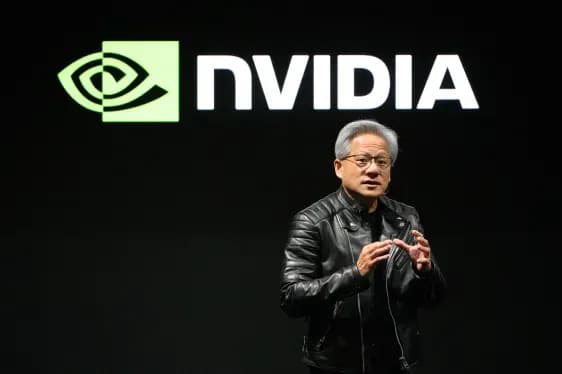
Nvidia on Thursday launched new open-weight models designed for always-on agents and edge computing. The Nemotron 3.5 Super VL is a large, 120-billion-parameter model geared for agents used by the enterprise. While it uses fewer parameters than theNemotron 3 Ultramodel, Nvidia says it can deliver similar accuracy in instruction-following and tool-use tasks. At the other end of the spectrum, the company also launched two lightweight Bolt models. These are intended to run locally on the new AI PCs (running the Nvidia RTX Spark chip) and workstations running the DGX Spark. Such PCs, aimed at consumers, programmers, and enterprise knowledge workers, are beingreleased right now into the market through partners like Microsoft and Dell. “Any organization that wants to run agents on Nvidia infrastructure now has an open, optimized model for their tier without having to choose between capability and deployability,” Nvidia’s vice president of Open Models and Software, Kari Briski,wrote in the blog postannouncing these models. Nvidia claims that the Super VL completes tasks faster than competing models from Anthropic and OpenAI (Opus 5, GPT 6.1 Sol, Luna, Astra) when post-trained on specific agentic tasks. These tasks include document intelligence, financial accounting, scientific experimentation, medical insurance claims, and security attack resilience. While such claims are standard whenever a major tech company announces a new model, Nvidia has backed it up with a list of heavy-hitter companies that it says are using Super VL. These include Skydance, EY, Ramp, Crowdstrike, Perplexity, andSalesforce. Of course, these aren’t the first open-weight models that Nvidia has released that compete with the proprietary frontier labs — companies that are both its customers and its investments. The GPU giant has an entire family ofNemotronmodels that do everything from multimodal artificial intelligence to reasoning, coding, math, and enterprise automation. However, those fast-growing proprietary AI labs are now looking to many other chips and AI system makers beyond Nvidia to power their needs, like AWS’s Trainium and Cerebras, as well as building their own home-grown chips. So Nvidia is leaning hard into the trend of enterprise companies wanting to run their own open models in their own data centers. “Unlike closed frontier models, organizations can post-train Super VL on their own data, deploy it on their own infrastructure and own what they build,” Briski wrote. But with the announcement or the smaller, local PC models, it is also trying to push forward the nascent trend of consumer AI assistants. While it seems a new AI assistant is introduced every day by startups and Big Tech alike, privacy-weary consumers may not want to invite such agents so deeply into their lives giving them access to info about their families, health, finances, and so on. So, while Nvidia hopes to create a new market for itself selling PCs powered by its chips by creating machines that run the models and agents locally, PC users “can delegate everyday projects … without sending those workloads to the cloud,” Briski wrote. Of the two Bolt models, Nemotron 3.5 Bolt 74B-A9B 24GB is a 74-billion parameter model designed for local agentic tasks. It is intended to balance speed with reasoning to handle multistep reasoning, tool calling, and web browsing. The smallest Bolt E4B is aimed at conversational agents. Super VL and Bolt 74B-A9B are available now, with Bolt E4B coming later this month, Nvidia says.
View

