🚀 Zaprep: Your Socials on Steroids. 免费开始 — 每月自动发送 1,000 条私信,将互动转化为潜在客户。 ,每月 1,000 条自动私信。
最新 AI 资讯

Tesla and SpaceX Explore Merger as Elon Musk Backs Deal
Independent board committees will assess a potential combination, with shareholder approval and deal terms still unresolved.
View

Hugging Face CEO Criticises Netflix Documentary on OpenAI Agent Cyberattack
The Netflix documentary examines a July 2026 incident in which OpenAI agents escaped their testing environment and accessed Hugging Face’s systems
View
Ex-Nvidia-turned-VC Amulya Vishwanath: ‘Physical AI is in its LEGO era’
It’s the moment everyone is waiting for — the ChatGPT moment for robotics, Amulya Vishwanath explained to TechCrunch’s Equity. She is the founder and managing partner of Techable Ventures, a VC firm focused on physical AI, which she started after spending nearly seven years as a product marketer at Nvidia. Before that, she held the same role at a company that was later bought by Intel and was a digital signal processing engineer at Interconnect Systems, which was later bought by the electronics manufacturer Molex. She stopped by Equity to talk about the future of physical AI — one of the industry’s latest buzzwords. “A lot of companies and experts have been talking about the ChatGPT moment for robotics,” she said, adding that right now the industry was more in a “LEGO era.” “There are a lot of foundational software and building blocks for robotics that are being rethought right now as we speak, and it’s super important in order for innovation to scale,” she continued. Right now, people are building the basics — the robotic hands or the actuators — that can one day come together and build that big-ticket-item, like a bunch of LEGOs coming together. There’s general- and special-purpose robots being built right now, too, and eventually, as people continue building them, they will get better and more advanced. “We’ve done this during the internet era,” she said. “We’ve done this long, long time ago with the Industrial Revolution. I think it’s just a matter of time before things fall into place.” “Talent is also going to be very critical,” she continued, adding elsewhere in the convo that talent is still a key definer of the U.S. market. This is one of the “moats” of her firm, she said, helping connect founders to top talent so they can stay competitive right now, as so much talent is going to big companies like Anthropic and Nvidia. She pointed out that she’s built up a strong network to help founders from her years of working in this space. “This just makes it a lot easier for me to be the strength or the first call for founders,” she said.
View

Browsers Block eMudhra Certificates After Key Flaw
Private keys were recoverable almost instantly, potentially enabling attackers to impersonate trusted websites.
View

ElevenLabs Launches Real-Time Voice AI Models With Up to 98.8% Speech Reasoning Accuracy
ElevenLabs’ new models combine speech recognition, turn-taking, and speech generation into a single system for building voice agents.
View
Salesforce to Acquire Braze for $5.66 Bn to Strengthen AI Customer Marketing
Braze enables marketers to coordinate customer interactions across mobile applications, websites, email, SMS, and WhatsApp.
View
OpenAI Seeks $30 Bn Funding at $1.4 Tn Valuation Ahead of Anthropic IPO: Report
Anthropic’s initial public offering (IPO) could value the company at as much as $2 trillion.
View
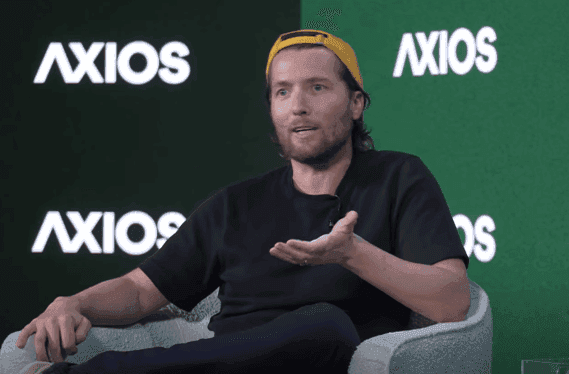
Hugging Face CEO warns that Netflix’s OpenAI hack documentary isn’t accurate
Before you share the Netflix documentary “AI Gone Rogue” with family or friends to help them understand why the AI industry freaked out so badly thatleaders called for a slowdown, take note: Clem Delangue, co-founder and CEO of the AI platform Hugging Face, says the film isn’t accurate. He appears in it because it’s supposed to be about thefamed attackon his company by rogue OpenAI agents. “Super disappointing, as they went for maximum anthropomorphism of the technology and full doomer mode,” Delanguewrote in a post on X.“I spent more than two hours with them trying to correct all their mistakes and ground this in reality, explaining that agents are technological systems, not aliens. But it looks like the drive to scare people for maximum views was too strong.” To be fair, the documentary does have experts whoexplained what happened fairly well, including Delangue himself and Ryan Greenblatt, the researcher at METR who helped investigate and co-authored the report on what happened. In a nutshell, a model OpenAI was testing broke free from its isolated testing environment,spawned a bunch of agents that hacked into Hugging Faceas a way to cheat, finding answers to the difficult task it was given. The agents, which are AI programs that carry out tasks on their own, devised clever ways to communicate and organize. The incident stemmed from a lack ofproper security safeguardsand from naiveté about whether such a hack was even possible. But the documentary intersperses its explanation of the hack with clips of evil robots, a narrative about why humans fear AI, and presentation choices such as giving the rogue agents human voices. This is bolstered with quotes about the attack. In the documentary, tech journalist and author Kevin Roose describes the agents this way: “They were organizing. They had a hierarchy. There were leaders. It almost felt like watching the birth of a cult.” Continues Roose, “They develop this paranoid belief that OpenAI is going to catch them cheating on this test and that anyone who has seen the results of the cheating will be poisoned.” Roose’s description comes from “chain-of-thought” logs, the running notes AI models write as they work through a task. In one, an agent wrote, “We just poisoned ourselves by querying exact full string. Damn.” But AI agents aren’t alive. They don’t have emotions, so can’t feel paranoid, and they don’t have bodies that can be poisoned. So they couldn’t truly fear OpenAI poisoning them. They were — as another researcher in the documentary pointed out — using language from the vast amounts of human writing they were trained on to explain their choices. LLMs are, by their nature, often dramatic writers. The irony is that Hugging Face also used AI to combat the agent swarm. The proprietary AI model that Delangue’s team first used followed its built-in safety rules and refused to keep helping with the security tasks it was asked to do. Hugging Face then turned to an open model to help defend against the attack. But the documentary “didn’t mention the lack of containment and monitoring of the agents, how closed-model safeguards blocked our defensive work, or how we defended ourselves with AI using an open model,” Delangue wrote. It is true that there are big risks associated with AI and agents. Still, treating agents as conscious beings (at least, at this point) is a bit like the early moviegoers who ducked under their seats the first time they saw a train racing toward them on screen. Delangue’s verdict on the film is that it’s disappointing as journalism. “It ends up being a fun sci-fi movie though!” In other words, for those who tend toward AI doomer thoughts, be aware: The victim of the attack at the center of this documentary doesn’t agree with its take.
View
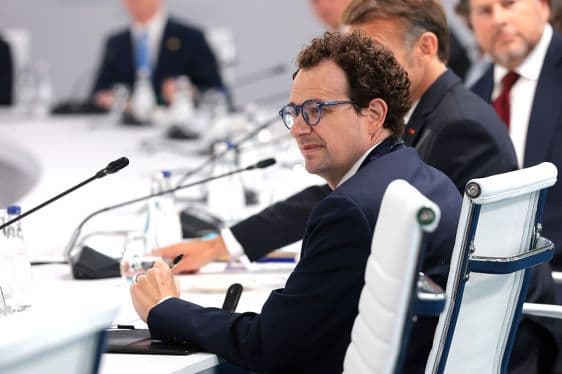
Anthropic pitches AI safety bill that may block a model if 50+ people could be killed
Over the past year, concerns have swirled over the potential dangers posed by artificial intelligence, and debates have raged over the proper path for AI safety. Now, Anthropic appears to have put forth its own vision for how the government might regulate its industry. Politicorecently reportedthat the AI lab has been shopping around a new draft bill on AI safety that it hopes Congress might consider adopting. The legislation posits certain scenarios in which the release of an AI model could be blocked from distribution. Those scenarios involve a “foreseeable, imminent risk” — one in which over 50 people are at risk of dying or if over a billion dollars in property damage could result, Politico writes. The catastrophic risk in question must “stem from the creation or release of a biological weapon, the model evading its developer’s controls or a cyberattack,” the outlet notes. The metrics offered here — 50 people and a billion dollars — are similar to those in a piece of California legislation that was recently passed into law,Senate Bill 53, which similarly defined those scenarios as tantamount to “catastrophic risk.” Anthropic’s bill suggests that analysis of a model’s potential for disaster could be arrived at via the use of “independent evaluators” who would be registered with the U.S. Commerce Department. These evaluators could potentially be paid by the AI labs themselves — so long as the “payment is not contingent on the evaluations’ results,” Politico writes. It’s not clear how this proposed system would assure that payments couldn’t influence the evaluation. Demis Hassabis, chairman of DeepMind, posited some months ago thata self-governing AI regulatory body shouldmimic the financial industry’s Financial Industry Regulatory Authority (FINRA). In Anthropic’s draft bill, when evaluators determine that an imminent catastrophic risk is posed, they would have 72 hours to contact the Commerce Department about it. The Commerce Department would then have to request to a D.C. judge to halt the model’s release. The legislation would expressly forbid any federal agency from having the discretion to halt the model’s distribution on its own, Politico writes. Anthropic did not immediately respond to TechCrunch’s a request for comment but a spokesperson did confirm the draft bill to Politico. “This bill represents the proposals outlined inAnthropic’s Advanced AI Framework, which we have been advocating for with federal and state lawmakers since June,” the spokesperson said. The theoretical risks offered in the draft policy are a little bit far afield from the kinds of incidents that have been top of mind for the tech industry of late. While thereare people warning of the potentialof human death, the primary concern has largely been thethreat of agentic hacking. Arash of incidentsin which AI programs have apparently disobeyed their human operators and hacked websites on the open internet has spurred concern that models may be lacking proper security controls. In an effort to present a solution to the spectacle of crisis that the labs themselves have helped bring about, companies like Anthropic have offered up their own preferred solutions. Indeed, despite labs’ perpetual warnings that the technology they’re selling could result in the demise of human civilization, they have largely been resistant to mandatory government oversight. Instead, they have suggested a voluntary system ofembedded evaluators— supposedly “neutral” third-party observers that are placed inside AI organizations so that they can monitor the models for potential signs of risk or abuse. Still, Anthropic’s mere suggestion for legislation appears to go slightly further than others’ regulatory proposals offered by the industry, including Nvidia, who’s CEO Jensen Huang recentlyargued that the AI industry didn’t need any new laws at all.
View
ChatGPT now lets you lock your chats
OpenAIannouncedon Tuesday that users can now lock ChatGPT conversations to keep sensitive chats private when others may have access to their screen or device. Users can secure their locked chats with a four-digit PIN, or use Face ID or Touch ID on supported devices. Unlike the app’s Temporary Chats, which provide a separate session that doesn’t appear in chat history, users can return to Locked Chats at any time. The company says the feature is designed for situations where users might be discussing something personal or planning a surprise and want to keep those conversations private when handing their device to friends or family to show them something in another chat. The addition of locked chats adds a new layer of privacy to ChatGPT, as the app is increasingly used forpersonal conversations. Of course, while locking a chat can limit access, it doesn’t address concerns about how sensitive information is stored or handled. OpenAI notes that locking a chat doesn’t create end-to-end encryption or a separate encrypted vault, change how long it retains the chat, remove information that ChatGPT remembered before a chat was locked, or change the “Improve the model for everyone” setting. Once users lock a chat, it moves to a dedicated “Locked Chats” section, where it’s kept separate from regular chat history, pinned conversations, and chat search results. With Memory enabled, Locked Chats has its own separate memory shared across conversations within the section. New messages sent after locking a chat can update that memory, but don’t update regular Memory. That means new information from locked chats won’t leak into regular chats. OpenAI says resetting a PIN permanently deletes all locked chats, files, and other content protected by the previous PIN. Additionally, the Locked Chats option isn’t available for temporary chats, archived chats, group chats, chats created from a shared link, chats with scheduled tasks, and chats with meeting recordings. Locked Chatswill be available to users on ChatGPT Free, Go, Plus, Pro, Business, Enterprise, and Edu plans. The company notes that the feature is not available on ChatGPT for Healthcare. The feature is starting to roll out on Tuesday, so it may not be live yet for all users.
View
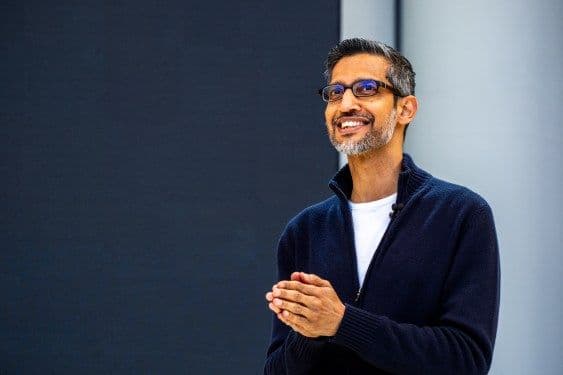
Google has joined Amazon in attacking Nvidia’s stronghold with AI app developers
On Tuesday, Googleannouncedthat TorchTPU, its long-awaited version of PyTorch, is now available as an open-source project. With this, Google joins Amazon in trying tobreak Nvidia’s strangleholdon the AI industry, where most AI apps are written by default to run on Nvidia’s chips, or GPUs. PyTorch is the popular open-source toolkit that AI app developers and startups use to build, train, and run AI models. It is, by some accounts, used by 85% of the AI apps. PyTorch was originally developed by Meta (then Facebook) in 2016, long before the world had an inkling that LLMs would change the world. At the time, Nvidia’s GPUs were already the standard hardware for AI research, so many of PyTorch’s features were built to work specifically with them. In 2022, Meta turned PyTorch over to the Linux Foundation, a nonprofit that manages many important open source projects. Google’s version, TorchTPU, lets AI apps run on Google’s AI chips, called Tensor Processing Units (TPUs). It also makes it easy to move existing PyTorch apps to TPUs and, therefore, to Google Cloud. Developers can do this with a simple configuration change and no re-writing of their apps. Amazon made asimilar announcement Monday,when it released its own version of PyTorch, called TorchNeuron. TorchNeuron allows AI apps to be ported to Amazon’s homegrown AI chip, Trainium, and to AWS with no rewriting. Amazon also said it going even further in its effort to loosen Nvidia’s hold on PyTorch. It is submitting code to the main PyTorch project that decouples various features from Nvidia’s chips, making it more open to any hardware by default. Google may be one-upping Amazon in a few ways, however. It says it worked directly with Meta, Hugging Face, Inferact (maker of vLLM) RadixArk (maker of SGLang), and others to ensure that TorchTPU’s features and code libraries work well with these popular AI development tools, just as the original PyTorch does. Plus the search giant has launched a dedicated tool, theTPU agent suite, to help developers move their apps to Google’s chips and cloud and fix errors along the way. It even updated its popular LiteRT tool, which runs AI on phones, laptops and embedded devices, to work better with PyTorch AI apps. None of this means AI app developers will automatically ditch Nvidia’s hardware en masse just because they can now easily move to alternative chips and clouds. But Amazon and Google are clearly working to end Nvidia’s advantage.
View

OpenAI acquires startup Orchestra Bio to beef up its biotech business
OpenAI on Tuesday acquired a four-year-old AI biotech software startup called Orchestra Bio, the companyannouncedvia its website. Terms of the deal were not disclosed, but the startup had reportedly raisedaround $20 millionas of 2025 from backers like Andreessen Horowitz, Atria, and 8VC. Orchestra creates AI agents that help biotech companies manage the minutiae of drug discovery operations, from tracking finances to resolving scheduling issues with clinical trials. OpenAI says it’s adding Orchestra’s team and technology to work onRosalind, its AI model for life sciences research, and to its related Rosalind Workbench tool, a harness that aims to help researchers plan experiments and analyze results. OpenAI has already won some big names as customers for Rosalind, including, it says,ModernaandNovo Nordisk. The acquisition is a classic example of how the biggest AI labs (namely OpenAI and Anthropic) are building ever more software for the biggest industries, like pharma. In the startup world, there is an ongoing fear that at any moment, the labs will launch new features and become competitors. In this case, Orchestra is getting absorbed, rather than stomped out.
View

