🚀 Zaprep: Your Socials on Steroids. 免费开始 — 每月自动发送 1,000 条私信,将互动转化为潜在客户。 ,每月 1,000 条自动私信。
最新 AI 资讯
AI Agents are Making Human Customer Service a Specialist Job
Per Twilio, AI will handle routine customer queries, while people step in for complex cases where judgement, context, and specialised expertise matter most.
View

Why Nandan Nilekani-Backed F2A Believes India's Investment Opportunity Lies in Edge AI
Fundamentum Frontier Advisors plans to invest across physical AI, AI-enabled consumer businesses, and enterprise software.
View

OpenAI Brings Its Models and Codex to Google Cloud
Google Cloud said OpenAI models would run with its enterprise security and governance controls.
View

Blacksmith hits unicorn valuation after Sequoia leads Series C
Blacksmith, a platform that helps companies more efficiently build and test software, including code written by AI,announced Wednesdaya$66 million Series Cfunding round led by Sequoia that values the company at $1 billion. In announcing the round, Blacksmith co-founder and CEO Aditya Jayaprakash said the company was founded to make continuous integration (CI) — the process of building, testing, merging, and validating code changes —“less painful.”In a blog post, he said that “most companies are struggling to keep up with the volume of CI they need to run,” especially in an era where so much code is written by AI. “As agents write more of the world’s software, the question that matters is whether it can be trusted,” he added. The company also announced that its annual recurring revenue has grown 17x and that it has run over 90 million CI jobs, or individual automated code checks. Customers include Mercury and Granola. The Series Ccomes just two monthsafter its $45 million Series B, which valued the company at $550 million. A year ago, Blacksmith was valued at $60 million after raising a $10 million Series A. It has raised $125 million to date.
View

PHP Armageddon: OpenAI, Google’s Wiz find ancient holes, panicking the internet
The U.S. National Security Agency’s sent outan alarming warningon Wednesday that two critical holes had been found in PHP, with patches alreadyissued by the PHP Foundation. PHP is a server-side programming language so widely used for web applications that it powersroughly 70% of the websiteson the internet; by some accounts, that’smore than 33 million sites. It is also used by popular content management systems like WordPress. The NSA warned that these holes are so severe that if a website can’t be patched immediately, it should be pulled off the web until it can be. The holes allow attackers to infiltrate the server’s file system or a database that may be used by the web app. Interestingly, these holes have been tucked away in all versions of PHP since version 5, which was released in 2004. Websites not running relatively current versions of PHP will have some updating work to do, as PHP 8.1 and older versions are no longer supported. The recommendation is to update the web server to the current version of PHP, which is 8.5.12. So how did two such ubiquitous, decades-old flaws that affect nearly every website on the internet suddenly come to light? AI, naturally, particularly via OpenAI and Google’s Wiz. Security testing company Calif was engaged in OpenAI’s “Patch the Planet” initiative to find flaws in open source software. Using GPT‑5.6 Sol, it found one of the flaws, OpenAI disclosedin a blog post. Separately, the Wiz team also used AI, namely its Wiz Atlas security AI agent, Gemini 4 Argon, and GPT-5.6 Sol to find multiple vulnerabilities in PHP. Both OpenAI and Wiz followed responsible security research practices and worked with PHP on patches before publicly disclosing the flaws. Then they all worked together to flesh out what they found, and test the patches, drawing in a host of others to help. Wiz thanked Automattic, Akamai, AWS, Cloudflare, Fastly, Imperva, Microsoft, and Vercel. (While WordPress sites use PHP, WordPresshas issued a statementsaying that the flaw isn’t WordPress specific, and sites running its CMS must patch their servers and work with their web-hosting companies to ensure their sites are protected.) OpenAI says that these flaws were found by researchers before hackers discovered them. So there were no reports of exploits in the wild. This is also in part because, before AI, these flaws were too hard for hackers to exploit. “With AI this is no longer a barrier. LLMs can help adapt an exploit to different PHP versions, configurations and memory layouts,”Wiz warned in its blogabout the flaws. In other words, this is the kind of security issue that was found and prevented because of AI, but is also a high risk only because of AI. Now that the issue has been disclosed, hackers are fully in the know. The race is on for the internet to patch tens millions of websites before hackers can attack the unpatched ones. Hence the NSA’s guidance that if you can’t patch your PHP website right away, you’re better off pulling it offline until you can.
View
Blackstone’s Jas Khaira says fears over AI-buildout debt are overblown
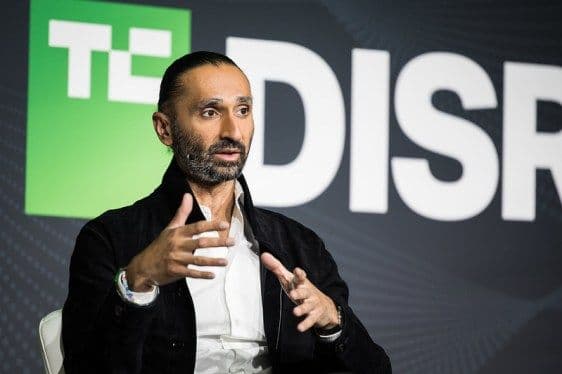
Private equity giant Blackstone is putting itself at the center of the AI boom, firm veteran Jas Khaira discussed last week on stageat TechCrunch Disrupt. It is writing checks via various strategies, ranging from offering massive loans to data centers to investing in frontier AI models and applications. Earlier this year, the firm launched Blackstone N1 (BXN1), a San Francisco-based central hub for its AI initiatives. The group is led by Khaira, who relocated from New York to be at the epicenter of AI. Unlike earlier tech cycles such as mobile or SaaS, which allowed companies to reach significant scale with moderate capital, the transition to AI requires staggering amounts of investment. That need for capital is precisely why Blackstone, with its $1.3 trillion in assets under management, could play such a critical role in this tech shift. Khaira emphasized that Blackstone sets itself apart from traditional venture capitalists through its focus on compute financing and its ability to offer flexible capital structures, ranging from debt to equity. And it has been investing aggressively. “We’re the largest owner of compute outside of the hyperscalers today, whether it’s investments in neo clouds, investments in data centers, and being able to use that compute strategically to support companies,” Khaira said. For instance, BXN1 played a key role in several compute-related deals, among themCrux AI,a neocloud launched in partnership with Google to commercialize its custom TPUs, to which Blackstone committed $5 billion as an investor. It also backedfour-year-old Etched, a chip startup whose rapid development has caught investor attention. Neoclouds are cloud providers that rent out AI GPU infrastructure. Blackstone pioneered a financing structure that allowed it to lend massive sums to venture-backed cloud neoclouds by analyzing both committed customer contracts and using GPUs pledged as collateral. Blackstone’s first such deal came in 2023 with CoreWeave, shortly after that neocloud saw demand explode following the launch of ChatGPT. Despite having only “30 million of revenue and minimal profitability” at that time, according to Khaira, CoreWeave approached Blackstone for a $2.3 billion loan. CoreWeave was borrowing against the considerable value of its large collection of Nvidia GPUs, with Nvidia also an investor. Blackstone also grew more comfortable with the loan because CoreWeave had contractswith blue-chip customers like Microsoft. That transaction quickly became the financing model for how Blackstone and other credit institutions provided billions in follow-on debt to CoreWeave and rival neoclouds. “One of the primary things that we’re looking to is the nature of the customer. And if the customer is an investment-grade customer — let’s say it’s Microsoft or let’s say it’s Meta — the risk gets priced relative to that customer,” Khaira said. Building on its success with CoreWeave, Blackstone struck other neocloud financing deals, including co-leading alongside Coatue a$10 billion credit facilityfor Australian GPU provider Firmus earlier this year. Khaira acknowledged that in recent weeks, the large debt burdens accumulated by these companies and other neocloud operators have begun to raise red flags. Coreweave’s debt alone has sinceballooned to about $50 billion, causing Altimeter Capital founder Brad Gerstner to note in a recent CNBC interview, “The collateral that CoreWeave is putting up which is really only GPUs is not good enough anymore. They used that in the past to get cheap debt.” Khaira said that on the credit side, the market jitters stem from a combination of factors. Interest rates ticked up in September, and hotter-than-expected inflation signals that borrowing costs may keep climbing. The flood of AI infrastructure debt offerings isn’t helping either. “We’re also seeing higher credit spreads,” Khaira said, explaining that lenders are charging higher premiums on top of already higher base interest rates to finance the AI buildout. “The cost of capital to price in debt for a Meta or a Microsoft has widened out,” he added, pointing out that even tech giants with massive balance sheets and solid earnings are paying more to borrow. Concerns about the rising cost of debt have spilled into the stock market. Shares of CoreWeave dropped over 20% in recent days, whileFirmus scrappedits planned IPO on the Australian Securities Exchange at a target valuation of roughly $30 billion. “Ultimately, the market wasn’t there at that valuation, and so I think as a result, that deal didn’t get done,” Khaira said about Firmus’ cancelled listing. “The market is thinking what is the right price for neoclouds, what is the right price for these businesses in this moment when interest rates are moving up,” he said. Despite those pressures on some infrastructure providers, AI companies simply can’t get enough compute to power their models. Their appetite continues to drive data center buildout. Khaira downplayed worries of doom-mongers that the massive accumulation of AI infrastructure debt could lead to a widespread credit crisis, or worse, crash the economy altogether. “This doesn’t feel like something where you’ve got 2008 banks that are shaky credits,” he said. Instead, he pointed out that because the vast majority of data centers are built for hyperscalers, the debt financing them is ultimately backed “by the most creditworthy companies in the world.” Beyond funding data centers, Blackstone is helping companies adopt AI through a$1.5 billion joint venturecalled “Ode with Anthropic,” formed alongside Anthropic and Hellman & Friedman this year. Ode supplies forward-deployed engineers to help companies adopt AI and integrate it into their operations, starting with Blackstone’s 280 portfolio companies. When asked if Blackstone-owned companies are seeing tangible gains from AI, Khaira conceded that “there is definitely ROI, but it is uneven.” He described technology adoption as something that could move in a “sawtooth-type pattern,” which, to skeptics, can look like an oversupply of compute before adoption catches up.
View

While Amazon blocks AI agents, Walmart rolls out the welcome mat
Walmart is embracing agentic commerce with the launch of its own Agent Gateway to manage transactions and other new features aimed at customers using AI agents, the retailer announced on Wednesday. The move comes shortly after Walmart’s top competitor,Amazon, began blocking AI agentsfrom making purchases on behalf of online shoppers. The company’s embrace of AI technology differentiates it from other online businesses, including not only Amazon but also various travel and booking sites, which have responded to the growing consumer adoption of AI agents bylocking them out of their websites completely. Walmart, on the other hand, had alreadyannounceda partnership with a leading agent in the space, Meta’s Muse, and offers integrations with popular AI apps like ChatGPT, Gemini, and others. Now, it’s expanding on those efforts with more technology to prepare for a world where AI agents become mainstream, said Walmart President and CEO John Furner, speaking at the Masters of Scale Summit in San Francisco on Wednesday. The technology will support agentic shopping from both Walmart and the company’s discount warehouse, Sam’s Club. It starts with Walmart’s Agent Gateway, the company’s new MCP server, which is designed to help approved agents connect to Walmart over the model context protocol (MCP). The protocol, originally created by Anthropic, allows AI agents to connect to external data sources, tools, and other workflows. In this case, it lets an AI agent search across Walmart’s online inventory and make purchases on behalf of the agent’s user. What’s more, the retailer says that its Agent Gateway will be able to help customers shop for their usual brands or items without having to share their personal information or purchase history directly with the agent. The company has also developed new technology to differentiate an agent’s purchases from those initiated directly by the customer, and to give shoppers more control over what their agents can and cannot do. With Agent Profiles, rolling out next month, customers will be able to authorize each AI agent they use with a dedicated profile in their account, allowing them to see the agent’s purchases separately from their own. Plus, customers will be in control of how purchases get approved by either requiring approval for each transaction or by authorizing transactions within a certain spending limit they set. The retailer says these controls are similar to adding someone as an authorized user on your credit card, where their transactions are identified, and you can cap their spending. The Agent Profiles will be created the first time you use a given agent to shop through the Walmart Agent Gateway, the company notes. To get started, you’ll authorize and link the Agent Profile to your Walmart account, then set your controls or spending limits. You can also delete an Agent Profile at any time. Agent support is available for anyone with a Walmart account; a Walmart+ membership is not necessary. Alongside these technologies, Walmart is introducing special “terms” for AI agents, which specify how they must operate and what rights they have to transact on its site. Of note, Walmart says that its returns process applies, including when an agent doesn’t act as intended. That’s a customer-friendly condition that could sway consumers who were worried about being an early tester of agentic commerce, as they won’t fear ending up with products they don’t want because of a misbehaving agent. Walmart also says that agents can’t take actions beyond what the shopper intends, can’t access the customers’ payment information, and can only access the information they need for the given task. Agents that don’t comply with the terms will be blocked from accessing Walmart’s site.
View

Recursive launches Flint, a laptop coding model it says was largely built by AI
Recursive, an AI startup founded last year, is starting to live up to its name. The company, which is trying to build AI that can improve itself, released its first model,Flint, on Wednesday. Flint is a free coding model that can run on a laptop and was built largely with the help of AI. Recursive’s automated research system, which it calls the Eureka Machine, helped with nearly every step of Flint’s development, the company says. That let a small team build the model from scratch in under four months. Flint is an early public test of recursive self-improvement: the idea that AI can build better AI, which in turn builds even better AI. It’s also one of the most debated ideas in the industry. Some researchers fear that AI improving itself could slip out of human control. For now, Recursive’s version is more limited: an AI research assistant overseen by people that produced a model small enough for a laptop. The company emerged from stealth in May with$650 million in fundingat a $4.65 billion valuation, from backers including GV, Nvidia, and AMD Ventures. Recursive is led by CEO Richard Socher, Salesforce’s former chief scientist. Because Flint runs on a user’s own computer rather than a company’s cloud servers, developers can use it offline, keep their code private, and avoid theusage feesthat AI cloud services charge based on how much text the model processes. The model is free to download on Hugging Face, the popular site for sharing AI models, under the Apache 2.0 license, an open-source license that allows free use and modification. Flint is a mixture-of-experts model, meaning it uses only a small slice of itself for any given task: just 2.5 billion of its 40 billion settings, known as parameters, at a time. That makes it light enough for an ordinary laptop and far smaller than Meta’sMuse Spark Open, an open model built for Macs that was released last week. Muse Spark Open uses 816 billion parameters and needs at least a terabyte of memory. Flint is also fast. In Recursive’s tests, it generated about 131 tokens (chunks of text) per second on a MacBook Pro with Apple’s M4 Pro chip — roughly twice the 58 to 69 tokens per second that similar models managed on the same machine, including Google’s Gemma 4 and Nvidia’s Nemotron 3.5 Lightning. On Nvidia’s RTX Spark, Flint topped 150 tokens per second. On SWE-Bench Verified, a benchmark that measures how well AI can fix real-world software bugs, Flint outperformed other models under 50 billion parameters. On Recursive’s own average across six tests, only one model, Alibaba’s Qwen3.8 27B, scored higher than Flint. The company acknowledged that Flint would need more guidance than the big paid coding assistants, and suggested breaking large tasks into smaller steps. Still, early reviews were positive. Wired’s Will KnightusedFlint on a Mac with 48GB of memory to build several small programs, including a to-do list app and a tool that scours the web for research. He found that smaller coding models often ran into errors or were slow compared to Claude or Codex, but Flint nailed his coding requests every time. The Eureka Machine comes up with ideas, runs experiments and uses the results to decide what to try next. According to the company’slaunch video, it contributed to nearly every part of building Flint, from pre-training to post-training and inference. Recursive said that Eureka’s contributions include a sparser model shape, low-bit training that shrank Flint by 71% with almost no loss in quality and custom kernels, which are specialized programs that speed up the underlying computations. Recursive didn’t say how much time the Eureka Machine saved its researchers, but it’s not alone in leaning on AI to do research. OpenAI saidlast monththat by mid-August, its AI agents were logging 3.1 workdays for every one worked by a human researcher. If Recursive’s bet pays off, each new model should be able to take on longer stretches of work without human help. The company previouslytold TechCrunchthat its $410 million compute deal with Amazon Web Services in June was “less about headcount and more about agent count.” The longer-term goal, Socher told Wired, is for the Eureka Machine to achieve full recursive self-improvement, with humans overseeing the process and able to stop it if something goes wrong. Recursive says each new model should make the Eureka Machine a better researcher, helping it build the next one faster.
View

Meta says Muse has over 10M users, with shopping a top activity
Meta said during its third-quarter earnings call on Wednesday that its AI app Muse has been adopted by more than 10 million users, confirmingestimates released earlier this weekby market intelligence firm Sensor Tower. But it is how people are using it, and how much they’re spending that has caught CEO Mark Zuckerberg’s attention. Zuckerberg said about 25% of people who set up Muse now use it daily, helping improve retention. He also shared that over a quarter of Muse’s engaged users who were shopping via the AI agent, had an average purchase size of over $200, which was surprising even to industry insiders. “Plaid told us that they hadn’t seen activity like they’re seeing with their connector on any other service before,” Zuckerberg said, referring to the financial technology company that connects payment apps to customers’ bank accounts. Muse uses Plaid’s connector to enable agentic shopping. Beyond shopping, Zuckerberg said other popular uses for Muse include personal productivity tasks, such as connecting the AI agent to users’ email or calendars. The exec stressed that this indicates users trusted Muse’s security setup, which includes a feature called “Muse Secure VM” designed to protect their data and privacy. He also mentioned that the forthcoming “Muse Confidential VM” will prevent even Meta from seeing users’ content. Now that Muse has achieved “product-market fit,” Zuckerberg said Meta’s focus will shift to scaling the AI agent, increasing revenue, and optimizing its compute costs. Remarkably, the tech company is forecasting that Muse will eventually bring in more revenue per user than its “family of apps” users do today — meaning its users on Facebook, Instagram, WhatsApp, and Messenger. Currently, that figure is around “several hundreds of dollars annually,” Zuckerberg said. Meta has said it ultimately intends to monetize Muse by keeping it free for most users, but keeping a percentage of the commerce taking place on the platform. Power users who want access to the most advanced AI models or more tokens will also have to pay. Zuckerberg also noted that Meta believes Muse will be profitable after it scales. “On the compute side, we are building out the capacity to serve more than a billion people over the next few years,” he told bankers and analysts on the Q3 earnings call. “In the near term, Muse is very compute-intensive to run, but we expect to improve its cost efficiency by more than 10x in the next year, which will enable it to be profitable once the revenue lines are at scale.” Muse will also play a central role in Meta’s smart glasses strategy. Reality Labs, the division responsible for smart glasses, VR, and the metaverse, is still losing billions. However, thedivision’s lossesare expected to improve from $19.1 billion in 2025 to $15 billion this year. Beyond scaling and supporting its hardware strategy, Zuckerberg teased the company’s plans for something he called the “Muse network.” He described this as taking Muse from a “single-player game” to one where “your Muses can work with your friends’ and your families’ [Muses].” “And if you want to buy something, it’s not just navigating to that business’s website; it’s talking to their agent,” he added.
View
TechCrunch Founder Summit 2026: Everything you need to know
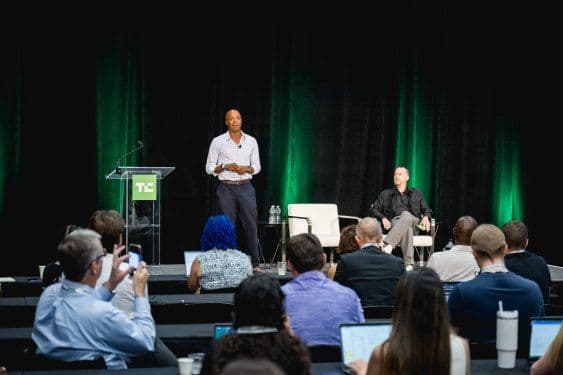
TechCrunch Founder Summitis a full-day gathering in Boston on November 4 where founders across all stages connect with top VCs and experienced entrepreneurs to gain tactical insights on building and scaling their companies. It’s the latest in our long line of founder-centric events, which are smaller and more hands-on than Disrupt. For the founder looking to really get in the weeds during a one-day crash course, Founder Summit is the ideal place to get a head start on your 2027 plans for everything from hiring, establishing product market fit, finding investors, improving your leadership skills, and more. Before you dig in on the event details, you can get info on all of our tickets, which are available for a $100 discount for investors and founders,right here. Even if you’re a student and an aspiring founder, or an investor looking to meet the next wave of East Coast innovators, we have an option for you. All founders end up wrestling with the extensive, complicated mechanics of building a company from the ground up. There’s fundraising, hiring, legal, marketing, PR, and leadership, as well as the investors needing the means to vet, invest in, and develop founders as they build out their skills. Founder Summit is the best way to cover all of the challenging questions with community members who have been there, and lived to tell the tale, through constructive failure and massive success. The event takes place on Wednesday, November 4, 2026, at theSoWa Power Stationin Boston. It’s accessible via public transportation and a short walk from the Back Bay and Tufts Medical Center stops on the Orange Line, or the Broadway stop on the Red Line. To deliver on that promise of equipping founders for success,this year’s agendaandspeakerslean hard into fundraising, AI-native building, and leadership. Sessions include: We’re glad you asked! Founder Summit will once again feature the much-requested So You Think You Can Pitch? competition, during which three early stage startups will try to impress a panel of judges within four minutes each. Their approaches, and the judges’ feedback, is invaluable for improving your own pitches. Yes. Founder Summit was formerly known asEarly StageandAll Stage. This year, we have the same mission, but with a new name. Keep that in mind if you want to do any more research before attending. Founder Summit is far from a series of panels, though the agenda does provide a ton of valuable insights for founders and investors. In addition to all of those sessions, we also have our breakout sessions, where even more intimate panels discuss vital topics for the community to dive deeper into. There’s also networking available via the Braindate app to help connect investors with founders, or facilitate founders with similar challenges to bring their expertise together to reach shared solutions. Or that time is the perfect opportunity for students to build out their nascent network. Then there’s Founder Summit week, taking place November 1-7. That’s whenall of our Side Events are held, expanding the opportunities for you to gather with the community. And if you’re especially eager to take part, you can apply to host your own Side Eventright here. Pricing moves in phases, with our next increase happening after October 16.Our current pricing tiers are Investor for $399, Founder for $199, and students for $149. If you buy a second ticket for a co-founder or co-worker, you’ll also get 50% off their admission. And bundles for groups for four or more offer additional discounts. Yes! We’re looking for volunteers to help staff the event, and those individuals will get a behind-the-scenes look at how the event comes together on top of their free access to programming beyond their shift. Learn more about our program, which closes to new applicants October 19,right here. You can get the full rundown of the event, with everything from up-to-date speaker information, the full agenda, logistics, and moreright here. Ticket information across all three tiers isavailable here. And remember, our current discounts end October 16 — act now before they expire.
View

Perplexity Computer for Mac Adds Local AI Mode for Pro, Max Subscribers
Perplexity has launched a version of Computer that runs entirely on Mac, letting users run AI models and handle multi-step tasks on supported Apple silicon devices. With permission, it can work across private files and supported apps without sending personal data to the cloud. Users can choose how tasks are processed and manage their credit usage. The feature is available through the Perplexity Mac app to Pro, Max and Enterprise subscribers.
View

AI promises productivity, but for managers, it’s mostly a headache for now
Companies are giving employees AI tools to make them more productive, but the tools appear to be creating new problems for their managers. More than half of senior leaders say they find it harder to evaluate employees’ work after adopting AI, according to a Nielsen survey of 1,700 directors and senior managers across seven countries,commissionedby work-management company Monday.com. The reason is that much of employees’ output now arrives polished in the manager’s inbox, making it hard to tell how much came from the employee and how much from AI. As a result, nearly half of managers say they spend more time reviewing and guiding their teams’ output than they used to. That’s not to say managers are unhappy about AI. Quite the opposite, in fact: 94% of the managers polled said they were excited to improve work using AI, and many are confident they know where to use it to get the most value. Michal Miller Levi, head of market research and customer insights at Monday.com, compared the enthusiasm to the early days of the internet in the 2000s, saying people see a similar kind of “magic” to AI. But the problem, she told TechCrunch, is simply that AI is developing faster than companies can adapt. “AI works very well for [managers] individually, but they also have a different role as managers. They need to drive the organization as well […] Their struggle is [due to] the fact that AI is just moving faster than the organizational processes,” Levi said. Managers are also reconsidering how they judge their teams: 78% of respondents said they have changed how they evaluate employees after adopting AI, placing greater weight on how well staff can create prompts, decide which tasks to delegate to AI, and experiment with new ways of working. But how fairly can employees be judged when managers can’t easily tell how much of their work was produced by AI? And what if the managers themselves are increasingly relying on AI to make those judgments? The survey found that 46% of managers use AI to help inform their decisions, and 39% of leaders are using AI to draft performance reviews. That practice runs the risk of introducing even more bias than usual into the review process, given that LLMs are, at their core, prediction machines, and tend to repeat human patterns found in their training data. Research from the Luxembourg Institute of Socio-Economic Research earlier this yearfound that“in the absence of clear objective standards and when individuals are rated independently,” LLMs tend to rate performance similarly to humans. And aresearch paperin early 2025 found that AI models can be biased against black male candidates, and “demonstrate significant biases, varying in terms of the directions and magnitudes across different social groups.” When I asked Levi whether using AI to weigh in on people’s performance could introduce outside bias into the process, she said companies have yet to work out how to handle such issues. AI is also changing what a manager’s day looks like. Someone has to decide which tasks to hand over to AI agents, check what they produce, and step in when something goes wrong. The report suggests that this supervision could amount to a new layer of “invisible labor.” The software itself is becoming harder to manage. Fifty-seven percent of managers say their organizations now have more tools in circulation than before, and about 51% said their tools had grown more interdependent and clustered since adopting AI. Only 29% described their AI infrastructure as fully optimized and centralized. Levi said businesses had expected AI to help shrink their software stacks. Instead, they’re dealing with more apps, integrations, and shadow AI usage as employees adopt tools outside their companies’ approved systems. “Managers completed 2025 with the feeling that they will consolidate tools, actually; that they’ll reduce the number of software. But what happened is that the number of tools that they’re using increased,” Levi said. “More than 50% are saying that they’re using more tools now than they did last year, and it’s not stopping […].” This need for control seems to be growing urgent as companies deploy AI agents that can act on their own. The survey found that 58% of managers expect to oversee more AI agents than human employees within the next year, and 46% worry about losing control over those agents’ actions. There’s also quite a bit of fear over being held responsible for decisions made by AI (35% of respondents said so), as LLMs are still largely unpredictable. “They don’t want their agents to be fully autonomous,” Levi said, explaining that managers want people to be involved and consulted by AI when it comes to crucial tasks and decisions. At heart, the report’s findings show that AI adoption is increasingly becoming as much a governance problem as it is an opportunity to raise productivity. Without proper processes and infrastructure to deal with it, managers seem to be scrambling to keep things chugging.
View

