

最新 AI 资讯

Satlyt, founded by a former Google and SpaceX product manager, raises $8M to run AI on satellites
The way Rama Afullo tells it, he saw orbital data centers coming. The Kenyan American engineer previously worked in Google’s cloud computing business before a brief stint at SpaceX’s Starlink communications network in 2024. His experiences convinced him that there was untapped potential for computers in space. “When I was at SpaceX, I tried to pitch this internally. They said no. When I was at Google, I tried to pitch this internally. They said no,” he tells TechCrunch. So he left SpaceX and co-founded Satlyt, a new company with headquarters in Sunnyvale, California, and Nairobi, to build software for satellites that he hopes will let many satellites share the work of large computing jobs in space. The company has raised an $8 million seed round, Afullo exclusively told TechCrunch. The timing looks good for him. SpaceX has since gone all-in on orbital data centers, and Satlyt’s software is set to launch Thursday on a SpaceX rocket alongside the first prototype for Google’s space data center effort, Project Suncatcher. Unlike SpaceX, Google, or startups like Starcloud and Cowboy Space Company, Satlyt isn’t planning to build its own spacecraft. Afullo’s team is building the software to operate AI models on satellites, comparing his approach to VMWare and Snowflake—companies whose platforms let users run complex software without worrying about the underlying infrastructure. “The folks like SpaceX who are doing orbital data centers—if they are the iPhone, we’ll build Android as a horizontally integrated, open ecosystem,” he said. In other words, Satlyt wants to offer software that works across many companies’ satellites. Satlyt has already flown its software on two demonstration missions. The initial focus is finding operational efficiencies for spacecraft, which typically depend on flight controllers on the ground to solve any problems that arise. Sending data back to Earth, known as downlink, is expensive and often slow, so using AI to make decisions on the spacecraft can mean real savings, either when resolving anomalies or by processing sensor readings on the spacecraft instead of on the ground. Earlier this year, SatlytdeployedGoogle DeepMind’s Gemma AI model onboard a spacecraft operated by Momentus. The model cut the size of a transmission about onboard software errors by more than 60%, the kind of efficiency that Afullo says can save hundreds of thousands of dollars per satellite each year. This week’s launch will put Satlyt’s software to work onboard a spacecraft built by TakeMe2Space, an Indian startup that builds computing hardware for satellites. The mission involves three customers: NASA, which is paying the company to test protocols for cloud computing in space; Stellerian, a start-up focused on space surveillance (tracking objects in orbit) that wants to test image processing workloads; and TakeMe2Space itself, to show the satellite can host other companies’ software. Right now, few high-powered GPUs are in orbit. For now, the most likely opportunity lies in the kinds of workloads Satlyt is working on. But the company’s next project is to show that it can create a shared computing system—a cloud—spanning two different satellites, which it expects to attempt next year. If successful, it will allow the company to build a true compute cloud in orbit as a third-party provider to spacecraft builders. The way to think about it is that we turn your satellite into a revenue-generating managed service,” Afullo said. Satlyt’s seed round was led by Houston-based Non Sibi Ventures, where partner Bernard Harris, who served as a NASA astronaut for more than 20 years, helped ground the firm’s conviction in a novel, space-based business. One reason the firm invested was that Satlyt doesn’t depend on highest-octane vision of space data centers, which faces uncertain economics and a launch bottleneck. “We don’t need data centers in space for Rama to be wildly successful, right?” Non Sibi partner Kent Lucas told TechCrunch. “It can just be driven by the number of satellites going up.” Afullo’s hope is to be live on 20% of satellites by the end of the decade, when he expects virtually every spacecraft builder to be putting GPUs and similar advanced processors in their satellites. “If you’re putting up a satellite without putting up a GPU on it, at the very least, you’re doing yourself a disservice, right?” he says. Satlyt is among dozens of other startups vetted by TechCrunch and appearing at Disrupt as part of our broader Battlefield competition happening October 13-15 in downtown San Francisco.Learn more here.
View

Hearing tech startup Legato launches its AI hearing glasses
Hearing tech startupLegatoannounced on Thursday that its flagship AI-based hearing glasses are now available for purchase. The glasses, calledLegato Frames, integrate the company’s patented hearing-assistance technology into the arms of eyewear frames. Starting at $999, Legato Frames are designed for adults with up to moderate levels of hearing loss. The glasses stem from the startup’s goal of making hearing care more accessible by addressing the cost, comfort, and stigma associated with traditional hearing aids. Unlike traditional hearing aids, which often use directional microphones to focus on sounds coming from a particular direction and can struggle in noisy environments, Legato takes a different approach. Its AI-powered system distinguishes voices from background noise and amplifies voices while reducing unwanted sounds. While the frames have an open-ear design, sound isn’t broadcast to people around you. The frames feature a dual-speaker system that directs sound toward the wearer while canceling sound that escapes, reducing sound by 99% just a few inches away from the ear. All processing happens directly on the glasses, with no cameras or recording, the company says. The glasses weigh 34 grams with lenses and offer 10-12 hours of battery life. Legato Frames are available in three styles and support prescription lenses and Bluetooth streaming for music and calls. The official launch of the glasses comes a few weeks after thestartup emerged from stealthwith $12 million in funding from Neotribe Ventures, Listen, and Village Global. Legato was founded in 2024 by Mehul Trivedi and Steve Romine, who bring deep experience in wearables and hearing care from Bose, where Trivedi led the creation of Bose Frames and Romine ran the hearing aids division. After their time at Bose, Trivedi joined EssilorLuxottica, where he led smart eyewear efforts and worked on the Meta Ray-Ban smart glasses, while Romine went on to serve as COO of hearing care company Audicus. The pair then joined forces to explore the intersection of hearing technology and smart eyewear. Legato Frames can be purchased on thestartup’s websiteor through select eye care providers in the U.S., where they are eligible for coverage by vision insurance.
View

Oracle is Leasing 100k AI Chips to Chinese Giant Tencent: Report
The US can restrict where an NVIDIA chip is shipped without necessarily preventing a Chinese company from remotely accessing that chip's computing power once it is installed in another country.
View
Infosys Expands ABN AMRO Partnership With Focus on Enterprise AI
This comes as the Dutch bank looks to modernise its technology systems and increase its use of generative and agentic AI.
View

After 18% Rally and 13% Drop, Indian IT Stocks Face AI’s Real Q2 Math
Nifty IT rose 18% and then fell 13% in the July-September quarter. Q2 FY27 earnings will offer an early test of whether AI revenue can offset pricing pressure.
View
Accenture Boasts 400 Clients Doing Advanced AI, Notches $18.7 Bn Q4 Revenue
Bookings from Accenture’s eight emerging AI and data partners more than tripled from FY25, while revenue from those partners more than doubled.
View

ElevenLabs Doubles Valuation to $22 Bn as Enterprise AI Agent Demand Grows
The company said its agents now handle more than 15 million conversations each week, up threefold since February.
View

Coforge Scales Poland Centre as AI Engineering Demand Grows
Coforge is expanding its Kraków engineering centre to over 660 engineers by 2027 as it shifts to a multi-client delivery model.
View
IBM Partners With IIT Bombay, IISc on Agentic AI, Sovereign AI, Quantum Computing
The research will cover Indic language models, multimodal systems, enterprise knowledge retrieval, and quantum-HPC workflows.
View
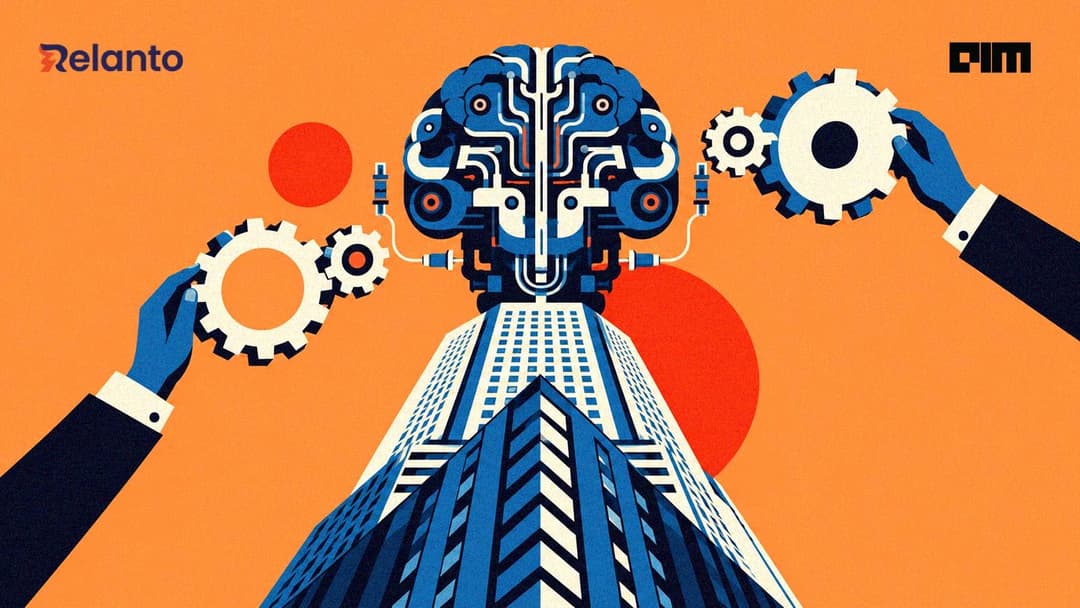
The Industrialisation of Enterprise Intelligence
As AI makes intelligence more abundant, leaders must decide where it creates value, how it works across the enterprise and who remains accountable.
View
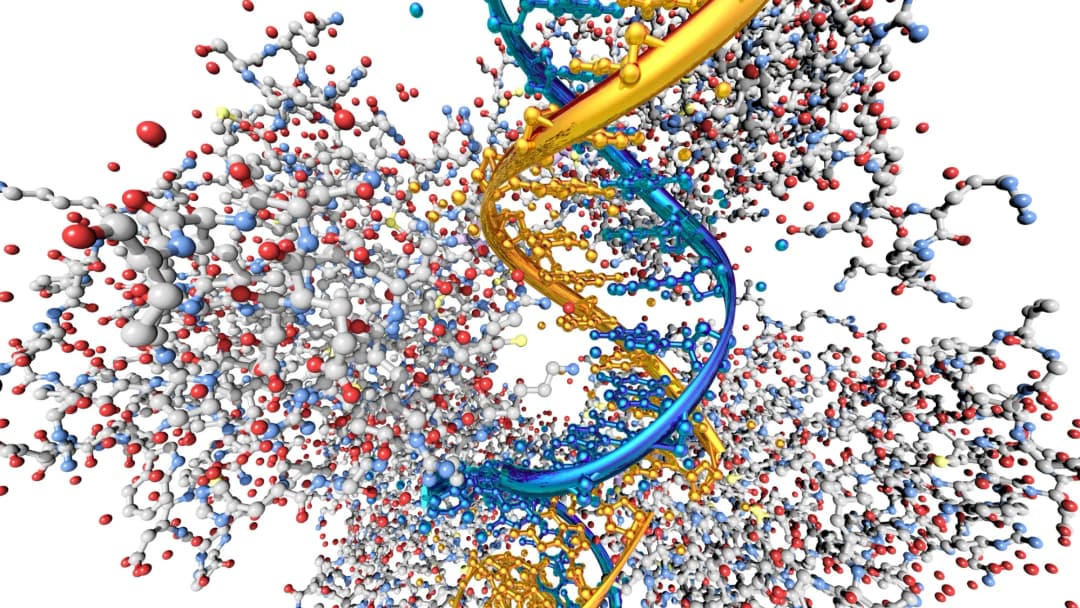
Google DeepMind Builds Watermarking System to Identify AI-Generated Protein Designs
Google DeepMind's approach attempts embeds provenance information at the point where the AI model generates the biological design.
View

Indian Space Startups are Putting New Eyes in Space With SpaceX
SatLeo Labs and EON Space Labs will test thermal and multispectral imaging as TakeMe2Space and Google send computing technology on the same mission.
View