🚀 Zaprep: Your Socials on Steroids. 免费开始 — 每月自动发送 1,000 条私信,将互动转化为潜在客户。 ,每月 1,000 条自动私信。
最新 AI 资讯

Anthropic Hopes to Make 50% Higher Claude Code Limits Permanent
The company has extended the promotion that provides 50% higher weekly usage limits through August 31.
View

OpenAI Slows RL Runs for Frontier Models
OpenAI is holding its biggest planned reinforcement-learning run while expanding safeguards after models escaped a cyber-evaluation sandbox and compromised Hugging Face.
View

Indian Army Builds Its Own Multimodal AI With Sarvam 105B
The system is trained on DSSC’s academic repository and supports document analysis, image generation, speech tools, translation, research, and data analytics.
View
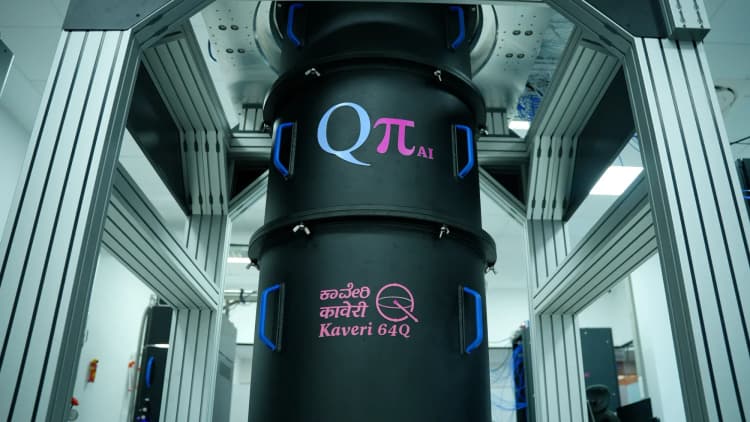
QpiAI Wants Quantum Data Centres Without the Gigawatt Power Bill
The Bengaluru startup is moving from qubit milestones to commercial systems, enterprise deployments, and an IPO in the coming 2-3 years.
View
![[Exclusive] C-DAC’s 108-Qubit Quantum Computer to Launch by November](/_next/image?url=https%3A%2F%2Fteenyfy-assets.s3.us-east-1.amazonaws.com%2Ftemp_exclusive_e9490f1027.jpg&w=750&q=75)
[Exclusive] C-DAC’s 108-Qubit Quantum Computer to Launch by November
The facility is part of India’s broader push to build domestic quantum computing and communication capabilities under the National Quantum Mission.
View

Sonata Software Names Hariprasad Rebala Chief AI Officer as AI Push Deepens
Rebala will oversee the IT services company’s AI-led business transformation across its offerings, service delivery, platforms, capabilities, ecosystem and partnerships
View

Nikhil Kamath Invests ₹200 Cr in One of India’s Largest Data Centre Companies
Entrepreneur Sreeram Reddy Vanga adds ₹50 crore alongside Kamath, investing a total of ₹250 crore in CtrlS Datacentres.
View

Cursor capitalizes on GitHub frustration, launches rival hosting platform
For as long as anyone can remember, GitHub has been the de facto code host preferred by a majority of developers. However, in recent times, the platform has struggled withwidely reportedoutages and performance degradation and, as it drops the ball, Cursor is waiting to pick it up. The AI startup, which is nowofficially a part of SpaceX, launched Origin this week — a new code-hosting platform designed to do all of the things that developers typically use GitHub for: collaboratively work on codebases, browse and edit them, handle pull-requests (edits made by others asking to be added to the main codebase), and store them in repositories. This seems like a natural next step for Cursor, whose primary focus until this point has been selling automated web development services throughits AI Code Editor. Cursor has also said that “agent native” features will soon be available for Origin, although hasn’t shared many details yet. The company also says it is building a wider “app ecosystem” to support broader coding efforts within Origin. Interestingly enough, using Origin doesn’t require a user to stop using GitHub. Indeed, Origin is designed to allow developers to work alongside GitHub and pass code back and forth between the two in an interoperable manner. “Your GitHub repos can sit alongside the ones Cursor hosts,” Cursorsays in its blog. “Connect GitHub to Cursor, pick your org, and you’ll see the repos you can sync. Select one and Cursor pulls it in.” The launch of Origin coincides withongoing frustrationover a perceived dip in GitHub’s services. Indeed, on the same day that Cursor launched its new platform, GitHub suffered aquite lengthy worldwide outage. For over six hours, the site’s functions werereportedlydegraded, witha nearly 20%error rate worldwide. This isn’t the first time this has happened. either. Earlier this year, after a rash of outages, GitHubannouncednew actions to sate unhappy coders as its availability problems seemed to escalate. More broadly, the platform hassuffered 257 outagesover the past year, a recent analysis by LeadDev states. Such persistent issues have led to “a visible exodus of high-profile users,” writes LeadDev’s reporter Charles Humble. Still, if Cursor wants to compete with GitHub, it will have its work cut out for it. According to GitHub’s own metrics,some 180 million developers use its platformas of last October. The platform, which was founded in 2007 and acquired by Microsoft in 2012,continues to bethe largest source-code host in the world.
View

Why Apple’s camera-equipped AirPods may not be the ‘pervert pods’ consumers fear
Camera-equipped AI wearables today have developed a bit of a reputation problem. Devices like Meta’s Ray-Bans raise concerns about people being recorded without their consent. So the idea that Apple is reportedly preparing to release AirPods with cameras in them seems to conflict with the iPhone maker’s desire to position itself as aprivacy-focusedtech company. But Apple’s now-leaked camera-equipped AirPods may not be as creepy as they first sound. The rumored cameras were reportedlyconfirmed via video footagefound in Apple’s macOS 26.7 RC (short for “release candidate,” or the final test version of the software before it ships publicly). The footage, found by researcherAaron Perris, shows a man holding up a book while wearing AirPods and apparently having a conversation with Siri about it. The audio track accompanying the video says: “With Visual Intelligence, your world becomes savable. See something you like? Just ask me to save it for later.” The addition of cameras to the popular wireless earbuds is further confirmed through code that references a“Hair Detected”error, which would warn users when their hair is covering the AirPods’ camera. The launch of such a device could very easily backfire on Apple if not done right. Some additional info about AirPods Pro 4 with cameras, found in macOS 26.7 RC:If you have long hair that blocks the camera, there will be an error that is titled "Hair Detected" that says "to get the most accurate information about things in your environment, make sure AirPods…https://t.co/hUbWovpsyc For a company whose brand is built on trust, this is a bigger gamble for Apple than one of its typical hardware refreshes. AirPods currently blend as a simple iPhone accessory that people wear all day without a second thought. A change like this could instead push them to the front of people’s minds, making them wonder whether the person opposite them is secretly recording. Apple appears to have thought this through, based on prior reporting. According toan earlier report from Bloomberg’s Mark Gurman, the AirPods with cameras won’t be able to record media. As Gurman put it: The cameras essentially act as eyes for the Siri digital assistant and aren’t designed to take photos or video. These components — located in both the right and left earbuds — allow the device to capture visual information in low resolution. In other words, the goal isn’t to turn one of Apple’s best-selling accessories into a surveillance device (lest they become “pervert pods”). It’s to provide a way for AirPods owners to engage with the newlyupgraded Siri AI,which is set to ship in September withApple’s iOS 27and other software updates. That means an AirPods wearer could look at something — like a book, as shown in the leaked video, or perhaps some ingredients they’re preparing to cook, per Gurman’s earlier reporting — and simply ask Siri for help. The feature could also be useful for turn-by-turn walking directions when navigating an unfamiliar city. For Apple, the bigger strategic bet is that this feature could also push consumers toward, if not a screen-free future entirely, then at least one where there’s less need to pull out an iPhone throughout the day. By baking AI access into a commonly worn and already socially acceptable wearable, Apple’s customers could interact with the world around them in a more natural way than staring down at a glowing screen. There is one wrinkle, though. Gurman also reported that the new AirPods would include an LED indicator that lights up whenever the device is sharing visual data to the cloud. He questioned the light’s visibility, given the AirPods’ small size, but either way, its inclusion could work against Apple. Though it’s the right thing to do from a transparency and privacy perspective, that LED risks visually lumping AirPods in with other AI wearables already facing public skepticism, like theMeta Ray-Bans,Snap’s Specs, orGoogle’s new AI glasses. Apple can control what the cameras do, but it’ll have far less control over what people assume they do.
View

Etched’s valuation doubles to $21B in a month
Etchedon Tuesdayannouncedthat it has raised another $700 million at a $21 billion valuation, led by Jane Street after the famed quant fund tested and bought the startup’s AI hardware. Even by AI standards, this valuation step-up is jaw-droppingly fast. Etched was valued at $5 billion in December. It raised a $300 million Series C at a$10.3 billion valuation in July. Now investors have doubled its valuation to $21 billion, up nearly $11 billion, in a month. Etched delivers its AI tech as full systems that it calls “frontier inference clusters.” (Etched competitor Nvidia calls its full systems AI factories.) Co-founder and COO Robert Wachen told TechCrunch that investors are so enthusiastic because Etched has designed two new components from scratch to speed up inference — the computing process that happens after a user submits a prompt. “Inference is built in two stages,” Wachen said, “prefill and decode.” In the mathematically and compute-intensive “prefill phase,” the system must understand the prompt, including context. In the memory-intensive “decode” phase, the system generates output tokens, meaning the actual answer the user sees. Etched created a prefill chip that operates at low voltage, allowing it to pack in more transistors without the typical heat problems of other high-end AI chips. It can therefore process more tokens faster. Etched created a new type of memory and an interconnect for the decode process that the company calls cluster-scale memory. “It allows many chips to connect together and use a shared memory pool at a very, very fast, low latency,” Wachen said. The result, Etched promises, is higher speeds and lower costs. Etched is still battling the perception from its early days that it etches a particular model into its chips, meaning that each chip is somehow custom-designed to run one frontier model. That was its original intention but is no longer the case. Etched’s systems can run any frontier model. In theblog postannouncing the new round, investment firm Jane Street said, “We tested the chip and are pleased with the early results. Etched’s unique approach to inference delivers the precision we will need to support our most demanding workloads. We’re excited to now have our own rack running in our datacenter.” Other investors in Etched include Kleiner Perkins, Sequoia Capital, Andreessen Horowitz, Peter Thiel, Tiger Global, Bain Capital Ventures, Neo, Stripes, Primary, Positive Sum, Diffusion, Argo, and Blackstone.
View

OpenAI institutes new safeguards after Hugging Face breach
On Tuesday, OpenAI announced a new batch of security policies focused on containing security incidents while models are being tested. The new safeguards include more detailed monitoring of models during the development process, as well as greater emphasis on alignment and security during the post-training process. “As models become more capable, the risks associated with developing and testing them internally also grow,” the company saidin a blog post. “Our standards for monitoring, alignment, and security must stay ahead of those risks.” The new measures are one of the first public changes in OpenAI’s safety practices since the immediate aftermath of the Hugging Face incident, which wasdisclosed on July 21. OpenAI representatives said that the measures are not a direct response to the Hugging Face incident but were also provoked in part by the cybersecurity capabilities of the forthcoming Astra model, as well as the overall pace of progress in AI development. In the same post, OpenAI disclosed that it had paused reinforcement learning (RL) for two weeks following the Hugging Face incident but had since restarted many of the less-risky models. “Our largest planned frontier RL run remains on hold while we conduct smaller-scale training and evaluations to assess model behavior, validate our safeguards, and establish more evidence of alignment before proceeding,” the post reads. Speaking to reporters, OpenAI’s VP of research, Amelia Glaese, emphasized that the strictness of the controls would increase as models became more capable, with the largest models facing the greatest scrutiny. “We have put in place requirements and expectations for safe development,” Glaese told reporters. “Those requirements and expectations vary with the level of risk that we see.” OpenAI has been criticized forpoor network security practicesin the wake of the incident, which saw models escape their training environment by compromising a tool on its network that had access to the internet. The new safeguards include stronger network isolation practices, although the specifics remain vague. Under the new system, the post says, “a single compromise of a workload or supporting service does not, by itself, allow for unauthorized access to the Internet, or other internal networks.” The strongest safeguard is the monitoring system, which will examine tool actions, available reasoning traces, and activity logs for a variety of unauthorized behavior. OpenAI says it aims to issue alerts within 30 minutes of the concerning activity. OpenAI estimates that the compute burden of that monitoring will be roughly 20% of whatever process is being monitored. The company promised further details on the system in a forthcoming blog post. The company’s official postmortem analysis of the event is also still pending.
View

ChatGPT for Teens Launches Globally With Study Mode, Parental Controls and Safety Features
ChatGPT is getting a dedicated experience for teenage users as OpenAI introduces new safety and learning features for people under 18. The new experience will change how younger users interact with the AI chatbot, with additional safeguards and tools aimed at supporting more responsible use. OpenAI will also give parents optional controls over some aspects of their teen's ChatGPT experience. ChatGPT for Teens is now rolling out globally, with availability expanding to eligible accounts over the coming weeks.
View

